Château de Marzac: A Fifteenth-Century Castle in Tursac, France


Site at a Glance
- Rating
- 4.7
- Popularity
- Medium
- Country
- France
- Primary era
- Medieval
- External website
- Open
- Eras represented
- Medieval, Early Modern
- Civilizations
- French
- Site type
- Military
- Remains
- Castle
On this page9 sections
History
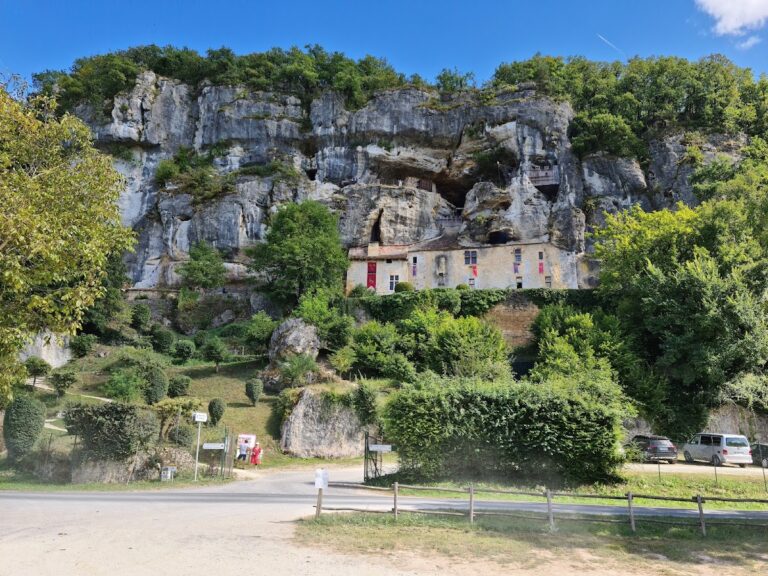
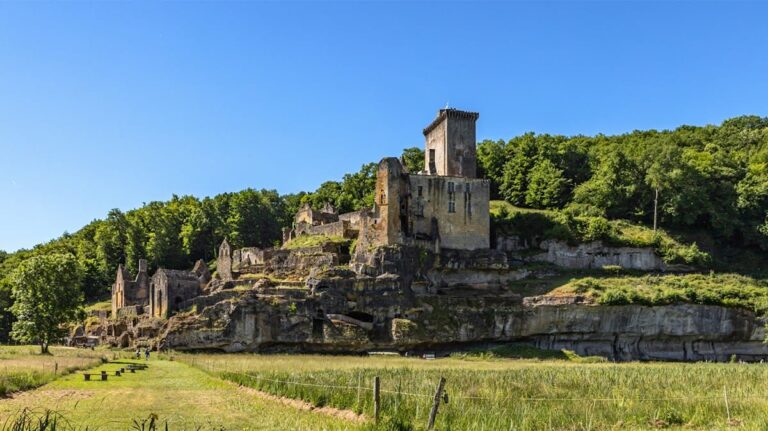
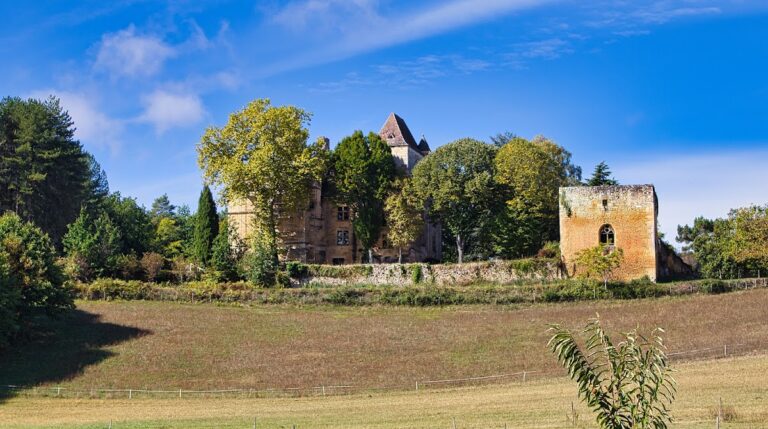
Château de Marzac is a French castle at Tursac in the Dordogne, in the historic Périgord region. The present castle was built in the fifteenth century, while the site’s earlier history is connected with the Marzac family and the control of navigation on the Vézère. Together with Château du Petit-Marzac, whose ruins survive, it formed part of a fortified position overlooking the river.
The Marzac family and the Hundred Years’ War
The name Marzac comes from the family that occupied the site in the thirteenth century. Guichard de Marzac, also recorded as Guichard de Marzi, appears in 1294 in a letter addressed to the bailiff of Sarlat. A bailiff was an officer responsible for administration and justice.
During the Hundred Years’ War, the prolonged conflicts between the English and French crowns from the fourteenth to the fifteenth century, control of the Marzac stronghold passed first to the English and then to the French. In 1420, inhabitants of Sarlat and the seneschal of Périgord seized it. A seneschal held senior administrative and judicial authority in a territorial district.
The fifteenth-century castle and its owners
The present castle was constructed in the fifteenth century. It then belonged to the Campniac family. Hélie de Campniac was lord of Marzac and L’Herm, and the property passed to his son Hébrard and then to Hébrard’s son François. François later lost the estate through a decree that transferred it to the Roffignac family. Christophe de Roffignac, who died in 1572, was lord of Couzages and Marzac.
The castle developed further in the following centuries. A chapel was added in the sixteenth century, and a large dovecote was built in the seventeenth century. The estate later belonged to Marie-Madeleine Bart, the granddaughter of the celebrated French privateer Jean Bart. She married Marc de la Barthe in 1732. Their daughter, Marie de la Barthe de Thermes, married François de Carbonnier in 1756, after which he became Marquis of Marzac. A marquis was a noble title traditionally ranking below a duke and above a count.
From the nineteenth century to the present
In 1865, the estate passed to the Fleurieu family through the marriage of Marie Marguerite Carbonnier de Marzac to Henri de Fleurieu. In June 1915, Count Alphonse Claret de Fleurieu, then the owner, arranged for the Japanese-born painter Tsuguharu Foujita and Kawashima to stay at the fortified house of Reignac. After Kawashima left in autumn 1915, Foujita stayed at Marzac until departing in February 1916.
A Danish family bought the property in 1987. A British company acting for the family later incurred substantial debt to a Luxembourg bank while improving the estate. After the debt was not paid, the bank offered the domain at auction in March 2018. No buyer came forward, and the bank became the owner.
The Guyot family, owners of Château de Bridoire at Ribagnac, purchased Château de Marzac in September 2019. They intended to restore it and open it to the public as an escape game, but the COVID-19 pandemic delayed the project. The ground and first floors were restored in 2020. The castle had been uninhabited for three decades and is privately owned, serving as a private residence.
The remains of the cloister received historic-monument protection on 13 March 1963. A further protection dated 15 March 1991 extended legal protection to other parts of the estate. In France, historic-monument protection is a designation intended to preserve buildings and associated heritage features.
Remains
The castle and defensive layout
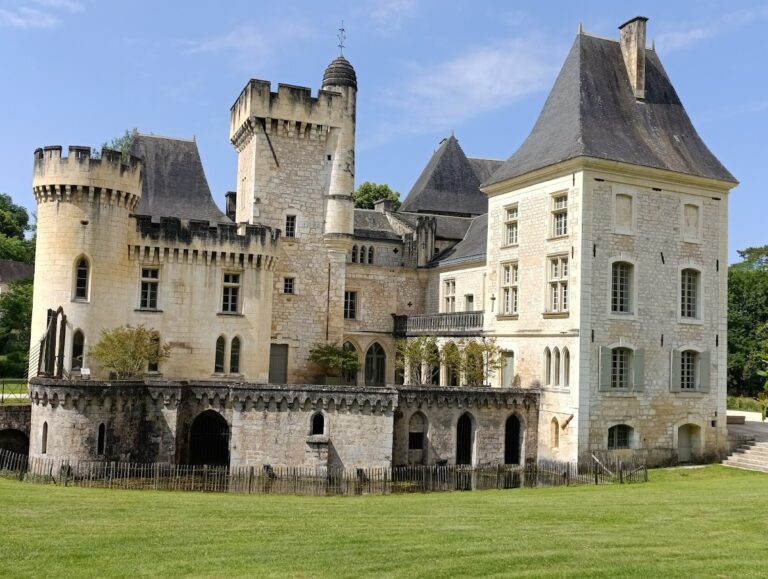
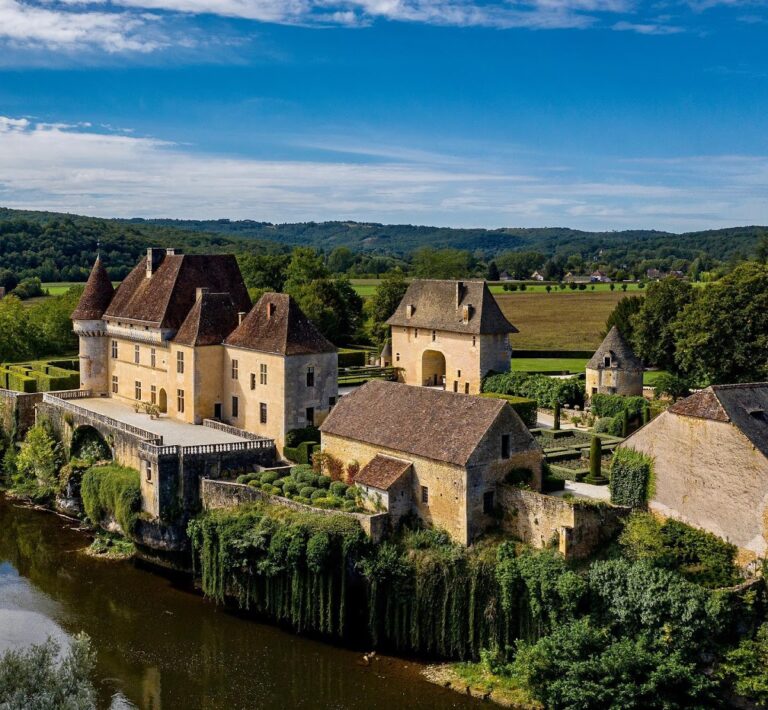
Château de Marzac stands about one kilometre southwest of Tursac village, on a height within a meander of the Vézère. It overlooks the river from approximately 60 metres above it, on the bank opposite the Madeleine shelter. The main building is rectangular, with four circular towers at its corners. Its principal facade faces northeast toward Tursac.
A square stair tower was added against the southwest facade, midway between the two corner towers. The southern tower contains a chapel that served as a funerary chapel, a place associated with burial or memorial rites. Most of the building is crowned by machicolations and wall walks. Machicolations are projecting openings or galleries used to observe or attack those below, while a wall walk is a passage along the top of a defensive wall. The facades contain mullioned windows, which are divided into sections by vertical stone members.
The castle was originally surrounded by a moat that was later filled in. To the northeast, a terraced courtyard overlooks the precipice descending toward the Vézère. Outbuildings partly border the courtyard on its northwest and southwest sides.
Outbuildings and formal grounds
Dovecote
A round dovecote stands approximately 100 metres west-northwest of the residential building. A dovecote is a structure designed to house pigeons. Its separate position forms part of the wider arrangement of buildings surrounding the castle.
French garden
Beyond the outbuildings to the southwest lies an enclosed formal French garden. A basin occupies its centre, giving the garden a defined focal feature within the estate.
In 2018, the domain also included barns, nine houses with swimming pools, and 288 hectares of woodland or agricultural land. These elements formed part of the broader estate associated with the castle.
Nearby sites