Hermitage of Santa María de La Piscina: A Romanesque Church in La Rioja
Site at a Glance
- Popularity
- Medium
- Country
- Spain
- Primary era
- Medieval
- Eras represented
- Medieval
- Civilizations
- Kingdom of Navarre
- Site type
- Religious
- Remains
- Chapel
On this page12 sections
History
Tradition and foundation
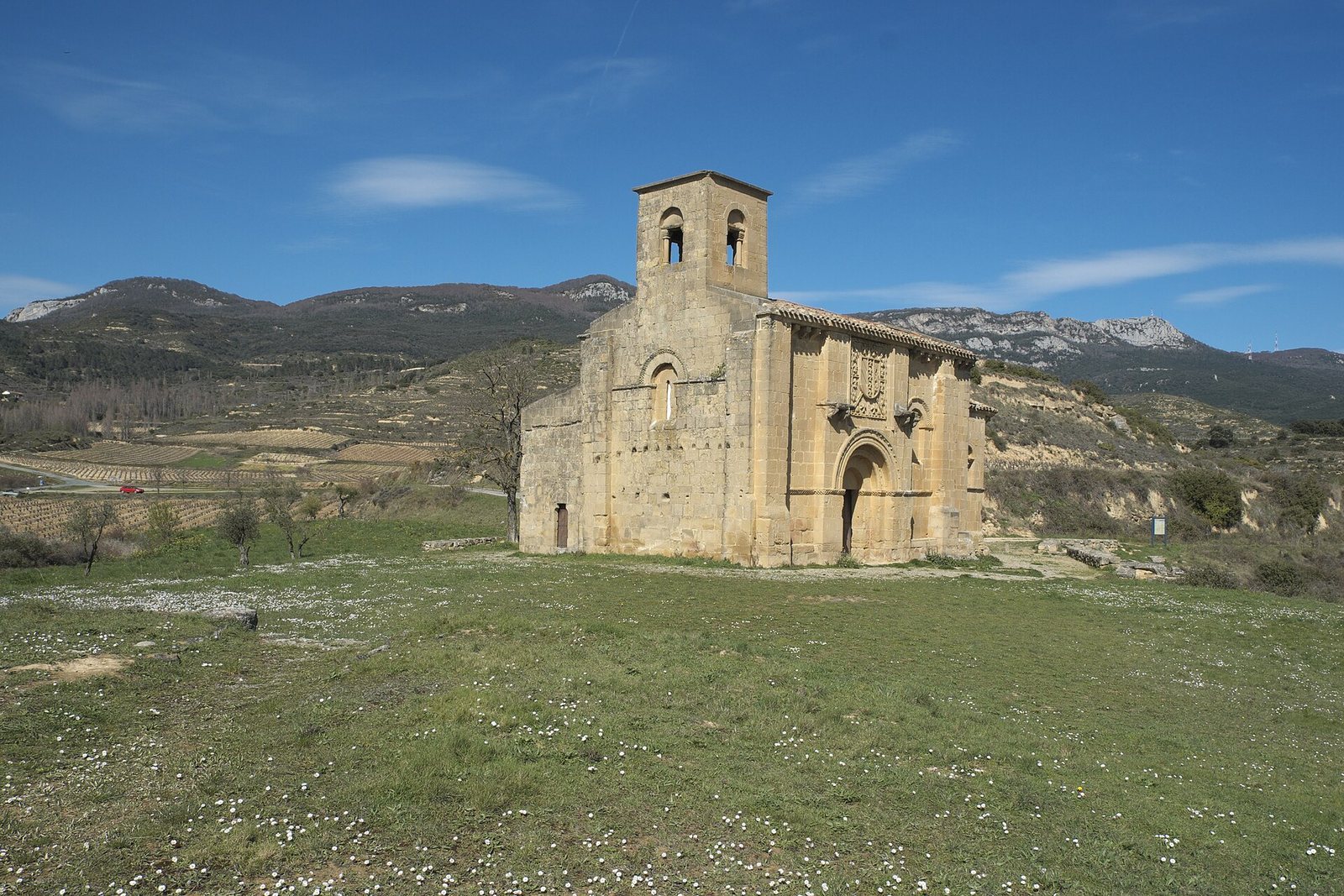
The Hermitage of Santa María de La Piscina is a twelfth-century Romanesque church near Peciña, in San Vicente de la Sonsierra, Spain. Romanesque architecture is characterized by rounded arches and barrel vaults. The hermitage was built to fulfill the wishes of Ramiro Sánchez de Navarra and became a place of devotion linked to a relic of the True Cross, the cross Christians believe was used to crucify Jesus, and an image of the Virgin Mary.
Tradition connects Ramiro with the First Crusade, a campaign by western European Christian forces that culminated in Jerusalem’s capture in 1099. During the siege, he was said to have fought near the Pool of Bethesda, a biblical pool associated with healing. On his return, he reportedly brought home a fragment of the True Cross and an image of the Virgin believed to have been carved by Saint Luke. Ramiro organized a chivalric association called La Divisa and later retired to the monastery of San Pedro de Cardeña.
In a will made at Cardeña on 13 November 1110, Ramiro requested a hermitage where the Virgin and the Holy Land relic could be venerated, alongside an insignia of Navarre’s kings. His son Sancho Ramírez and Pedro Virila, abbot of Cardeña, arranged for the church to be built on land Sancho had inherited with the lordship of Peñacerrada and Montoria. The building was complete by 1136.
Parish and settlement
Sancho de Funes, bishop of Calahorra, consecrated the hermitage on 1 August 1137. Sancho Ramírez endowed it with houses and land in Peñacerrada and Montoria to support its upkeep, made it a parish with a baptismal font, and placed local inhabitants under its jurisdiction. The arrangement gave La Divisa authority over the parishioners and required them to pay tithes to the new parish of San Martín. Disputes followed, and the local people eventually became parishioners of Peñacerrada. The name La Piscina recalls the Pool of Bethesda in Jerusalem.
A settlement around the church was occupied from the tenth through the fourteenth century. It is thought to have been abandoned during the First Castilian Civil War, a fourteenth-century dynastic conflict, when its inhabitants moved to the area of present-day Peciña. The name Peciña is traditionally said to derive from Piscina.
Later history and continuing use
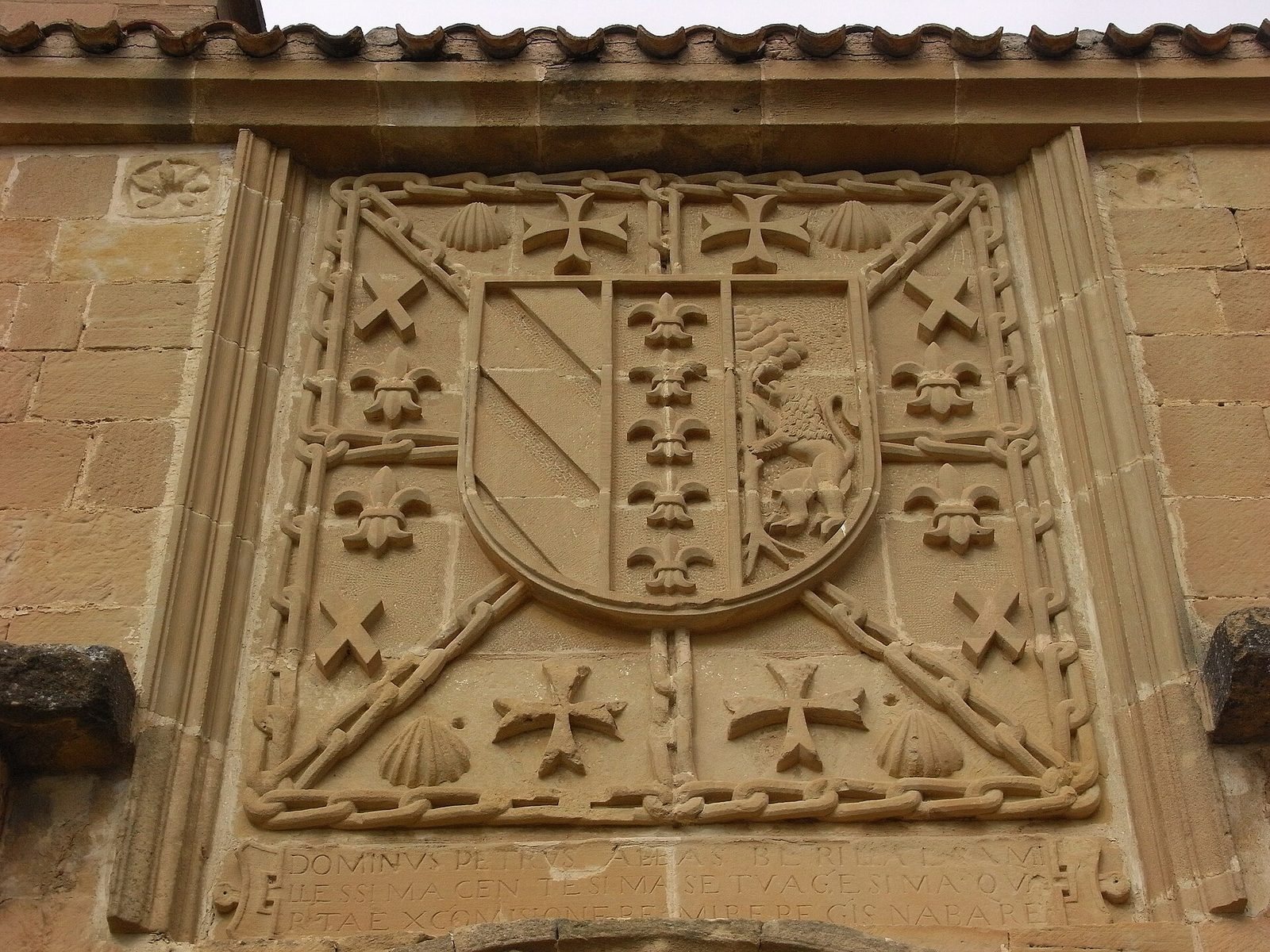
A large stone coat of arms of La Divisa was placed above the south doorway around 1530. The hermitage was declared a Spanish Asset of Cultural Interest in the monument category in 1931. By 1974 it had fallen into ruin, and restoration followed. In 1975, the bishop of Calahorra, La Calzada and Logroño re-established La Divisa as a confraternity, a religious association organized around shared devotion to Our Lady of the Pool of Bethesda.
Excavations around the church between 1976 and 1978 revealed the cemetery and settlement. Ramiro’s noble descendants continue to maintain and use the hermitage, and some bear the surname Ramírez de la Piscina. Each 15 August, on the Christian feast of the Assumption of Mary, which commemorates the belief that Mary was taken bodily into heaven, members of La Divisa and the confraternity meet at the site and attend Mass.
Remains
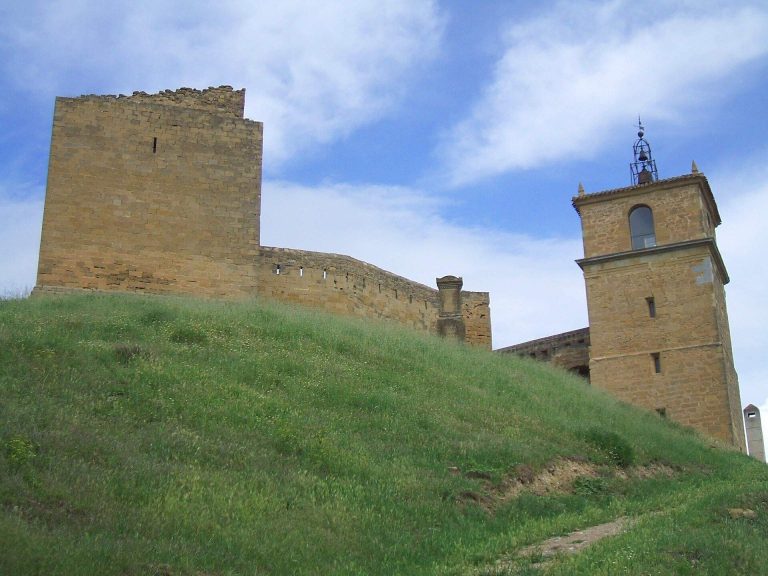
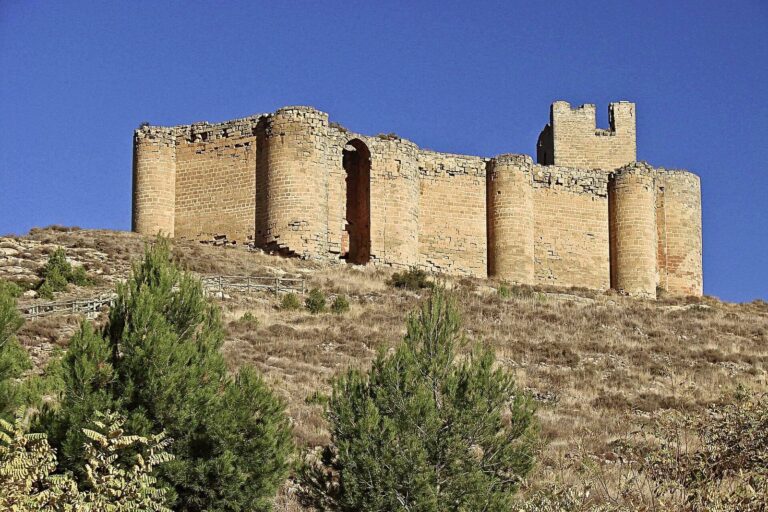
The hermitage stands in an isolated position on a saddle between two hills, on the southern slope of the Sierra de Cantabria and above the Ebro valley. Its carefully dressed stone blocks form a church whose nave is higher and wider than the sanctuary end. The twelfth-century building has no major later additions.
Church architecture
Nave and sanctuary
The church has a single nave divided into four equal bays and a rectangular presbytery, the area around the main altar. Both are covered by barrel vaults, curved ceilings built from stone. Three rounded cross-arches rest on columns whose carved capitals include human figures and mythical creatures. The semicircular apse, the projecting end of the church, has a half-dome ceiling.
Exterior walls and apse
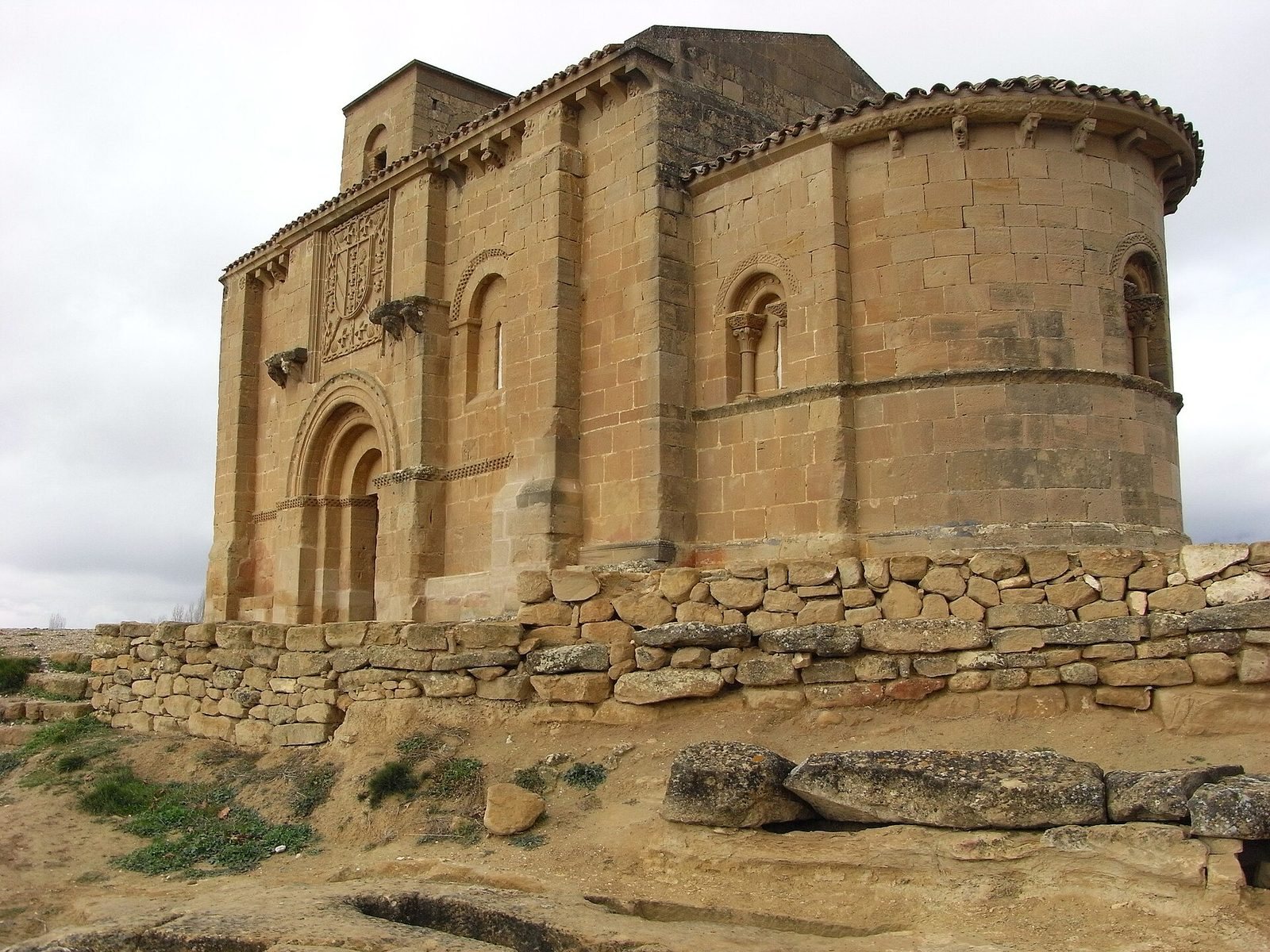
The apse exterior is plain apart from a window framed by two small columns and a projecting horizontal band of stone below it. Checkerboard decoration survives along parts of the eaves, and projecting supports called corbels include carvings of an embracing couple and a monster with its tail curled over its back. Buttresses strengthen the nave walls, which also carry a narrow continuous band of stone. Most of the eaves supports are plain. Two beside the south portal show a human figure with one arm at the waist and a dog tied to a pole; carved floral panels sit between them.
South portal and coat of arms
The principal entrance is centered on the south wall. Three decorative arch bands, or archivolts, rise from prism-shaped jambs around a plain panel within the arch, called a tympanum. Above the portal is La Divisa’s stone coat of arms, framed and crossed by chains. Its carved emblems include Maltese crosses, lilies, small scallop shells and X-shaped crosses. Weathering had severely damaged the shield, so it was replaced in its entirety in 1975.
Inscriptions and west end
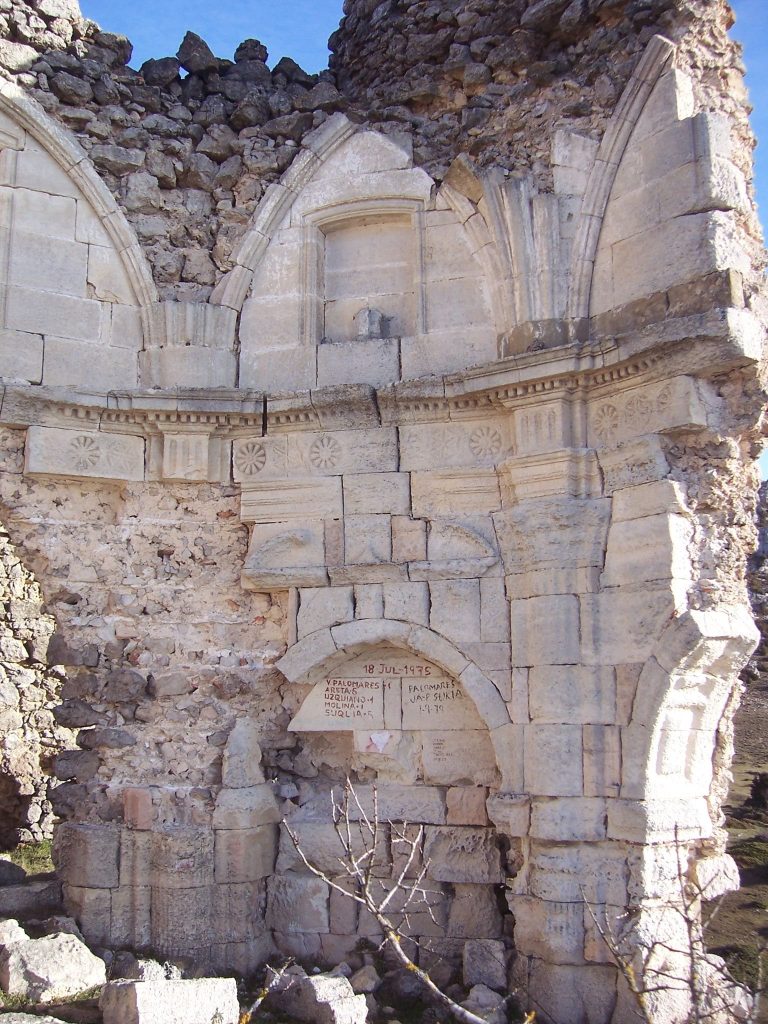
The shield inscription names Abbot Pedro Berilla and attributes the commission to Ramiro, described there as king of Navarre. It gives the date as Era 1174, using the Hispanic Era, a medieval year-counting system distinct from the Gregorian calendar. An earlier inscription, associated with the shield installed around 1530, named Abbot Pedro Virila and gave Era 1148; it also described Ramiro as being of El Cid’s lineage. El Cid was a medieval Castilian military leader. A partly legible inscription on the arch of a north-facing doorway was copied in the early nineteenth century. It names Pedro Berilla as builder and also gives Era 1174. At the west end, a plain window lies beneath a square bell tower. A meeting room is accessible from inside the church and through a west doorway, and narrow slit windows light it.
Cemetery
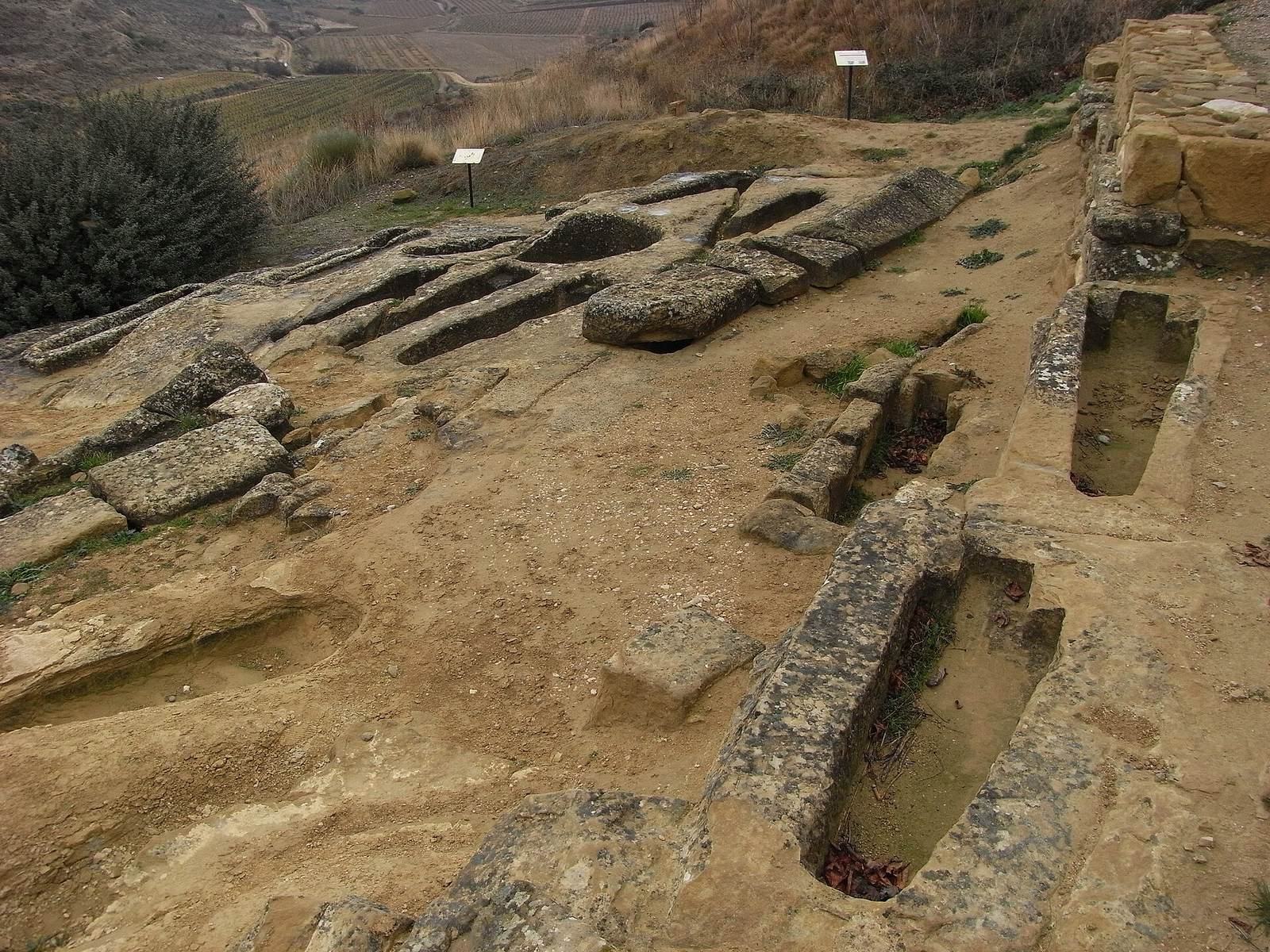
The cemetery lies east of the hermitage on a gentle slope toward the valley. Excavations identified 49 graves, as well as four beside the church’s eastern wall near the apse. The earliest, dating to the mid-tenth century, are shaped to suggest the human form and cut into limestone bedrock. Twelfth-century graves are built from stone slabs, while those from the thirteenth and fourteenth centuries are freestanding stone coffins. These burials predate the church and show that people lived in the area before its construction.
Settlement and devotional image
Remains of the settlement occupied between the tenth and fourteenth centuries were found around the hermitage. Inside the church, a replica of the Virgin made by San Vicente de la Sonsierra artisan Javier Pangua was installed and blessed in 2008.