Dolmen d’El Sotillo: A Prehistoric Megalithic Tomb in Álava
Site at a Glance
- Popularity
- Very Low
- Country
- Spain
- Primary era
- Stone Age
- Eras represented
- Stone Age
- Civilizations
- Unclassified
- Site type
- Burial
- Remains
- Tomb
On this page7 sections
History
Dolmen d’El Sotillo is a megalithic tomb in Leza, Álava, Spain, built during the late Neolithic or early Chalcolithic, also known as the Copper Age. It belongs to the Rioja Alavesa megalithic complex, in a comarca, or district, in southern Álava. Its construction date is uncertain, but the monument is tentatively estimated to be about 4,800 years old.
Construction and chronology
Conservation treatment with an antifungal product prevents precise dating of the tomb. The tentative estimate comes from comparison with the nearby San Martin dolmen, which was radiocarbon-dated to approximately the same age. The oldest bones from El Sotillo are estimated to be 5,110–4,940 years old. Dating of the human remains has also been interpreted to place the people buried there at least 500 years after the monument was built.
Burials and genetic evidence
Thirteen people were buried at El Sotillo: 11 adults, five women and six men, along with one young person and one child. Most of the bones yielded different dates, all assigned to the Bronze Age. The final burial may have taken place around 900 BC, although that estimate is highly uncertain. Long gaps between burials have been attributed to a possible decline in the population of the surrounding area.
Genetic analysis identified one buried individual with the Yamnaya culture, a prehistoric pastoralist culture associated with the Pontic-Caspian steppe. A haplogroup, or branch of a genetic lineage, can help trace ancestry. Mitochondrial DNA, which is generally used to study maternal lineages, placed two individuals in H3 and another in X2b. H3 is common among Basques; the X2 lineage originated in the ancient Near East and later spread widely.
Y-chromosome analysis, which traces paternal lineages, assigned one individual to haplogroup I and two others to I2a2a. I2a2a is especially common in Scandinavia and Croatia and has been associated with the spread of Gravettian culture, an Upper Paleolithic culture of Europe. Analysis also indicated that one person died of bubonic plague, caused by the flea-adapted bacterium Yersinia pestis.
Regional protection
A decree issued on 26 July 2011 classified the lowland dolmens of Álava as cultural assets in the monument-ensemble category, including El Sotillo. These monuments are spread across the Álava plain, mainly in Rioja Alavesa, with others in Lantarón and Kuartango. Their structure, chronology, and materials may be compared with megalithic monuments on the Iberian Plateau.
Remains
Chamber, corridor, and mound
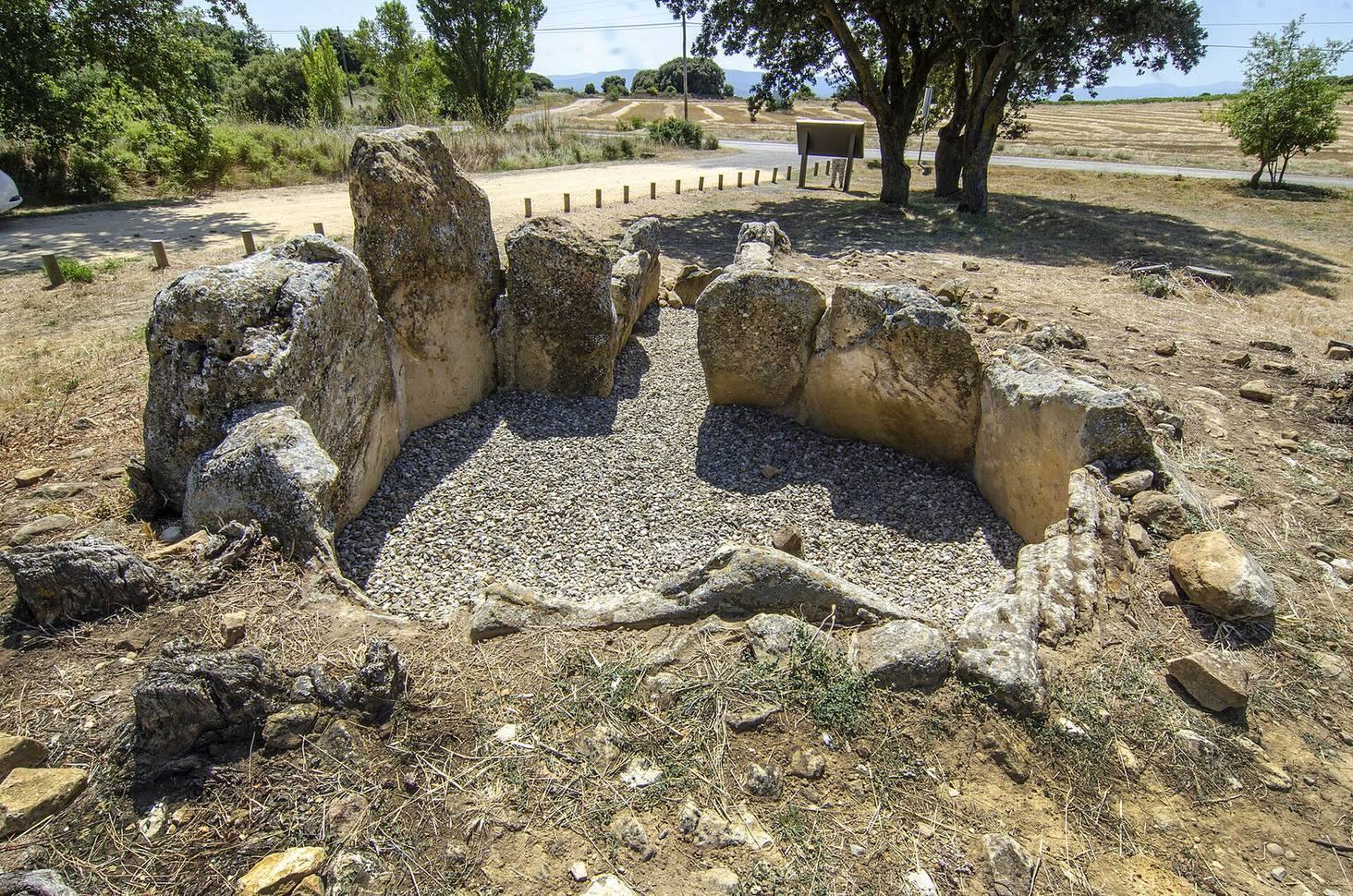
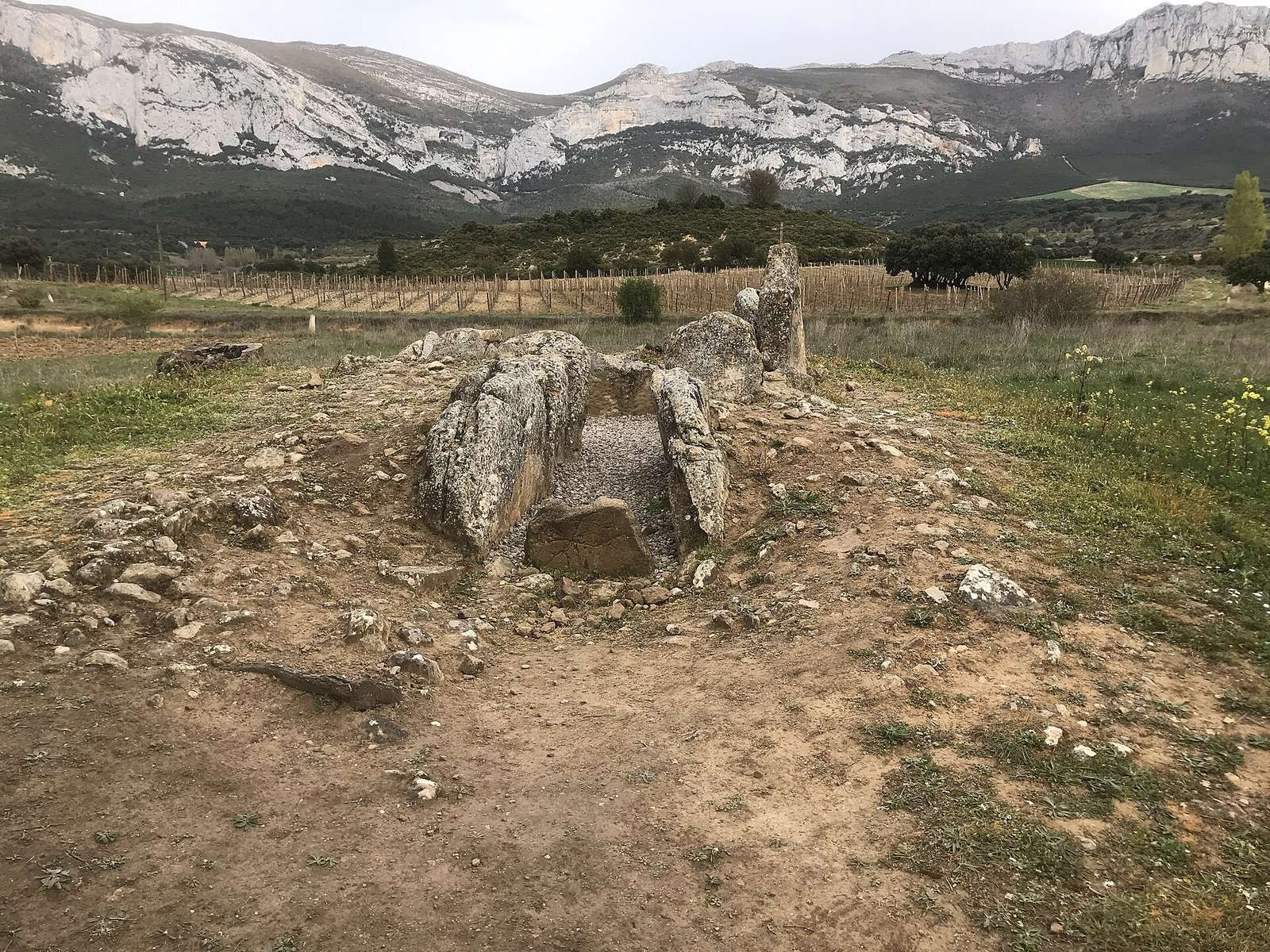
El Sotillo is a corridor-type tomb built from upright stone slabs and enclosed by an earthen mound containing small stones. Its oval burial chamber measures 3.30 by 2.90 metres and is formed by nine slabs, one of which rises 2.29 metres. A corridor, 0.60 metres wide and 1.30 metres high, connects with the chamber and is bounded by five slabs. The surrounding mound is about 18 metres in diameter; an access track cuts across part of its top.
Objects and human remains
Finds from the tomb include several tools, among them six arrowheads. An upper jaw was recovered for each of the people buried there.