Sacromonte Abbey: A Religious and Cultural Complex in Granada
Site at a Glance
- Popularity
- High
- Country
- Spain
- Primary era
- Early Modern
- Eras represented
- Early Modern, Modern
- Civilizations
- Spanish
- Site type
- Religious
- Remains
- Monastery
On this page22 sections
History
The discoveries and the pilgrimage center
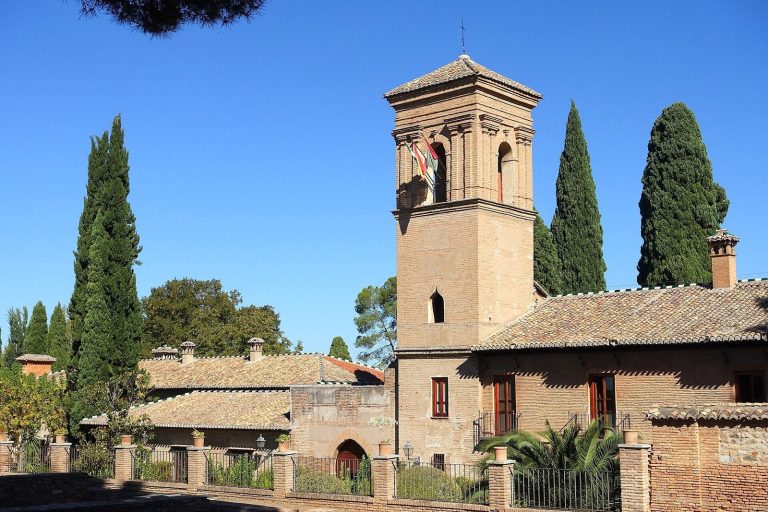
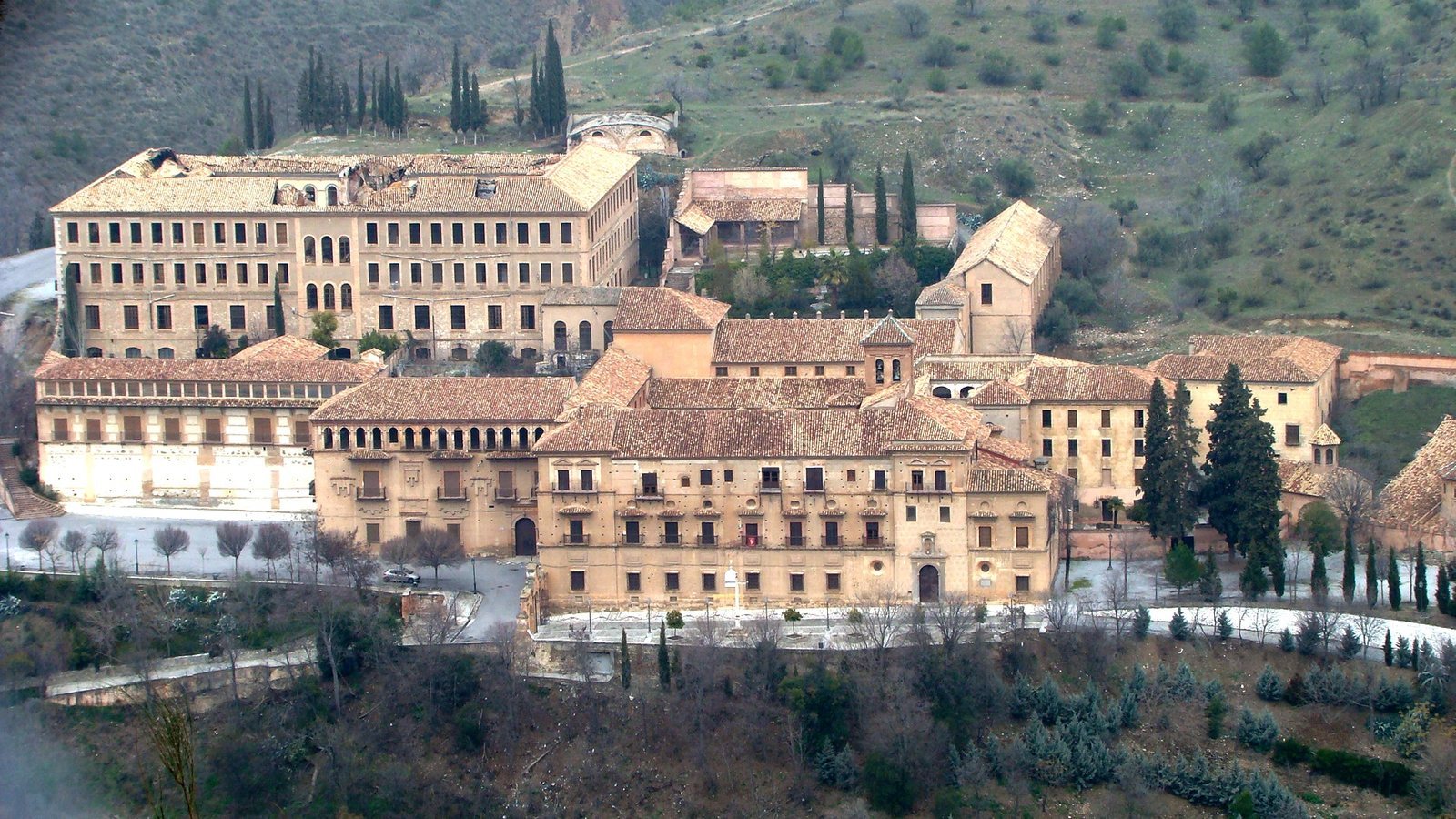
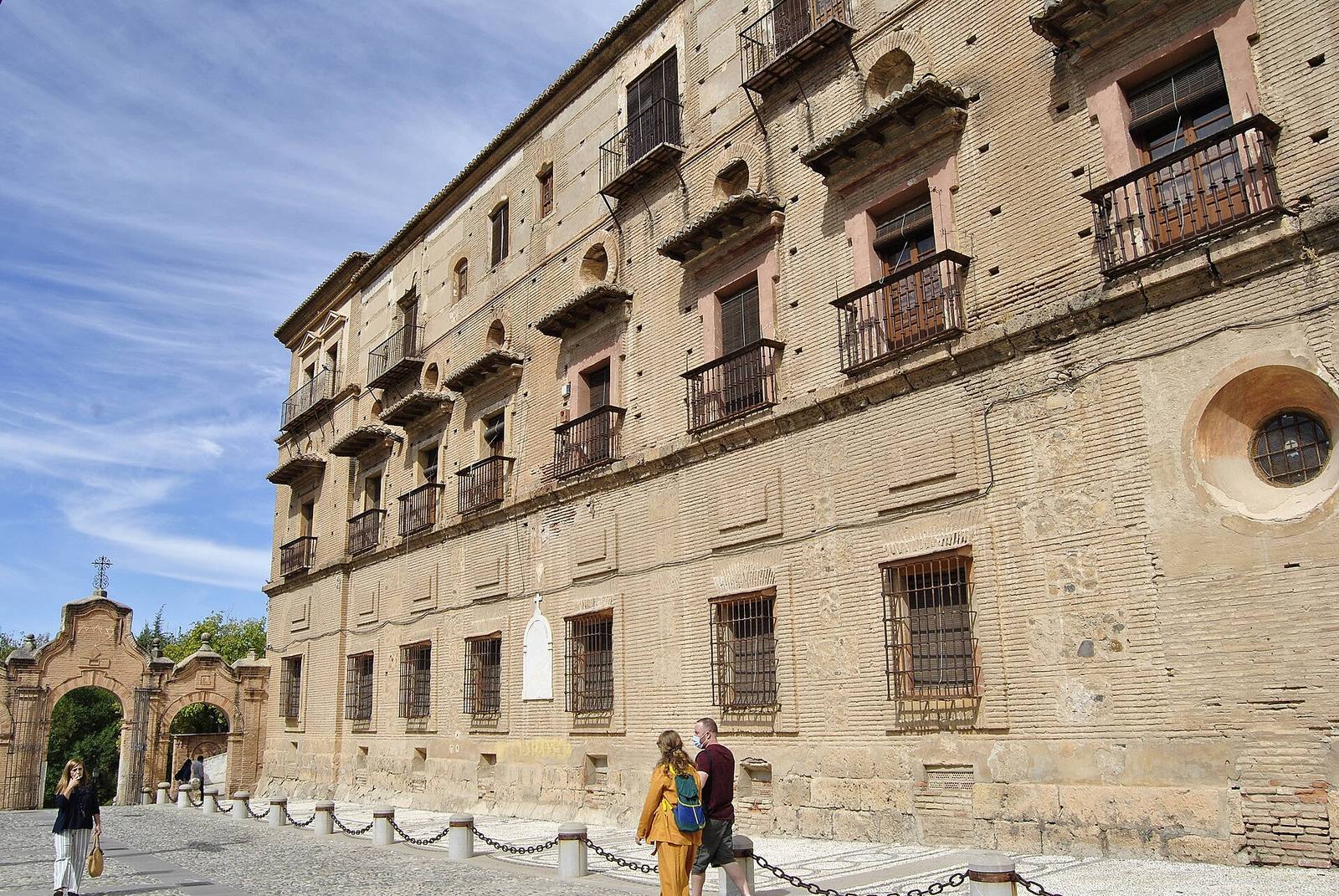
Sacromonte Abbey is a religious and cultural complex in northeastern Granada, Spain. Its principal building was constructed between 1600 and 1610. Archbishop Pedro de Castro Cabeza de Vaca y Quiñones commissioned the project from Pedro Sánchez, a Jesuit brother, a member of a Catholic religious order, and an architect. The design took El Escorial, a royal monastery and palace near Madrid, as a model, and other architects are also credited with the work.
The abbey’s beginnings followed discoveries traditionally dated to 1595 on Mount Valparaíso, the former name of Sacromonte. The reported finds included relics attributed to Saint Cecilio, traditionally regarded as Granada’s first bishop and a martyr, and other followers of James the Greater, one of the Twelve Apostles. Arabic-inscribed lead tablets described the martyrdom of Cecilio and his companions. The discoveries were also said to include a furnace and human ashes, while the tablets were found in Roman-period furnaces. These claims helped turn the site into a pilgrimage center.
The authenticity of the finds became contested. A local council accepted the relics as genuine, while some interpreted the tablets as a Morisco fabrication intended to prevent the expulsion of the Moriscos, Muslims and descendants of Muslims compelled to convert to Christianity in Spain. Their expulsion took place in 1609. Historian Luis Tribaldos de Toledo judged the tablets false, and a papal brief reached the same conclusion in 1682.
City guilds and artisans erected about 1,200 crosses around the site. Franciscans received many of them and, in 1633, established a devotional route between Granada and Sacromonte marking the Stations of the Cross. It ended at a small chapel dedicated to the Holy Sepulchre and helped draw pilgrims to the area.
Foundation and institutional life
The ambitious project remained incomplete. After Pedro de Castro died, funding was reduced. In 1610 he founded a college at the site, one of Europe’s earliest private colleges, where students studied law, theology, and philosophy. The institution functioned in a way comparable to a private university. The complex also served as a seminary and provided accommodation for students. From the early twentieth century, the college operated as a secondary school until it closed in 1975.
The church was consecrated in the seventeenth century and dedicated to the Virgin of the Assumption. The abbey’s later decline accompanied the disappearance of the historic Sacromonte settlement; a Franciscan cross is associated with its memory.
Continuing religious use
The abbey remains a residence for clergy, and its church serves as the neighborhood parish. The complex also houses an ecclesiastical museum and belongs to the Archdiocese of Granada. Sacromonte continues to host an annual pilgrimage in honor of Saint Cecilio on the first Sunday of February. The abbey is also associated with the confraternity of the Most Holy Christ of Consolation and Most Holy Mary of Sacromonte, known as Los Gitanos, meaning “the Roma.” It is protected as an Asset of Cultural Interest, the highest level of protection under Spanish and Andalusian heritage law.
Remains
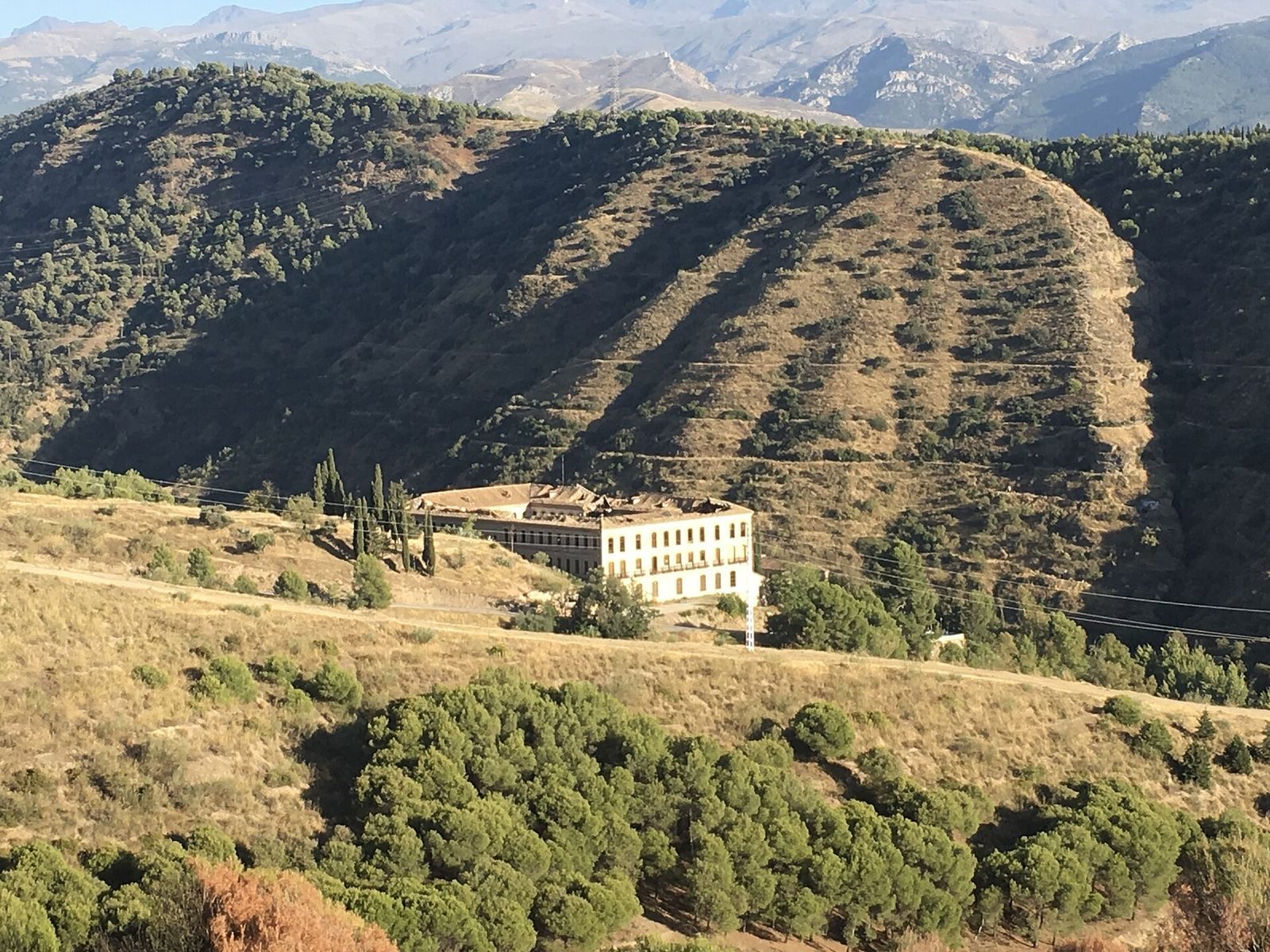
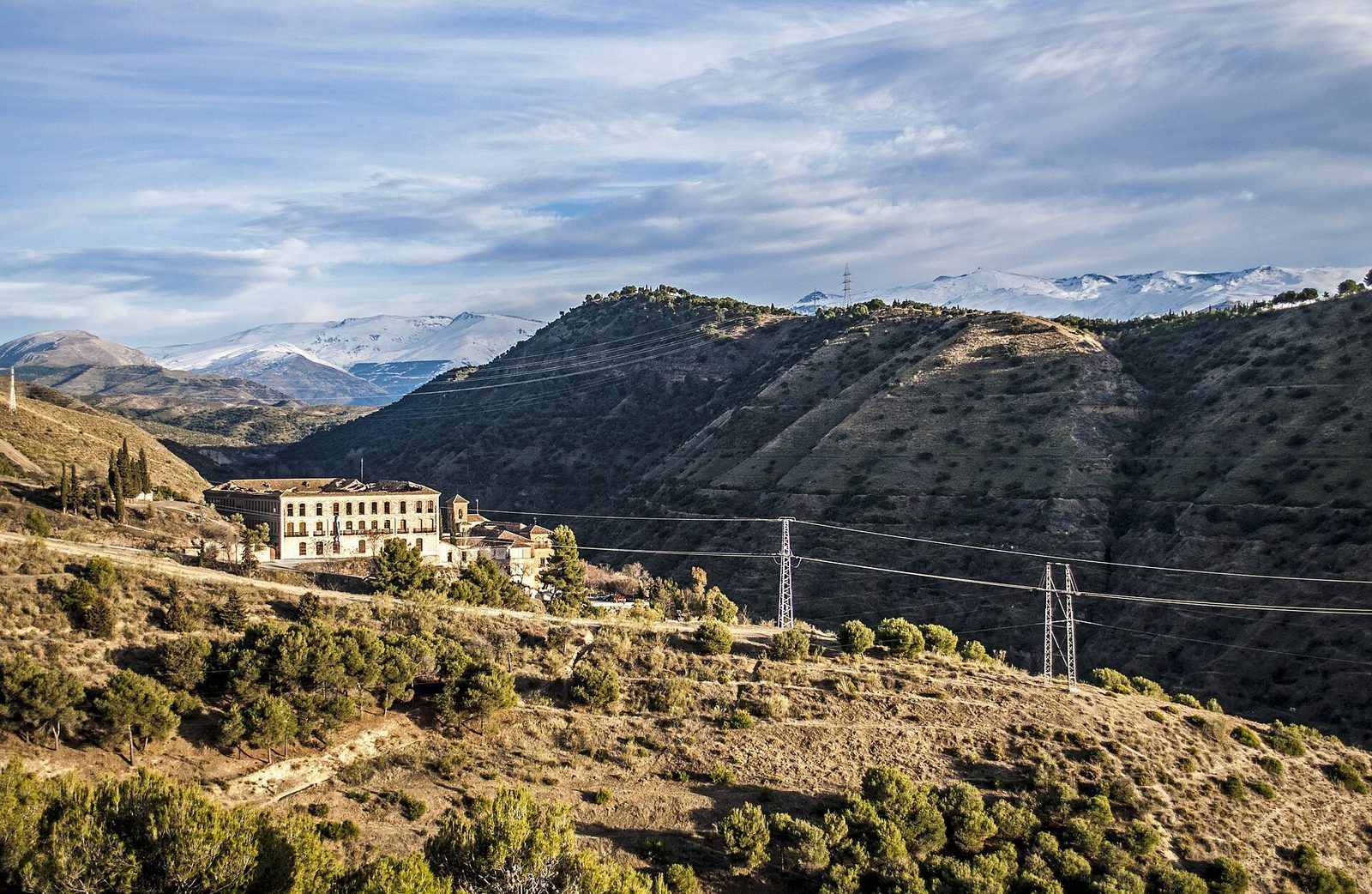
The 19,175-square-metre complex comprises the abbey, the Holy Caves, the Old College of Saint Dionysius the Areopagite, dating to the seventeenth century, and the New College, dating to the nineteenth. Its surviving fabric includes the church and courtyard, while the caves and their chapels form another distinct part of the site.
The Holy Caves and their chapels
Enclosure and entrance
Work on the caves began between 1595 and 1597, when they were uncovered and places believed to be martyrdom sites were reinforced. A brick wall with curved battlements, raised sections along its top, encloses the caves. Its decoration includes stars, circles, flowers, the founder’s coat of arms, and the date 1598. Four of the roughly 1,200 crosses once erected around the site survive.
An altar stands at the cave entrance, with two wax figures brought from Rome in 1843 and relics attributed to martyrs Saint Victor and Saint Leontius. A replica of the Christ of the Caves, also called Christ of Consolation, was made by Miguel Zúñiga. A stairway beneath the altar descends into the caves, which contain several chapels, including the Chapel of Our Lady of Sorrows.
Chapel of Stone
The Chapel of Stone contains a large stone associated with a local belief that a woman who kissed it would find a husband within a year.
Chapel of Saint James
The Chapel of Saint James has a late-seventeenth-century altar screen. An image of the Immaculate Conception by Duque Cornejo occupies its center, with figures of Saint Lucy and Saint Teresa on either side. Tradition places the first Mass celebrated by James in Spain in this chapel and says the Virgin appeared to him there, rather than at Zaragoza.
Martyrdom chapel and cemetery
A small chapel thought to occupy the site of the saints’ martyrdom furnace is protected by an iron grille. It contains a small bust of Saint Cecilio and a cross traditionally said to have been carried by Saint John of God while he begged for alms in Granada. The canons’ cemetery, belonging to clergy of a church chapter, lies beside the caves.
Courtyard
The courtyard has galleries on all four sides, where Tuscan columns, a plain classical column type, support semicircular arches. Moulded trim and brackets mark the tops of the arches. Circular panels between them bear the Castro coat of arms and Solomon’s stars. Rectangular openings on the upper level sit between shallow wall supports. The lower level is built of ashlar, finely cut stone blocks, while the upper level is brick. Pebbles pave the courtyard floor, and a large fountain stands at its center.
Church
Plan and ceilings
The church originally had one nave, or main church hall, ending at the transept, the crosswise section that intersects it. From the eighteenth century, it was enlarged on a Latin-cross plan to include three naves, a main chapel, a transept, and a choir. The central nave has barrel vaults, semicylindrical ceilings, while intersecting vaults cover the side naves.
Choir and altar structures
Francisco Díaz del Rivero created the choir between 1615 and 1617. The main chapel’s altar screen is attributed to Blas Moreno. Each side altar in the transept has a principal level and an upper tier. The central altar structure contains the tabernacle, the receptacle in which the Eucharist is reserved. Sculptures of the martyr saints stand on either side, with their ashes kept beneath them. A large relief medallion of the Assumption interrupts the cornice, which is topped by a relief showing the Trinity and the Apostles.
Christ of Consolation
The image of Christ of Consolation, also known as Christ of the Gypsies, was made by José Risueño in 1695.
Founder’s chapel
To the right of the main altar is a small chapel for the founder. Its mausoleum depicts Pedro de Castro kneeling in prayer.
Sacristy
The rectangular sacristy lies to the left of the main altar. It contains a table with marble inlay for chalices, drawer units, religious paintings, and oval mirrors.
Colleges, library, and museum
Library
The abbey library preserves the plans for the building.
Museum rooms and collections
The museum occupies a wing beside the courtyard, in an area formerly used for monastic enclosure, and is arranged in four rooms. Its holdings include books printed before 1501, bound-page manuscripts, a codex associated with Saint John of the Cross, an illustrated collection of choir books, an edition of Hartmann Schedel’s Nuremberg Chronicle, and a world map by Ptolemy. Other items include Arabic manuscripts on religion, law, grammar, history, and mathematics; Averroes’s Generalities on Medicine; coins; a letter from Pizarro to Emperor Charles V; devotional objects; tapestries; and ecclesiastical vestments. The museum also preserves 25 Arabic-inscribed lead books and plates used to produce engravings, including Ambrosio de Vico’s Platform of Granada.
Paintings
The paintings include Gérard David’s Virgin of the Rose and works by José Risueño: Holy Family, Coronation of the Virgin by the Holy Trinity, Virgin of the Caves, Saint Bruno, Nativity, Three Archangels, and Guardian Angel. The collection also holds Juan de Sevilla’s Saint Joseph and the Child; a portrait of Francisco de Saavedra by Goya; a portrait of Pope Leo XIII by Manuel Gómez-Moreno González; and an Immaculate Conception attributed to Pedro de Raxis.
Sculptures
The sculpture collection includes an ivory Calvary from the school of Alonso Cano, an Immaculate Conception by Pedro de Mena, a Virgin and Child by Duque Cornejo, and José Risueño’s The Good Shepherd.