Villa Cardillio: A Roman Agricultural Villa in Portugal
Site at a Glance
- Popularity
- Low
- Country
- Portugal
- Primary era
- Classical
- Eras represented
- Classical
- Civilizations
- Roman
- Site type
- Domestic
- Remains
- Villa
On this page9 sections
History
Villa Cardillio is a Roman rural agricultural villa in the parish of Santa Maria, in the municipality of Torres Novas, Portugal. Its first construction dates to the first century, and a later phase around the fourth century is associated with Cardílio and Avita, identified as its owners. Its association with named owners makes it distinctive among Roman villas.
Roman setting
The villa existed during the same period as the Roman settlements of Santa Vitória do Ameixial and Torre de Palma. Its mosaics have also been compared with those at Milreu and Conímbriga.
Quarrying, excavation, and protection
In 1930, a landowner from Casais da Caveira used the site as a quarry and removed 360 cartloads of stone. In 1932, Jalhay and Afonso do Paço examined and catalogued the built remains.
Excavation began in 1962, followed by campaigns in 1963–64 directed by Afonso do Paço. In 1980, Jorge Alarcão led a further investigation supervised by Monteiro and Quinteira of the University of Coimbra’s Faculty of Letters. The work used excavation by soil layers and a grid-based plan.
Villa Cardillio has been classified as a National Monument since 1967. On 1 June 1992, authority over the site passed to the Portuguese Institute for Architectural Heritage, a predecessor of IGESPAR.
Remains
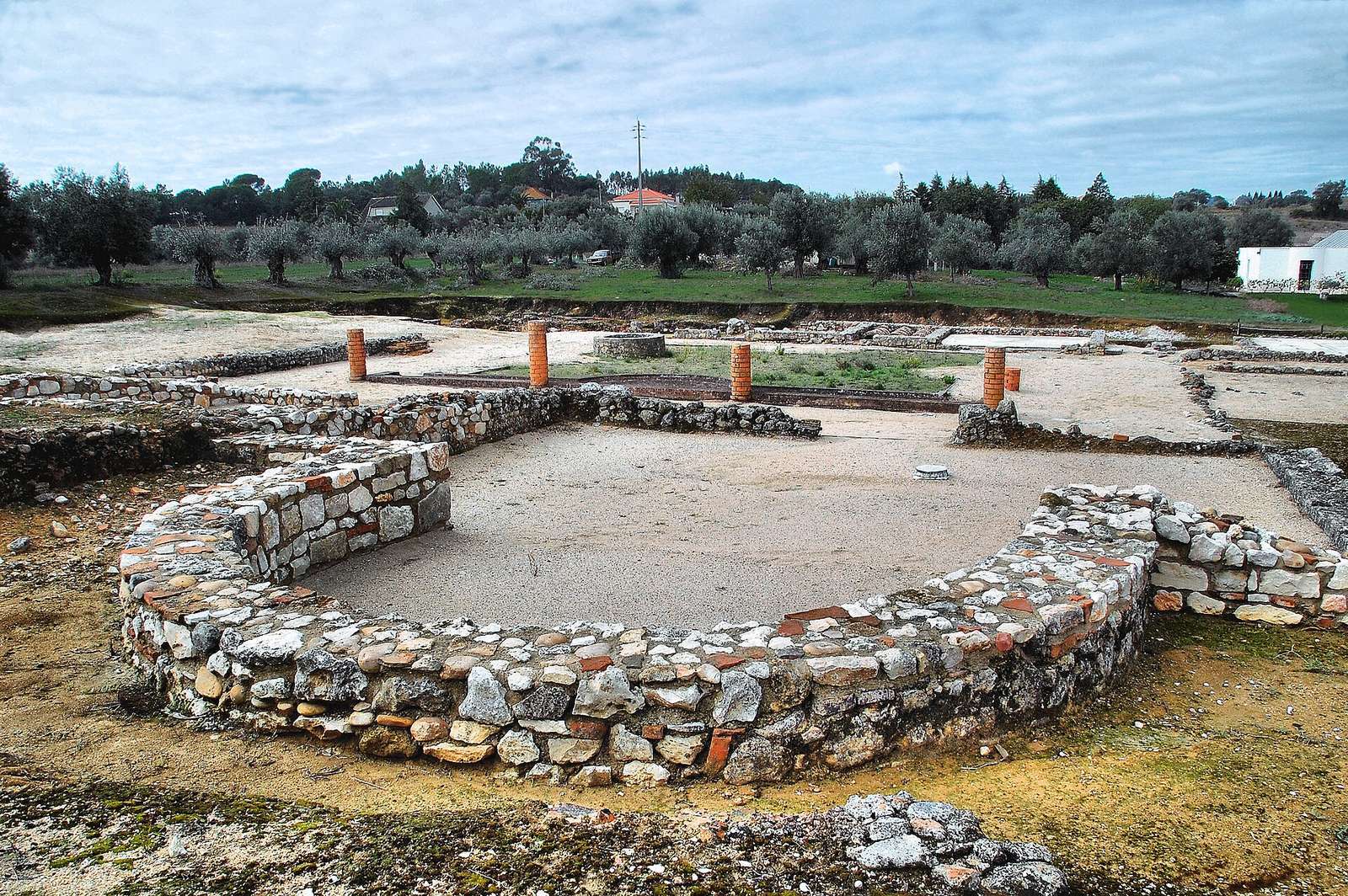
The villa occupied a cultivated plain near the Almonda River, about 2–3 km from Torres Novas. Its recorded footprint is about 65 m long and 49.85 m wide, at an elevation of 25 m. The layout centered on a peristyle, a courtyard surrounded by columns.
Peristyle and water features
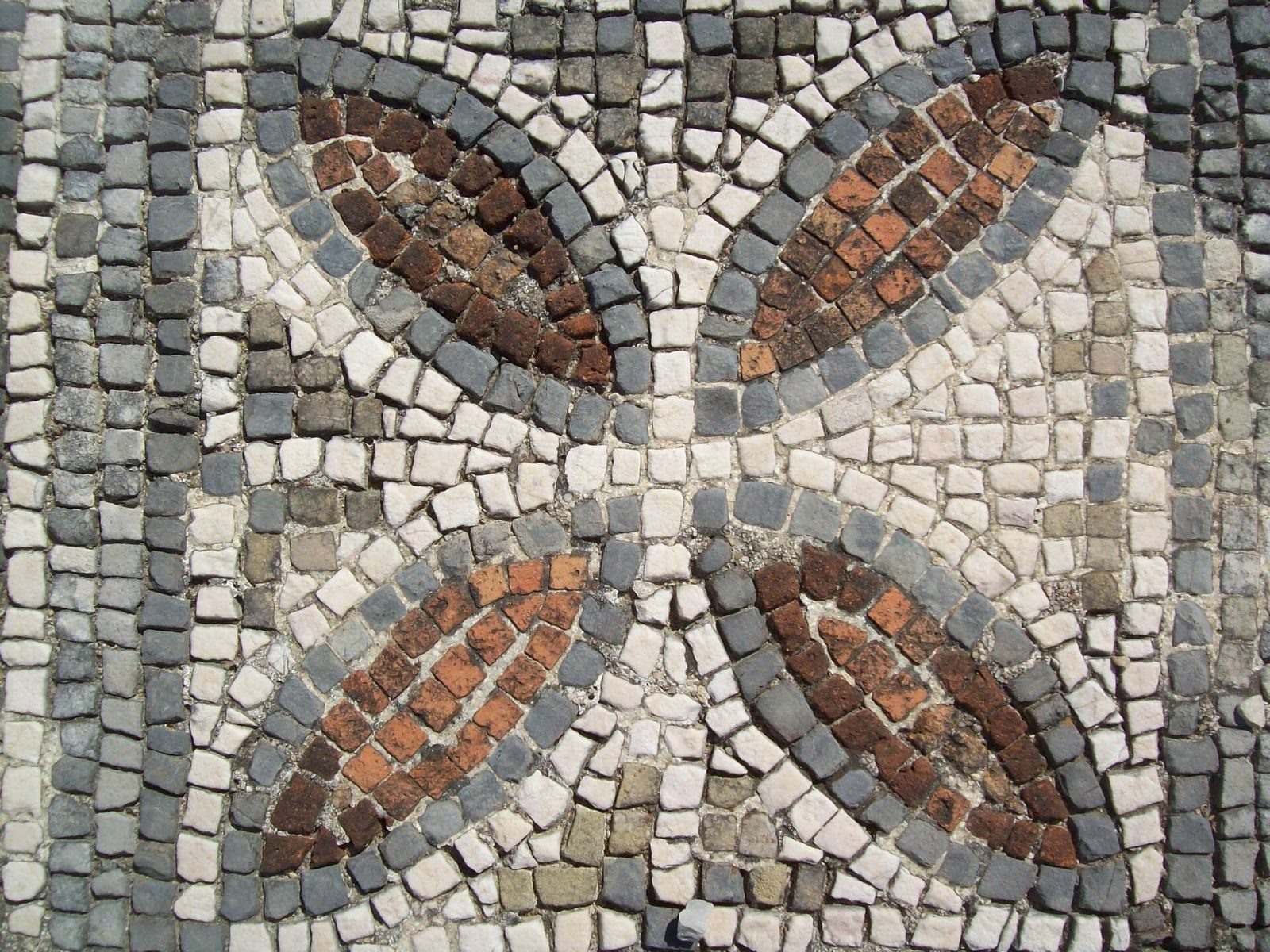
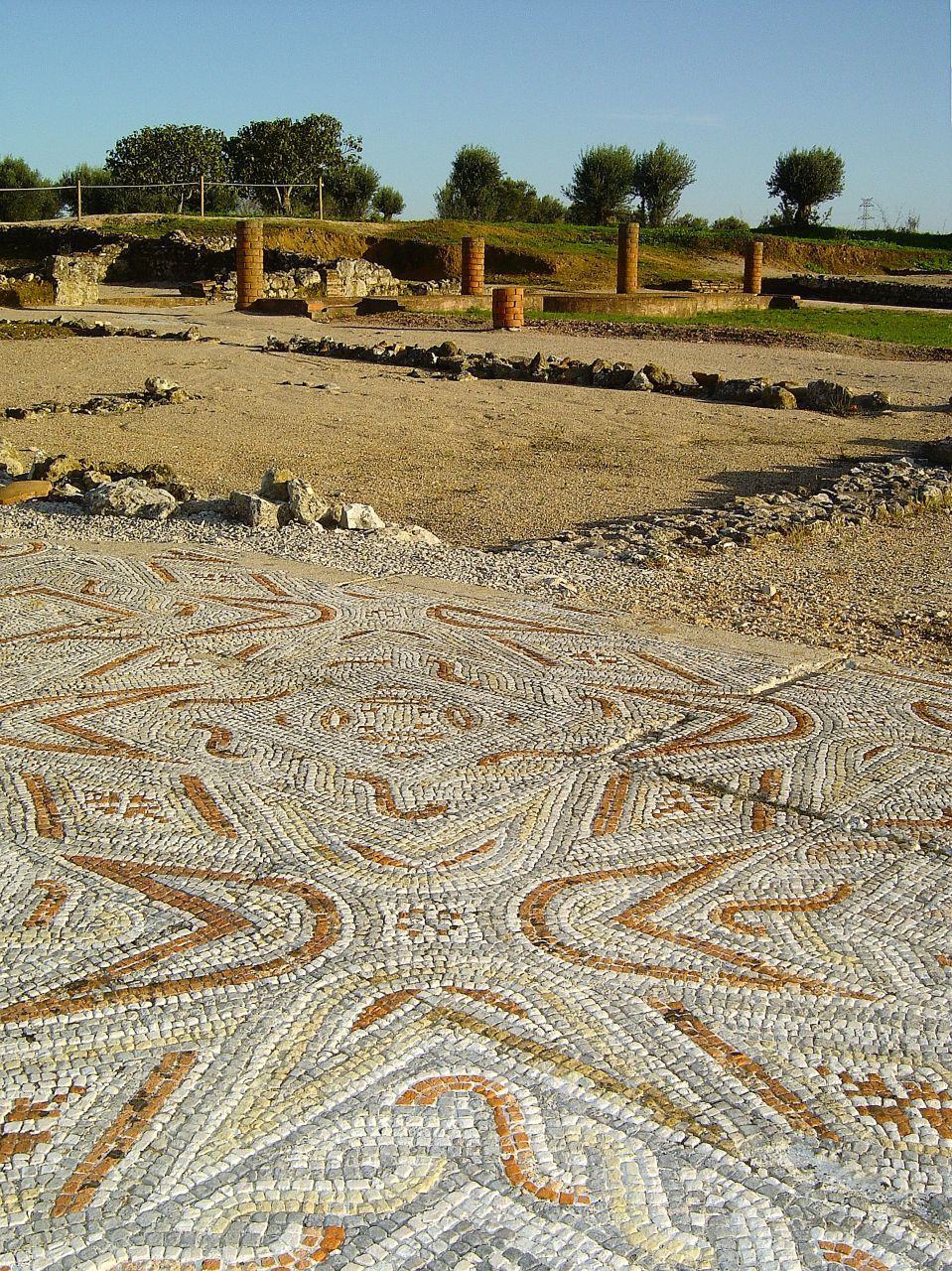
The peristyle was about 20 m long, with twelve columns enclosing a square courtyard approximately 11 m across. A 3.5 m section around the court contained six geometric mosaics made from small pieces. A channel made with crushed ceramic material, about half a metre wide, lay between the panels and the courtyard. A water-collecting channel known as the curigum extended through this area. A pool 7 m deep lay at the southern end of the property.
Entrance mosaics
West of the peristyle, the main entrance had a mosaic floor with geometric and figurative panels. One bears the inscription VIVENTES / CARDILIUM / ETAVITAM / FELIXTURRE. Suggested readings include that Felix of Turre made the mosaics in honor of Cardilio and Avita, or that Felix depicted the couple while they were alive at a place called Turris. Other interpretations connect Torre’s happiness with their lifetime or describe the place as a happy tower.
Another panel shows a Roman couple amid vessels, a sickle, birds, pairs of opposing posts, and flowers in the corners. The sickle and vessels may refer to the cultivation of wheat and grapes.
Eastern recessed space
East of the peristyle was an exedra, a recessed architectural space, measuring about 10 by 6.5 m and paved with a durable surface made from crushed ceramic material. An apse, a curved-ended recess, stood at the rear. A portico in front had four columns across its front and two along each side.
Baths and earlier structures
West of the peristyle are remains of cold and hot bathing rooms, an associated hypocaust, an underfloor heating system, and a pool. These thermal areas overlay older deposits in which two tanks survive. North of the entrance, another tank is surrounded by columns on three sides and may have served as the atrium, a principal hall or courtyard, of an earlier building. The earliest phase is represented by the primitive atrium and bath remains; the baths were later adapted into successive structures.
Excavated finds
Excavations recovered hundreds of coins broadly dated to the second through fourth centuries, along with ceramics that included terra sigillata, fine Roman pottery with a red coating, vessels, and amphorae, large storage and transport jars. Other finds include a clay statue, a Carrara-marble statue of Eros, the Greek god of love and desire, and bronze objects such as a bird, a bell, and a fibula, a brooch-like clothing fastener. Iron objects, Assyrian and Egyptian glass, ivory, bone, colored stucco, rings, and stones were also recovered. The finds are held at the Carlos Reis Municipal Museum.