Haji Bektash Veli Complex: A Bektashi Lodge and Shrine in Turkey
Site at a Glance
- Popularity
- High
- Country
- Turkey
- Primary era
- Medieval
- Eras represented
- Medieval, Modern
- Civilizations
- Ottoman, Seljuk
- Site type
- Religious
- Remains
- Sufi Lodge
On this page12 sections
History
The Haji Bektash Veli complex in Hacıbektaş, central Anatolia, Turkey, was established in the thirteenth century by Haji Bektash Veli as a teqe, or Sufi lodge, during the rule of the Anatolian Seljuks, a medieval Turkic dynasty. Haji Bektash Veli was an Alevi Turkmen sheikh and Sufi scholar whose leadership extended to 90,000 Alevi Turkmen pirs, or spiritual guides, from Khorasan. After his death, a mausoleum was established at the lodge.
The lodge and its religious role
Additions and repairs over later centuries shaped the complex into its present form. Before the secularizing reforms of 1925, it housed Haji Bektash Veli’s pir evi, or house of the spiritual guide, and served as the international headquarters of the Bektashi Order, a Sufi religious order.
In 1910, Fejzi Dede appointed Ali Kamber Prishta, Ahmet Turani, and Sulejman of Gjirokastra as gjysh, the Albanian title corresponding to baba in Bektashi usage. Sali Njazi Dede, who later became the order’s third kryegjysh, or chief religious leader, received his education at the complex.
Secularization and later use
In 1925, Mustafa Kemal Atatürk, founder of the Republic of Turkey and leader of its secularizing reforms, banned dervish orders. The complex’s religious use ended, prompting the Bektashi Order to move to Albania. Its administrative headquarters transferred to the Bektashi World Headquarters in Tirana in 1930.
The complex became a museum on 16 August 1964 and was added to UNESCO’s Tentative List for World Heritage consideration in 2012. In July 2015, special permission from Turkey’s Ministry of Culture and Tourism allowed a cem, a communal Alevi religious ceremony, to be held at the lodge. It was the first worship there in 188 years.
Remains
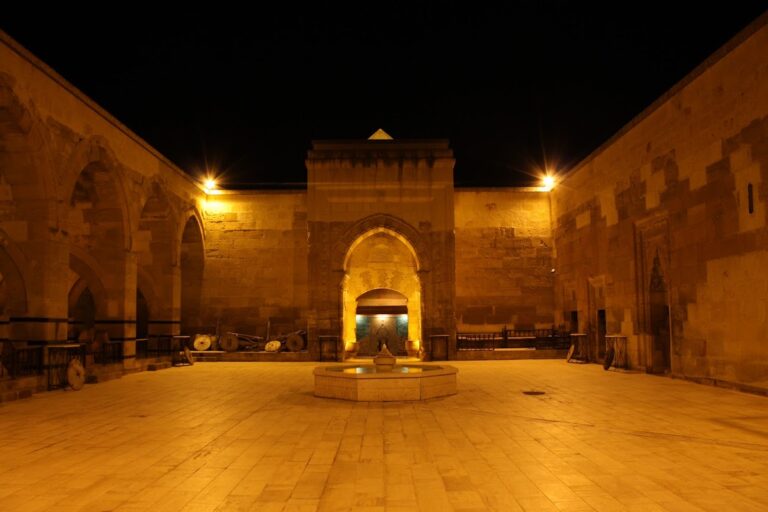
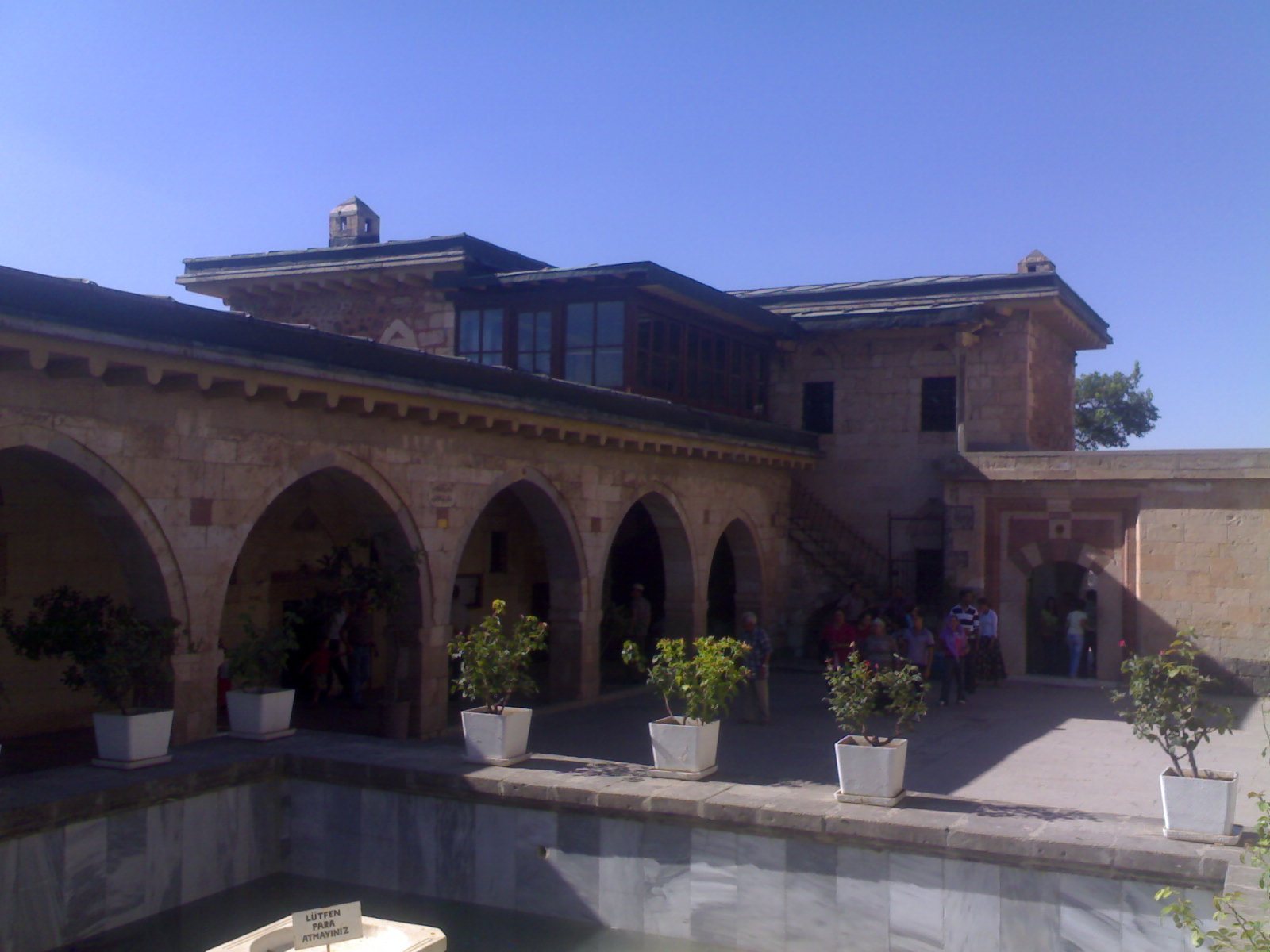
The complex is arranged around three courtyards, the Nadar, Dergah, and Hazret Courtyards, and includes tombs, religious and service buildings, fountains, a pool, a garden, and a cemetery. A cut-stone wall separates the Nadar and Dergah Courtyards, with Üçler Gate set into it.
Courtyards and water features
Nadar Courtyard
The Nadar Courtyard contains the Three Ones Fountain, whose three figures represent Allah, Muhammad, and Ali, who is especially revered in Alevi traditions.
Dergah Courtyard
The Lion Fountain includes a sculpture of a lion believed to symbolize Ali. The courtyard also contains the Meydan Pool. An inscription dates the pool’s construction to 1908 and credits Zehra Hanım, the wife of Halil Pasha, governor of Beirut. A marble Hüseyni crown, ceremonial headgear associated with Bektashi dervishes, sits atop the pool’s pediment.
Hazret Courtyard
The Hazret Courtyard contains Hasbahçe, a garden, and Hazire, a cemetery for dervishes.
Lodge buildings and tombs
Pir Evi and tombs
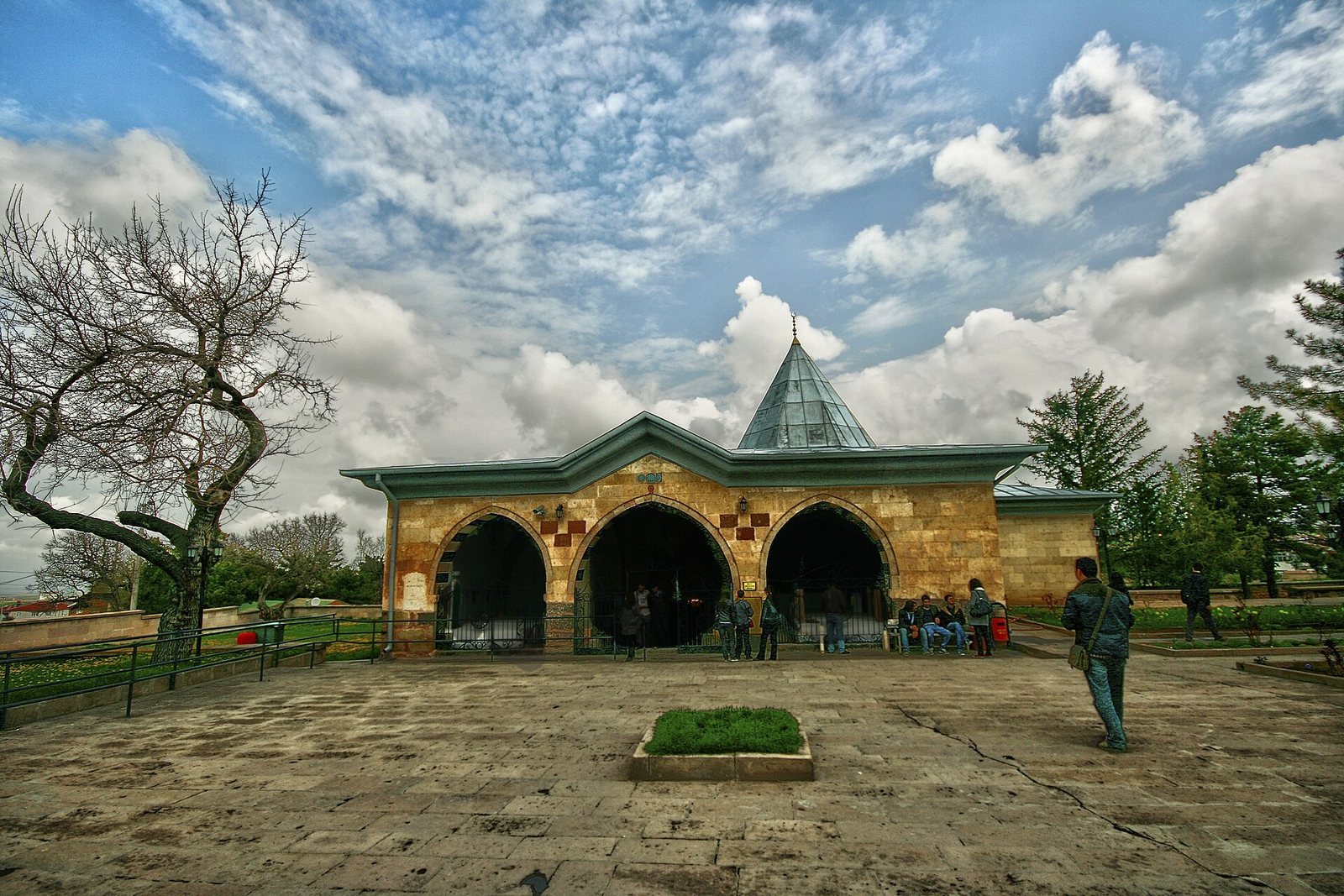
Pir Evi contains the tomb of Haji Bektash Veli. Balım Sultan Tomb holds the remains of Balım Sultan, regarded in the complex’s tradition as the Bektashi Order’s second pir. An old, monumental black mulberry tree stands in front of the tomb. It is associated with a legend and continues to bear fruit.
Communal and service buildings
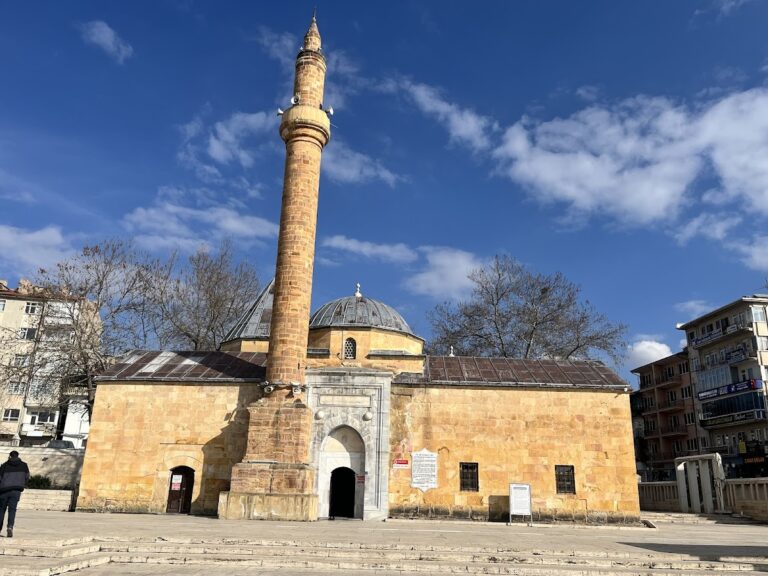
The Meydan Evi was used for Alevi-Bektashi rites. The Aş Evi served for cooking and teaching Bektashi doctrine, while the Mihman Evi accommodated guests and the Kiler Evi stored belongings and provisions. The complex also includes the Tekke Mosque and a bath.
Üçler Gate and courtyard wall
The cut-stone wall between the Nadar and Dergah Courtyards changes from red stones to yellow stones around Üçler Gate. Its pointed-arch doorway is topped by a triangular pediment, a decorative gable above an entrance, while the wall’s two-sloped cap continues across the gate. Square red stones beside the entrance bear carved twelve-lobed rosettes representing the Twelve Imams, revered leaders in Shi’a Islam, with quarter-sun patterns at their corners. These patterns indicate that the gate was renovated in or shortly after the second quarter of the nineteenth century, when such motifs became widespread.