Tekgöz Bridge: A Seljuk River Crossing in Kayseri, Turkey
Site at a Glance
- Rating
- 4.4
- Popularity
- Very Low
- Country
- Turkey
- Primary era
- Medieval
- External website
- Open
- Eras represented
- Medieval
- Civilizations
- Seljuk
- Site type
- Infrastructure
- Remains
- Bridge
On this page8 sections
History
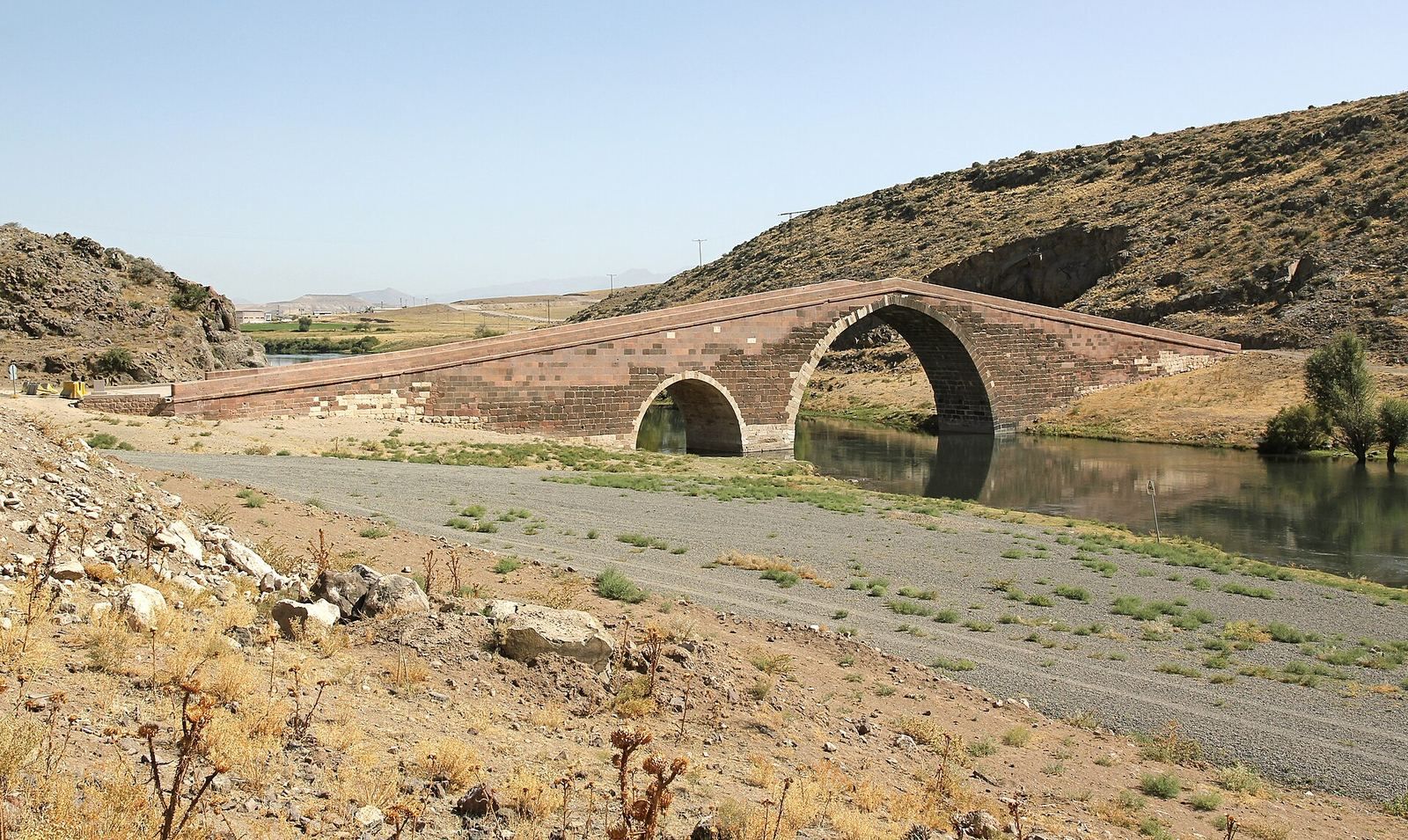
Tekgöz Bridge is a Seljuk bridge in Turkey, crossing the Kızılırmak River near Beydeğirmeni in Kocasinan District, Kayseri Province. Built around 1202–1203 in the period of the Seljuks of Rum, a medieval Turkic dynasty that ruled much of Anatolia, it carried the road from Kayseri toward Kırşehir and Ankara across the river.
Construction under Suleiman II
An inscription gives the construction date as 599 in the Hijri calendar, equivalent to 1202–1203, and names Hacı Ali Şir bin Hüseyin of Kayseri as the builder. The work took place during the reign of Rukn ad-Din Suleiman Shah, also known as Suleiman II, who was sultan of the Seljuks of Rum from 1196 to 1204.
Later interpretation
The Ottoman traveler and writer Evliya Çelebi visited the bridge in the seventeenth century. After misreading the inscription’s reference to Süleyman, he attributed the structure to Süleyman the Magnificent, the sixteenth-century Ottoman sultan. The official Turkish name, Tekgöz Köprüsü, refers to the bridge’s large principal arch and means “single-eye bridge” or “single-opening bridge.”
Remains
Bridge structure
Tekgöz Bridge extends approximately 120 metres across the Kızılırmak in a north–south direction and is about 5.8 metres wide. Its stone structure combines dressed and undressed masonry with spolia, meaning reused architectural materials. Two openings form the crossing, although the principal arch dominates its design.
Principal arch
The northern main arch is pointed and spans 27 metres, rising 18 metres above the river. Its scale gives the bridge its official name and defines the central feature of the surviving structure.
Auxiliary arch
A smaller pointed arch spans approximately 11.3 to 11.5 metres and reaches 7.5 metres in height. It carries water during periods of high water or seasonal overflow, providing a secondary opening beside the main channel.
Inscribed panel
An inscribed stone panel is set between the two arches. Its Thuluth script, a formal monumental style of Arabic calligraphy often used for architectural inscriptions, preserves the names of the builder and ruler together with the bridge’s construction date.