Cacabey Madrasa: A Seljuk Astronomical Educational Complex in Kırşehir


Site at a Glance
- Rating
- 4.7
- Popularity
- Medium
- Country
- Turkey
- Primary era
- Medieval
- External website
- Open
- Eras represented
- Medieval
- Civilizations
- Seljuk
- Site type
- Religious
- Remains
- Madrasa
On this page6 sections
History
Cacabey Madrasa is a Seljuk-era educational institution in Kırşehir, Turkey, constructed in 1272–1273 during the Anatolian Seljuk period. The Anatolian Seljuk Sultanate was the medieval Turkish state that ruled much of Anatolia at the time. Commissioned by Nur al-Din ibn Jaja, also known as Nureddin Cibril bin Cacabey, the building served an educational program associated especially with astronomy.
Anatolian Seljuk Foundation
Cacabey, the Seljuk governor of Kırşehir and a patron of science and education, established the complex as a madrasa, an Islamic institution for advanced religious or scholarly education. It originally incorporated an astronomical observatory, making it one of the earliest known observatory-integrated educational complexes in the Islamic world.
Later Religious Use and Protection
In later centuries, the institution ceased to function as a madrasa and was converted into a mosque. Several restorations, particularly during the Republican era, shaped its continued use, and it remains a functioning mosque. In 2014, Cacabey Madrasa was added to the UNESCO World Heritage Tentative List together with other Anatolian Seljuk madrasas. Turkey’s Ministry of Culture and Tourism also protects it as a monument.
Remains
Courtyard and Seljuk Stonework
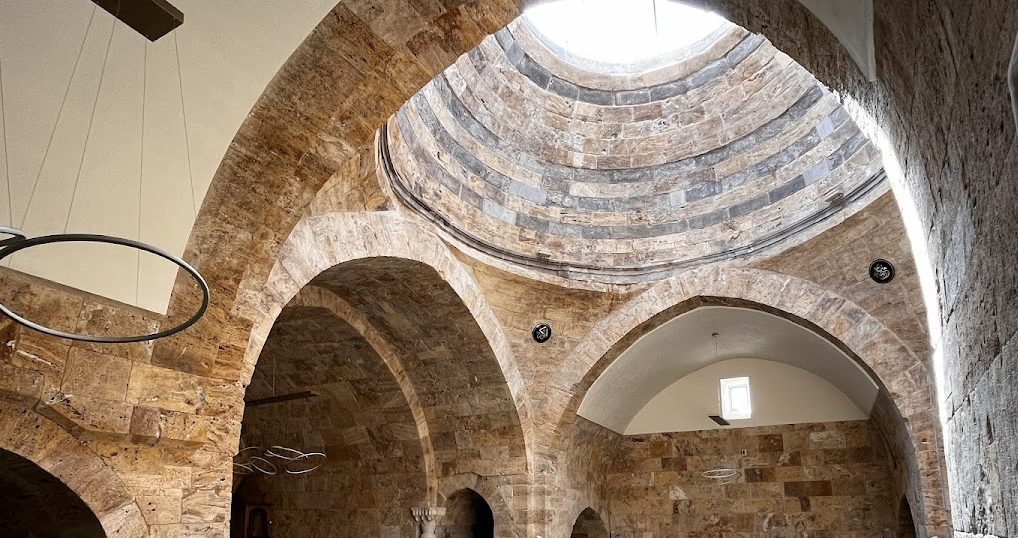
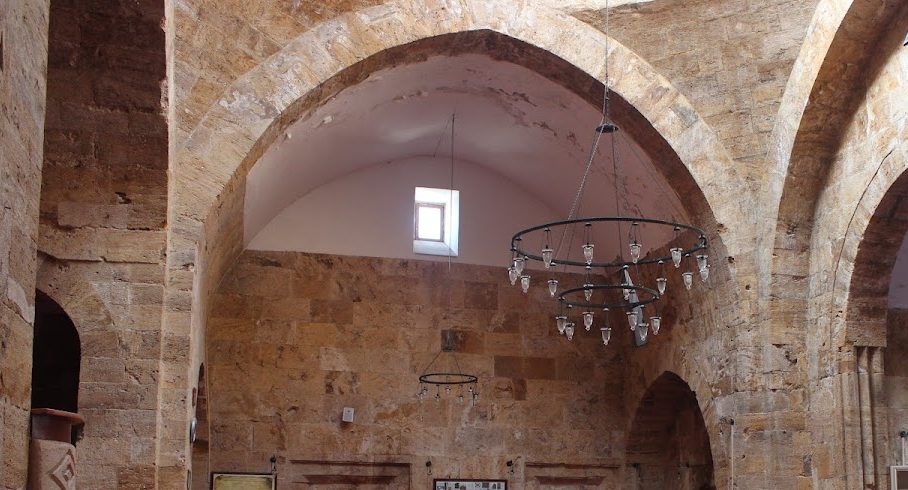
The building follows a rectangular plan, with a courtyard enclosed by classrooms and student cells. Its masonry and ornament exemplify Seljuk stone construction. The entrance portal carries muqarnas, a three-dimensional arrangement of tiered, niche-like elements, together with geometric stone carvings.
Dome, Minaret, and Astronomical Elements
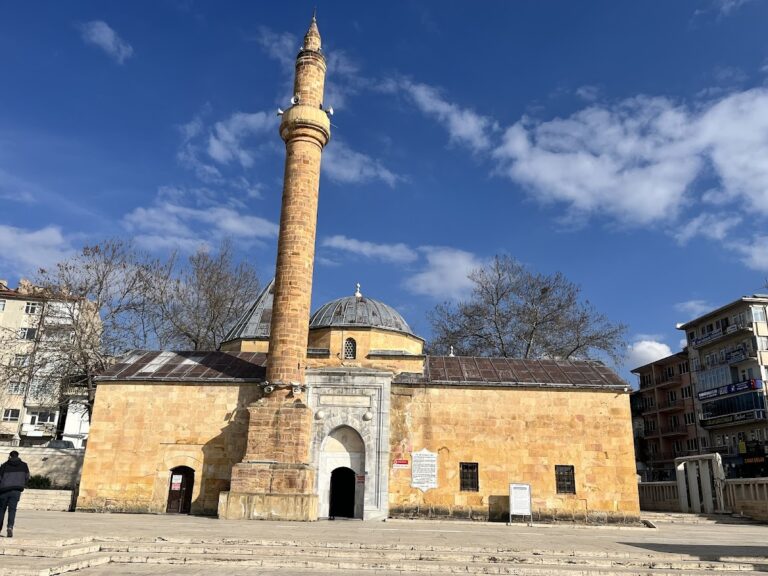
A minaret and dome form distinctive parts of the complex. Their arrangement, along with a cylindrical tower and strategically positioned openings, is believed to have supported the observation of celestial bodies. These elements suggest that the building’s architecture accommodated its association with astronomical study.