Labbacallee Wedge Tomb: A Prehistoric Burial Monument in County Cork
Site at a Glance
- Popularity
- Medium
- Country
- Ireland
- Primary era
- Bronze Age
- Eras represented
- Bronze Age
- Civilizations
- Unclassified
- Site type
- Burial
- Remains
- Tomb
On this page8 sections
History
Labbacallee wedge tomb is a prehistoric burial monument at Labbacallee, near Glanworth in County Cork, Ireland, built around 2300 BC. A wedge tomb is a megalithic burial structure made from large stones. Labbacallee is the largest wedge tomb in Ireland. Radiocarbon dating places bone deposits inside the tomb at approximately 2202–2138 BC.
Burial and later reuse
The tomb appears to have been closed and abandoned soon after the burials were placed inside. At a later time, people entered through the side wall near the western entrance, displacing a large roof-supporting stone and moving other side stones. The main chamber was then used as a shelter, disturbing earlier burials. Animal bones, charcoal and fragments of cooking pots are associated with this later use.
Antiquarian description and excavation
In 1693, English antiquary and writer John Aubrey described Labbacallee in a manuscript. It was the first megalithic tomb in Ireland to be described by an antiquarian writer. Harold Leask and Liam Price excavated the monument in 1934, in one of the first excavations carried out under Ireland’s National Monuments Act of 1930, the legal framework for the work.
Labbacallee is a National Monument in State Care, meaning the Irish state is responsible for its protection and management. It is listed as monument No. 318.
Folklore
The Irish name Leaba Chaillí means “Hag’s Bed.” Local tradition connects the tomb with a hag associated with the Cailleach, a hag goddess in Celtic tradition, and regards the monument as her former dwelling and burial place. In one tale, her husband Mogh Ruith, a legendary druid or learned religious specialist, fell in love with her sister. The jealous hag pursued him toward the River Funshion and struck him with a boulder, pinning him beneath the water. The tale does not explain how she died.
Another story tells of four local men who went to the tomb at night in search of rumored treasure. The hag’s daughter Aibell, a supernatural figure in Irish folklore, appeared as a cat with fire bursting from its tail. The men fled; one fell into a nearby river and drowned, while the others survived. The tale warned against disturbing the dead.
Remains
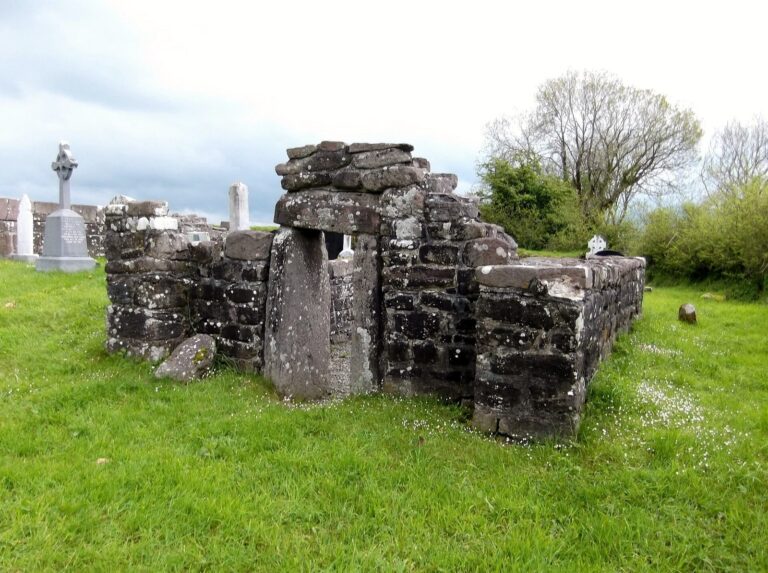
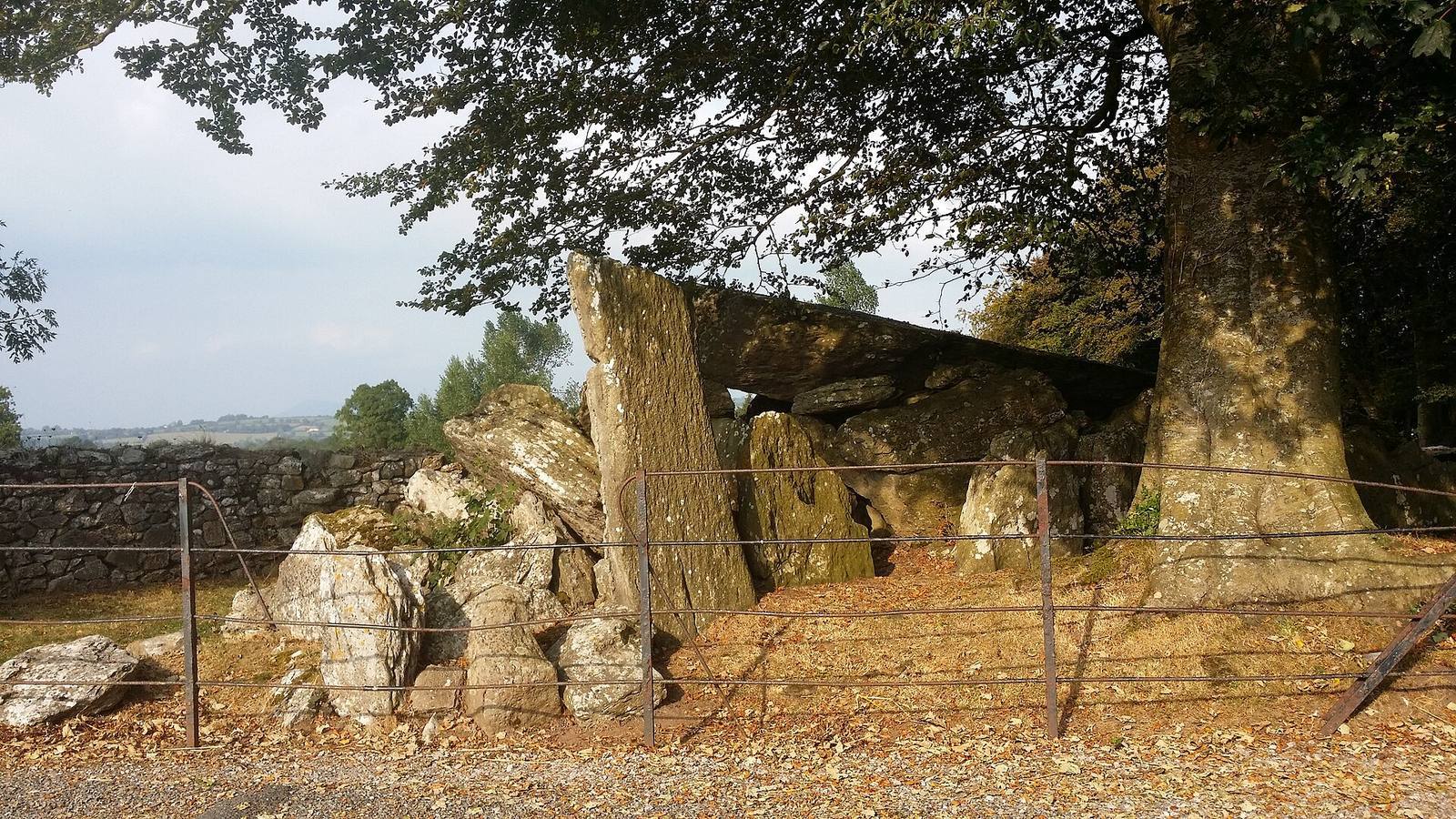
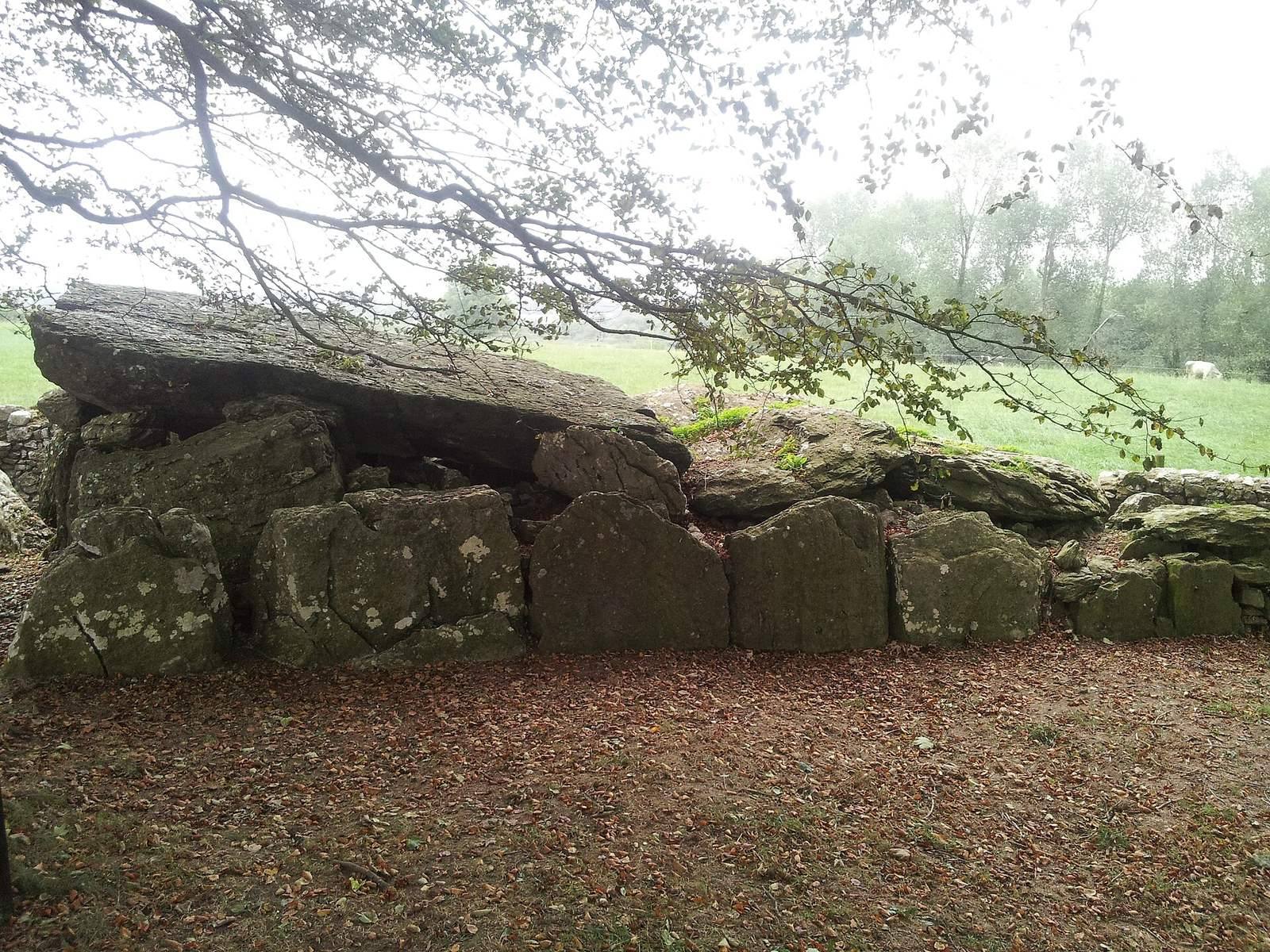
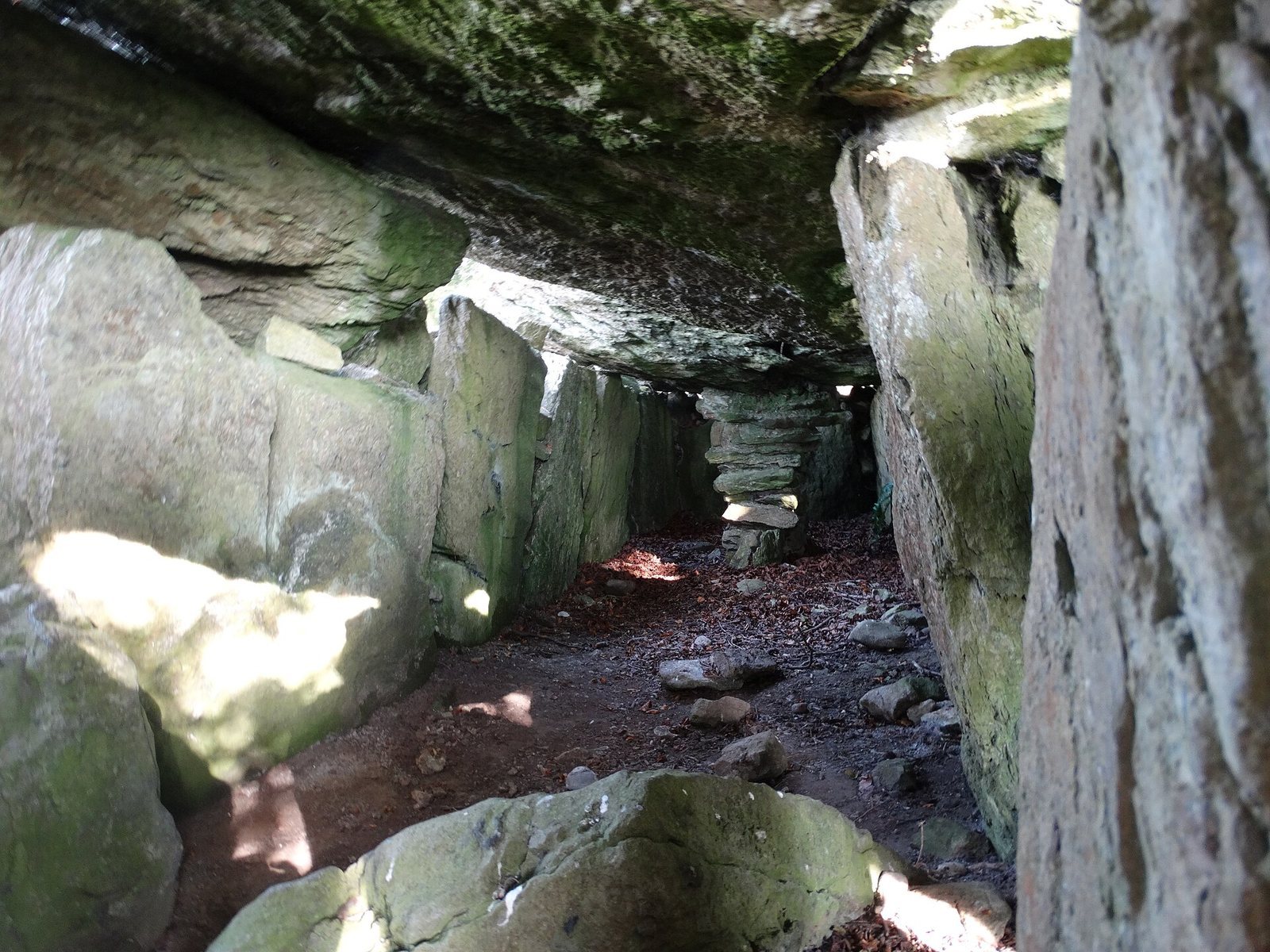
The monument is arranged along a long axis, with a forecourt before the burial gallery, all set within a wedge-shaped mound of stones. Its construction uses massive stones, and the surviving features include the forecourt, gallery, divided chambers and roof stones.
Forecourt and cairn
A large rectangular forecourt lies in front of the gallery and is wider than it. A fragmentary row of large standing stones accompanies it. The gallery sits within a wedge-shaped cairn, a mound of stones, whose edge stones remain largely in place.
Gallery and chambers
The gallery, the tomb’s long burial chamber, contains a rectangular main chamber with double walls, built from massive stone blocks and measuring 6.2 metres in length. A vertical slab separates it from a narrower chamber at the eastern end, which is 0.9 metres long. The gallery as a whole measures about 7.75 metres from the inside of the stone closing its western end to the inner face of the eastern chamber’s rear stone. Five stones set along the eastern end, with masonry between them, close it. Three large capstones form the roof; the largest is 3.8 metres long and weighs about 10 tonnes. Three large supporting stones stand at the back. The eastern chamber formed a sealed burial unit when its capstone was in place. The western chamber had two capstones and a large entrance stone, and access to either chamber required removing an end capstone.
Burials and finds
Excavation revealed that the smaller chamber had been filled to the top with earth, stones, ash, and animal and human bones. Clearing the rubble exposed a woman’s skeleton in the narrow eastern chamber. Her headless, partly decomposed body had been buried around 2300 BC. Her skull was found upright in the main chamber, wedged between two fragments of a juvenile skull. The western chamber contained parts of an adult male and a child, as well as a skull believed to be the woman’s. One of her leg bones was deformed, and a bone pin found with her remains may have fastened clothing or a shroud. Other finds included fragments of a decorated late Stone Age pot and pieces of bone and flint.