Conna Castle: A Sixteenth-Century Tower House in Ireland


Site at a Glance
- Rating
- 4.4
- Popularity
- Very Low
- Country
- Ireland
- Primary era
- Early Modern
- Eras represented
- Early Modern
- Civilizations
- English
- Site type
- Military
- Remains
- Castle
On this page5 sections
History
Conna Castle is a sixteenth-century tower house near Conna in County Cork, Ireland, built for Thomas Ruadh fitz James FitzGerald on land acquired by the Earls of Desmond in the 1460s. The Earls of Desmond belonged to the FitzGerald dynasty, a powerful Anglo-Norman noble family with extensive influence in Munster. Although the castle may appear earlier in date, its construction is attributed to Thomas Ruadh in the mid-sixteenth century, probably around 1560 or 1561.
The FitzGerald period
The castle later became associated with James fitzThomas fitzGerald, known as the Súgán Earl, who was the last FitzGerald to reside there. He briefly took a leading role in the Nine Years’ War, a late-sixteenth-century conflict in Ireland involving Irish Gaelic and Gaelicised forces opposed to expanding English authority. His capture and imprisonment in the Tower of London marked the end of the rule of the Earls of Desmond.
Capture and fire
James Tuchet, 3rd Earl of Castlehaven, captured Conna Castle in 1645 during the conflicts of the seventeenth century. An accidental fire then burned the castle in 1653, altering the course of its use and preservation.
State care and preservation
Conna Castle entered state care during the nineteenth century. Alfred G.K. L’Estrange donated it to the Local Government Board of Ireland, making the bequest the first of its kind in the history of the Irish state. The castle is now designated a National Monument of Ireland, a site placed under state protection because of its archaeological or historical importance. The Office of Public Works closed the castle for restorative work in 2015, and it remained closed as of March 2022.
Remains
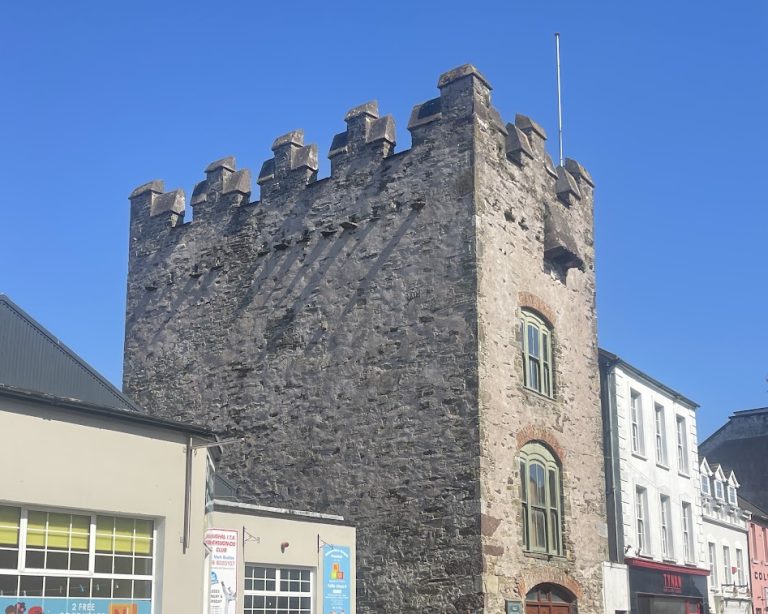
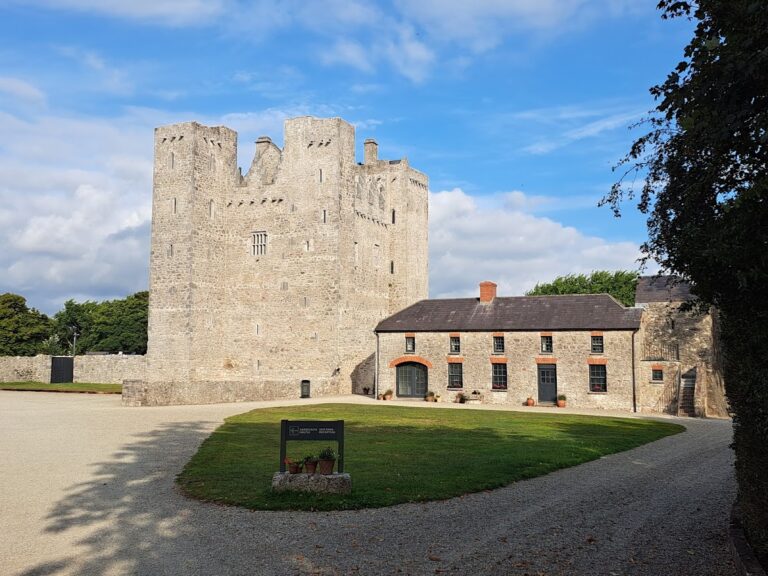
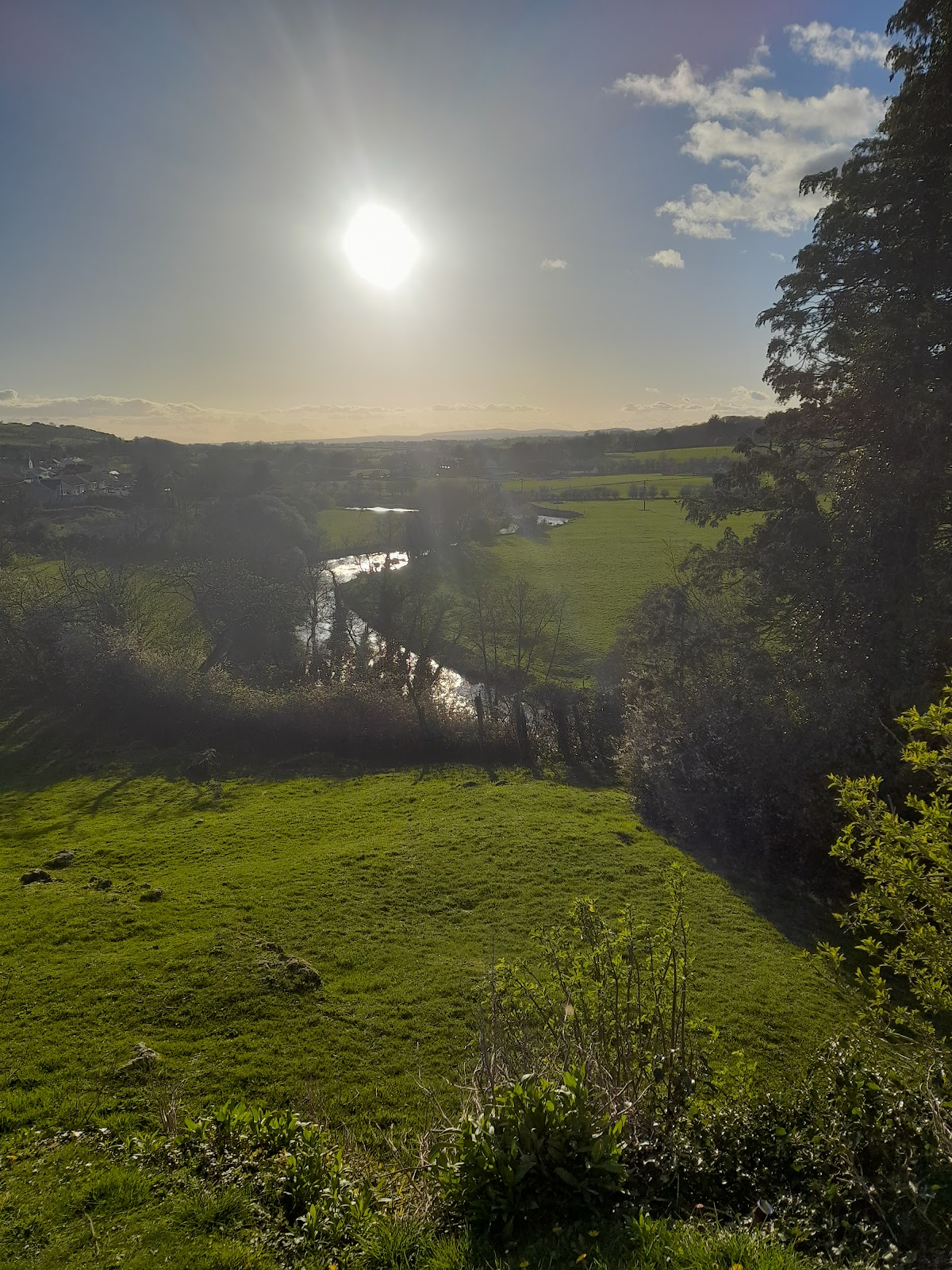
Conna Castle is a largely intact, five-storey tower house standing on limestone rock beside the River Bride, a tributary of the River Blackwater. Its compact, vertically arranged form reflects the tower-house tradition of combining residence with fortification. The castle stands near Conna and roughly six miles west of Tallow in County Waterford.
To the northwest of the main building are the remains of a corner tower and a bawn, an enclosed defensive courtyard associated with a tower house. Together, these surviving elements preserve part of the castle’s wider defensive enclosure as well as the principal tower.