Tantiusques: A Historic Graphite Mine in Massachusetts
Site at a Glance
- Popularity
- Medium
- Country
- United States
- Primary era
- Early Modern
- Eras represented
- Early Modern, Modern
- Civilizations
- Unclassified
- Site type
- Economic
- Remains
- Mine
On this page11 sections
History
Nipmuc use and early commercial mining
Tantiusques is a historic graphite-mining site in Sturbridge, Massachusetts, United States. Before European settlement, the Nipmuc, an Indigenous people of central Massachusetts, mined graphite here chiefly for ceremonial paints. The name Tantiusques comes from a Nipmuc word meaning the place between two low hills. A historic-property record lists 1643 as the site’s construction date. In 1644, John Winthrop the Younger, a colonial leader and son of the Massachusetts Bay Colony’s first leader, bought the area from the Nipmuc and began commercial mining. Tantiusques became the first commercially operated mine in New England. Difficult extraction brought poor returns, despite modest yields of lead and iron as well as graphite. The Winthrop family retained the property until 1784.
The Crowd household and nineteenth-century mining
John Davis and Rhoda Vinton built a house at the Crowd Site around 1815 on land owned by Rhoda’s father, Jabez Vinton. After John died in 1820, Rhoda returned to her father’s home, and the house became a rental property. Mine workers lived there by 1830. Robert Crowd and his wife, Diantha Scott, bought the house and property in 1842. Crowd, who had African American and Native American ancestry, worked at the mine during the 1850s. The couple expanded their landholdings but appear to have made few improvements to the house. Illness and changing fortunes led them to move away around 1860; other residents followed, and the house burned around 1924. During Crowd’s time at the mine, its customers included a pencil factory belonging to Henry David Thoreau, the American writer best known for Walden.
Boston merchant Frederic Tudor purchased the property in 1828 and mined graphite successfully for more than 25 years. He employed Captain Joseph Dixon and Dixon’s son, who later founded the J.D. Crucible Company in New Jersey. The company eventually became Dixon Ticonderoga, a pencil manufacturer. Tudor’s operation ended with his death in 1864, and mining at Tantiusques had ceased by 1910.
Historical study and preservation
George H. Haynes, a Sturbridge native and professor at Worcester Polytechnic Institute, published a history of the mine in 1902. Roger Chaffee, who had worked under Haynes, donated land for a reservation in 1962 in Haynes’s memory. The Sturbridge Historical Commission helped secure the site’s listing on the National Register of Historic Places, the United States’ federal register of historic properties, on October 6, 1983. The reservation covers 57 acres, while the National Register entry identifies a 15-acre property.
Staff from Old Sturbridge Village, a museum interpreting life in 1830s New England, excavated the Crowd Site in 1994 and 1995. The findings were intended to inform the village’s Small House Exhibit, which broadened its usual focus on larger period houses. The Trustees of Reservations acquired the separate Crowd Site parcel in 2002.
Remains
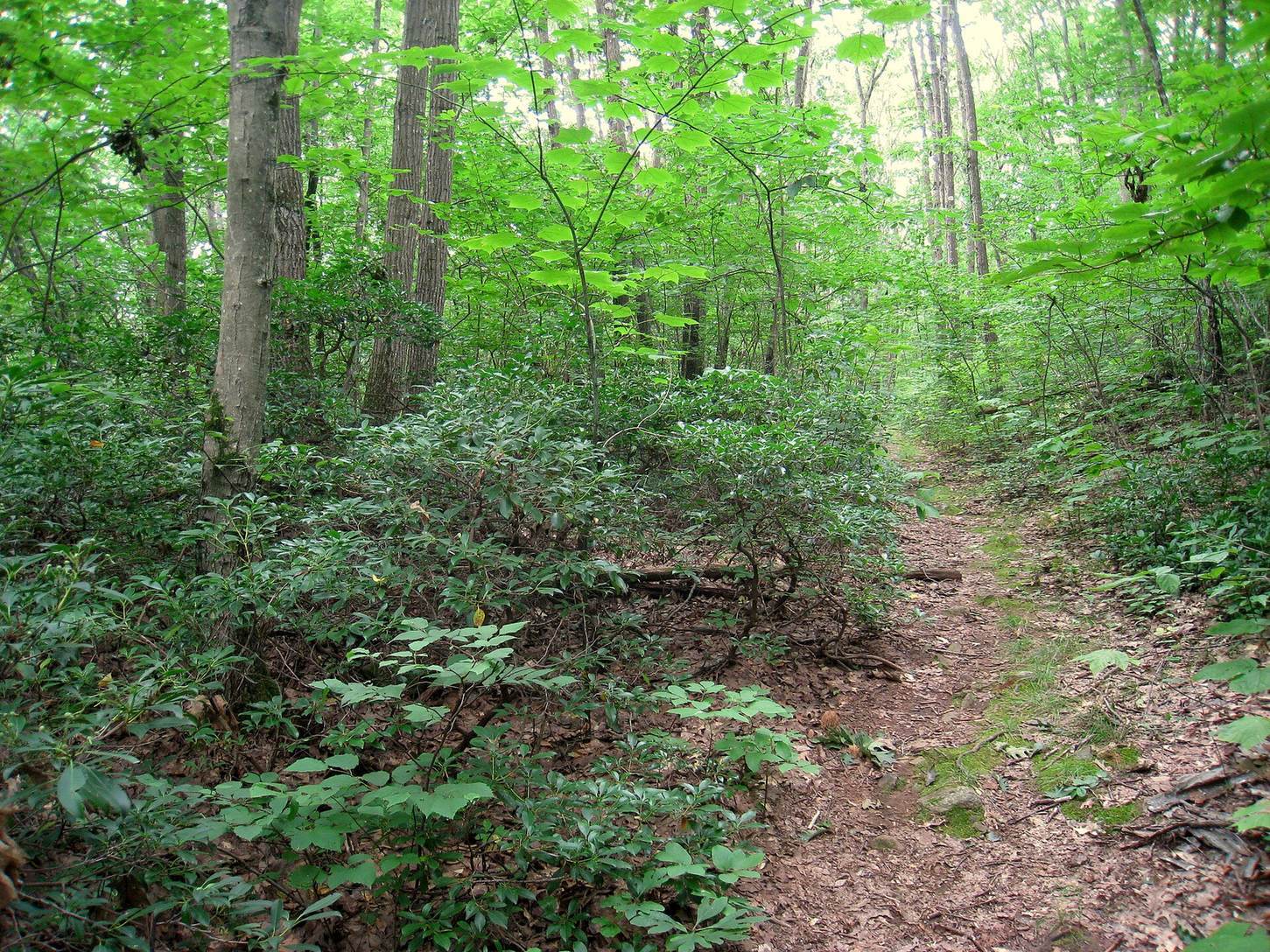
The mine workings and the Crowd Site occupy separate wooded areas. Open trenches and related excavations follow the graphite-bearing ridge, while the Crowd Site preserves traces of a house, barn, and well. Oak and hickory predominate across the reservation; red maple grows in wet areas, with occasional hemlock and mountain laurel in the understory. Forest has reclaimed parts of the former mining ground.
Mining features
Open-cut workings
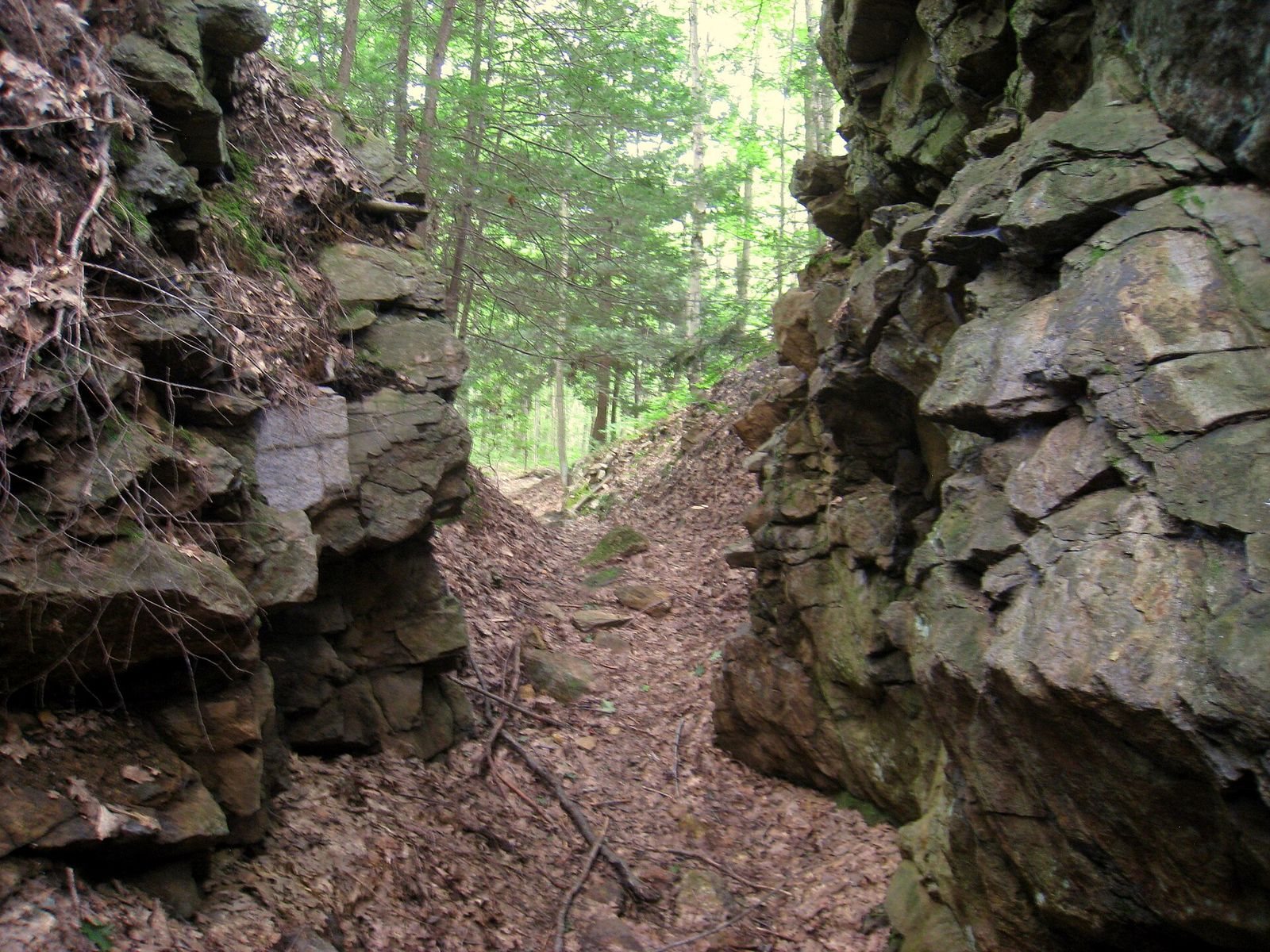
Most extraction followed the graphite vein through open trenches, although underground workings were also made. A principal cut runs about 400 feet along the side of a ledge. A separate trench on the ridge top once connected with it, forming much of the mine; Lead Mine Road now divides the two cuts. The ridge-top trench was about 6 feet wide, 20 to 50 feet deep, and roughly 1,000 feet long. It is partly filled, and sections of the mine have collapsed or filled with material. Other remains include several shafts, debris and tailings piles (waste left after mineral extraction), and cart paths from different mining operations.
The 1902 shaft
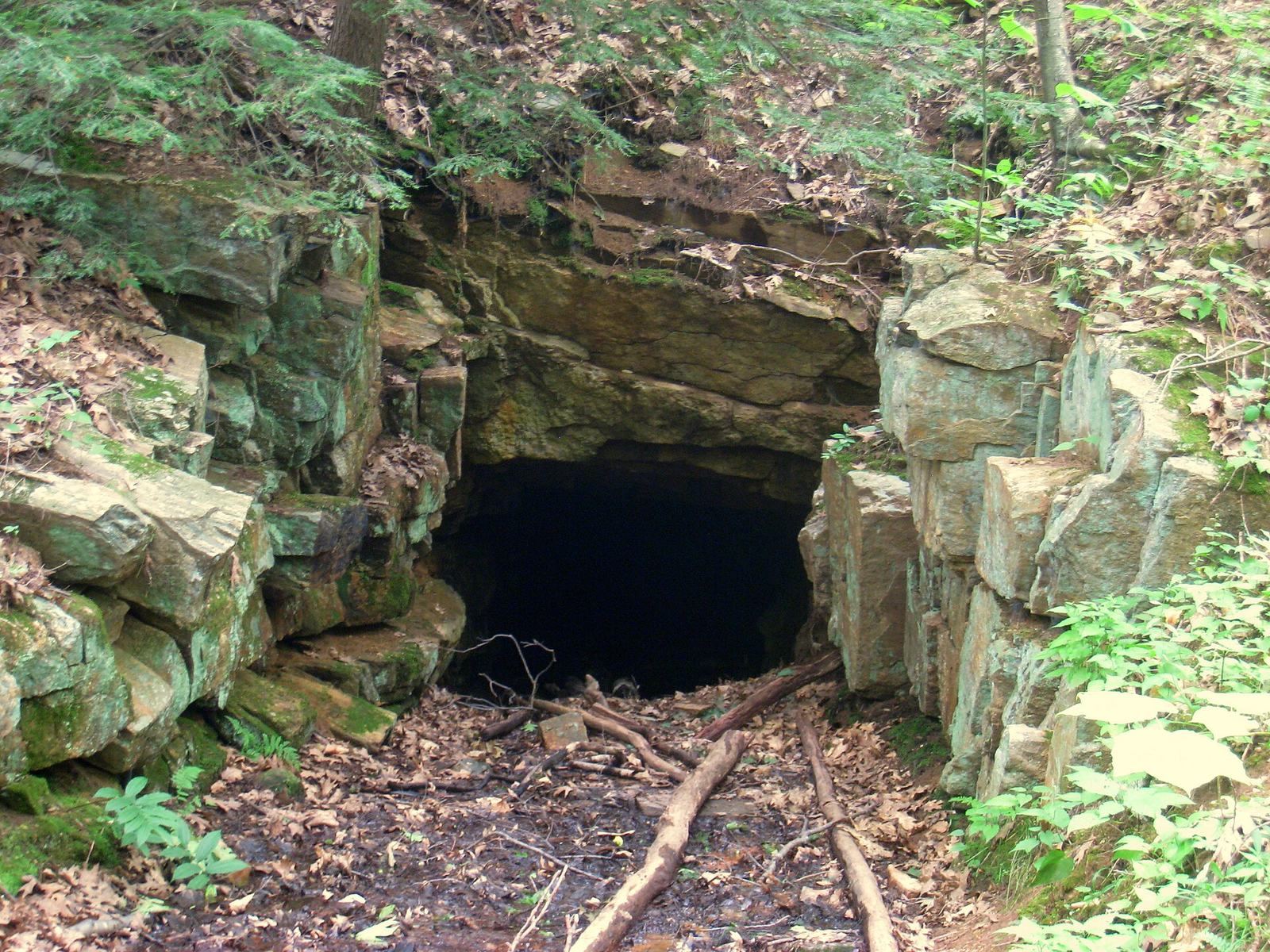
The latest excavation is a shaft cut into the face of the low ridge in 1902. Its entrance is the best-preserved mine feature, and the shaft extends about 50 yards into the ledge. Poor drainage leaves ankle-deep water at the entrance during wet periods.
The Crowd Site
House, barn, and well
This wooded, two-acre parcel lies at the corner of Leadmine and Goodrich Roads. Its remains include a deep cellar hole for the house, a shallower foundation for the barn, and a capped well. The house measured 20 by 25 feet. Archaeological and documentary work identified it as a small-house type now largely vanished from the New England landscape. Comparisons with houses in Sturbridge and Brookfield, along with estate inventories for two earlier residents, helped shape interpretations of its upper structure. Houses of this type commonly had a chimney in the northwest corner or along the north wall, an unfinished attic, and one large room downstairs.
Finds from the household site
A deposit linked to the Crowd family’s occupation from 1842 to 1860 came from the lower part of a posthole, a hole made to hold a building post, between the house and well. Its contents appear to fit that period, although the site’s succession of residents makes it difficult to assign finds to individual households. The deposit included a piece of raw graphite, a pair of black-glass buttons, a brass-jewelry fragment, a sawn beef bone, a pig’s tooth, tinware fragments, and a glass inkwell. Pottery finds included a yellow-ware shard with blue, tree-like branching decoration; three shards from a blue transfer-printed teacup, decorated by transferring a printed design onto the pottery, with an East Asian landscape motif; two multicolored, hand-painted shards probably from two differently decorated teacups; and a couple of redware shards, made from reddish clay.