Sundwiger Mühle: A Working Watermill in Hemer, Germany
Site at a Glance
- Popularity
- Very Low
- Country
- Germany
- Primary era
- Modern
- Eras represented
- Modern
- Civilizations
- Duchy of Berg, German, Holy Roman Empire, Kingdom of Prussia
- Site type
- Economic
- Remains
- Watermill
On this page8 sections
History
Sundwiger Mühle is a working watermill in Sundwig, a district of Hemer, Germany. The present mill was built between 1865 and 1868, and it is the last watermill still operating in the Märkischer Kreis, an administrative district in North Rhine-Westphalia. The mill remains in commercial production, making about 270 tonnes of flour each year.
Establishment of the mill
An earlier grain mill was built for Johann Gottfried Wilhelm Renzing by the millwright Johann Hermann Stindt of Niederhemer. Its establishment was registered with Hemer mayor Friedrich von der Becke on 4 October 1811. The abolition of compulsory milling rights in 1810, which had restricted where people could have grain ground, removed a barrier to the project as freedom of trade was introduced. The mill began operating on 9 August 1816 with one grinding unit.
Alberts’ mill and later development
Johannes Peter Alberts (1829–1892), who came from Alfrin near Herscheid, built the present watermill between 1865 and 1868, partly over the remains of its predecessor. A water-powered lift for moving heavy sacks across the mill’s three floors was built during the same period. The first trade-register entry, made in the 1860s, used the abbreviated name “J. P. Alberts.” In 1893 the farmhouse was converted into a residence, and a three-storey warehouse was built at the mill.
Rebuilding and continued production
Bread was baked in a wood-fired oven in the mill cellar until 1921. The mill underwent a major rebuild in 1938, followed by further changes to its grinding equipment in 1952. A separate bakehouse was built beside the millpond in 2003, and wood-fired breadmaking at the mill resumed the following year. The residential and farm buildings, mill, and sack lift have been protected as historic monuments since 1995.
Remains
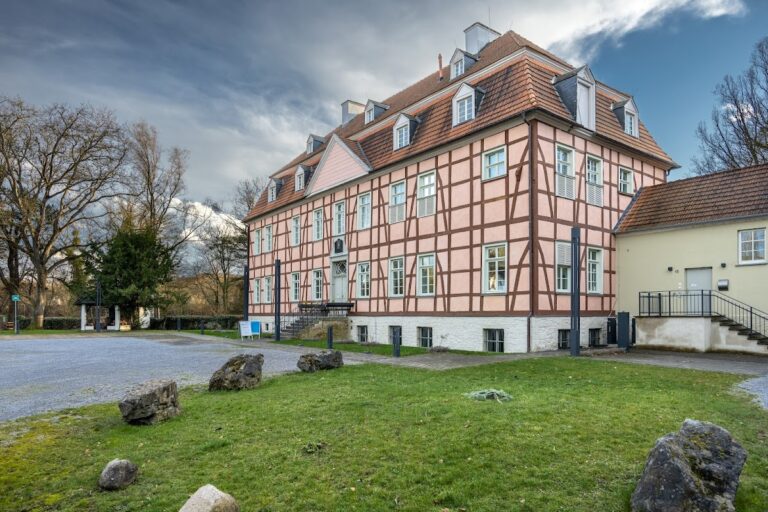
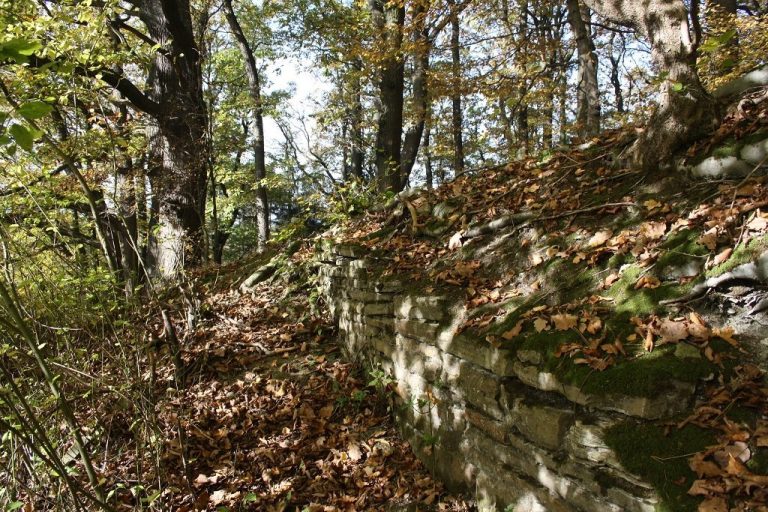
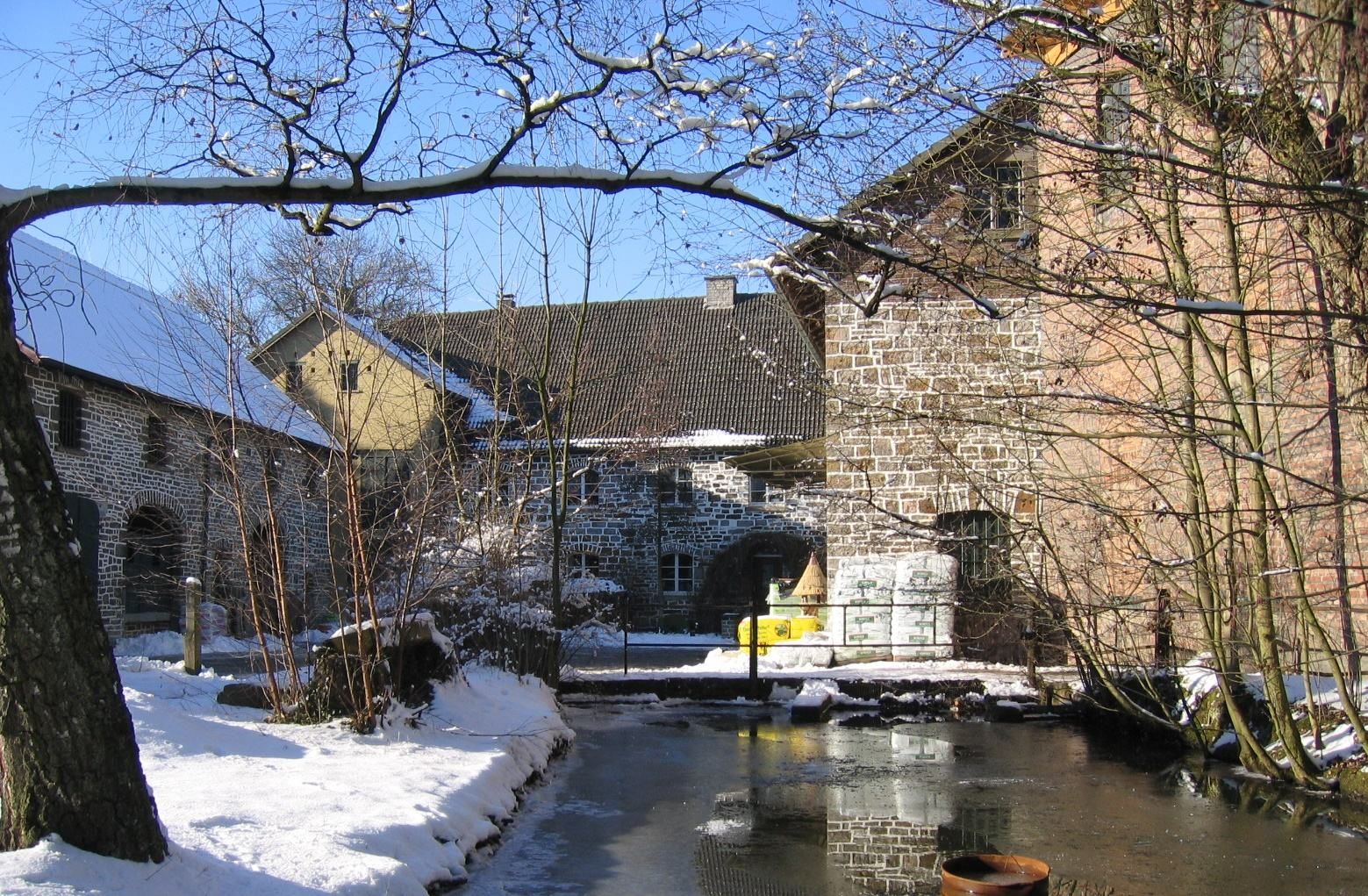
The surviving complex includes the mill, residential and farm buildings, a three-storey warehouse, a sack lift, and a small bakehouse beside the millpond. Water from the Sundwiger stream reaches the mill through the pond. Part of the mill stands on surviving wall remains of the earlier grain mill.
Water power and milling equipment
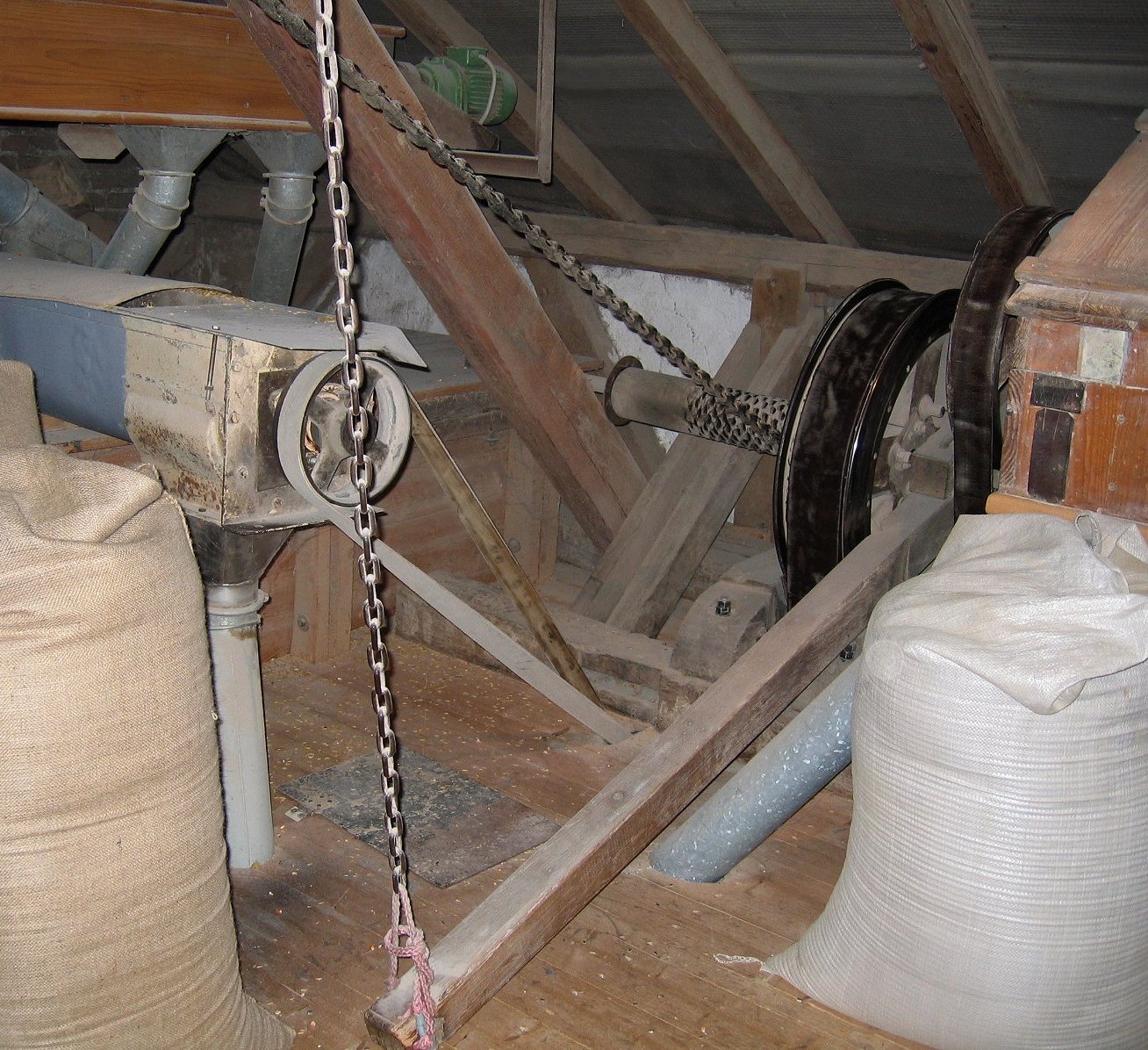
Until 1957, an overshot waterwheel, driven by water flowing over its top, powered the mill from inside the building. Since 1958, a 16-metric-horsepower turbine has driven the machinery when water levels allow; an electric motor is used when they do not. The 1938 rebuild renewed the king shaft, the shaft that transmits power through the machinery, and a four-unit grinding system. Equipment used after the overhaul included a simple roller mill and a stone-grinding unit 1.40 metres in diameter. The simple roller mill was replaced by a double roller mill in 1952.
Farm buildings and sack lift
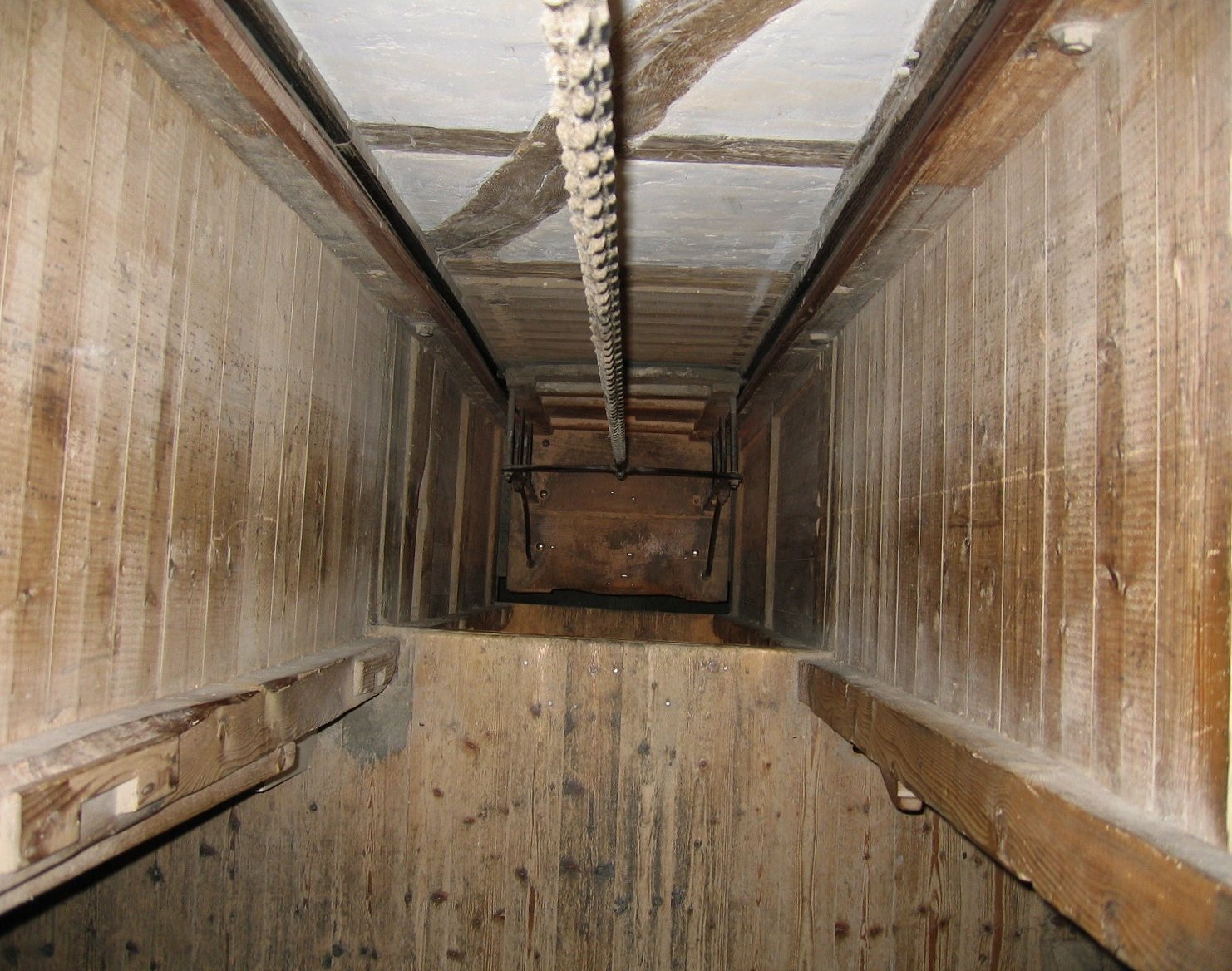
The residence began as a Westphalian farmhouse with a central farm hall and stables. The warehouse at the mill has three storeys. The water-powered lift carries heavy grain sacks between the mill’s floors and remains in operation.
Bakehouse
The small bakehouse beside the millpond is built with a timber frame. It provides a separate structure for the site’s renewed wood-fired breadmaking.