St. James Church in Ortrand: A Romanesque Church and Pilgrimage Stop
Site at a Glance
- Rating
- 5
- Popularity
- Very Low
- Country
- Germany
- Primary era
- Medieval
- External website
- Open
- Eras represented
- Medieval, Early Modern, Modern
- Civilizations
- Electorate of Saxony, Holy Roman Empire, Kingdom of Prussia, Margraviate of Meissen
- Site type
- Religious
- Remains
- Church
On this page13 sections
History
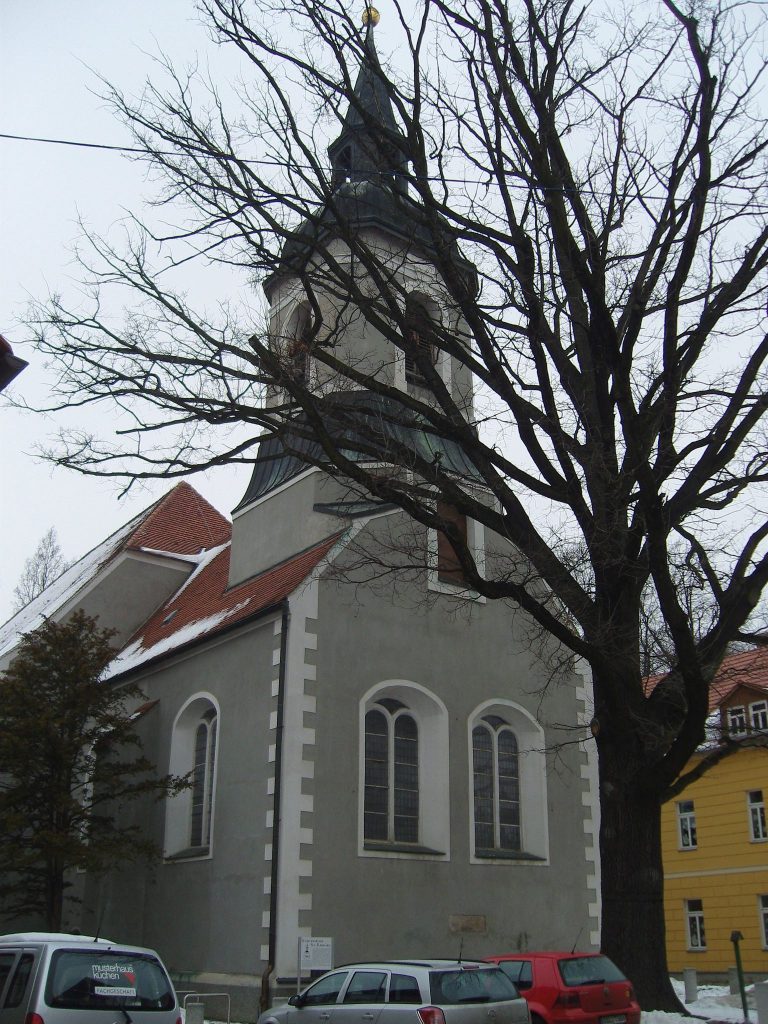
St. James Church is a 13th-century Romanesque church in Ortrand, Germany, and the town’s oldest building. Dedicated to James the Elder, one of the Twelve Apostles, it served as a stop on the Way of St James, a network of pilgrimage routes to Santiago de Compostela, traditionally associated with the apostle’s tomb. Built on a hill outside town, it escaped Ortrand’s major fires.
Medieval church
The church first appears in a written record in 1432, when Margrave Frederick of Meissen gave Ortrand’s townspeople an altar to replace one destroyed during the Hussite Wars, 15th-century conflicts in Central Europe associated with the followers of religious reformer Jan Hus.
Reformation and burial use
After the death of Duke George the Bearded in 1540, the Reformation, a 16th-century religious movement that led to the formation of Protestant churches, was introduced in Ortrand. St. James became a Protestant parish church and, from the late 16th century, also served as a burial church.
Catholic congregation after 1945
The postwar flight and expulsion of Germans from Central and Eastern Europe brought many Catholics to Ortrand from the spring of 1945. On 19 October 1946, Heinrich Schmidt received an additional appointment as vicar for Bockwitz, based in Ortrand. He moved there, established a Catholic congregation, and held services in St. James.
The congregation leased the church in 1947 and became a curacy, a Catholic pastoral district, on 1 November that year. In 1949, Schmidt acquired a house at Bahnhofstraße 30, which remains the Catholic community house in Ortrand.
A parish association linking Lauchhammer, Elsterwerda, Hohenleipisch, and Ortrand was formed on 1 July 2007 within the Torgau deanery, a grouping of parishes within a diocese. On 28 November 2010, it became the present parish of St. Hedwig Lauchhammer. St. James belongs to that parish in the Elbe-Elster pastoral region of the Diocese of Magdeburg, a territorial church jurisdiction overseen by a bishop. The parish also includes Christus König in Lauchhammer and Mater Dolorosa in Elsterwerda. Today, St. James is used for Catholic services on major feast days and special occasions; regular worship generally takes place in the community house.
Remains
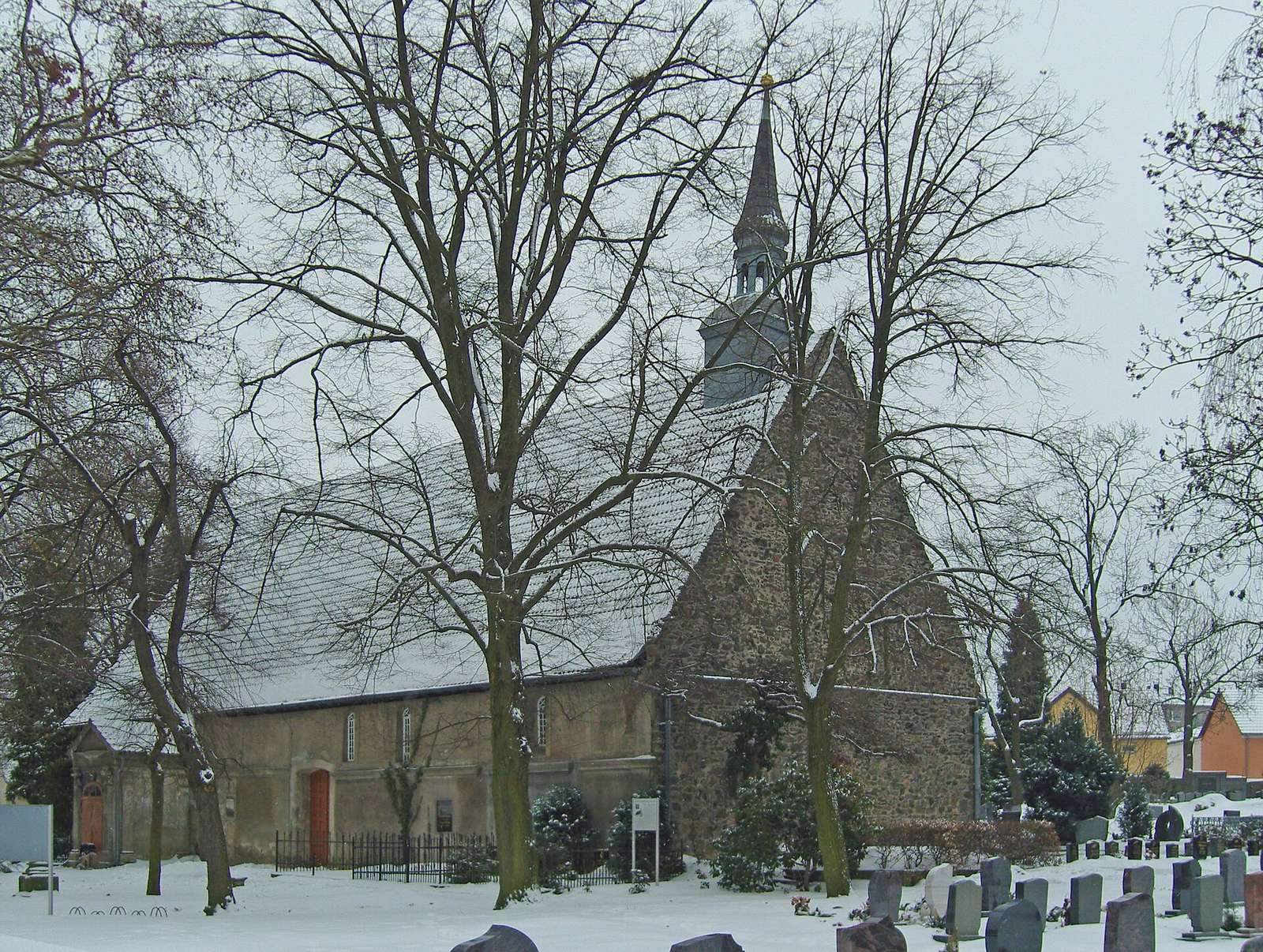
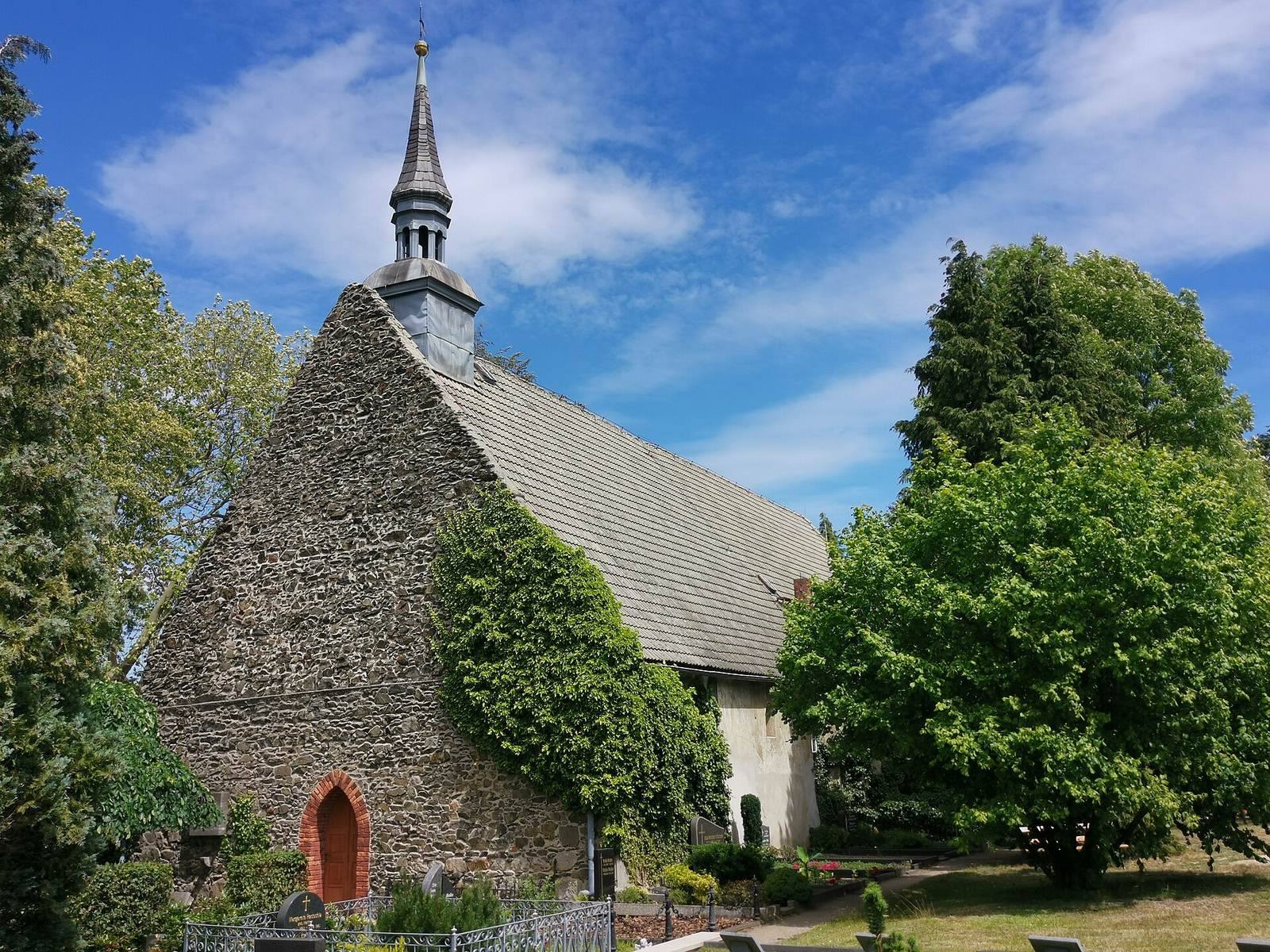
The east-facing church stands in a cemetery and has the hall-like main worship space of a Romanesque hall church. Its windows have flat arches. The west gable is made of rubble stone, and later features include a Gothic portal, a roof turret, and a north-side chapel.
Exterior and associated structures
West gable and entrances
The Gothic portal is set into the west gable. Small cup-shaped hollows appear in the wall above ground level, though their purpose is unknown. Behind the portal, an enclosure was used to bring municipal prisoners to services. Openings that allowed them to look into the church remain. The southern entrance is now walled up.
Bell structures and windows
The original bell tower stood in front of the church, toward the cemetery entrance on Forstgartenstraße. A roof turret was added to the west gable after 1555 and renewed on a smaller scale in 1771, when it was fitted with a weather vane. The windows were renewed during Advent in 1597.
North crypt chapel
A crypt chapel, a chapel associated with a burial vault, was built on the north side in 1836 and has served as a mortuary since 1902. Projecting vertical strips of masonry decorate its corners; each has a base and a capital, or decorative top.
Interior and furnishings
Chancel and altar
The chancel has bevelled corners and three round-arched recesses. The smallest contains the tabernacle, a receptacle for the consecrated Eucharist. The Gothic winged altar, with panels that hinge open, dates to 1432.
Memorials and burial markers
A 1543 funerary memorial commemorates Heinrich and Margarete von Lüttichau. Inside the church is also a grave slab with an iron ring for former mayor Andreas Petermann. Its inscription says he built a burial place for himself and his family, who rest in Jesus. A gravestone for Christian Heinrich Schreyer (1751–1823), a pastor and local historian in Ortrand, stands by the walled southern entrance.
Organ
A small pipe organ made by Jehmlich Orgelbau Dresden was installed in 1956 as opus 723. It had four stops, each controlling a set of pipes, and one keyboard. The instrument was sold in 2018 and moved to the Viktoria Chapel in Schwarzheide.