Palazzo Pallavicini-Rospigliosi: A Renaissance Family Palace in Rome
Site at a Glance
- Popularity
- High
- Country
- Italy
- Primary era
- Early Modern
- Eras represented
- Classical, Early Modern
- Civilizations
- Papal States, Roman
- Site type
- Domestic
- Remains
- Elite Residence
On this page14 sections
History
Construction and early owners
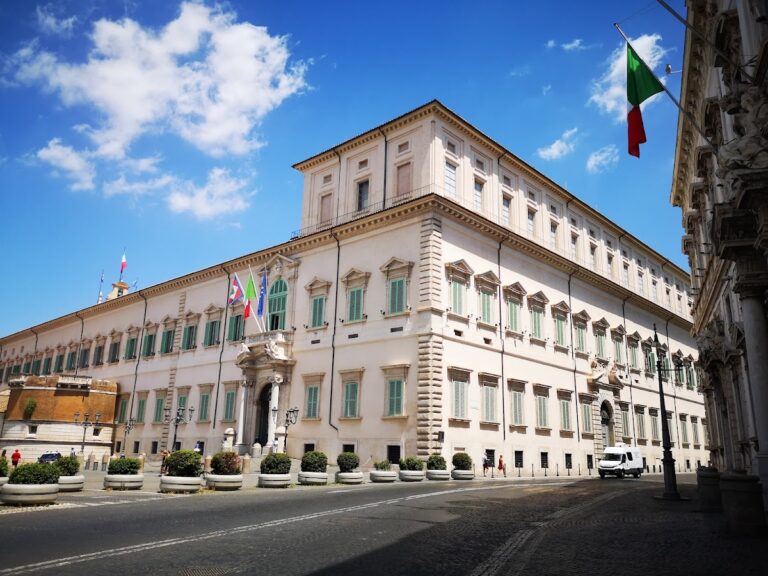
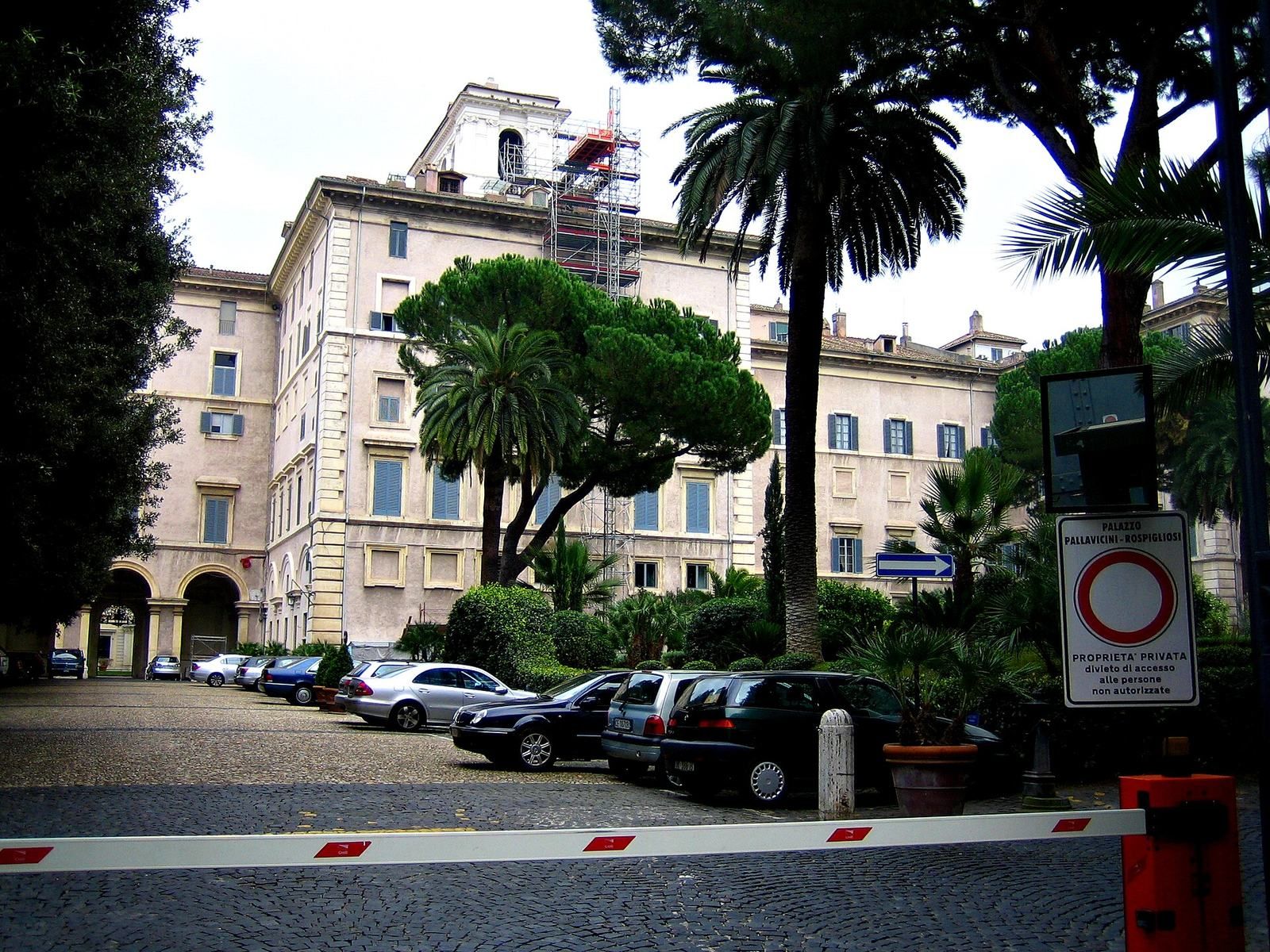
Palazzo Pallavicini-Rospigliosi is a Renaissance-style family residence on Rome’s Quirinal Hill in Italy, commissioned by Cardinal Scipione Caffarelli Borghese, a senior official of the Roman Catholic Church, beside the papal Palazzo del Quirinale. Renaissance design reflects renewed European interest in classical art and learning. Construction began in the early seventeenth century and continued through 1619. Flaminio Ponzio was the first architect; after his death in 1613, Carlo Maderno continued the work.
Before construction began, Giovanni Vasanzio arranged the sloping garden and designed the Casino dell’Aurora, a garden pavilion. Giovanni Angelo Altemps acquired the complex in 1616 and had Onorio Longhi bring the work to completion by 1619. In the 1620s, Cardinal Guido Bentivoglio lived in the palace, whose rooms were decorated between 1622 and 1627.
Changing ownership and diplomatic use
The palace later passed to the Bentivoglio and Lante families, then to Cardinal Mazarin and his heirs, the Mancini. During this period it housed the French embassy, which later moved to the larger Palazzo Farnese.
Rospigliosi and Pallavicini ownership
In 1704, Prince Giovanni Battista Rospigliosi and his wife, Princess Maria Camilla Pallavicini, acquired the palace. Their families gave it its present name, and it became their residence. Cardinal Lazzaro Pallavicini began the family’s art collection, which experienced sales and losses over subsequent centuries.
A garden pavilion on the third terrace was demolished in 1876 during construction of Via Nazionale. In the twentieth century, financial difficulties led the Rospigliosi family to sell its half of the palace and its share of the collection. That portion housed Federconsorzi for many years before Coldiretti acquired it under the presidency of Paolo Bonomi. The Pallavicini family retains the other half.
Remains
Palace and gardens
Palace fabric
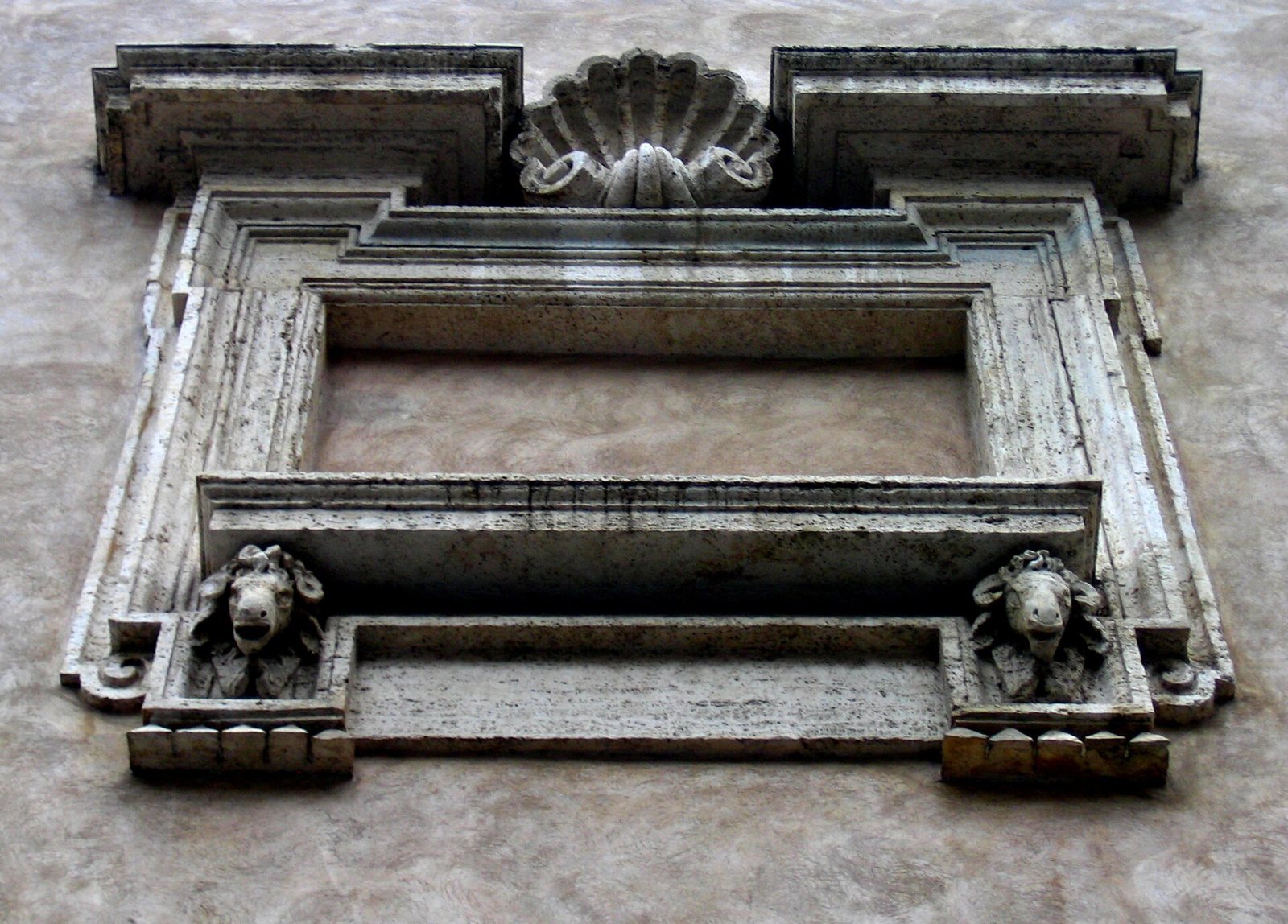
The palace stands on the Quirinal Hill, and its basement incorporates remains of the Baths of Constantine, public baths named for the emperor. A blind window, a window-like feature that does not open into an interior, appears on the façade. A statue of a Roman consul once stood in front of the building and appears in an engraving by Giuseppe Vasi.
Terraced garden
The garden follows the slope across three terraces. Each originally had a pavilion containing sculpture and frescoes, paintings made on wet plaster. On the second terrace, a loggia, a covered gallery open to the exterior, stands before a semicircular fountain. Orazio Gentileschi and Agostino Tassi decorated the loggia with figures of the Muses, associated with inspiration in the arts.
Casino dell’Aurora
This separate pavilion has its façade facing Via del Quirinale and measures 220 square metres. A central hall and two smaller rooms form a C-shaped plan, designed in the manner of a fifteenth-century country villa. Marble blocks from the Baths of Constantine were reused in the building.
Paintings and collections
Casino paintings
Guido Reni’s ceiling fresco, painted around 1613–14, shows Apollo, a god associated with the sun, in his chariot, preceded by Aurora, the Roman goddess of dawn, bringing light to the world. A painted border makes the scene appear like a picture set into the ceiling, while family emblems link Borghese with Apollo. The figures draw on sculpted scenes from ancient Roman stone coffins, some associated with the Borghese collection. The work is regarded as a major example of Roman classicism, an artistic approach drawing on ancient Roman models. A painting of Aurora and Cephalus in the Farnese Gallery, attributed to Agostino Carracci, has been proposed as a possible model.
The Casino’s walls include four seasonal paintings by Paul Bril and two triumphal scenes by Antonio Tempesta, the Triumph of Glory and the Triumph of Love. Domenico Passignano and Giovanni Baglione painted scenes from the story of Rinaldo and Armida on the ceilings of two side rooms. The pair are characters in Torquato Tasso’s epic poem Jerusalem Delivered.
Casino sculpture
The principal hall is associated with seventeenth-century marble busts and Roman sculptures. These include a replica called Artemis the Huntress, after Artemis, the Greek goddess associated with hunting, and a sculpture known as the Rospigliosi Athena, named for Athena, a Greek goddess. A Roman marble copy of Artemis, based on an ancient Greek original and dated to the first or second century, was at the Louvre after 1807.
Palace interiors
Frescoes by Giovanni da San Giovanni, Paul Bril, Guido Reni, and other artists decorate rooms and corridors. Giovanni da San Giovanni’s Chariot of Night, painted between 1622 and 1627, is in dialogue with Reni’s Chariot of Aurora. The palace also contains a Roman marble sarcophagus, or stone coffin, with hunting scenes carved on its front.
Pallavicini Gallery
The Pallavicini Gallery holds more than 540 paintings, drawings, and sculptures by artists from the fifteenth through eighteenth centuries. Those represented include Andrea Mantegna, Sandro Botticelli, Paolo Veronese, Caravaggio, Annibale Carracci, Pietro da Cortona, Domenichino, Diego Velázquez, Luca Giordano, Guercino, Lorenzo Lotto, Nicolas Poussin, Mattia Preti, Guido Reni, Peter Paul Rubens, Andrea Sacchi, Luca Signorelli, Sebastiano Conca, Mariano Rossi, and Giovanni Stanchi. The collection includes Lotto’s Triumph of Chastity.