St. Marien: A Late-Gothic Church in Oederan, Germany
Site at a Glance
- Popularity
- Low
- Country
- Germany
- Primary era
- Medieval
- Eras represented
- Medieval, Early Modern, Modern
- Civilizations
- Electorate of Saxony, German, Holy Roman Empire, Margraviate of Meissen
- Site type
- Religious
- Remains
- Church
On this page15 sections
History
Dedication and rebuilding
St. Marien is a late-Gothic church in Oederan, Germany, rebuilt in the late 15th century with parts of an earlier building damaged by fire in 1467. Its dedication to St. Mary, the mother of Jesus in Christian tradition, was first recorded in 1375 and is the original dedication of the present church.
Eighteenth-century changes
The church was renovated in 1709, and its tower was completed in 1725. In 1727, Gottfried Silbermann, a German organ builder associated especially with instruments in Saxony, made an organ with 24 stops, each controlling a set of pipes with a particular tone.
Neo-Gothic redesign and later care
Between 1890 and 1892, the church’s exterior and interior underwent a substantial Neo-Gothic redesign, part of the 19th-century revival of Gothic architecture. The organ’s case was replaced during this work, and two stops were exchanged. Those stops were returned in 1937, and an 8-foot flute stop was added in 1941.
The interior was restored in 1968, when work was also carried out on the organ. Exterior restoration began in 1990, and the organ received further restoration in 1992–1993. An additional 8-foot stop was installed in 1997. St. Marien belongs to the Evangelical Lutheran parish of Oederan, within the Marienberg church district of the Evangelical Lutheran State Church of Saxony.
Remains
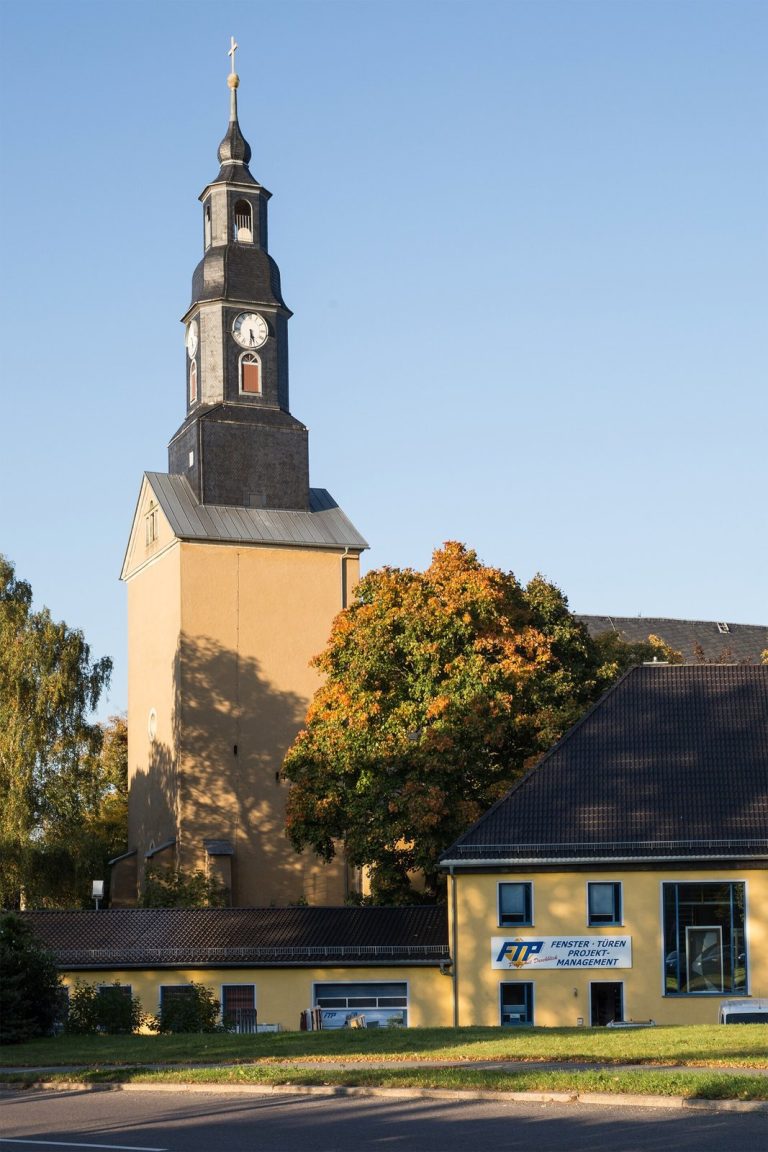
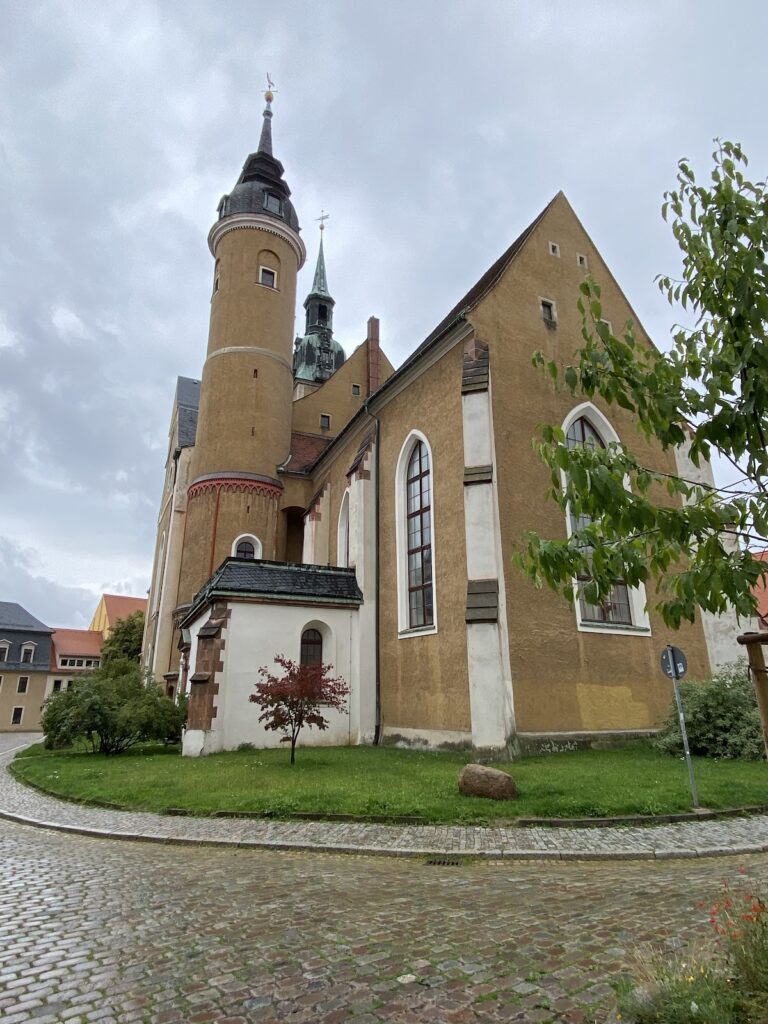
The church was planned as a three-aisled hall church, with the nave and side aisles at broadly similar heights. Its walls are plastered rubble masonry, with exposed architectural details in Rochlitz porphyry, a hard stone with larger crystals in finer material.
Plan and exterior
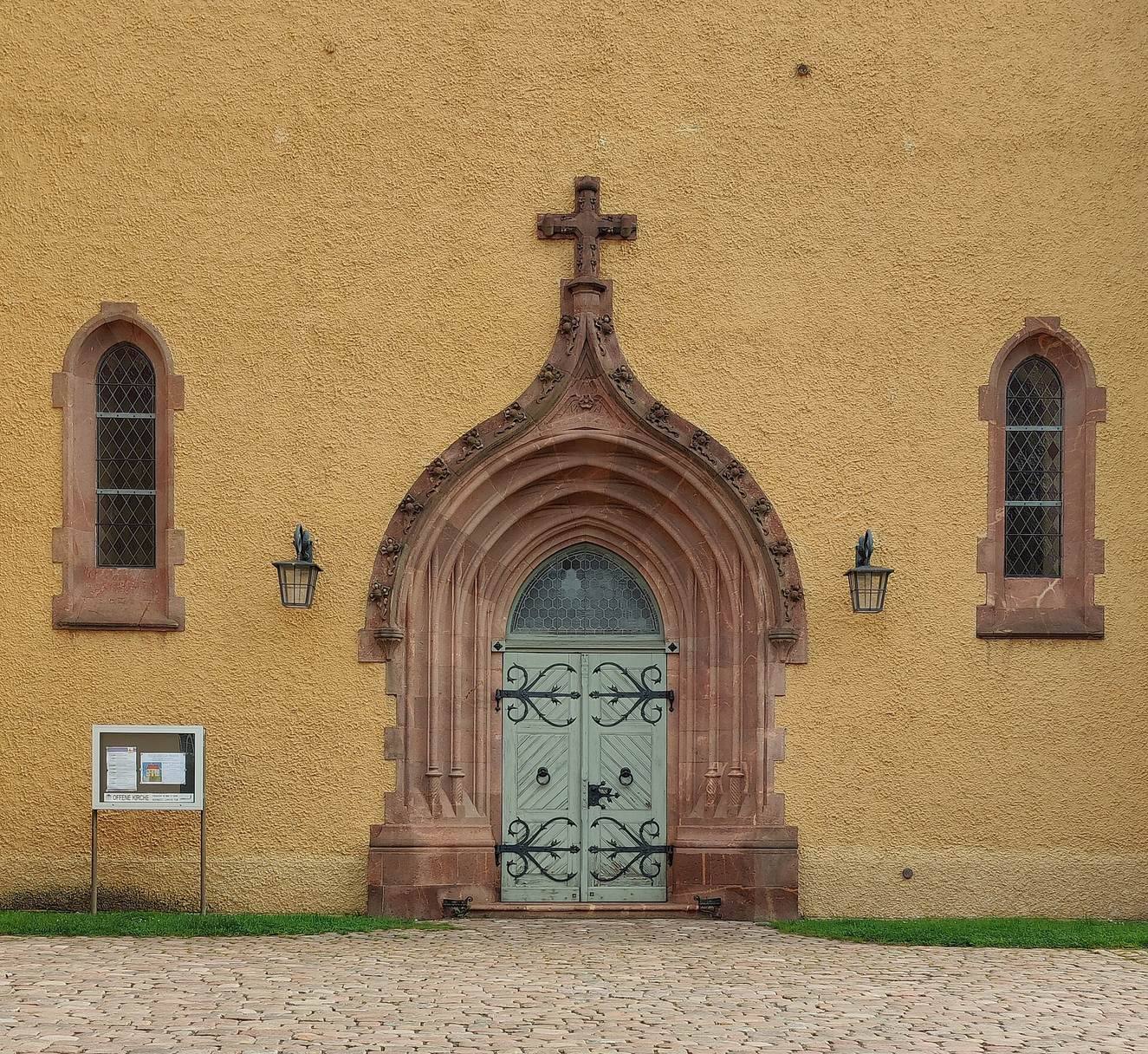
Recessed wall supports, or buttresses, reinforce the building. The long choir, the area around the altar, projects strongly from the main body and ends in three sides of an eight-sided plan. It has buttresses, with the sacristy on its north side and a baptismal chapel on its south. At the western end, a monumental, wide rectangular block probably dates to the 13th century and has a stepped upper finish. The windows have simple ornamental stonework. The entrance portal bears the date 1891 and a cross, and is framed by a double-curved arch with projecting leaf-like ornaments.
Interior and furnishings
Ceiling, galleries, and vaulted spaces
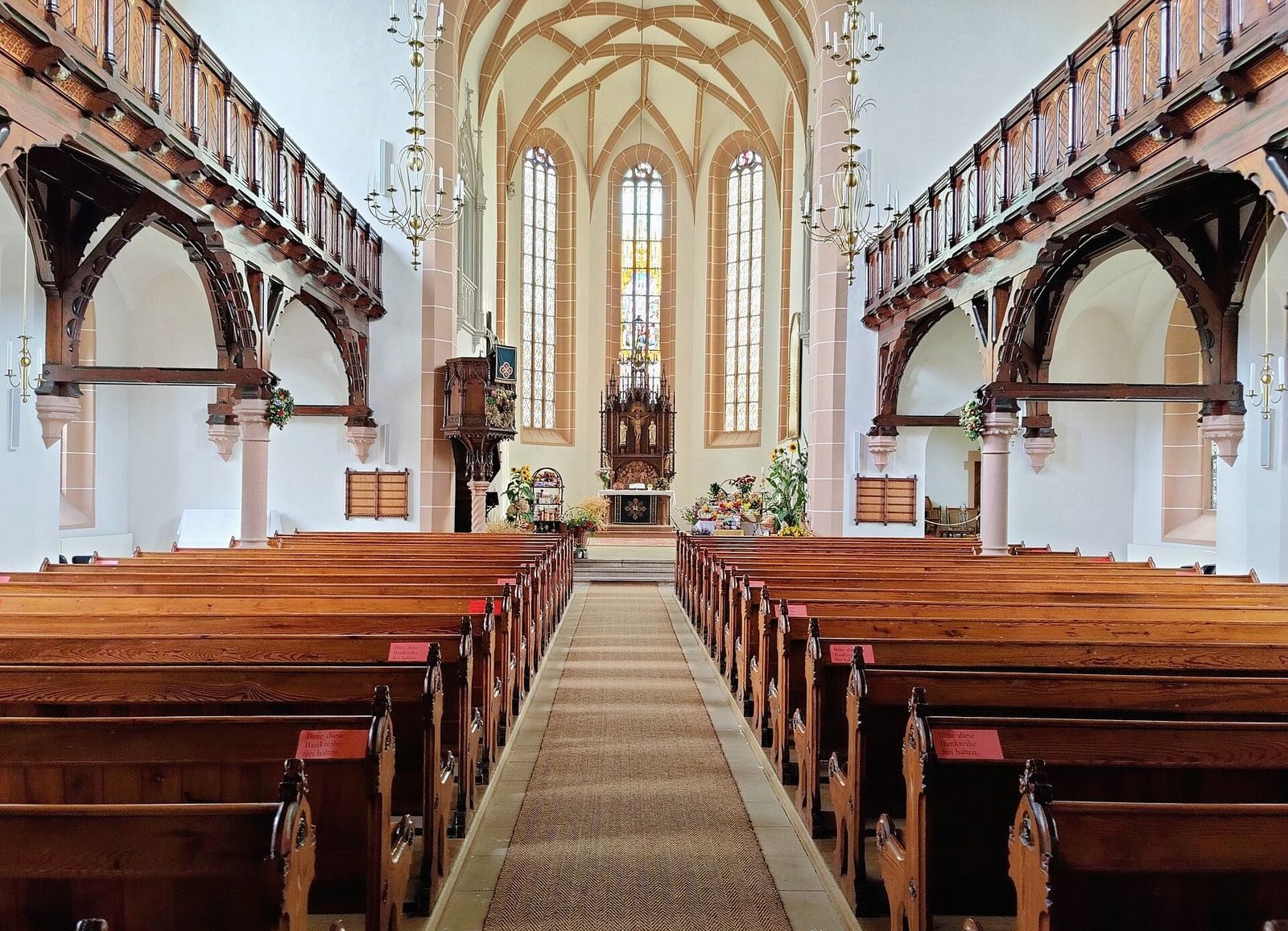
The wide interior has a flat ceiling divided into recessed panels, with a concave transition to the walls. Floral and leafy patterns decorate the ceiling and galleries. Large galleries extend along three sides between partly recessed supports; wooden structures from the 19th century obscure them. Stair turrets occupy the western corners of the nave, and the southern turret connects to a small vestibule with a vaulted ceiling whose ribs form a net-like pattern. A tall round arch opens into the similarly vaulted choir, and the sacristy also has this type of ceiling.
Lodges
A lodge for councilors and court officials stands on the north side, while a lodge for the manor owners of Schönberg and Börnichen is on the south. A coat of arms belonging to later owners, the Hohenthal family of Püchau, appears above a lodge. The frames are ornamented with double-curved arches, projecting hooks, and finials.
Altar, pulpit, and stained glass
Carl Förster of Leipzig designed the carved Neo-Gothic altar and polygonal pulpit. At the eastern end of the choir, stained glass made by Bruno Urban of Dresden in 1891 depicts the Resurrection of Christ, the Christian belief that Jesus rose from the dead.
Fonts and earlier furnishings
Earlier furnishings include a painting of the Resurrection from the former altar, dating to the second half of the 17th century, and a crucifix with a life-size figure of Christ from the same period. A porphyry baptismal font with corner-leaf decoration probably dates to the 13th century and is Romanesque, an earlier medieval style. A second font, in the Baroque style popular in 17th- and 18th-century Europe, depicts the Baptism of Christ. Formerly painted in several colors, it was donated by Friedrich von Schönberg in 1721.
Portraits and funerary monuments
The church retains portraits of pastors from the 18th century and sandstone funerary monuments from the 17th and 18th centuries, some with figures. Pastor tombstones include life-size figures in shallow relief of Paulus Odontius, who died in 1605, with a Latin inscription; Michael Koch, who died in 1631; and Jacob Daniel Starck, who died in 1688.
Organ and bells
Organ
As of 2022, the organ had 25 stops, two hand keyboards, and a foot keyboard. Its Neo-Gothic case was made by Ernst Weißbach’s art-carpentry workshop in Dresden. The fittings include controls that link the second keyboard to the first and the first to the foot keyboard, as well as devices that create a wavering sound in the main and upper sections and a mechanism for pumping the bellows. The instrument’s pitch reference is A = 437 Hz. Its original tuning system is uncertain; it is now tuned in equal temperament, which divides the octave into equal steps. Its wind pressure is 88 mm of water column.
Bells
Three hard-cast iron bells hang in a steel frame from cast-iron yokes, the bars that suspend and turn the bells.