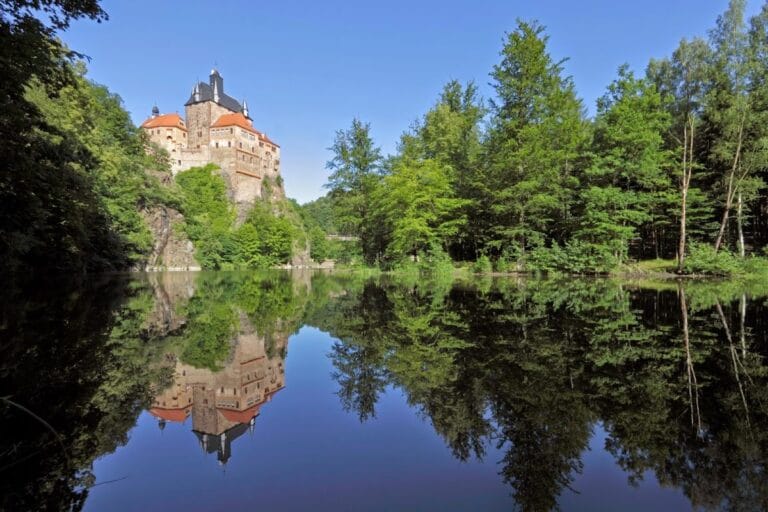
Schloss Sachsenburg: A Late Gothic Residential Castle in Germany


Site at a Glance
- Rating
- 3.6
- Popularity
- Very Low
- Country
- Germany
- Primary era
- Medieval
- External website
- Open
- Eras represented
- Medieval
- Civilizations
- Electorate of Saxony, Holy Roman Empire
- Site type
- Domestic
- Remains
- Castle
On this page10 sections
History
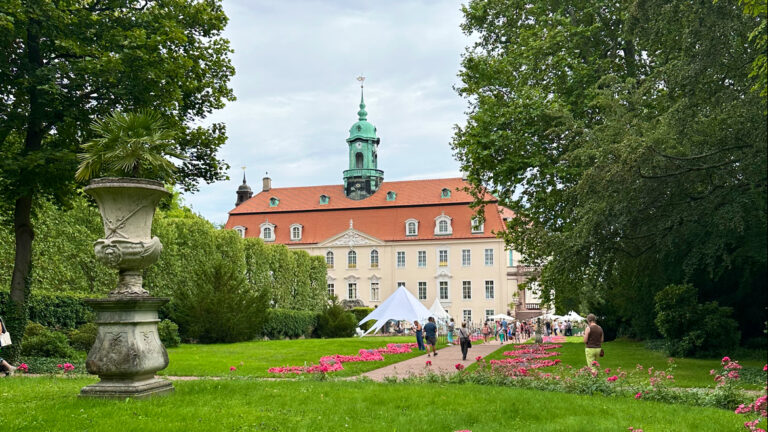
Schloss Sachsenburg is a castle complex in Germany, built by the lords of Mildenstein over an earlier medieval fortress and rebuilt as a late Gothic residential castle around 1480. Its position above the Zschopau connected it with territorial rule, local silver and copper mining, and successive administrative, penal, educational, and wartime institutions.
Medieval origins and mining protection
The lords of Sachsenburg appear in written evidence in 1197, when Heinricus de Sassenberg was named. Whether a castle already stood there at that date remains uncertain, but archaeological finds demonstrate a predecessor fortress by about 1210 to 1230. Additional finds belong broadly to the thirteenth and fourteenth centuries. The castle was apparently established by the lords of Mildenstein. After their lordship was broken up in connection with the Mildenstein tithe dispute of 1232, Sachsenburg passed to Margrave Henry the Illustrious of the Wettin dynasty, a powerful German ruling house whose lands included much of Saxony.
The discovery of rich silver-bearing lead and copper deposits at Treppenhauer around the middle of the thirteenth century led to the mining settlement of Bleiberg. Sachsenburg protected the local mining operations during this period of prosperity. Bleiberg became deserted after the middle of the fourteenth century, and in 1364, at the end of the region’s first major mining period, the Wettins sold the castle to two knights from Döbeln. The estate passed to the von Schönberg family in 1368.
The late medieval rebuilding
Caspar von Schönberg commissioned the Saxon master builder Hans Reynhart to construct the present castle on the remains of the older fortress. The work took place around 1480, a date supported by the study of tree rings in surviving wooden elements. An inscription in the chapel states that the Gothic residential castle was completed in 1488. The resulting complex was a late Gothic residence, a later phase of Gothic architecture associated with elaborate forms and detailing.
Administrative seat and wartime destruction
From 1610, Sachsenburg was the administrative seat of the Electoral Saxon Amt of Sachsenburg with Frankenberg. An Amt was a territorial administrative district in the early-modern German states, and this one comprised only ten villages. During the Thirty Years’ War, the major European conflict of 1618 to 1648, soldiers destroyed the castle’s first and second outer baileys and plundered the complex. An outer bailey was an enclosed area outside the principal castle core, used for additional buildings, storage, or defensive purposes.
Prison, education, and Nazi institutions
When the administrative seat was abandoned in 1864, the castle entered a series of new uses. From that year it housed young female prisoners, and from 1867 it operated as a penal and correctional institution. The property remained reserved for prisoners until 1926. From 1914, those held there included Russian, English, and Serbian prisoners of war. The Russian group included interned academics and students of the Freiberg Mining Academy.
In 1926, the state of Saxony converted Sachsenburg into a residential adult-education centre directed by Franz Angermann. The centre closed during the Nazi period. A political detention camp operated briefly at the castle in 1933 before being transferred to a spinning mill on the Zschopau. From May of that year, the castle also housed the Gau leadership school of the Saxon branch of the National Socialist Women’s League, the women’s organization of the National Socialist German Workers’ Party, or NSDAP, which ruled Germany from 1933 to 1945.
Wartime microbiology and postwar reinterpretation
In autumn 1943, plans were prepared to move the Reich Health Leader’s Research Centre for Foreign Medicine and Settlement Biology to Sachsenburg and to establish an Institute for Microbiology of the Wehrmacht, Nazi Germany’s armed forces. The Robert Koch Institute, Germany’s national institution for public-health and infectious-disease research, was assigned responsibility for the facility as a wartime auxiliary branch. A principal task was the production of plague vaccines, prompted by fears that the Red Army might use plague pathogens as biological weapons. Despite severe difficulties, the work continued. On 15 March 1945, institute head Hermann Gildemeister telegraphed that 56 litres were ready and another 20 litres would be diluted within several days once distilled water arrived.
The Soviet Army occupied Sachsenburg in early May 1945 and allowed the institute to continue operating under Gildemeister until September. In 1946, military physician Walter Schreiber falsely claimed during the Nuremberg trial that Hitler had ordered an offensive German biological-weapons programme in 1943 and that the Sachsenburg laboratories had taken part in it. His claims entered the judgment because he was unavailable for cross-examination. Later archival research found that the planned work at Sachsenburg was intended to protect against biological warfare rather than to prepare offensive biological-weapons activities. This reassessment led to an exhibition on Sachsenburg and biological warfare in 1998 and to the touring exhibition Black Death and Colorado Beetles in 2000, which travelled through Germany until 2004.
Postwar institutions and conservation
After the war, Sachsenburg housed people displaced from former eastern territories, including areas that had become part of Poland, the Soviet Union, or Czechoslovakia. A Jugendwerkhof, an institution in postwar East Germany for the compulsory education and correction of young people considered socially or behaviorally difficult, operated at the castle from 1947 to 1967. From 1968, the Dresden state-owned housing construction combine used the complex as a children’s holiday camp and training centre.
The castle area was registered as an archaeological monument on 16 September 1970, with protection directed specifically at the predecessor fortress. In 1990, Sachsenburg was sold to Stuttgarter Hofbräu AG for one mark. Restitution claims led to its transfer in 1993 to the municipality of Sachsenburg, which became part of Frankenberg in 1994. Since 2001, the city of Frankenberg and the Kuratorium Schloss Sachsenburg association have secured and rehabilitated the complex, alongside intensive building investigations led by Wolfgang Schwabenicky. Renovation has continued since 2018. The planned future use combines a museum with an educational and congress centre, gastronomy, and accommodation. Exhibitions have also addressed the castle’s history, the excavations and medieval mining at Treppenhauer, and the work of the Hainichen painter Leo Lessig.
Remains
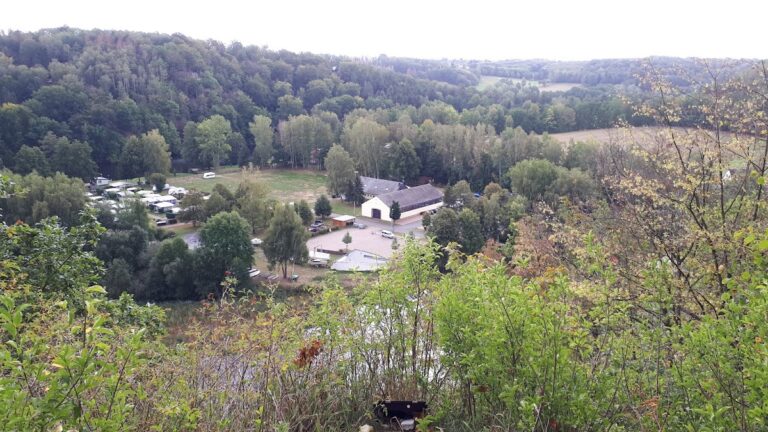
Schloss Sachsenburg occupies a southwest-oriented rocky spur above the eastern side of the Zschopau, about one kilometre south-southwest of Sachsenburg. The castle stands above the river and encloses a triangular courtyard. The surviving complex was built over the earlier fortress, allowing archaeological and building investigations to examine the relationship between the late Gothic residence and its medieval predecessor.
Late Gothic residential castle
The present complex is a late Gothic residential castle and is described as one of the few completely preserved examples of this type in Saxony. Its surviving fabric includes the south facade facing the Zschopau valley, the north wing, rooms on the ground floor of the west wing, a room beside the spiral stair on the first floor of the east wing, and the chapel. The chapel inscription gives 1488 as the completion date of the Gothic residence, while dendrochronology supports construction activity around 1480.
Archaeological remains and conservation
Archaeological investigations have produced finds placing the predecessor castle at the site by about 1210 to 1230. Excavation and building research have examined the earlier fortress beneath the surviving residential castle and have helped clarify the complex’s successive phases. Structural securing, building investigation, and renovation since 2001 have focused on the historic fabric and supported the planned museum and educational reuse.