Tōzen-ji Temple: A Pure Land Buddhist Temple in Tokyo
Site at a Glance
- Country
- Japan
- Primary era
- Modern
- Eras represented
- Modern
- Civilizations
- Tokugawa
- Site type
- Religious
- Remains
- Temple
On this page6 sections
History
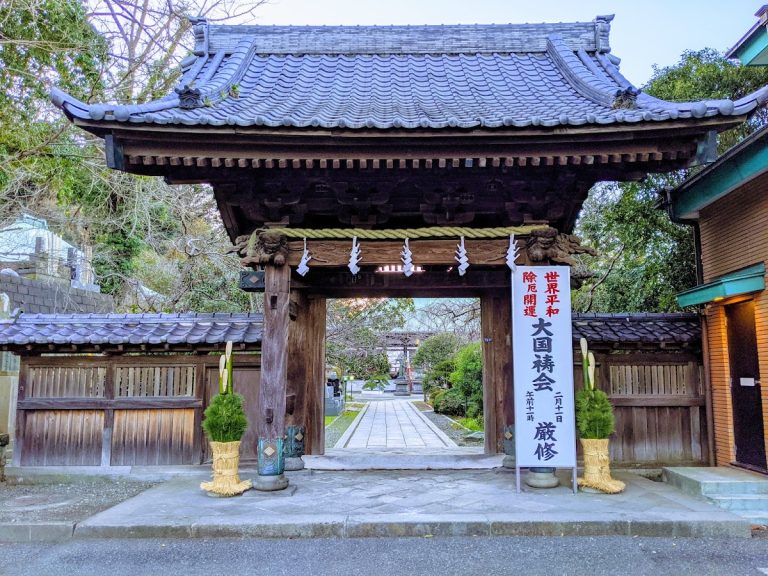
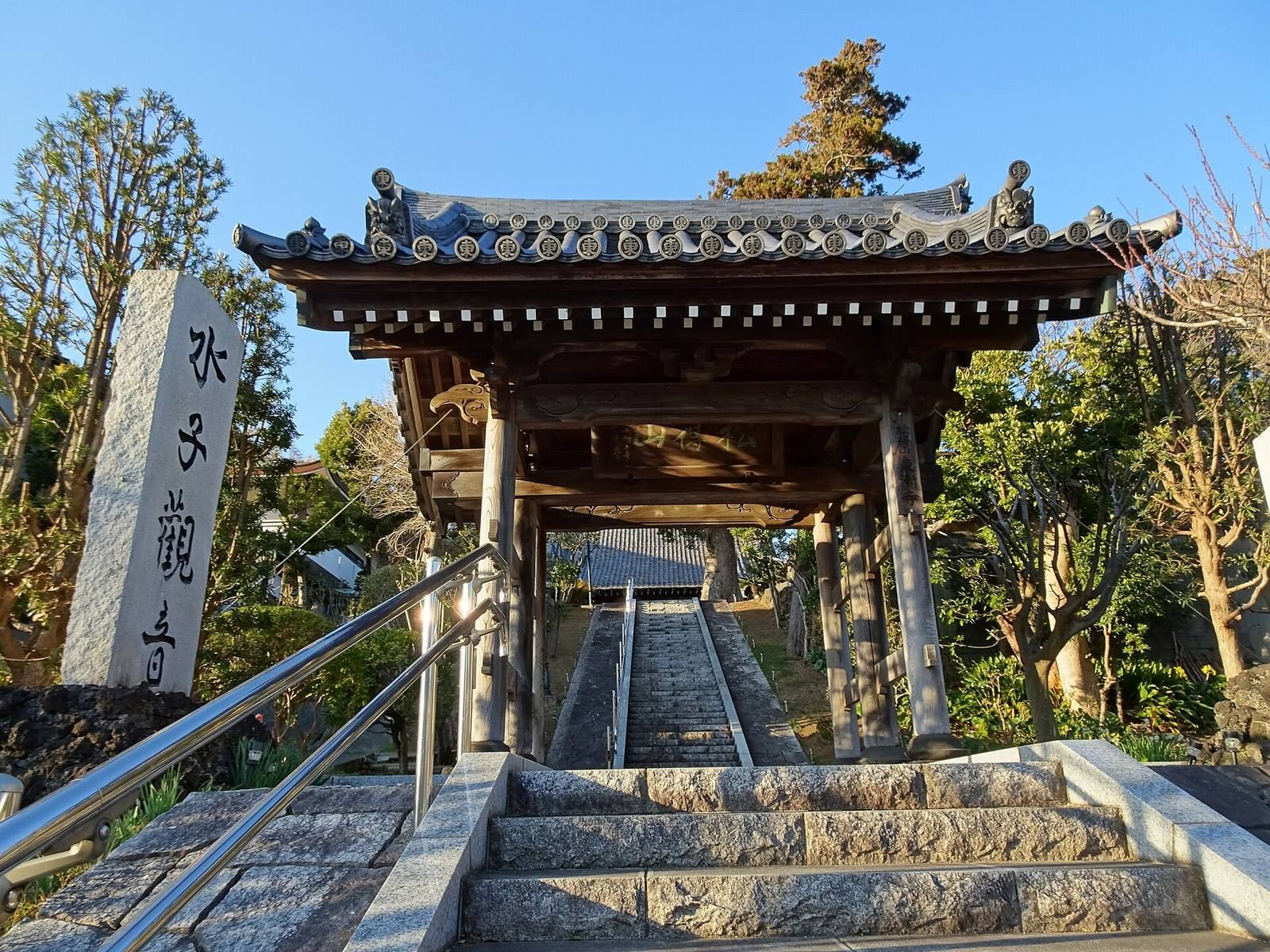
Tōzen-ji Temple is a Pure Land Buddhist temple in Minato City, Tokyo, Japan, with a traditional foundation date of July 1240. Pure Land Buddhism centers on devotion to Amida Buddha and the hope of rebirth in his Pure Land. The temple’s history is connected with the Nagashima family and with a Jizo pilgrimage whose circuit is centered on Kamakura.
Foundation and revival
Temple tradition attributes its foundation to a fifth son of Miura Yoshiaki, a medieval warrior associated with the Miura clan. The son entered Buddhist orders, took the name Tōzen, and is said to have turned his residence into a temple. Another tradition derives the temple’s name from his wife’s posthumous Buddhist name; a later interpretation holds that the temple was founded in her honor. Its mountain name, Shōtoku-zan, is also said to come from the founder’s posthumous Buddhist name.
After a period of decline, a member of the Nagashima family revived the temple between 1532 and 1555 and invited a monk to serve as its founding priest. Later repairs to the buildings were also attributed to an individual. Nagashima descendants continued to live in the village into at least the Showa period, which began in 1926.
Landholding and rebuilding
An official instrument dated 7 April 1577 confirmed the temple’s landholding and exempted it from military duties related to firearms. In November 1591, after entering the Kanto region, Tokugawa Ieyasu granted the temple land assessed at three koku, a traditional measure of rice yield used to assess land and income. This grant secured the temple’s institutional position. A fire destroyed the main hall and other buildings in 1822; they were rebuilt in 1826. Two subsidiary temples nearby were abolished in the early Meiji period (1868–1912) and incorporated into Tōzen-ji.
The Jizo image and its former temple
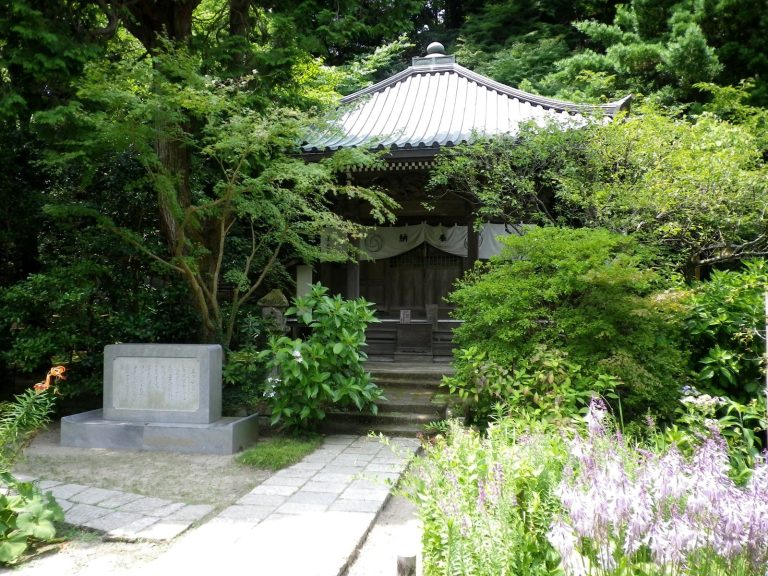
The Jizo image now associated with Tōzen-ji was originally housed at another temple. Tradition connects that temple’s beginnings with Minamoto no Yoritomo, the military leader who established the Kamakura shogunate. After praying to a Jizo at Mount Higane in Izu during his successful uprising, Yoritomo is said to have established a temple in Kamakura. The temple stood beside Tsurugaoka Hachimangu, a Shinto shrine, and served as its associated Buddhist temple. Its Buddhist affiliation changed over time, from Shingon to Zen and later to Pure Land.
The former temple was abolished amid the early Meiji separation of Buddhism and Shinto and the suppression of Buddhism. Its Jizo image was moved first to another temple and then to a Tōzen-ji subsidiary, which was incorporated into Tōzen-ji in the early Meiji period. The image itself reached Tōzen-ji in the early Showa period. Its place as the nineteenth stop on the Kamakura Twenty-Four Jizo Pilgrimage, a devotional circuit of temples associated with Jizo, passed from the former temple to Tōzen-ji. Tōzen-ji is the circuit’s only stop outside Kamakura City. The image is also associated with prayers for commercial prosperity.
Remains
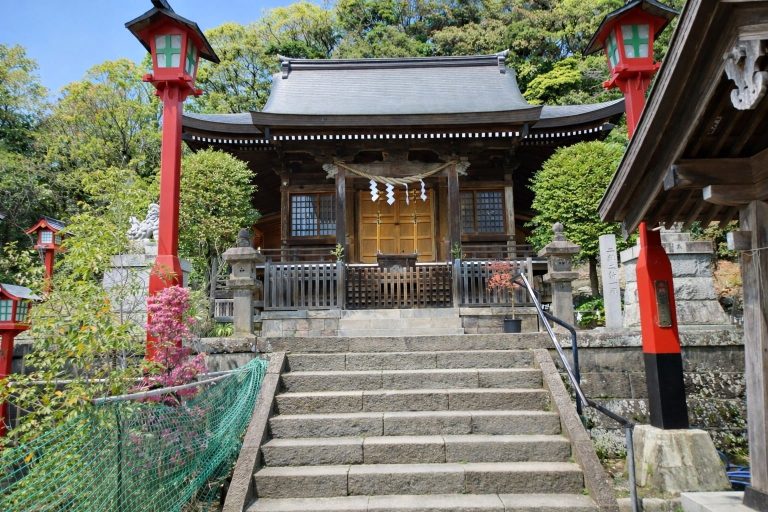
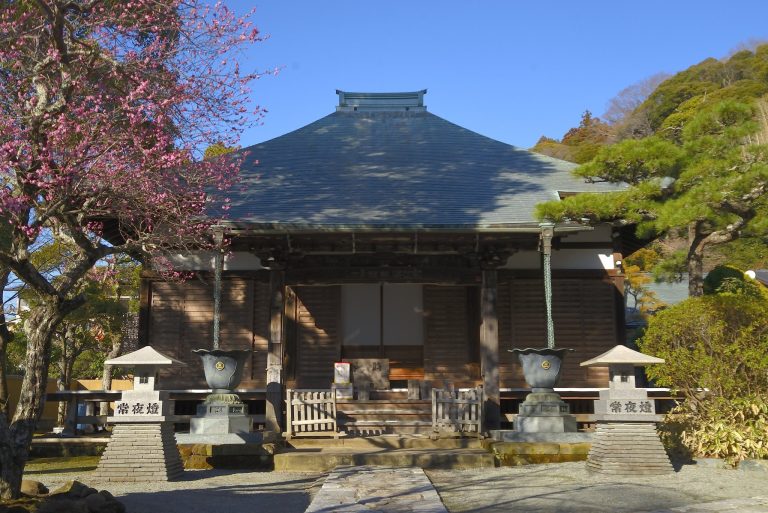
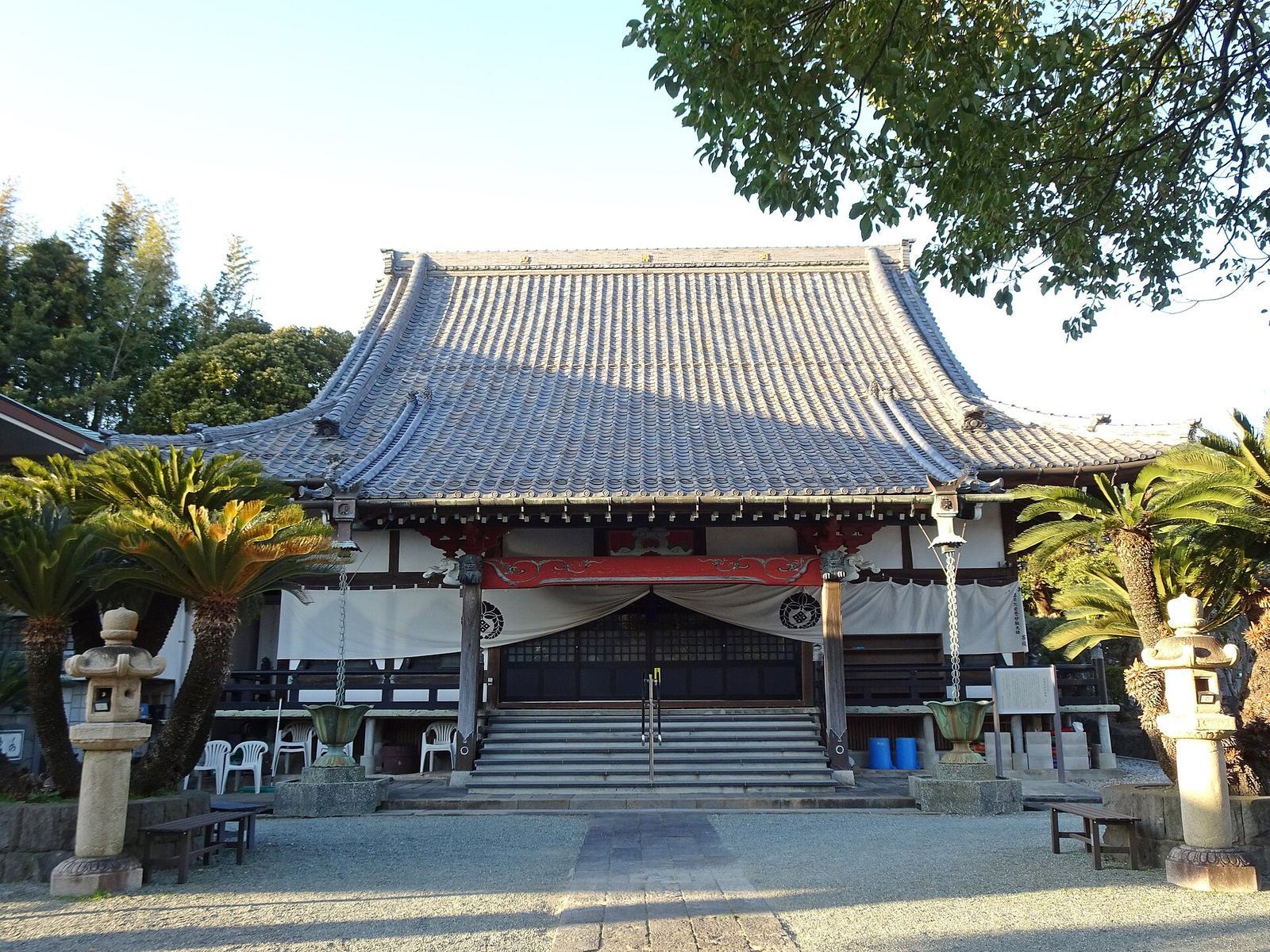
The main hall is the temple’s principal building. Its principal image is an Amida triad, showing Amida Buddha with two attendant bodhisattvas. Another important image is a wooden Jizo, a bodhisattva widely venerated in Japan and central to the temple’s pilgrimage association.
The Jizo image
The wooden figure is about one metre high and depicts Jizo half-seated, with the left foot raised on a small lotus pedestal. It holds a ringed staff in its left hand and a wish-granting jewel in its right. The image is assembled from joined wood blocks, with crystal eyes set into the figure. Its exposed flesh areas are lacquered and gilded, while the drapery is painted black. The head and torso are made of joined sections; the legs form a single horizontal piece, with two additional pieces attached at the front of the knees.
An ink inscription inside the figure gives its creation date as 15 November 1462. It says that a donor gathered contributions, the resident priest commissioned a sculptor, and many others also contributed. The elaborate folds of the clothing are thought to reflect the influence of Chinese art of the Song dynasty (960–1279). Later repairs are considered to have reduced the modeling of the face and body. One assessment describes the figure as formalized and lacking vitality; another finds its movement insufficiently flowing while praising the consistent treatment of its volume and garments.
The image’s coloring was restored in 1625 and again in 1703. Its inscription, construction, and later treatments preserve evidence of both its making and its subsequent care.