Ankokuron-ji Temple: A Nichiren Buddhist Temple in Kamakura, Japan


Site at a Glance
- Rating
- 4.1
- Popularity
- Low
- Country
- Japan
- Primary era
- Medieval
- External website
- Open
- Eras represented
- Medieval
- Civilizations
- Unclassified
- Site type
- Religious
On this page17 sections
History
Ankokuron-ji Temple is a Nichiren Buddhist temple in Kamakura, Japan, conventionally founded in 1253 and associated with the thirteenth-century reformer Nichiren. The temple belongs to the Nichiren school and takes its name from the Risshō Ankoku Ron, or “Treatise on Establishing the Correct Teaching for the Peace of the Land,” Nichiren’s major work on the relationship between religious teaching and social stability.
Nichiren in Kamakura
Nichiren came to Kamakura from Kominato in Awa Province in 1253 and settled in the Matsubagayatsu district of Ōmachi, then part of the country’s cultural and political center. He began chanting the Lotus Sutra, the Mahayana Buddhist scripture regarded by Nichiren traditions as the supreme expression of the Buddha’s teaching.
The temple’s foundation tradition names Nichiren as its founder. A more specific institutional account states that his disciple Nichirō established Ankokuron-kutsu-ji in 1260 beside the rock cave associated with Nichiren’s writing of the Risshō Ankoku Ron. Nichiren is therefore regarded as the temple’s founding master, while Nichirō is associated with its early institutional establishment.
The treatise is traditionally said to have been written in a cave at the temple over three years beginning in 1257. Its presentation led to the first of the three persecutions traditionally connected with Nichiren’s life. He narrowly escaped execution, was pardoned, and was exiled to Sado Island.
The Matsubagayatsu tradition
Ankokuron-ji, Myōhō-ji, and Chōshō-ji are traditionally linked with Nichiren’s hut in Matsubagayatsu, a name meaning the “Valley of Pine Needles.” Each temple claims a connection with the hut’s site. The 1685 Shinpen Kamakurashi, commissioned by the daimyō and scholar Tokugawa Mitsukuni, recorded tension between Myōhō-ji and Chōshō-ji. In 1787, a shogunate court granted Myōhō-ji the right to claim Nichiren’s hermitage.
Ankokuron-ji apparently did not take part in that case. The government’s position was that Nichiren first had a hut in the area when he arrived in Kamakura and later built another near Myōhō-ji after returning from exile in Izu in 1263. A black commemorative stele erected by the Kamakura Seinendan in 1939 preserves the tradition of Nichiren’s arrival in 1253, his residence in the district, and his writing of the treatise in a cave from 1257.
The Nanmenkutsu, or “South-facing Cave,” is traditionally identified as the place where Nichiren hid after attackers burned his hut during the Matsubagayatsu persecution of 1260. In the associated tradition, a white monkey guided him to safety and brought him food. The monkey is regarded within the tradition as an attendant of Sannō Gongen, a deity understood through the combined Shinto-Buddhist framework and associated here with Taishakuten, a Buddhist deity linked to the Hindu god Indra.
Nichirō and later recognition
Nichirō, one of Nichiren’s leading disciples and an important early figure in the continuation of his religious movement, chose to be cremated and buried at Ankokuron-ji. His funerary pavilion was established according to his wish to be cremated at the place where he had entered religious life and shaved his head.
The temple’s institutional relationships include its former head-temple designation under Hiki-ga-yatsu Myōhon-ji and its association with the Ikegami-Todomise branch lineage. Ankokuron-ji also serves as the memorial temple of Toshio Dōkō, former president of Toshiba and chairman of the Japan Business Federation, who was a committed believer in the Lotus Sutra tradition.
On 25 April 2016, Ankokuron-ji was designated a component cultural property of Japan Heritage. Three trees on the grounds, the Myōhō-zakura mountain cherry, a kaidō crabapple, and a sasanqua camellia, are designated natural monuments of Kamakura. The camellia is traditionally said to be about 350 years old.
Remains
Ankokuron-ji occupies the Matsubagayatsu area of Ōmachi, Kamakura. Its grounds combine a temple complex with mountain paths, stone stairs, caves, a cemetery, a ridge, and a rear hillside. The entrance, principal buildings, burial features, and elevated paths form a route through a landscape shaped by both religious use and traditions connected with Nichiren.
Entrance and principal buildings
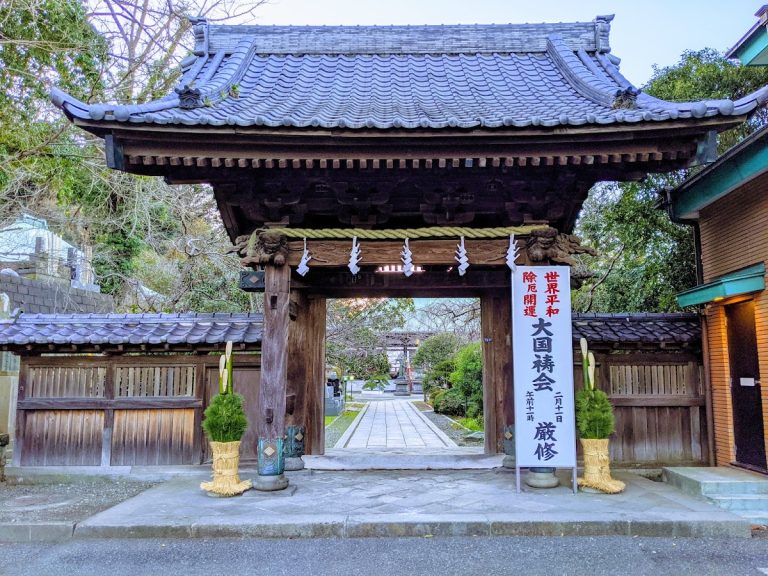
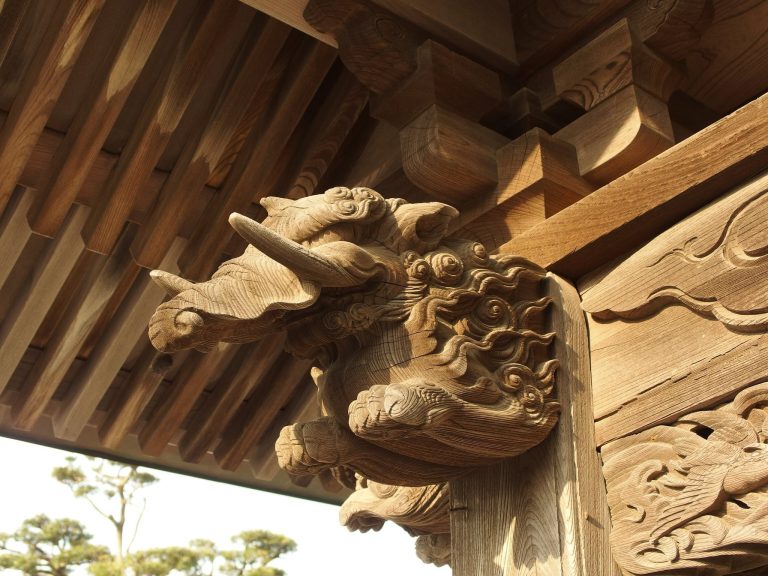
Entrance gate and stone lanterns
Stone lanterns stand beside the entrance gate. They were brought from Zōjō-ji in Tokyo, one of the two funerary temples of the Tokugawa family.
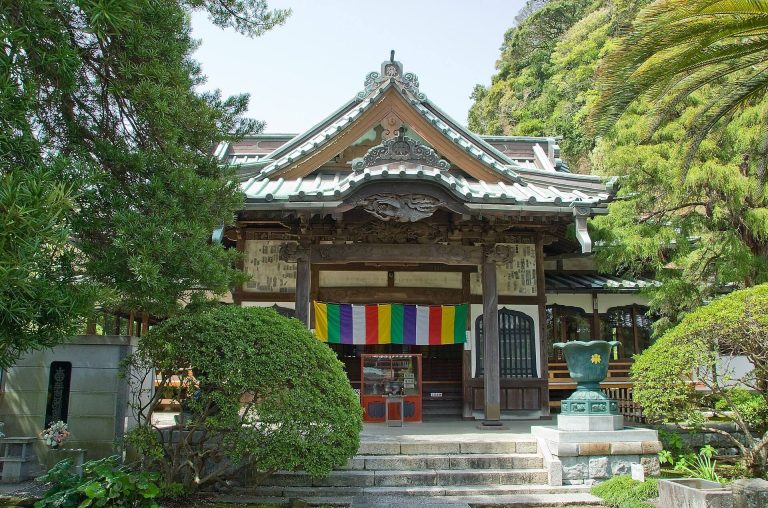
Goshoan
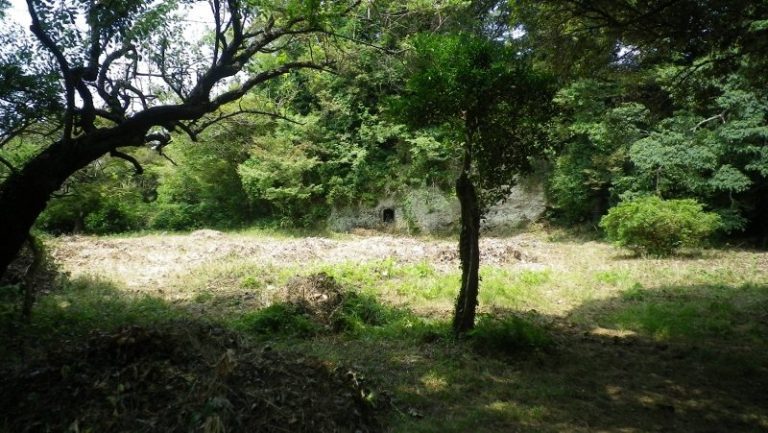
The Goshoan, or “Small Hermitage,” stands beside the cave traditionally identified as the place where Nichiren wrote the Risshō Ankoku Ron. An old tree in front of the building is said to have been planted by Nichiren from a sapling brought from Chiba.
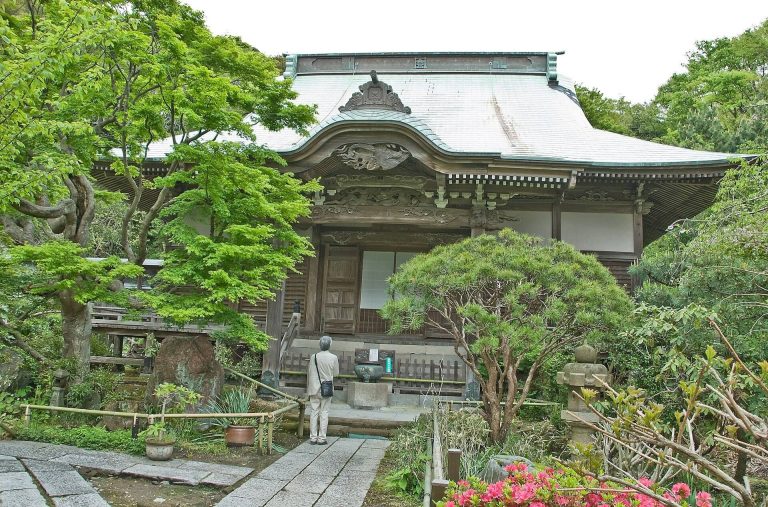
Main hall
The main hall was rebuilt in 1963 after the earlier building was destroyed by fire. It forms the principal building of the temple complex.
Nichirō funerary pavilion
Beyond the main hall, the cemetery contains the Nichirō funerary pavilion. The pavilion holds Nichirō’s ashes and preserves the place connected with his wish to be cremated where he had begun his religious life.
Caves and hillside features
Nanmenkutsu
The Nanmenkutsu is located above the main hall. Its name means “South-facing Cave,” and it contains a statue of a white monkey commemorating the tradition that the animal rescued Nichiren after his hut was burned during the Matsubagayatsu persecution.
Bell of Peace
A mountain path beyond the cave leads to the Bell of Peace, a bronze bell positioned on a ridge above the entrance. The path continues through the hillside landscape toward the Fujimidai.
Fujimidai
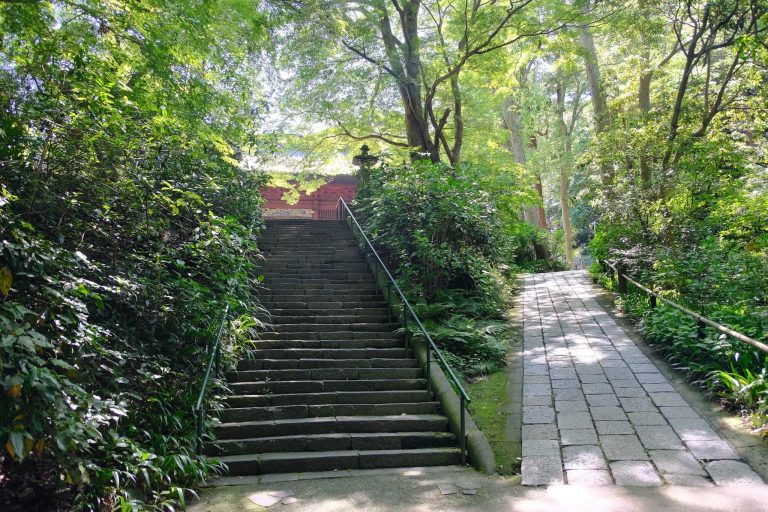
The Fujimidai is an elevated place traditionally associated with Nichiren’s daily contemplation of Mount Fuji. From this viewpoint, Mount Fuji, Kamakura, Kamakura’s beach, and Hakone are visible. Stone stairs descend from the hillside toward the entrance.
Shrine and sacred trees
Kumaō Daizenjin Sonden
Near the entrance stands the Kumaō Daizenjin Sonden, an Inari shrine enshrining a samurai who served Nichiren. Inari is a Japanese religious tradition associated especially with rice, food, prosperity, and agriculture.
Myōhō-zakura and other trees
The temple grounds contain the Myōhō-zakura, a mountain cherry of the Ichihara-tora-no-o variety traditionally said to have grown from Nichiren’s staff. The grounds also include a kaidō crabapple and a sasanqua camellia, the latter traditionally regarded as about 350 years old.