Chōshō-ji Temple: A Nichiren Buddhist Temple in Kamakura


Site at a Glance
- Rating
- 4.2
- Popularity
- Low
- Country
- Japan
- Primary era
- Medieval
- External website
- Open
- Eras represented
- Medieval
- Civilizations
- Ashikaga shogunate
- Site type
- Religious
- Remains
- Temple
On this page13 sections
History
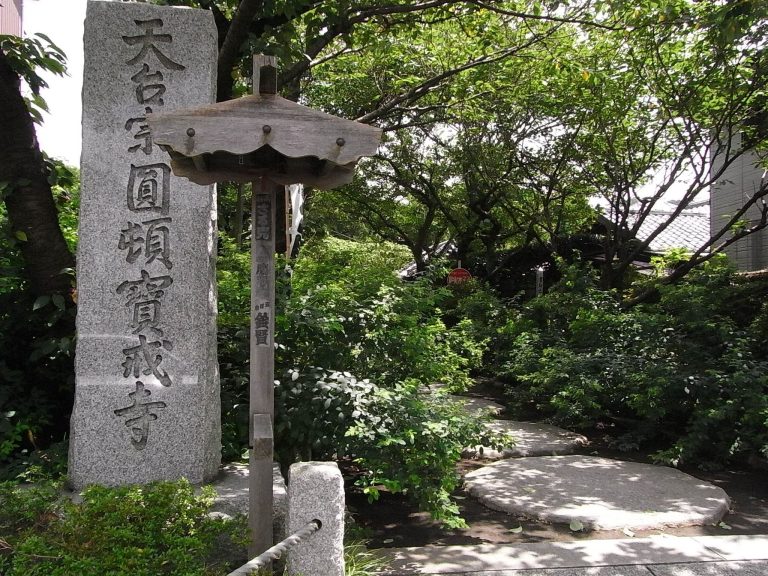
Chōshō-ji Temple is a Nichiren Buddhist temple in Kamakura, Japan, traditionally associated with a foundation in 1253 during the medieval period of Japanese Buddhism. It is formally known as Sekiseizan Chōshō-ji and belongs to Nichiren Shū, one of the schools of Nichiren Buddhism, which centers on the Lotus Sutra.
Foundation and Early Development
Tradition attributes the temple’s beginning to Ishii Nagakatsu, a local landholder who became a follower of Nichiren. In 1253, he is said to have built a Hokke-dō at his residence and donated it to Nichiren. Another tradition places the construction of the temple in 1263, ten years after the foundations of Ankokuron-ji and Myōhō-ji.
The original Hokke-dō is regarded as the predecessor of Honkokuji in present-day Yamashina, Kyoto. It was transferred to the capital in 1345 and later declined. Nichiryu revived the institution, after which it became known as Sekiseizan Chōshō-ji. The temple was formerly a subsidiary of Honkokuji’s Rokujo lineage and is also associated with the Konishi branch.
Matsubagayatsu Tradition
Chōshō-ji is one of three Kamakura temples connected with Matsubagayatsu, known as the Valley of Pine Needles. Nichiren, a 13th-century Japanese Buddhist teacher and the founder of the tradition named after him, is traditionally believed to have kept a hut there. Chōshō-ji, Ankokuron-ji, and Myōhō-ji each identify their grounds or surroundings with this location, although none has proved the claim.
Chōshō-ji’s claim concerns an area near the entrance to Zaimokuza Reien cemetery, outside the temple precincts. In 1787, the shogunate ruled that Myōhō-ji could claim Nichiren’s hermitage site. The government’s position was that Nichiren first established a hut at Ankokuron-ji and later built another near Myōhō-ji after returning from exile in Izu in 1263.
Institutional and Religious Continuity
During the Edo period, the shogunate granted Chōshō-ji a shuinjo, an official certificate bearing a vermilion seal that confirmed privileges or rights. The temple’s principal object of worship is the Great Mandala, a central sacred object in Nichiren Buddhist practice representing the tradition’s doctrine and sacred figures.
Each year on February 11, Chōshō-ji hosts the Daikokutōe Seiman Matsuri. During the ceremony, Buddhist priests pour cold water over themselves while praying for the safety of the country. About 150 Nichiren priests from across Japan take part, and participation is required for authorization to conduct religious services.
A formal cultural-property designation covers the Hokke-dō and associated ritual objects and fittings. This status includes the building’s religious furnishings and reflects the continuing historical value assigned to the temple complex.
Remains
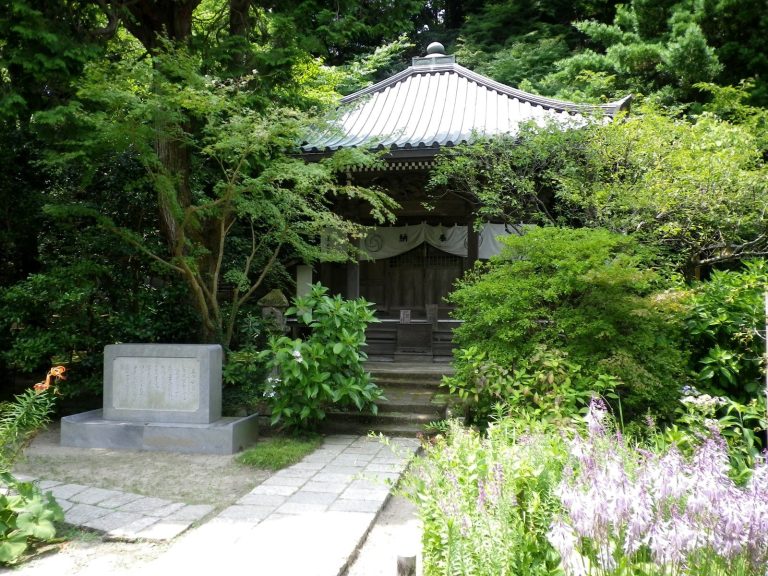
Chōshō-ji’s surviving buildings and religious features are arranged around the temple gate, the principal images, and the Hokke-dō. The mountain name Sekiseizan is part of the temple’s formal identity. The Hokke-dō stands slightly above the Taishaku-dō and functions as the complex’s de facto main hall.
Gate and Protective Figures
Statue of Nichiren
A large statue of Nichiren stands beside the temple gate. Four Deva Kings surround the figure as guardians. These Buddhist protective figures are traditionally associated with safeguarding the four directions, giving the entrance a group of religious images centered on Nichiren.
Taishaku-dō
The Taishaku-dō stands behind the statue of Nichiren and is dedicated to Taishakuten, a Buddhist deity associated with the Indian god Indra and regarded as a protector of Buddhist teaching. Its dedication recalls the tradition that Nichiren was rescued during a period of persecution by a white monkey believed to be Taishakuten’s retainer.
Worship Buildings and Objects
Hokke-dō
The Hokke-dō is a small building positioned somewhat above the Taishaku-dō. Originally constructed during the Muromachi period, the Japanese era from approximately 1336 to 1573, it now serves as Chōshō-ji’s de facto main hall.
Ritual Furnishings
Inside the Hokke-dō are associated religious objects and fittings, including a gong, a lacquered table, a candle stand, and a ritual altar. Together with the building, these objects form part of the temple’s protected cultural-property group.
Cemetery Monument
Memorial to Keiichiro Akagi
Zaimokuza Reien, a cemetery operated by Chōshō-ji, contains a memorial monument to the actor Keiichiro Akagi. The monument stands within the cemetery area, while its status is distinct from the cultural-property designation covering the Hokke-dō and its associated ritual furnishings.