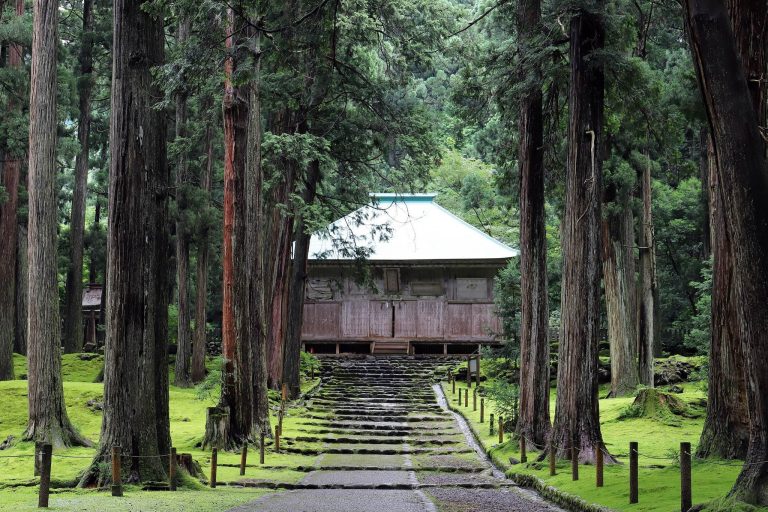
Torigoe Castle: A Stronghold of Kaga’s Ikkō-ikki Resistance
Site at a Glance
- Country
- Japan
- Primary era
- Early Modern
- Eras represented
- Early Modern
- Civilizations
- Unclassified
- Site type
- Military
- Remains
- Castle
On this page8 sections
History
Torigoe Castle is a Japanese hilltop stronghold on a ridge near the confluence of the Tedori and Dainichi rivers in Japan. Built around 1573, it served as a base for local adherents resisting Oda Nobunaga’s campaign in Kaga. The castle’s history belongs to the final phase of the Kaga Ikkō-ikki, organized movements of followers of Jōdo Shinshū, a Buddhist tradition.
The rise of the Kaga Ikkō-ikki
After the Ōnin War of 1467–1477, a major conflict that weakened Japan’s medieval military government, the Muromachi shogunate lost control of much of the Hokuriku region. Ikkō-ikki adherents displaced local rulers and established their authority in Kaga Province in 1488.
Oda campaigns and the fall of Torigoe
Oda Nobunaga, a powerful military ruler seeking to extend his control across Japan, invaded Kaga after taking neighboring Echizen Province in 1573. Around 1580, leaders at Hongan-ji, a major temple and institutional center of Jōdo Shinshū, sent the local commander Suzuki Dewa-no-kami to organize resistance. Oda forces led by Sakuma Morimasa initially failed to capture Torigoe, where defenders used matchlock guns effectively.
After Oda forces captured Ōyama-gōbō, the Kaga movement’s headquarters, Torigoe’s defenders learned that their leaders had reached an accommodation with Nobunaga at Ishiyama Hongan-ji. With the castle’s resistance isolated, Shibata Katsuie offered negotiations and drew Suzuki and his generals to a meeting, where they were killed. Torigoe then fell to the Oda and came under a commander appointed by them.
Local adherents later retook Torigoe and neighboring Futoge, killing the appointed commanders. Oda forces recaptured both castles and crushed the renewed resistance in the early 1580s. More than 300 defenders were put to death by crucifixion.
Abandonment and historical record
Torigoe was abandoned sometime after the Battle of Shizugatake in 1583, a major conflict in the struggle for power following Nobunaga’s death. After Kaga came under the Maeda clan, Maeda Toshiie strengthened nearby Funaoka Castle because he feared a revival of the movement. Torigoe and Futoge were abolished. Their history preserves the story of resistance by adherents in the Hakusan foothills and the closing phase of the Kaga Ikkō-ikki. In 1985, the ruins of both castles received protection together as a National Historic Site.
Remains
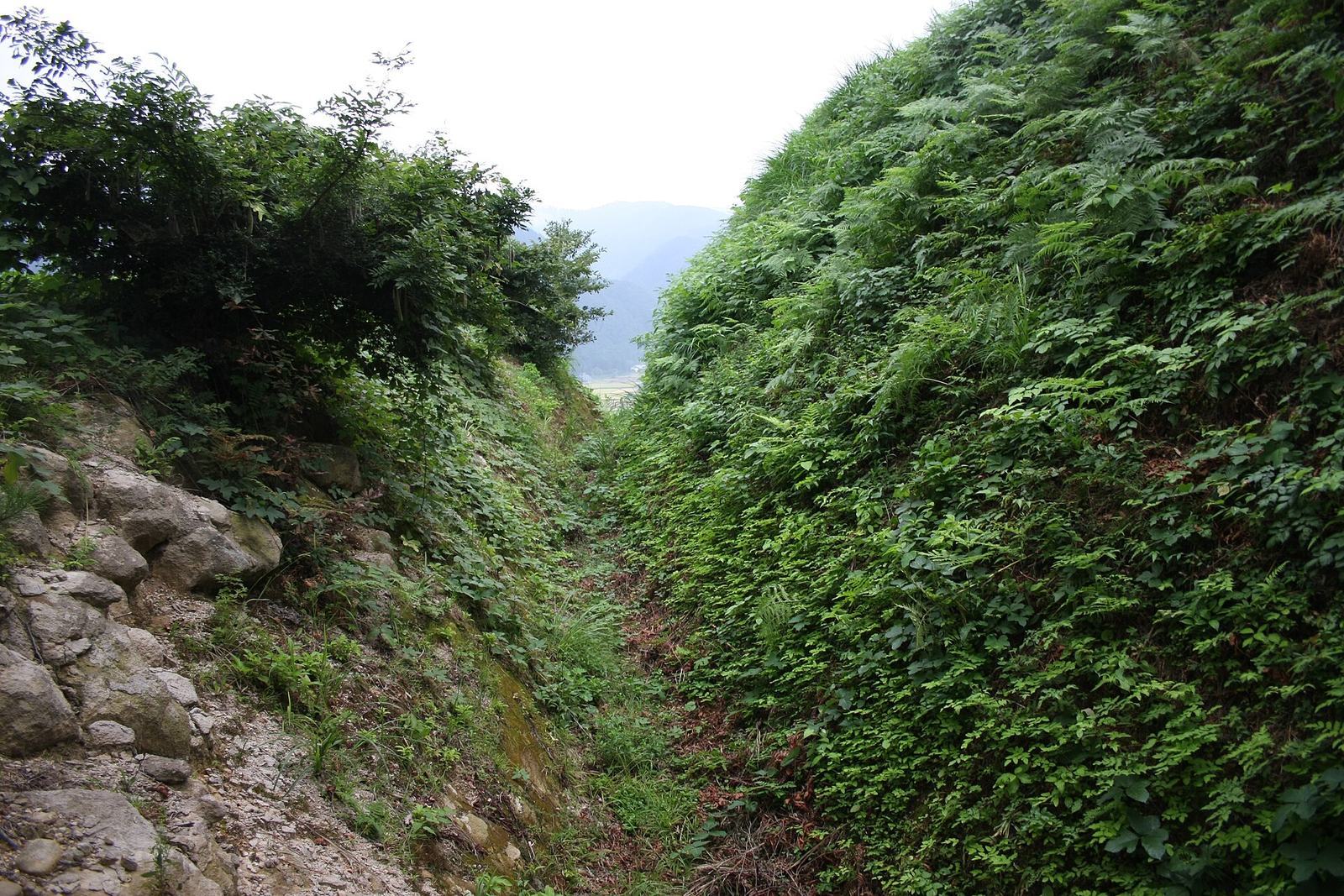
The defenses follow a long, narrow ridge between the Tedori River’s main channel and its Dainichi tributary. Seven principal enclosures cluster around the summit, including the main, second, and third enclosures and rear enclosures. Earthen ramparts and dry moats protected or divided them, while smaller enclosures bordered the main group. The site is described as about 400 metres east to west and 1,200 metres north to south; the castle’s overall dimensions are also given as approximately 300 by 50 metres. The main enclosure stands at an elevation of 312 metres.
Ridge and defensive enclosures
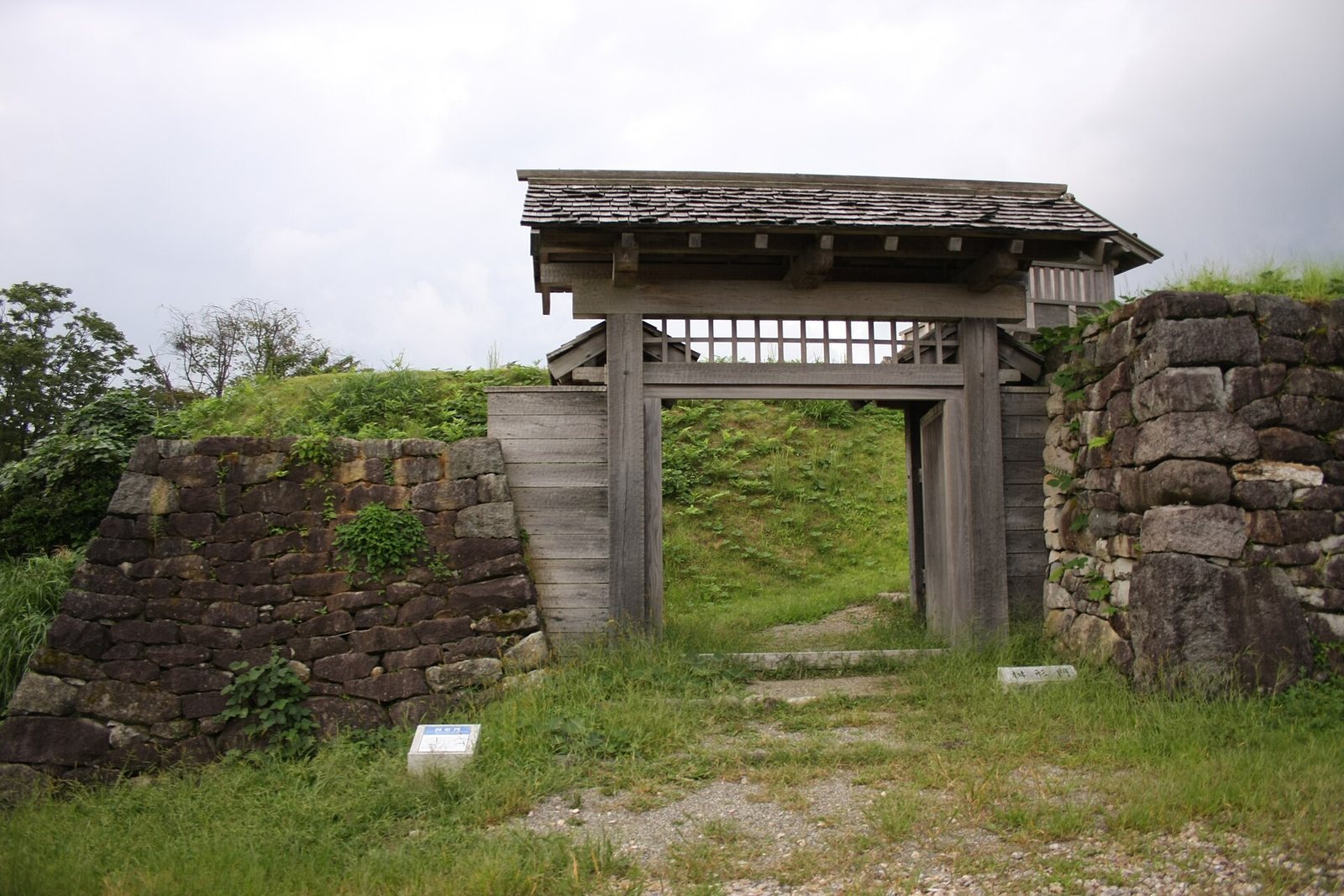
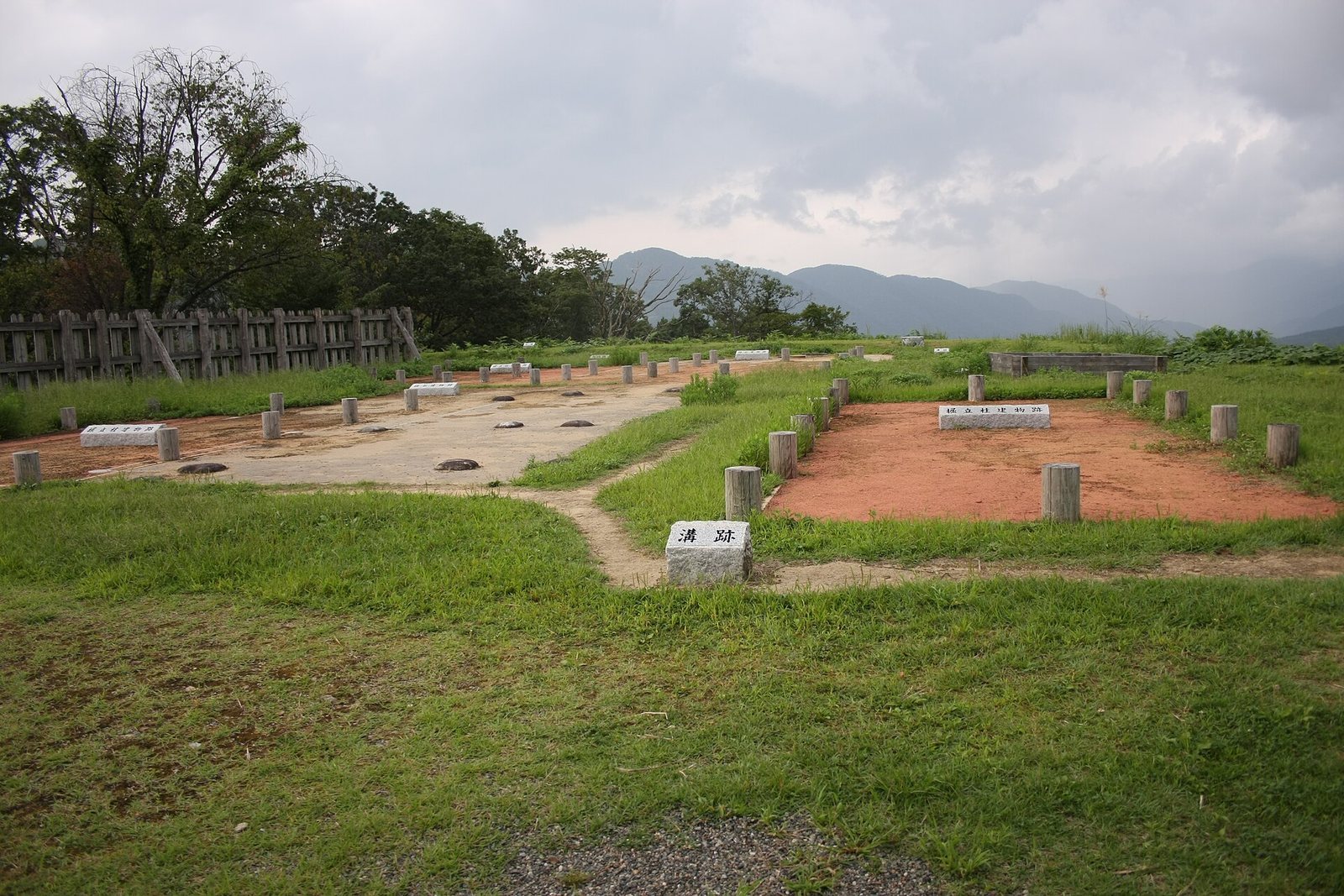
The main enclosure occupies the ridge’s highest point and is rectangular, measuring about 50 by 20 metres. Its defenses included a fortified two-storey gate and turret towers, and stone reinforced parts of the ramparts. Another enclosure lies to its south, with a further one behind it.
Reconstructed defenses
Archaeological excavations revealed the lines of the fortifications and foundations of buildings. These findings informed the reconstruction of a turret gate, other gates, and sections of stone wall.
Futoge Castle
Across the Dainichi River, the smaller Futoge Castle also occupies a ridge. Its remains include several small enclosures.