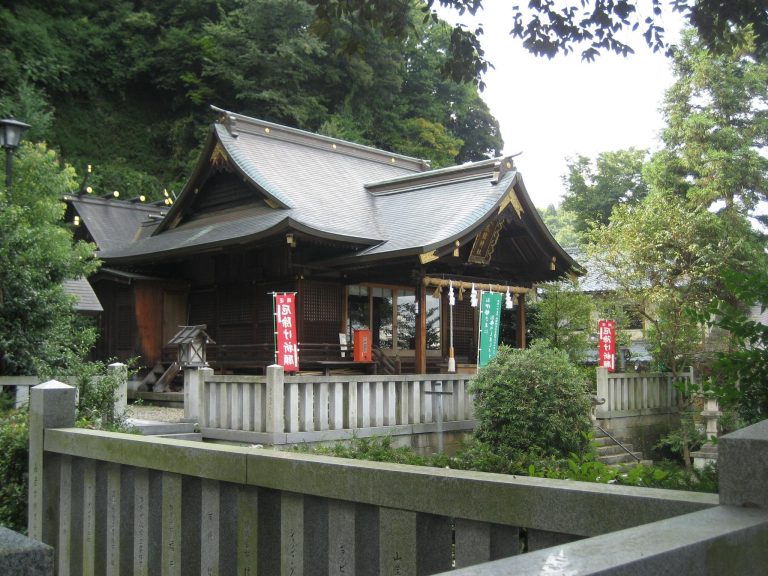
Nata-dera Temple: A Buddhist Temple in Komatsu, Japan


Site at a Glance
- Rating
- 4.4
- Popularity
- Medium
- Country
- Japan
- Primary era
- Early Modern
- External website
- Open
- Eras represented
- Early Modern
- Civilizations
- Tokugawa
- Site type
- Religious
- Remains
- Temple
On this page8 sections
History
Foundation and Renaming
Nata-dera Temple is a Buddhist temple in Komatsu, Japan, traditionally founded in 717 by the monk Taichō. Affiliated with the Kōyasan Shingon-shū school of esoteric Shingon Buddhism, it began when Taichō enshrined an image of Senjū Kannon, the many-armed form of Kannon, in a mountain cave. The temple was first known as Iwaya-ji.
In the late tenth century, the retired Emperor Kazan visited the Hokuriku region and experienced a vision or dream of radiant Kannon figures in the cave. He concluded that the thirty-three sacred sites of the Saigoku Kannon Pilgrimage, a traditional circuit dedicated to Kannon, were concentrated at the site. The temple was consequently renamed Nata-dera, using characters associated with the first and thirty-third temples of that pilgrimage.
Medieval Decline
Nata-dera developed as a place for esoteric Buddhist asceticism and became traditionally associated with the Saigoku Kannon Pilgrimage, although it is not one of that circuit’s numbered temples. It is also the twelfth temple of the Hokuriku Thirty-Three Kannon Pilgrimage and the eleventh temple of the Hokuriku Hakuju Kannon Pilgrimage.
The temple was burned three times during the Nanboku-chō and Sengoku periods. It later declined as growing numbers of people adopted Jōdo Shinshū, a Buddhist tradition centered on devotion to Amida Buddha, during the Ikkō-ikki rebellions, organized religious and local movements prominent in late medieval Japan.
Seventeenth-Century Reconstruction
In 1640, Maeda Toshitsune, the retired daimyō of the Kanazawa Domain, sponsored the reconstruction of Nata-dera. When most of Enuma District was separated from Kanazawa to create the Daishōji Domain, he retained the area around the temple as part of his retirement territory. After his death, the land remained under the Kaga Domain and later passed to the Daishōji Domain through an exchange of land.
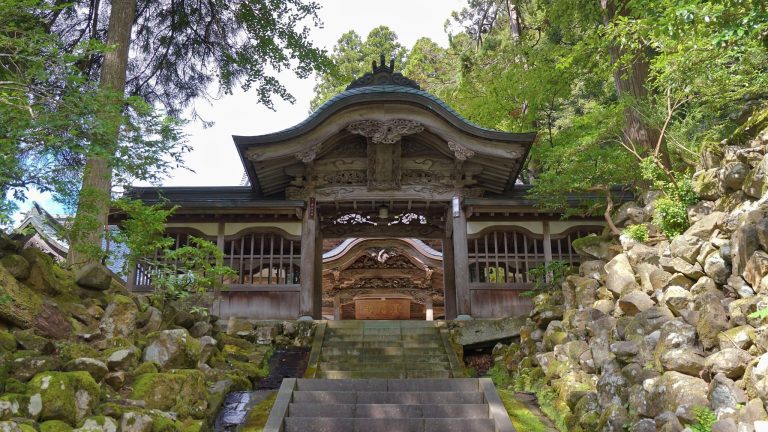
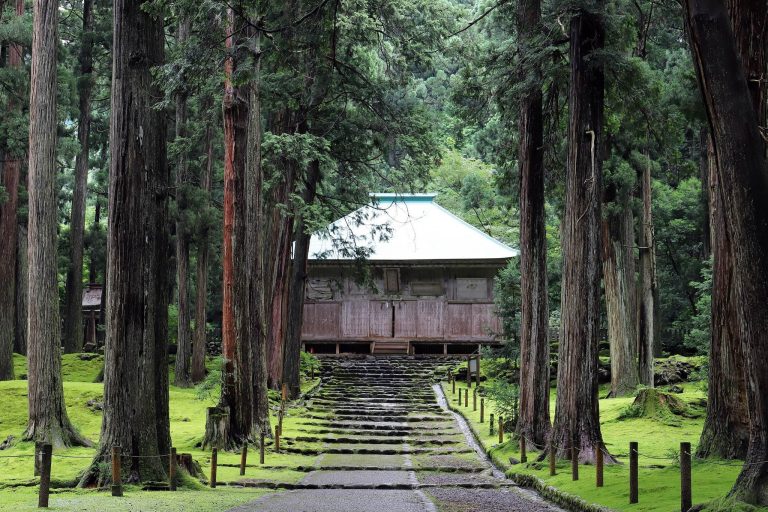
The rebuilding restored the main hall, Karamon gate, lecture hall, three-story pagoda, Goma-dō ritual hall, bell tower, and gardens. The approach was improved by planting cedar trees along both sides. The carpenter in charge was Yamagami Zen’emon, who had also built the worship hall of Keta Taisha.
Bashō and Modern Recognition
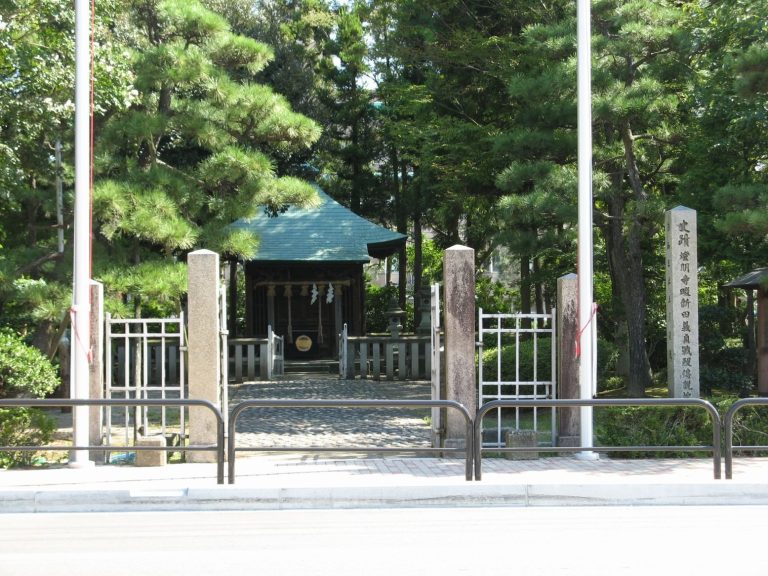
In 1689, the poet Matsuo Bashō visited Nata-dera while returning to Komatsu after parting from his disciple Kawai Sora at Yamanaka Onsen. At the cliffs of Yūsenkyō, Bashō composed a haiku, and a monument commemorating the visit stands within the temple grounds. The precincts are also included among the scenic landscapes associated with Oku no Hosomichi, Bashō’s travel account of his journey.
The main hall, worship hall, Shoin and Kuri, three-story pagoda, Goma-dō, and bell tower are designated Important Cultural Properties. The Kuri garden and the wider precincts hold National Place of Scenic Beauty designations. Nata-dera’s principal image is a hidden statue of Senjū Kannon, a sacred image normally concealed from public view and opened every thirty-three years. It was displayed from April 9 to October 31, 2017, during the temple’s 1,300th-anniversary foundation festival.
Remains
Temple Buildings and Garden
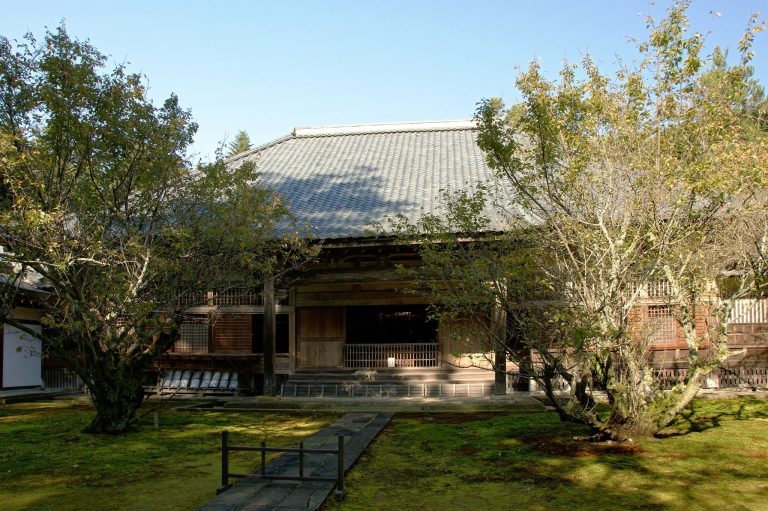
The precinct is organized around a group of religious and ceremonial buildings that includes the main hall, worship hall, Shoin and Kuri, Karamon gate, lecture hall, three-story pagoda, Goma-dō, bell tower, and Fumon-kaku. The principal image of Senjū Kannon belongs to the sacred focus of the complex and is preserved as a hibutsu, or hidden Buddhist image. Its original setting in a cave or mountain niche remains central to the temple’s foundation tradition.
The Kuri garden is recognized as a scenic garden within the precinct. The approach created during the temple’s reconstruction is lined with cedar trees on both sides, while the surviving buildings include the structures identified as Important Cultural Properties, notably the main hall, Shoin and Kuri, three-story pagoda, Goma-dō, and bell tower.
Yūsenkyō Cliffs
Yūsenkyō contains rocky cliffs, unusually shaped rocks, and sacred stones. The cliffs are associated with Bashō’s visit and poem, and the monument commemorating him stands on the temple grounds. Together with the gardens and buildings, this rocky landscape forms part of the scenic precinct connected with Oku no Hosomichi.