Wichai Prasit Fort: An Ayutthaya-Period River Defense in Bangkok
Site at a Glance
- Country
- Thailand
- Primary era
- Unclassified
- Eras represented
- Unclassified
- Civilizations
- Unclassified
- Site type
- Military
- Remains
- Fort
On this page5 sections
History
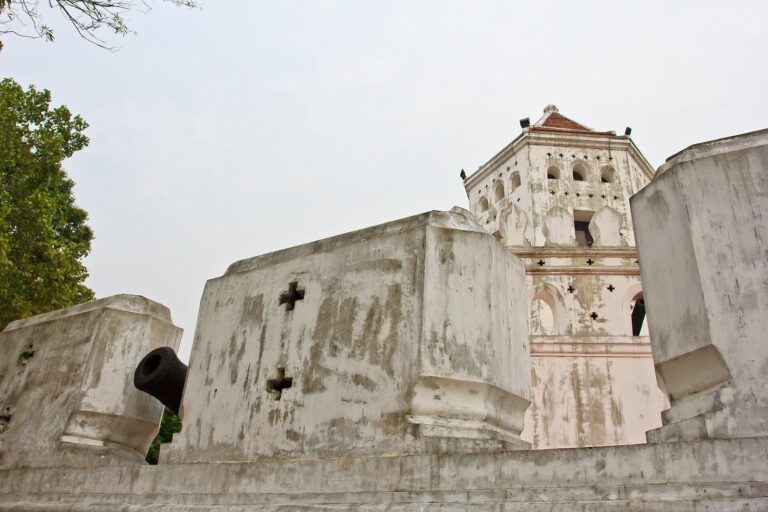
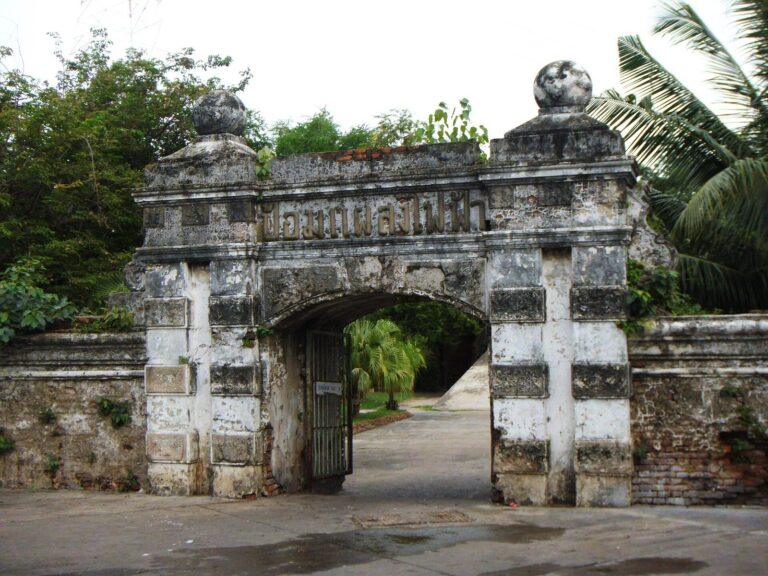
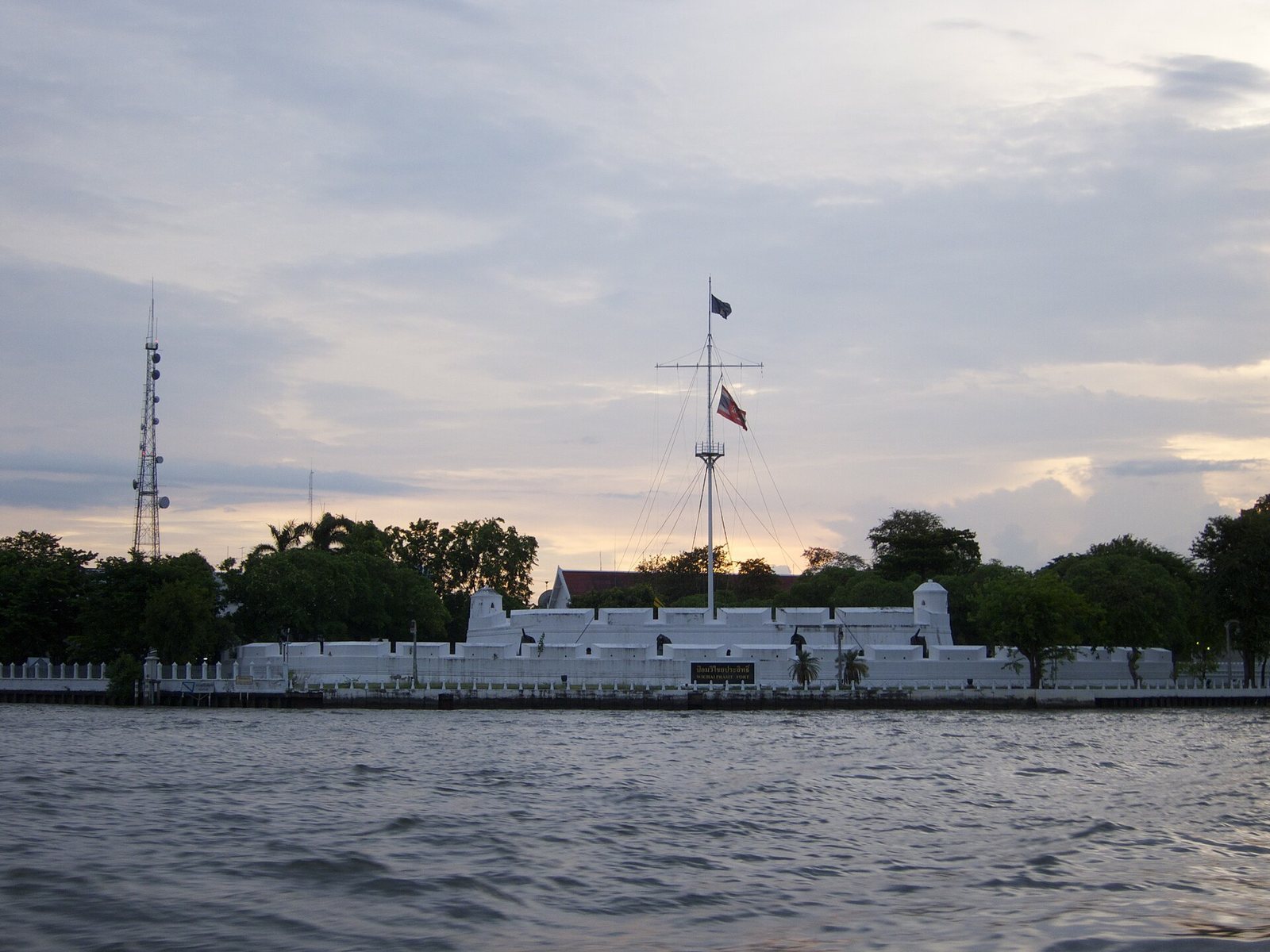
Wichai Prasit Fort is an Ayutthaya-period fortification on the west bank of the Chao Phraya River in Bangkok, Thailand. Thought to predate King Narai’s reign, it guarded the river mouth along an important trade route and is the only surviving Ayutthaya-period fort in Bangkok.
Early fortification and King Narai’s reign
The fort began as a tower fortification at a corner of Bangkok’s city wall. Portuguese assistance with its design is possible. During King Narai’s reign, Bangkok’s defenses were renovated and rebuilt, perhaps following a petition by the courtier Chao Phraya Wichayen, also known as Constantine Phaulkon.
The French engineer De la Mare designed and supervised the works, with engineering advice from an Italian priest of the Jesuit order, a Catholic religious community. The plan called for star forts, with projecting defenses that gave them star-shaped outlines, on both sides of the river. A chain across the water was intended to stop ships from passing. Only the east-bank fort was completed before the 1688 Siamese Revolution, the political upheaval at the end of Narai’s reign that brought Phetracha to the throne. That fort was later dismantled.
The two forts are not always identified in the same way. One distinction treats Wichai Prasit as the west-bank fort and the completed east-bank work as a separate fort; another uses the name Bangkok Fort for both. Wichai Prasit retains its original appearance.
Thonburi and later use
After King Taksin established Thonburi as his capital, he may have built a palace in the area of the west-bank fort, renovated the fort, and named it Wichai Prasit. The fort is also associated with Taksin’s death. It remains under Royal Thai Navy control, and naval salutes are fired from it during royal ceremonies.
Remains
Layout and construction
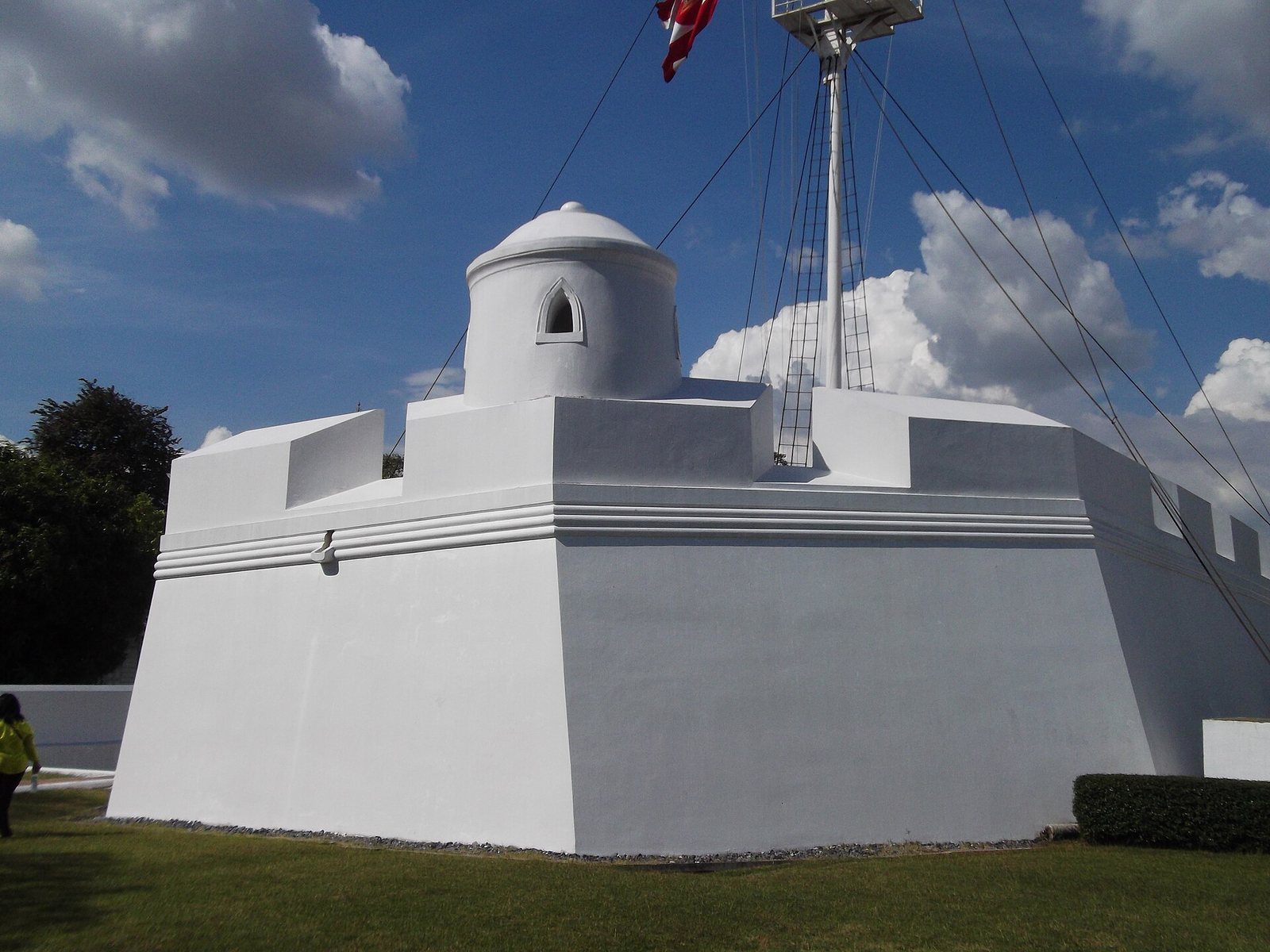
Built of brick and covered with plaster, the fort has two parallel octagonal walls. Two round, tapering towers stand on the inner wall, at its northern and southern corners. A flagpole stands on this wall beside the western entrance; it flies the Royal Thai Navy flag and the navy commander’s flag. The fort lies within the navy headquarters and the grounds of the former palace, on the river’s west bank and north of the mouth of Bang Luang Canal, also known as Bangkok Yai Canal.