Saranrom Palace: A Former Royal Residence and Foreign Affairs Headquarters in Bangkok
Site at a Glance
- Rating
- 4.5
- Popularity
- Low
- Country
- Thailand
- Primary era
- Modern
- Eras represented
- Modern
- Civilizations
- Unclassified
- Site type
- Domestic
- Remains
- Palace
On this page9 sections
History
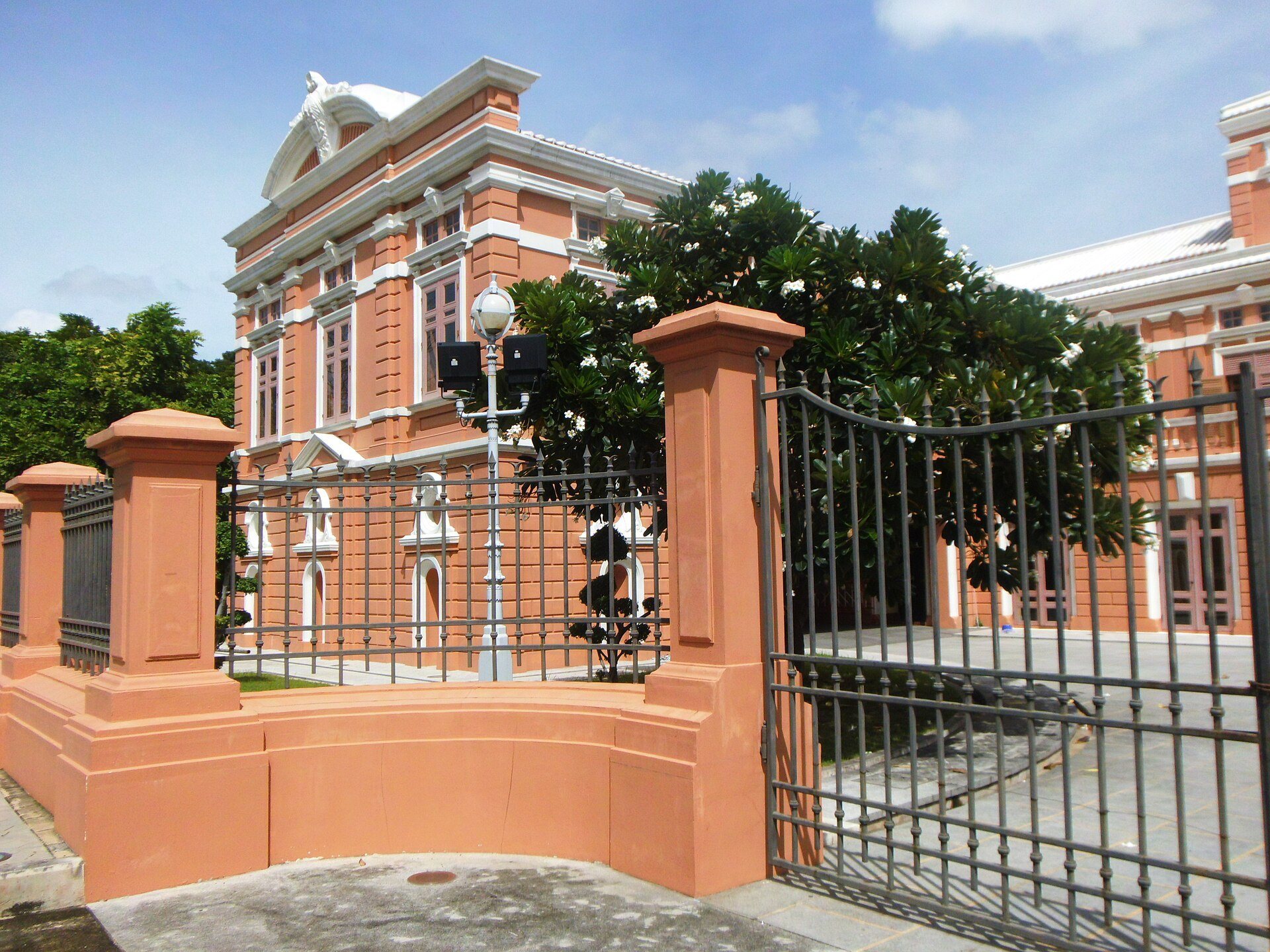
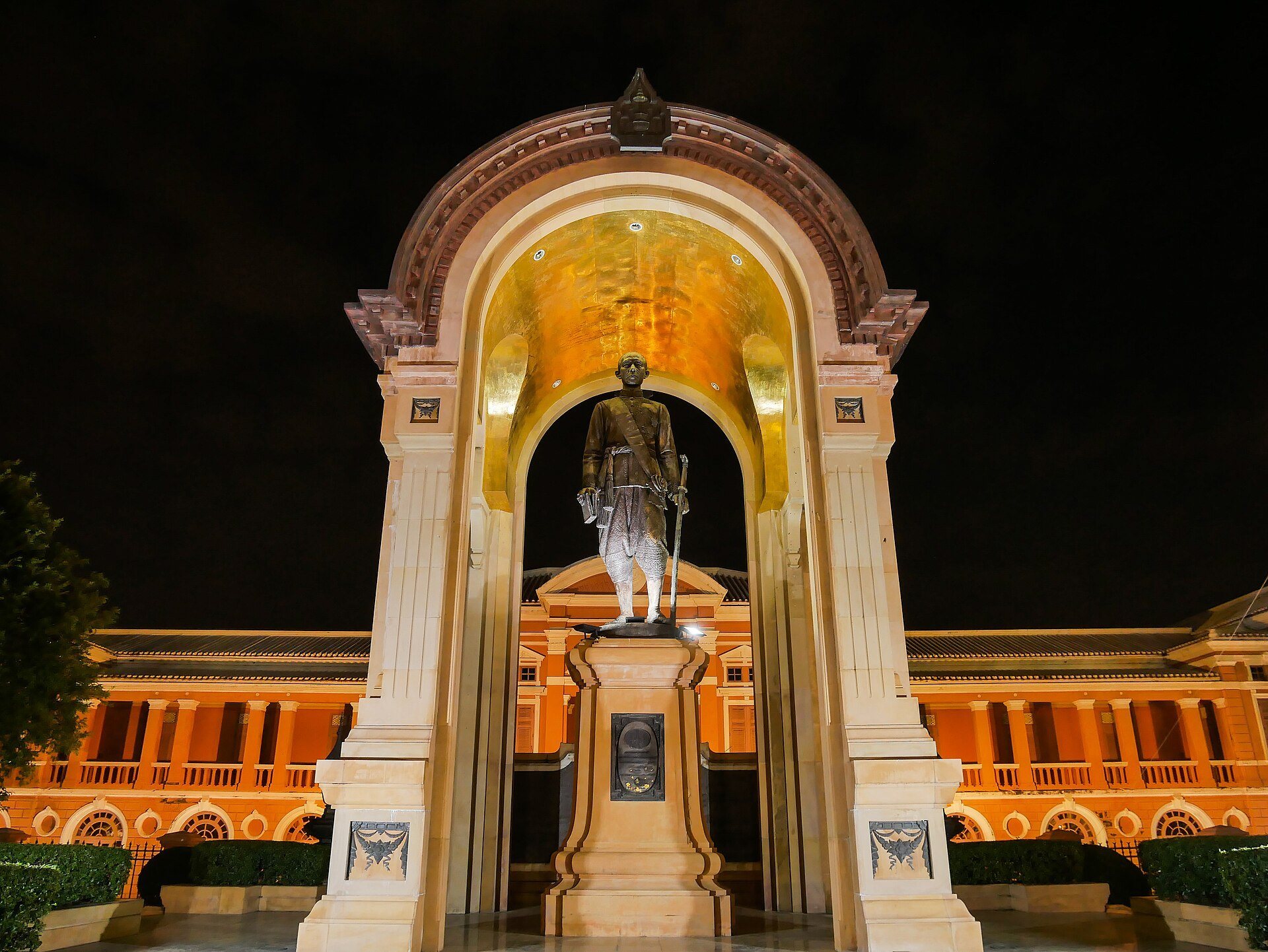
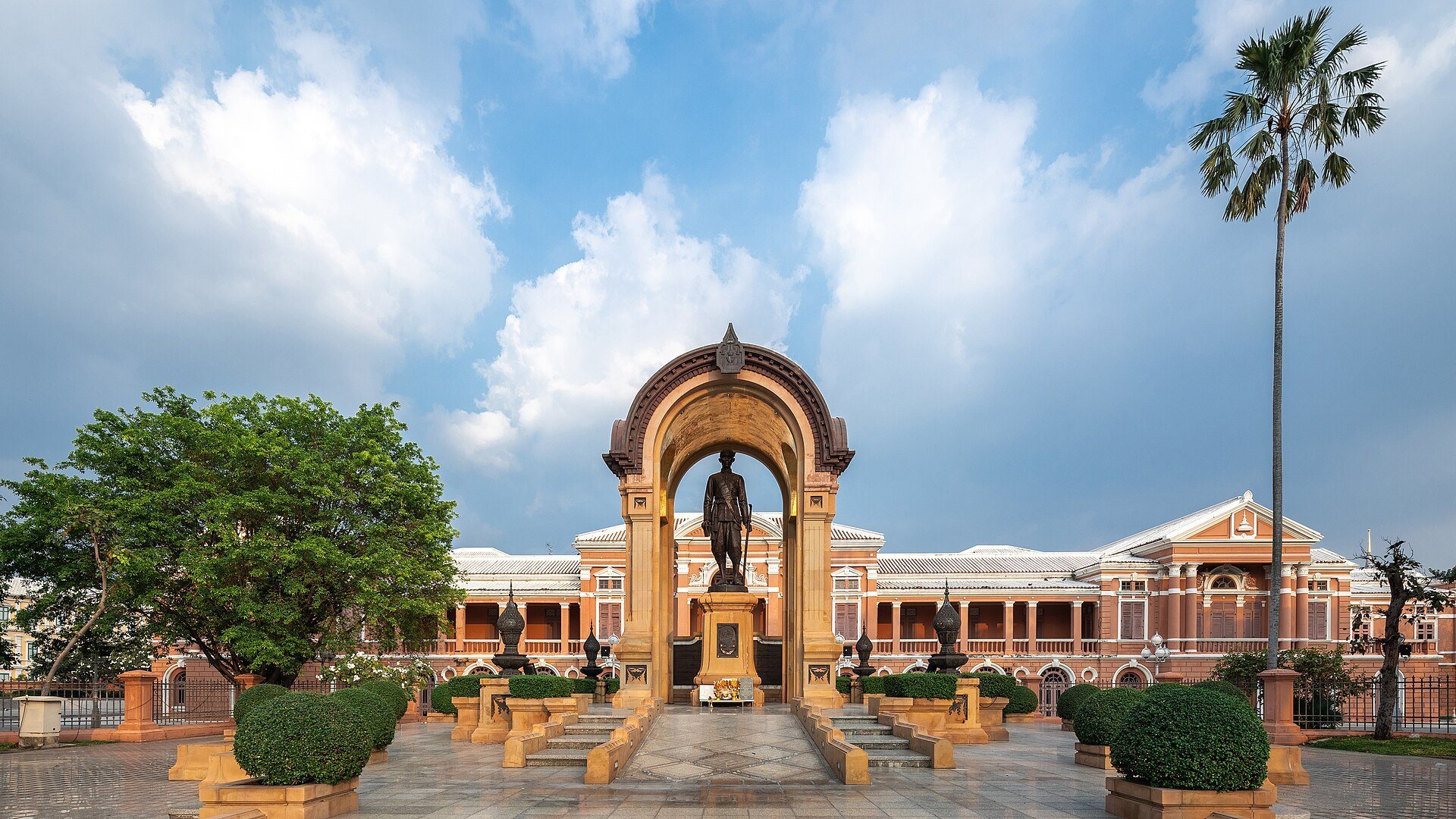
Saranrom Palace is a former royal palace in Bangkok, Thailand, built in the neoclassical style from 1866. Construction began on the site of a gunpowder magazine east of the Grand Palace after King Mongkut, also known as Rama IV, ordered a new residence there.
Royal residence and diplomatic setting
Mongkut planned to retire to Saranrom Palace and remain close to the future king as an adviser on state affairs. He died in 1868 before the building was finished, so his successor, King Chulalongkorn, or Rama V, completed it.
Chulalongkorn first assigned the palace to younger members of the royal family, including Prince Chaturonrasmi and Prince Bhanurangsi Savangwongse. They used it temporarily after leaving the Grand Palace. The residence soon acquired a wider diplomatic role. In December 1886, Prince Devawongse, a Thai prince and statesman connected with foreign affairs, sought permission to establish the Ministry of Foreign Affairs there.
Saranrom Palace also received foreign royal and state visitors. These included Prince Oscar Bernadotte of Sweden in 1884, Prince George of Greece in March 1890, Nicholas II when he was still the Russian imperial heir, and Prince Fushimi Hiroyasu, a Japanese imperial prince and naval officer.
Royal and governmental use
Crown Prince Vajiravudh returned from overseas study in 1902 and initially lived at Saranrom Palace. After becoming King Vajiravudh, or Rama VI, he allowed the palace to pass through a period of neglect. It later resumed its role as accommodation for state guests, including the French commander General Joffre during his visit to Siam in December 1921.
During the reign of King Prajadhipok, or Rama VII, the Ministry of Foreign Affairs again made Saranrom Palace its headquarters. It remained there until 1992, when the ministry moved to the Sri Ayutthaya Building in Ratchathewi District. As the ministry expanded, additional three- and four-storey buildings were constructed to the east of the palace.
ASEAN and later conservation
On 8 August 1967, representatives of Thailand, Malaysia, Singapore, Indonesia, and the Philippines signed the ASEAN Declaration at Saranrom Palace. The agreement established the Association of Southeast Asian Nations, a regional organization founded by the five countries.
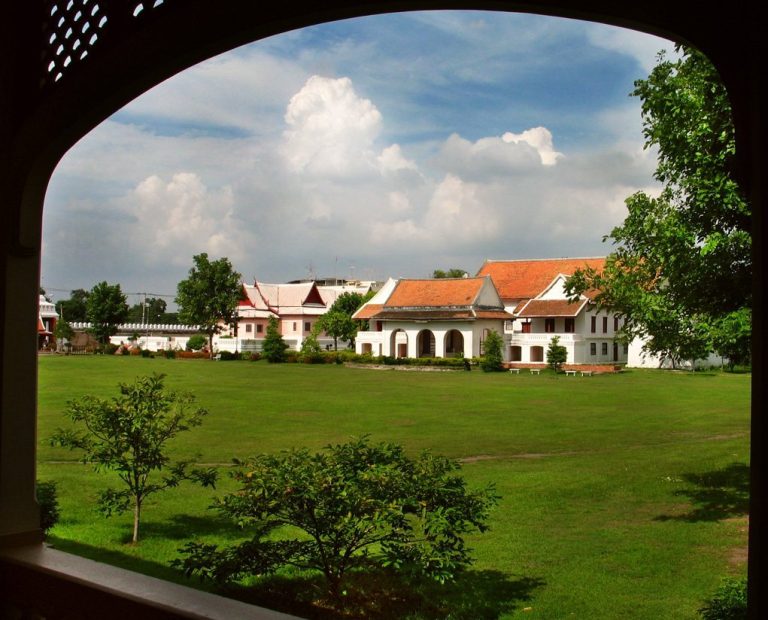
A survey of the palace fabric in 2004 preceded major restoration work in 2009. The site now incorporates the Museum of the Ministry of Foreign Affairs and Saranrom Park.
Remains
Palace building
Original plan and interiors
Saranrom Palace is a two-storey brick structure arranged originally as a rectangle around a central courtyard. A veranda surrounded the courtyard, while numerous rooms opened onto balconies. The rooms on the first floor accommodated state guests, and the ground floor was assigned to staff.
The building originally faced south, at right angles to the Grand Palace. Its principal entrance opened toward Saranrom Garden, and two large stairways led to a throne hall. Henry Alabaster is associated with the design. The lower level received stucco rustication, a finish made to resemble large masonry blocks, together with arched windows. Rectangular upper-storey windows were framed by pilasters, which are shallow attached supports.
Western verandas and classical decoration
In 1897, the Italian architect Carlo Allegri was commissioned to remodel the palace. His work added three verandas on the western side, facing the Grand Palace. The central veranda was open and used Palladian architecture, a classical style derived from the work of Andrea Palladio. The two side verandas included balconies with balustrades decorated in stucco.
Large tympana, the ornamental fields above the openings, rose above the verandas and were supported by Corinthian columns with ornamented capitals. These additions gave the western front a more explicitly classical appearance while retaining the palace’s brick structure and two-storey form.
Saranrom Garden and palace temple
Saranrom Garden lay in front of the palace and was also known simply as Saranrom. Henry Alabaster designed the garden after arriving in Thailand in 1870, and Chulalongkorn redesigned it in 1893 according to the model of European gardens. Wat Ratchapradit, a small temple in the garden’s northeastern corner, served as the palace temple. The former garden is now Saranrom Park, a public park immediately south of the palace.