Phi Suea Samut Fort: A Siamese Naval Fortification
Site at a Glance
- Country
- Thailand
- Primary era
- Modern
- Eras represented
- Modern
- Civilizations
- Unclassified
- Site type
- Military
- Remains
- Fort
On this page7 sections
History
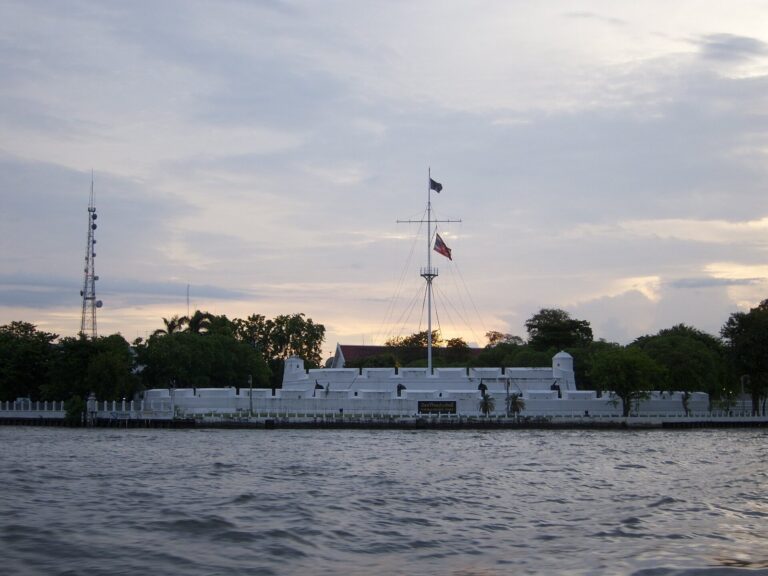
Phi Suea Samut Fort is a naval fortification in Samut Prakan, Thailand. King Phutthaloetla Naphalai, known as Rama II, ordered it built in 1819 to defend the Chao Phraya River between two shipping routes, but construction was not completed.
Construction and royal revisions
In 1822, Rama II assigned Prince Chetsadabodin, later King Rama III, to improve the fort. During King Chulalongkorn’s reign, the prince holding the Front Palace office was directed to make further changes. The Front Palace was the position of Siam’s viceroy, a prince who ranked just below the king and could serve as heir.
Artillery and the 1893 crisis
The fort’s original guns were loaded through the front of the barrel. In 1892, it began using guns loaded from the rear. Naval Vice Admiral Phraya Wichitnawi, a mechanical engineer, oversaw their installation after the same type had been fitted at Phra Chulachomklao Fort. Phraya was a noble title.
On July 13, 1893, the fort fired on two French warships that had entered the Chao Phraya during the crisis with France. The event is remembered as an important episode in Thai history.
Changing channel and later use
As silt accumulated in the western shipping channel, large vessels could no longer pass through it. The fort consequently came to appear close to the Thonburi bank, on the river’s western side. It is now inactive as a military fortification, remains under Royal Thai Navy control, and is used as a museum. The Fine Arts Department registered it as an ancient monument on June 23, 2023.
Remains
Island layout and construction
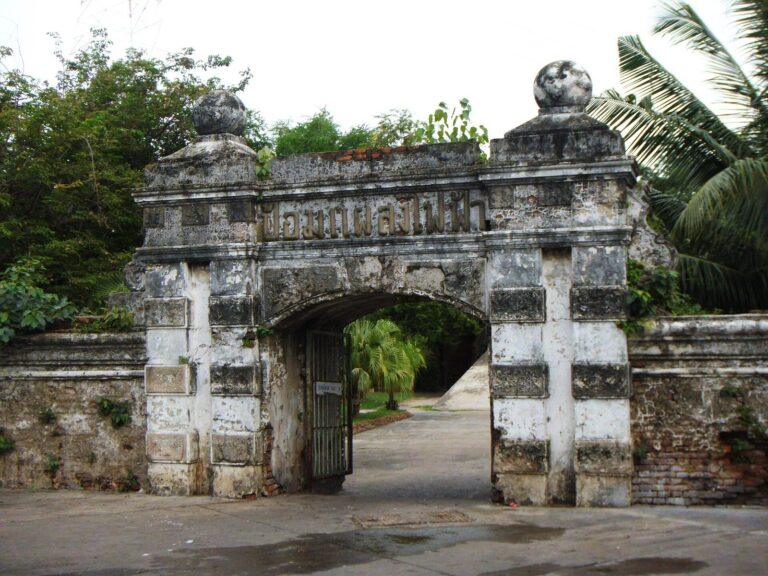
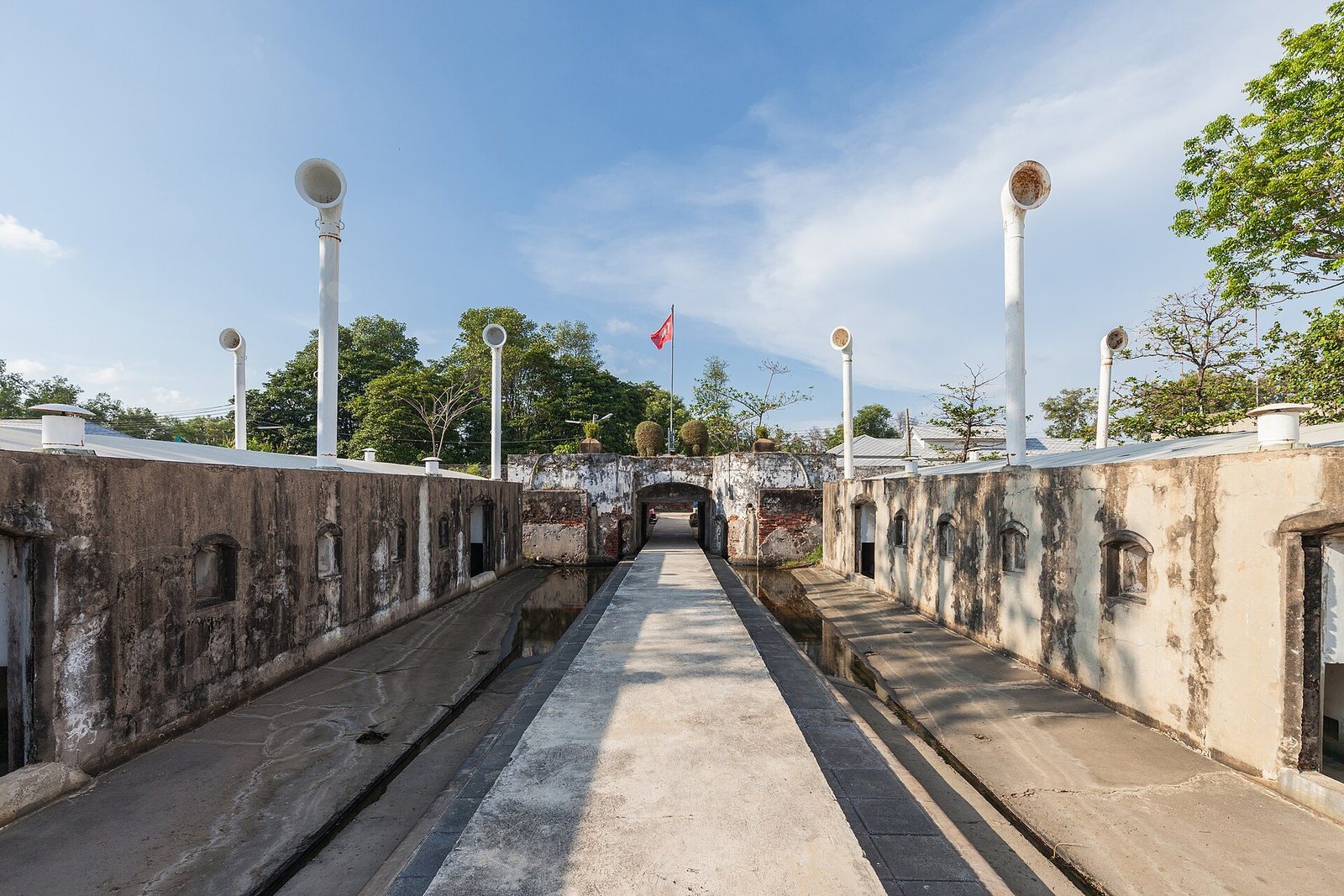
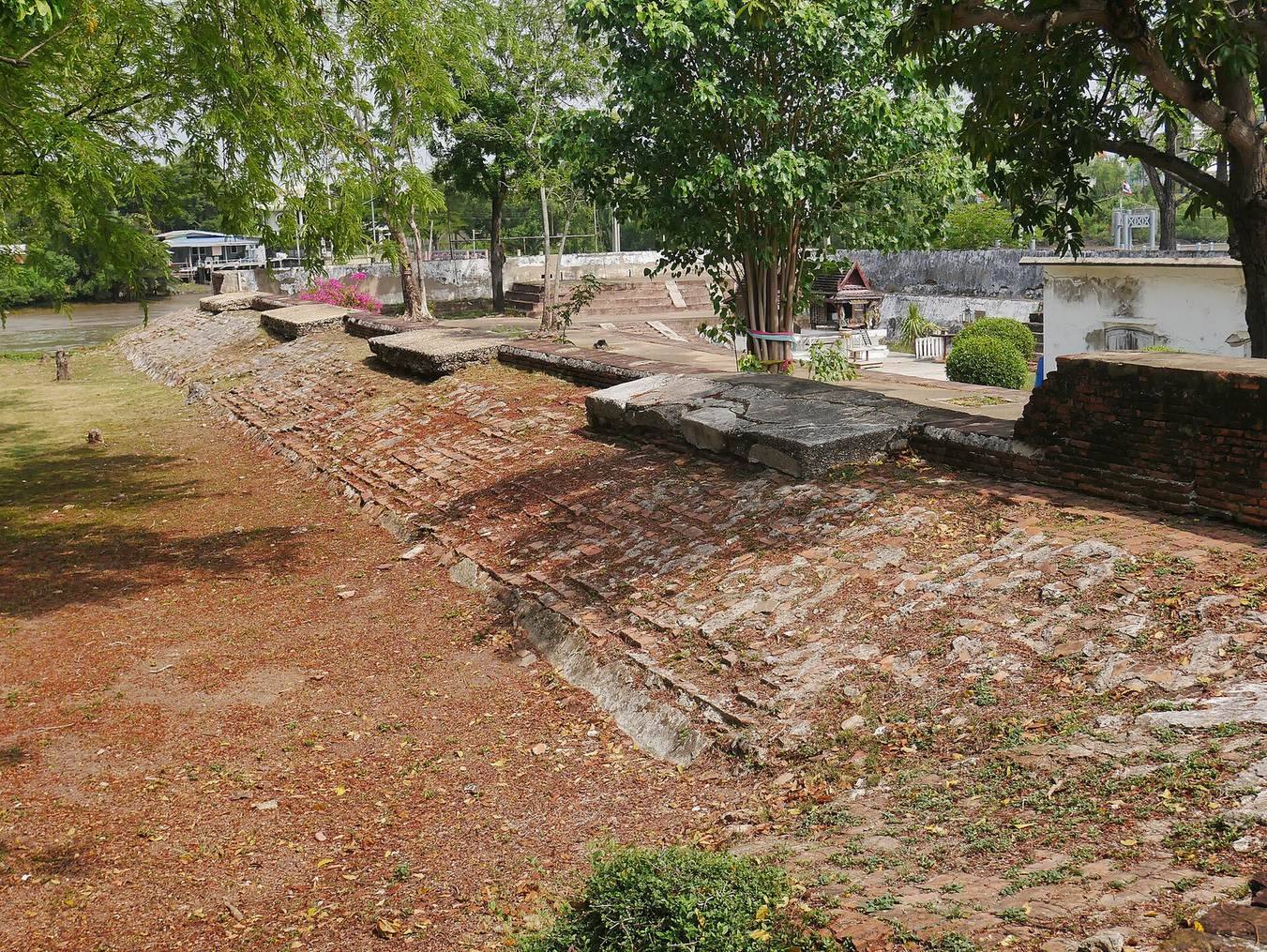
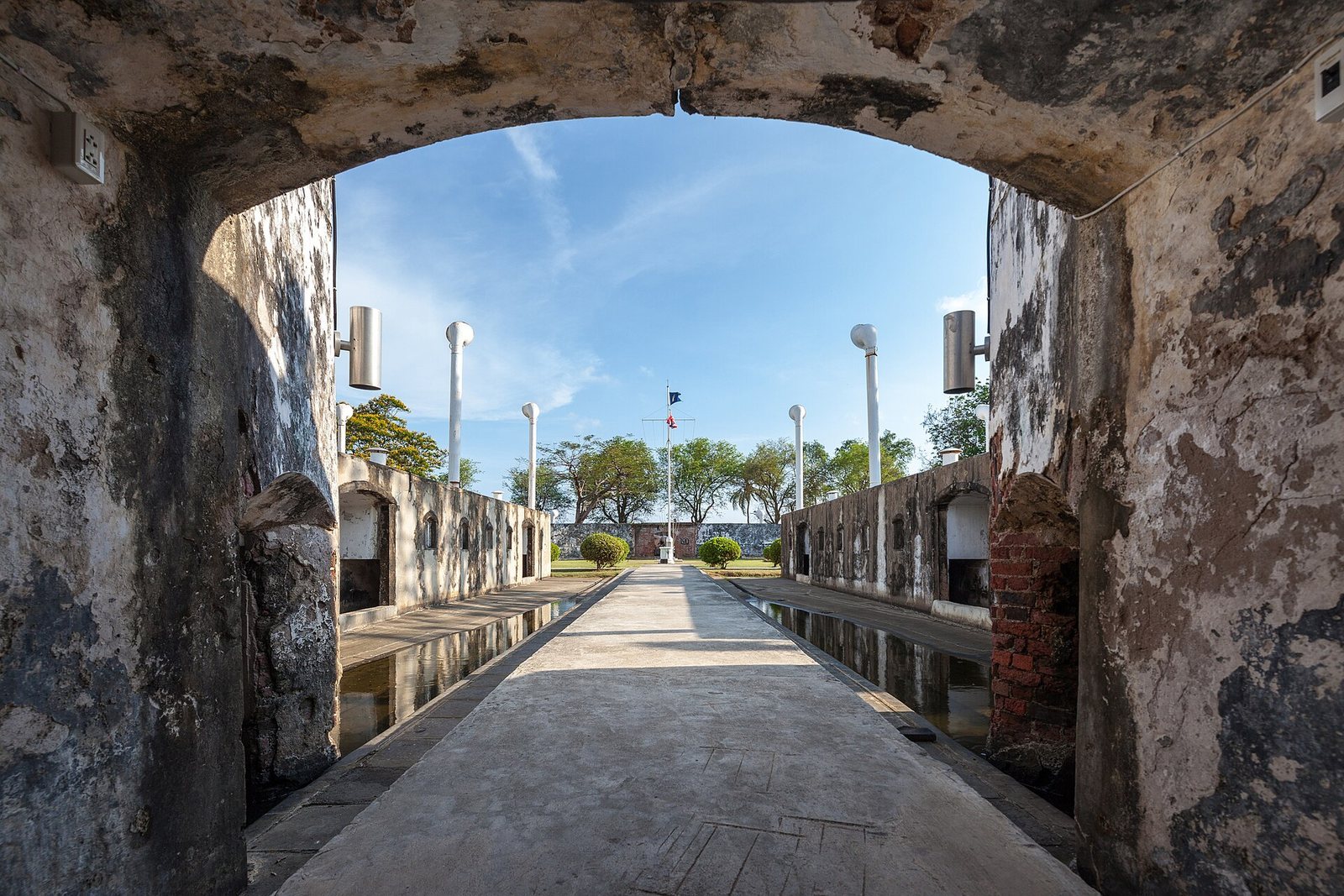
The fort stands on an island in the Chao Phraya River, south of Phra Samut Chedi, a Buddhist stupa, and between two shipping channels. Its plan resembles a butterfly, with the entrance at the end shaped like the tail. A main walkway runs inside the fort. Reinforced concrete is used in its construction.
Gun armament
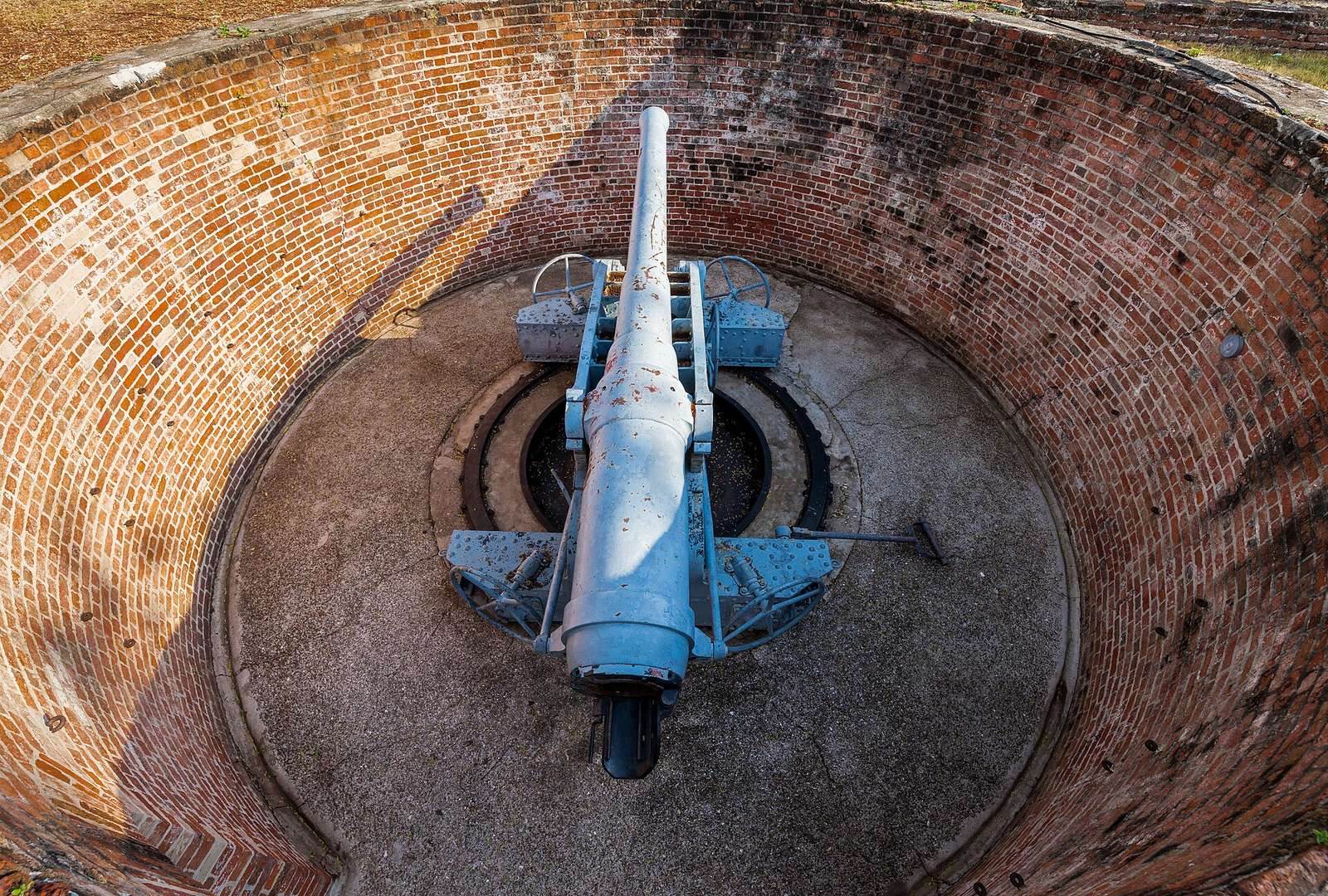
Three six-inch breech-loading guns were installed at the fort. Ordered from Vickers Armstrong, a British arms manufacturer, they were of the pit-mounted “crouching tiger” type, a disappearing gun designed to lower into a protected emplacement.