Castellón de Fique Tower: A Medieval Watchtower in Spain
Site at a Glance
- Country
- Spain
- Primary era
- Medieval
- Eras represented
- Medieval
- Civilizations
- Crown of Castile
- Site type
- Military
- Remains
- Tower
On this page7 sections
History
Castellón de Fique Tower is a medieval watchtower in Spain, attributed to the Castilian prince Henry of Castile and dated to the 14th century, with construction estimated between 1299 and 1302. It helped guard a route toward the Nasrid Emirate of Granada, the Muslim state that governed Granada during much of the later Middle Ages.
Medieval construction and frontier use
The estimated construction dates coincide with Henry’s recognition as adelantado mayor, a royal official with regional administrative and military responsibilities, in 1299. They also include 1302, when Muhammad III, ruler of the Nasrid Emirate, conquered Quesada.
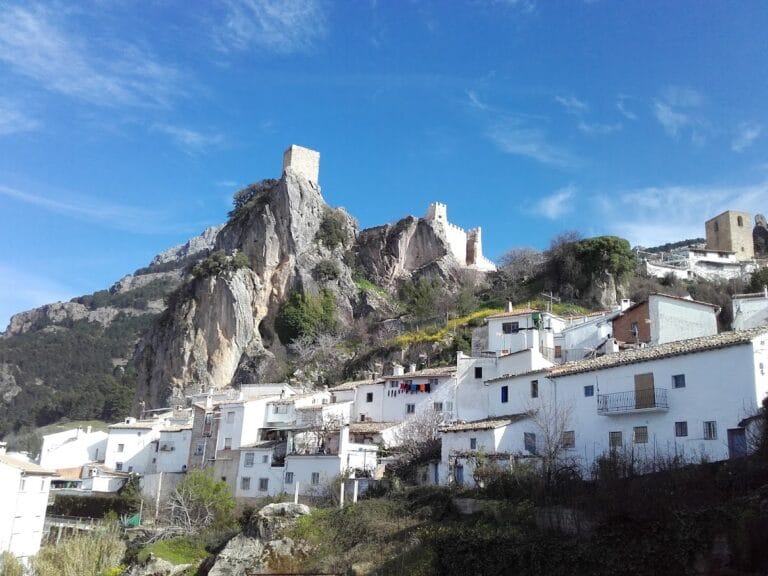
The tower watched troop movements along the route to Granada. Its strategic position likely made it a recurring point of dispute between Muslim and Christian forces. Along with Tíscar Castle, it reflects Quesada’s importance in the Middle Ages. The tower was also called the Watchtower of Prince Henry and the Watchtower of Tíscar Pass. Its earlier name, the Tower of Smoke Signals, referred to fires lit at night and smoke signals sent by day to warn of enemy forces over long distances.
Settlement evidence and heritage protection
Pottery found around the tower suggests that a small settlement may have existed nearby during the same archaeological phase. In the mid-1980s, the tower received protection as a Monument under Spain’s Bien de Interés Cultural designation, a protected cultural heritage status.
Remains
Structure and archaeological remains
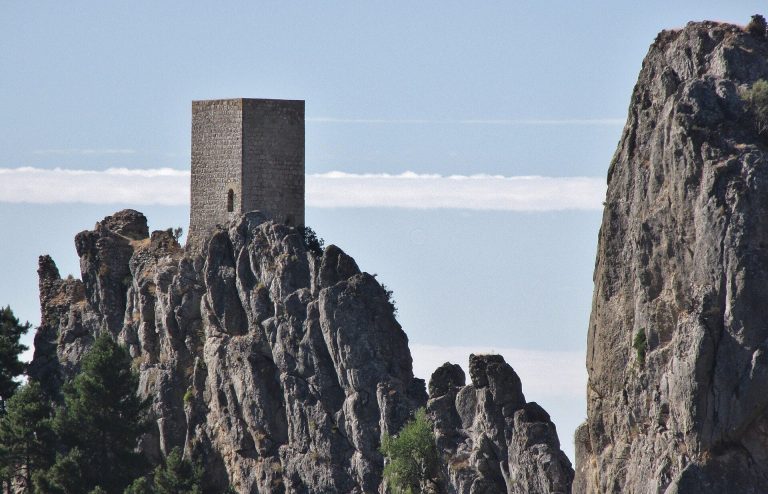
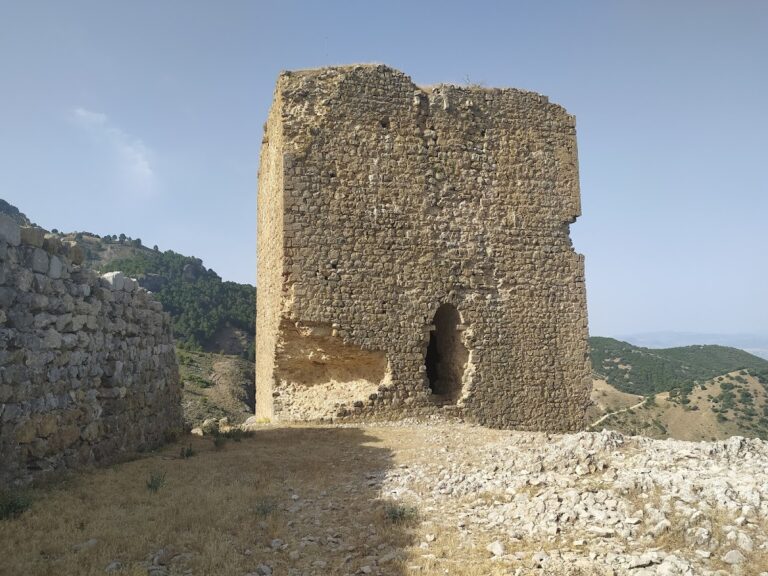
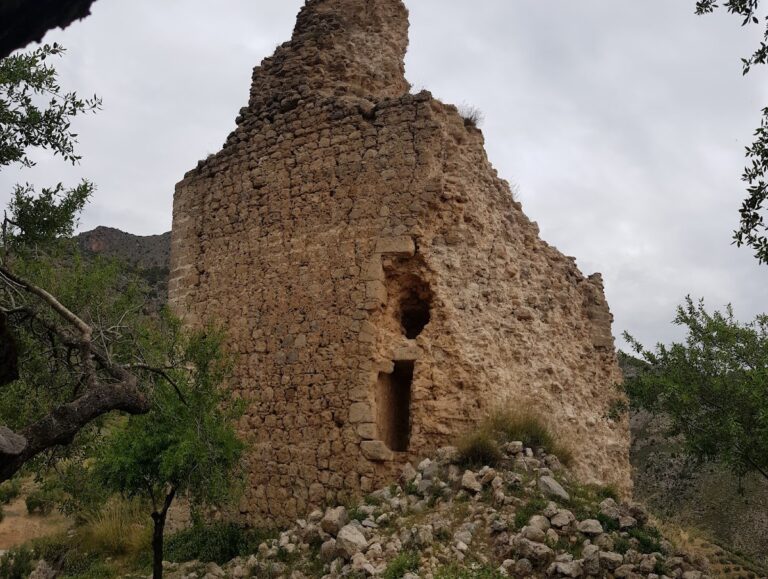
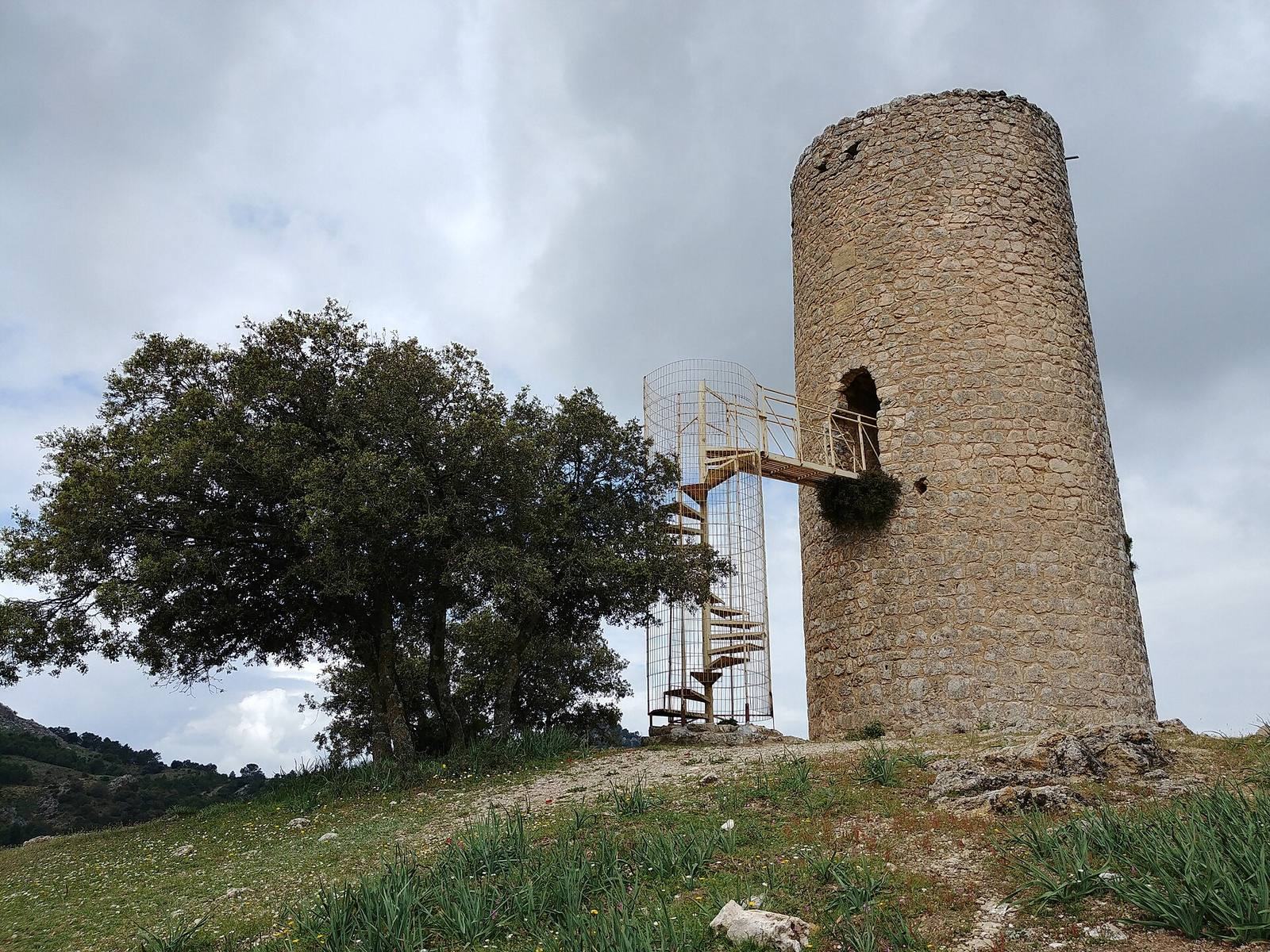
The site is centered on a cylindrical stone tower at the highest point of Puerto de Tíscar, formerly called Puerto Ausín, 1,189 metres above sea level. Its walls are built from regularly arranged rubble stone and roughly shaped stone blocks.
The tower
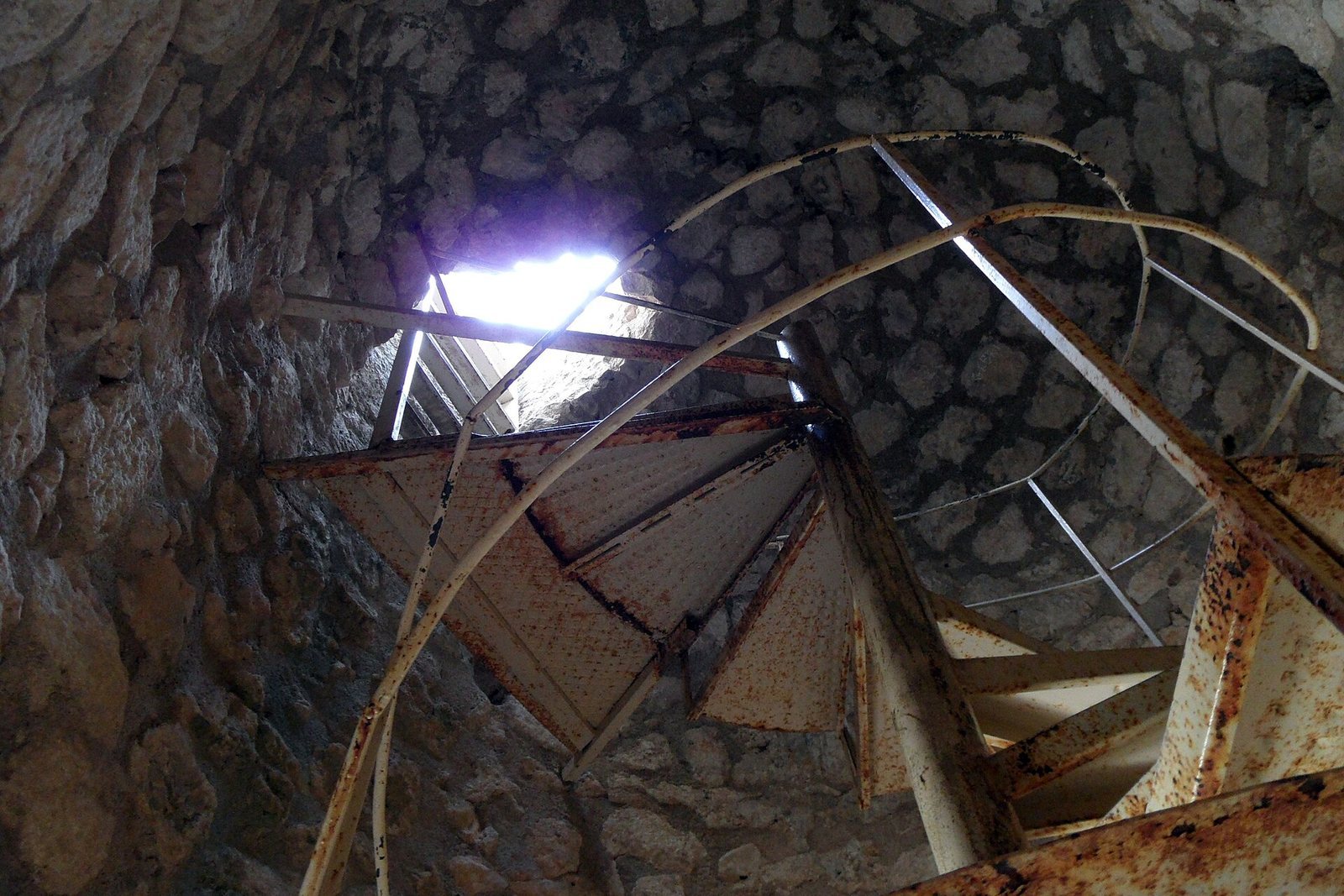
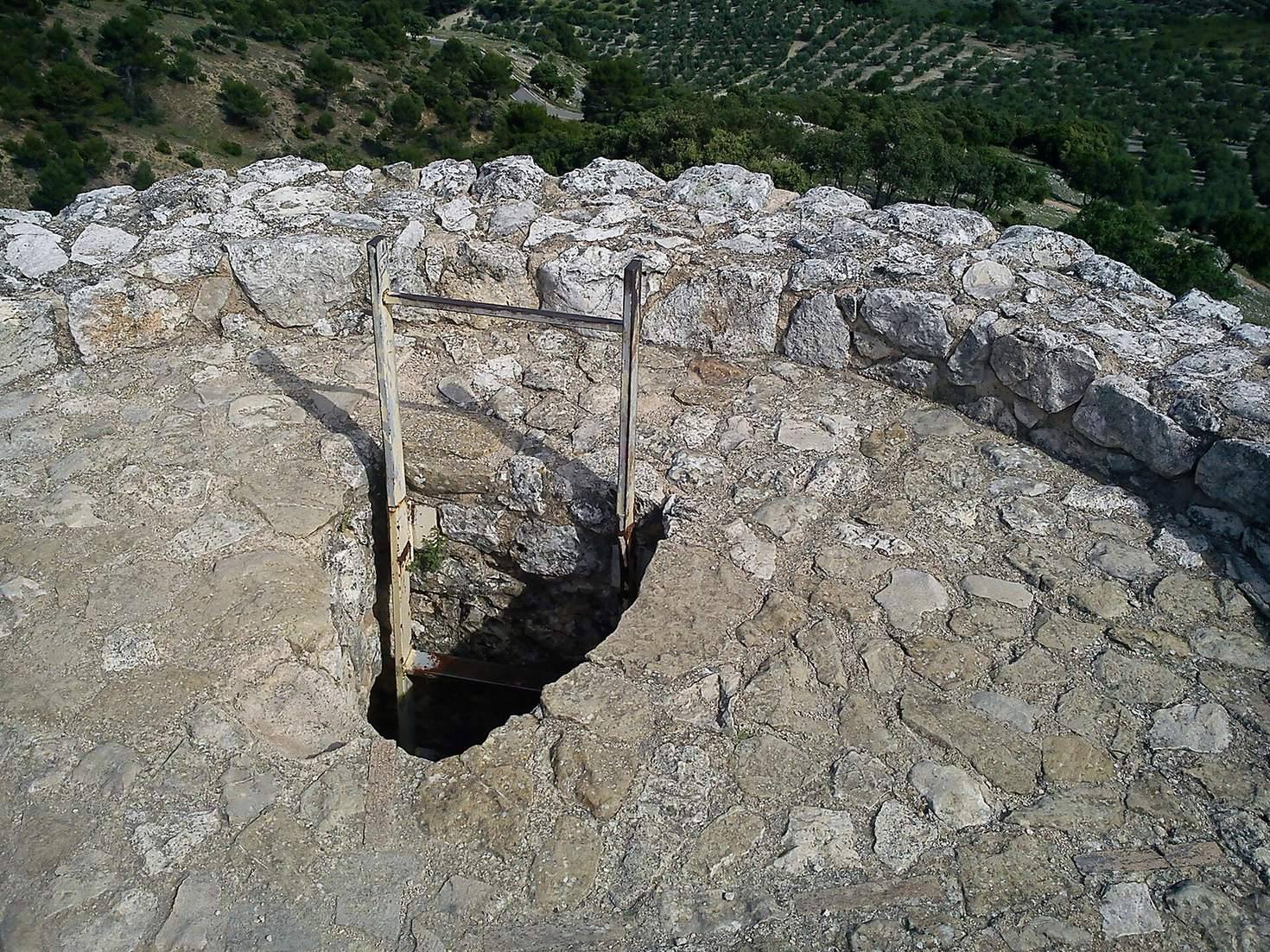
The tower measures 10.40 metres high, with a base perimeter of 16.10 metres and walls 1.30 metres thick. Its lower section is solid. The entrance lies 3.5 metres above ground on the side facing the Tíscar ravine. An upper chamber is covered by a half-spherical dome, and the topmost section is truncated.
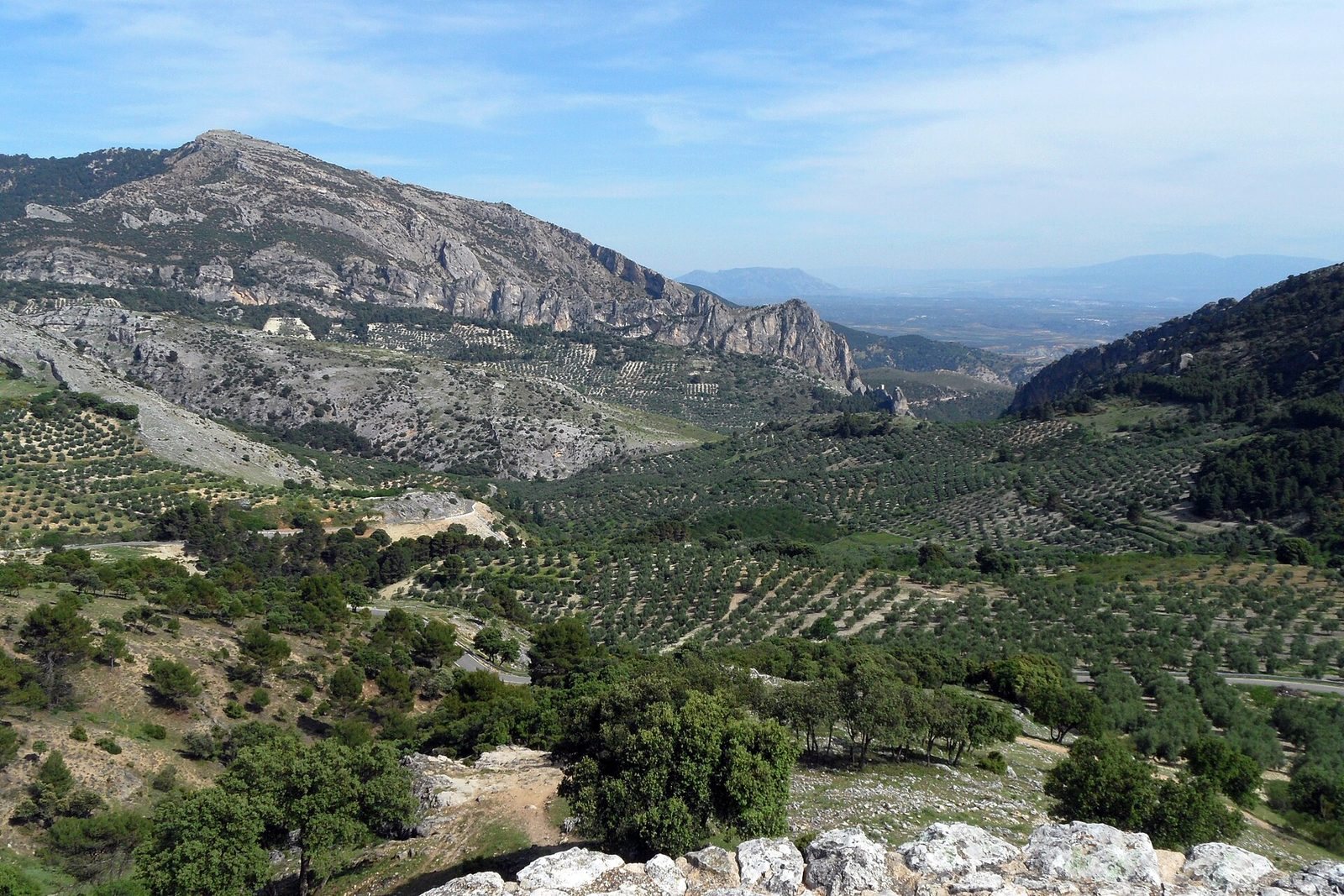
Two coats of arms remain above the entrance arch. The lower shield shows two towers and two Crosses of Calatrava, the emblem of a medieval military-religious order; it may represent Henry of Castile. The upper shield is almost erased and may have shown either the royal arms of Ferdinand IV of Castile or a bishop’s mitre, a ceremonial headdress associated here with the archbishopric of Toledo. From the tower, both Tíscar Castle and Quesada Castle can be watched. The view extends across the Pozo Alcón plain, toward Sierra Nevada and along the valleys of the Extremera, Béjar and Majuela rivers, reaching Úbeda, Baeza, Torreperogil, Santo Tomé, Villacarrillo and Iznatoraf.
Access path and pottery
Remains of the old access path are in poor condition. Light-colored and glazed pottery is abundant in the surrounding area.