Santi Martiri (Turin): A Jesuit Church for the City’s Patron Saints
Site at a Glance
- Country
- Italy
- Primary era
- Early Modern
- Eras represented
- Early Modern, Modern
- Civilizations
- Duchy of Savoy
- Site type
- Religious
- Remains
- Church
On this page9 sections
History
Santi Martiri is a Baroque Roman Catholic church in Turin, Italy, begun by the Jesuits in 1577 to house the relics of the city’s earliest patron saints and serve as the order’s church there. It is affiliated with the Archdiocese of Turin. The relics of Avventore, Ottavio, and Solutore have been kept in the church since late 1584.
Jesuit foundation
The Jesuits, members of the Catholic Society of Jesus, were invited to Turin in 1566 by the Venerable Company of the Catholic Faith, now called the Compagnia di San Paolo. Their purpose was to defend Catholicism as the Protestant Reformation, a movement that led to the formation of Protestant churches, spread in western Christianity. The new church replaced the parish church of Santo Stefano, which dated to the tenth century.
The foundation stone was laid on 13 April 1577 in the presence of Emanuele Filiberto, Duke of Savoy, who had strongly supported the project. The design is attributed to Pellegrino Tibaldi, an Italian architect and painter.
Completion and later alterations
The church, apart from its dome, was complete by 1612, and its overall completion is dated to 1711. Damage in the 1706 siege of Turin, a military assault on the city, led to later changes that included enlarging the choir and redecorating the interior.
A major restoration was completed in 2000. Among those buried in the church are Joseph de Maistre, a conservative Savoyard philosopher; Giovanni Francesco Bellezia, mayor of Turin during the plague of 1630; Giovanni Botero, a priest and author of the sixteenth-century work Della Ragion di Stato; and Milliet de Faverges.
Burials and literary response
The Piedmontese-language poet Nino Costa included a poem about Santi Martiri in his 1931 collection Fruta madura, within a cycle devoted to five churches in Turin.
Costa dwelt on the church’s marble, gilding, and elaborate decoration. He associated its socially privileged visitors with insincere repentance and questioned such opulence in contrast with the humble circumstances of Jesus’s birth.
Remains
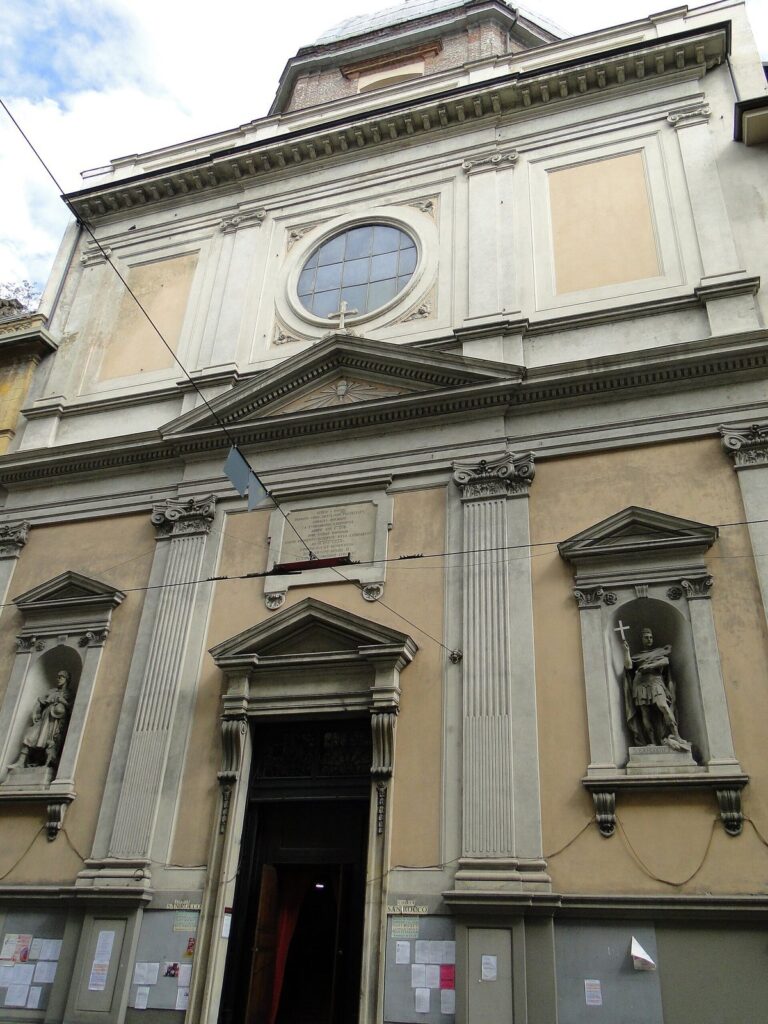
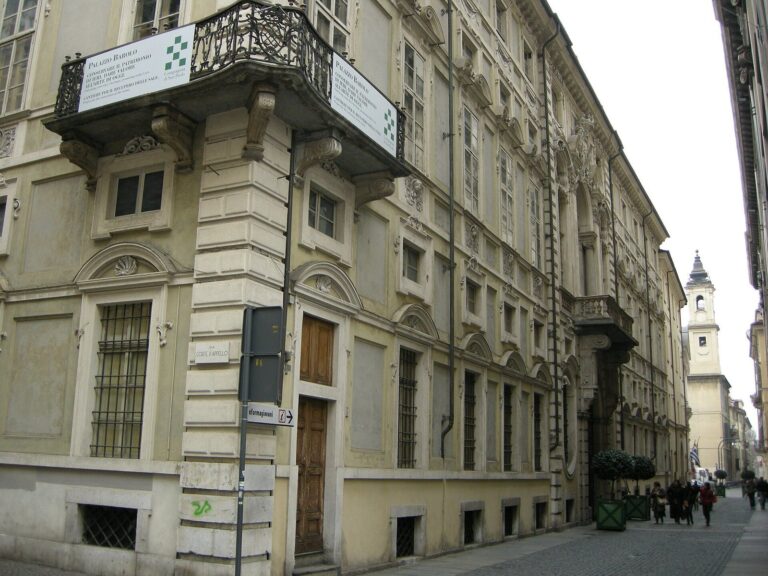
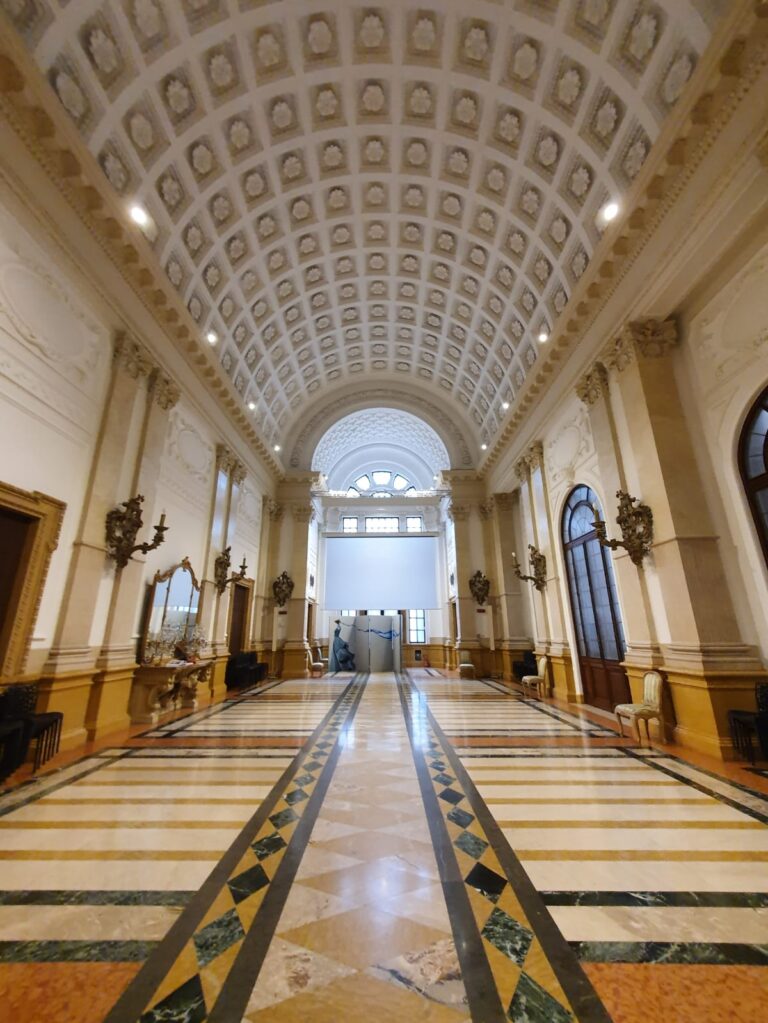
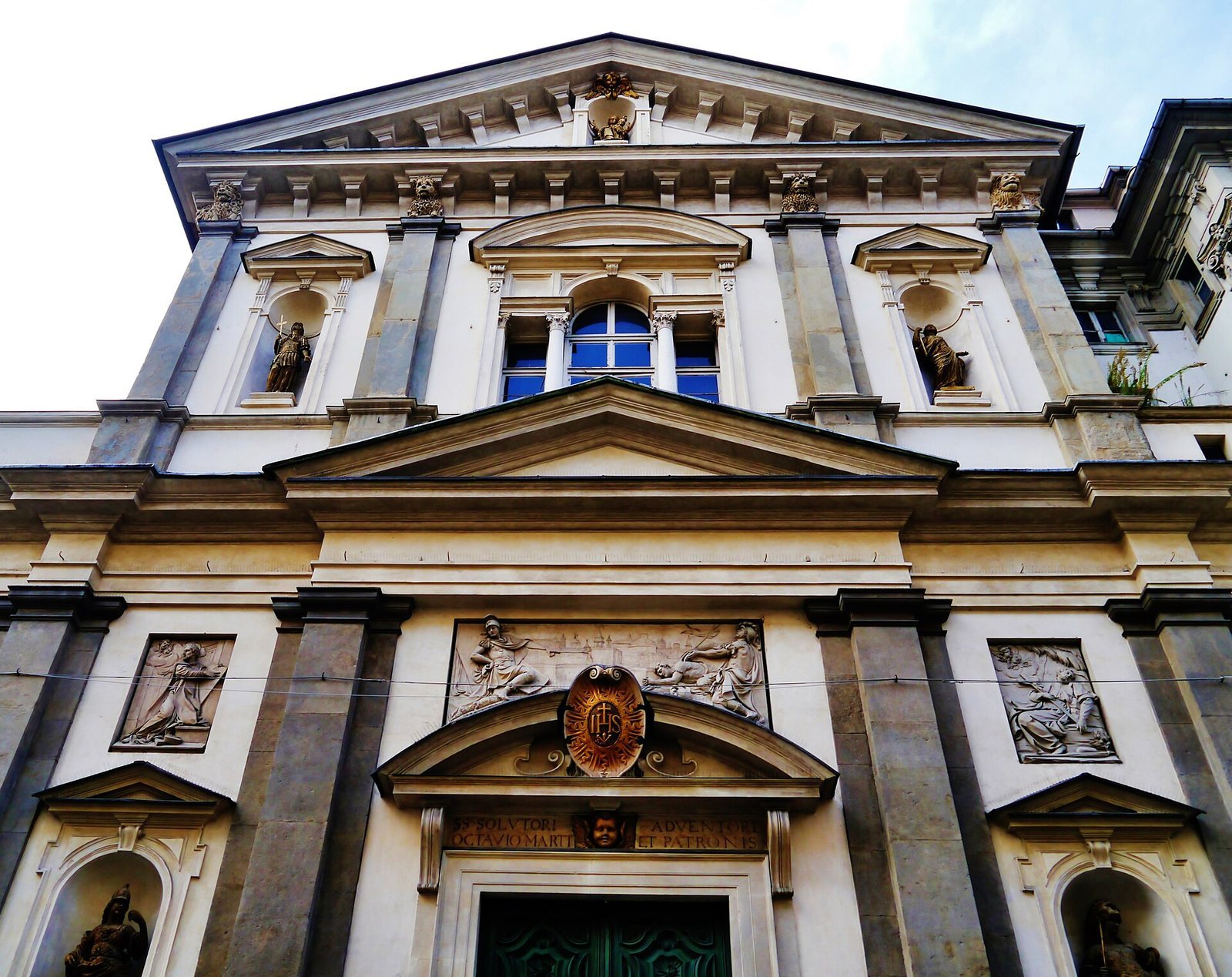
The Baroque church stands at the corner of Via Giuseppe Garibaldi and Via Botero. Its façade, dome, and richly ornamented interior form the principal parts of the surviving building.
Façade and dome
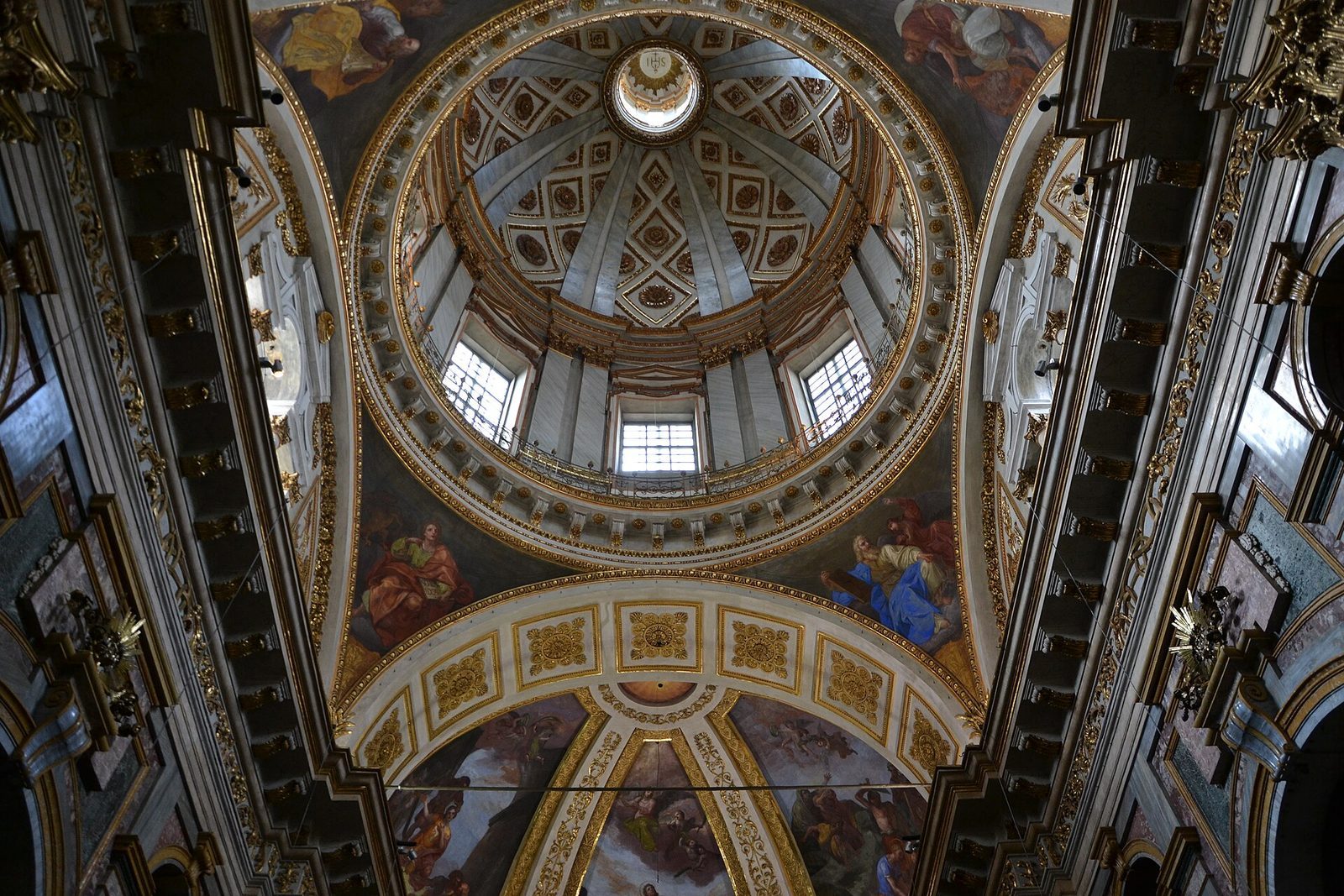
Six niches in the façade hold three-dimensional wooden statues carved by Francesco Borelli, a sculptor and woodcarver born in Chieri in 1636. Carlo Giulio Quadrio built the dome between 1708 and 1711, after the church had suffered damage during the siege of Turin.
Interior decoration
Choir and vault paintings
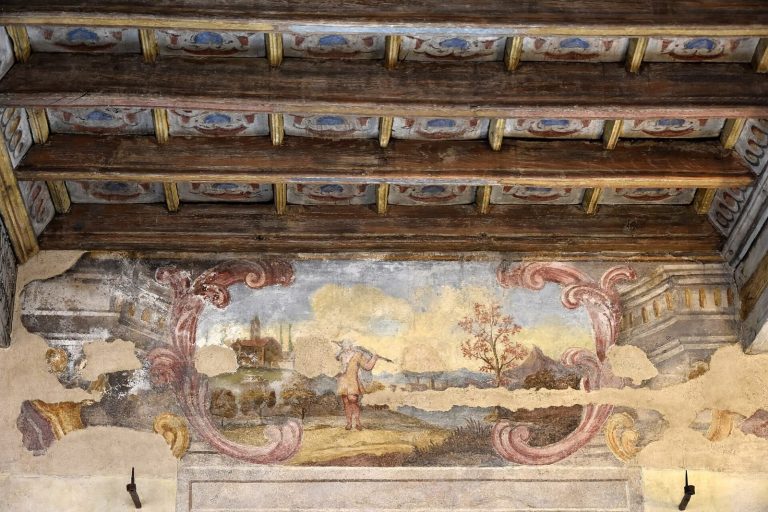
Marble, stucco, frescoes, and other artworks enrich the interior. Isidoro Bianchi painted the choir frescoes in 1629. Andrea Pozzo painted the vault around 1680; two details of his work survive, while Luigi Vacca and Francesco Gonin replaced the remainder in the nineteenth century.
High altar and sacristy
Filippo Juvarra designed the high altar in 1730. Its altarpiece, The Madonna with the Three Martyr Saints, was painted by Gregorio Guglielmi between 1765 and 1766. The sacristy contains wooden furnishings and paintings by Gianna Durando.