Vickleby Church: A Medieval Church on Öland
Site at a Glance
- Country
- Sweden
- Primary era
- Medieval
- Eras represented
- Medieval, Early Modern, Modern
- Civilizations
- Swedish
- Site type
- Religious
- Remains
- Fortified Church
On this page13 sections
History
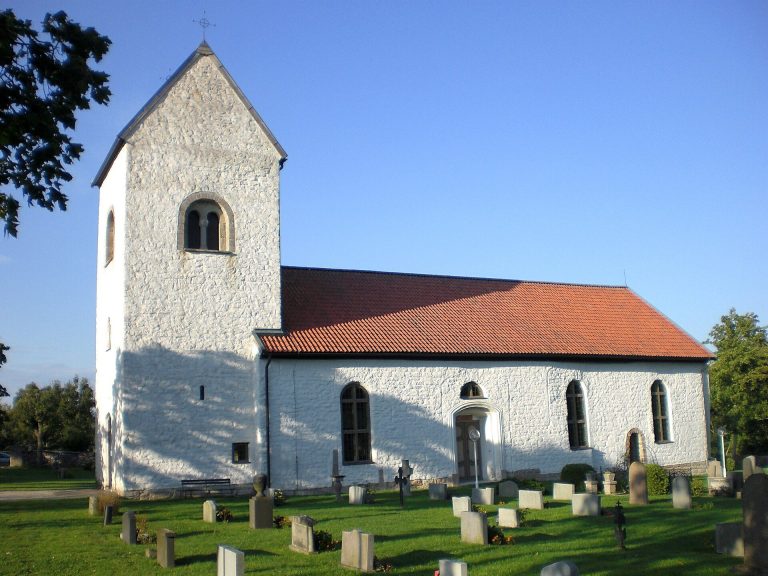
Vickleby Church is a medieval church on Öland, Sweden, about 12 km south of Färjestaden. It was consecrated in the 12th century, and its oldest nave fabric dates to the middle of that century. A priest’s residence already stood on the site of the nearby parsonage.
Medieval church
A substantial defensive tower was added at the west end around 1200. Around 1300, its entrance received a pointed arch crowned by a carved rose motif. A drawing made in 1634 by the Swedish antiquarian and draughtsman Johannes Haquini Rhezelius shows the church’s medieval appearance.
Raids and expansion
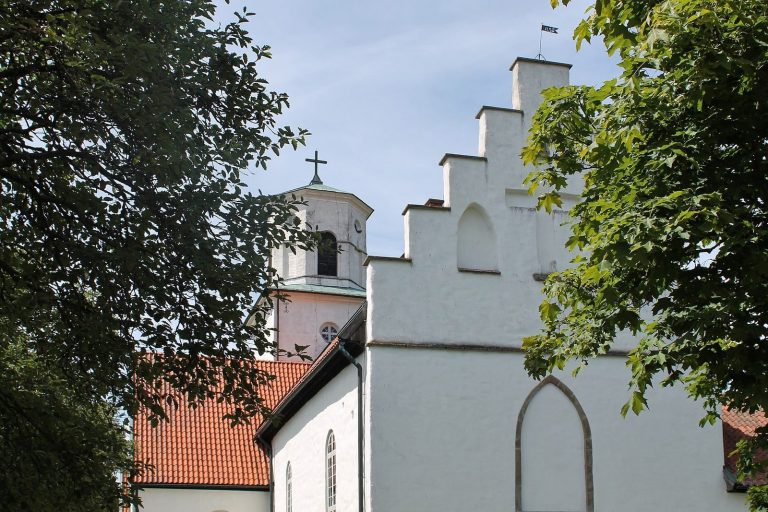
In 1677, Danish forces ravaged Vickleby Church and the churches at Resmo and Mörbylånga. At an undetermined date, the nave’s vault was removed and replaced with a wooden ceiling. A sacristy was built against the north wall of the former chancel in 1759. In 1778, the original semicircular-ended chancel was replaced by a larger one, and the nave walls were extended eastward.
Later changes
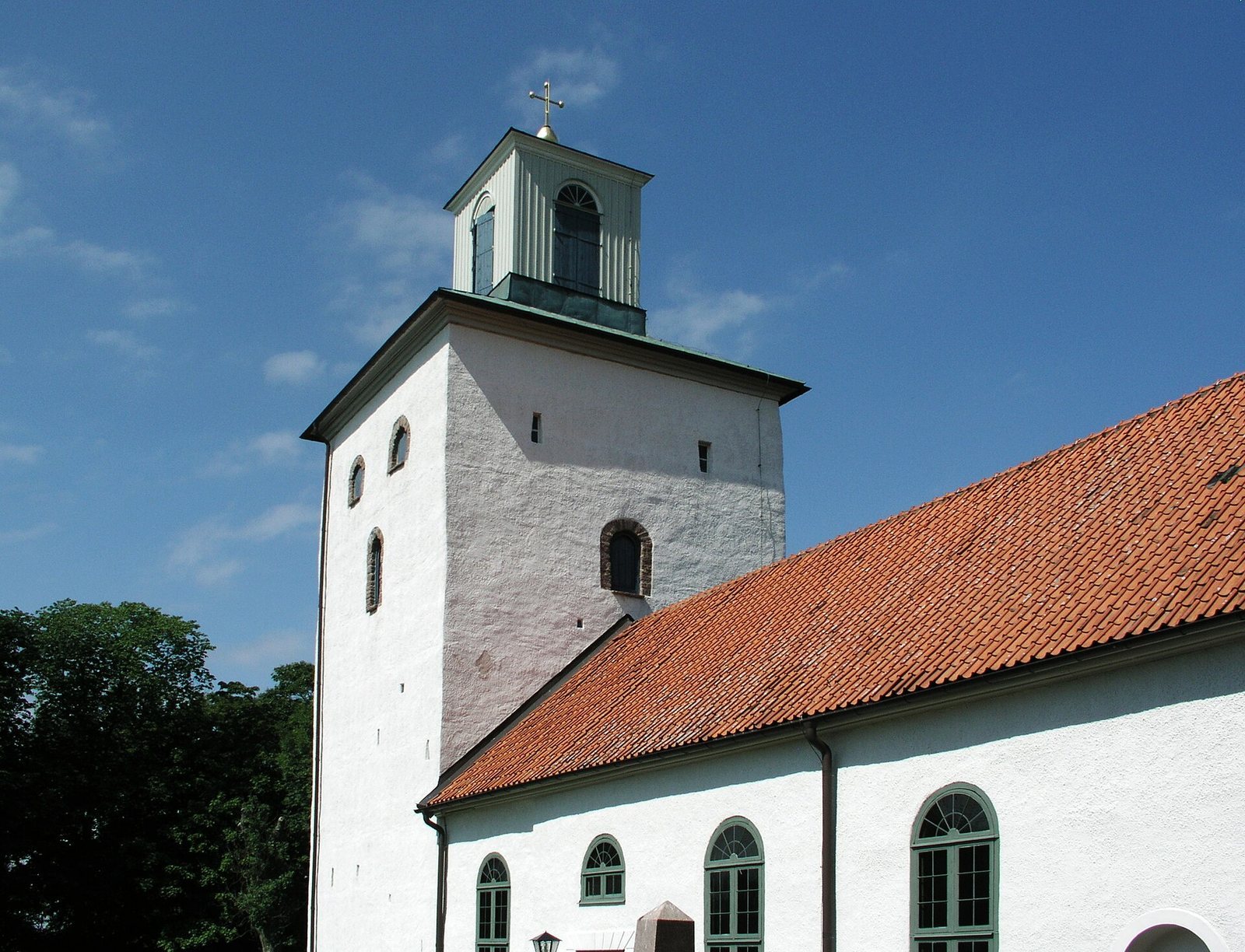
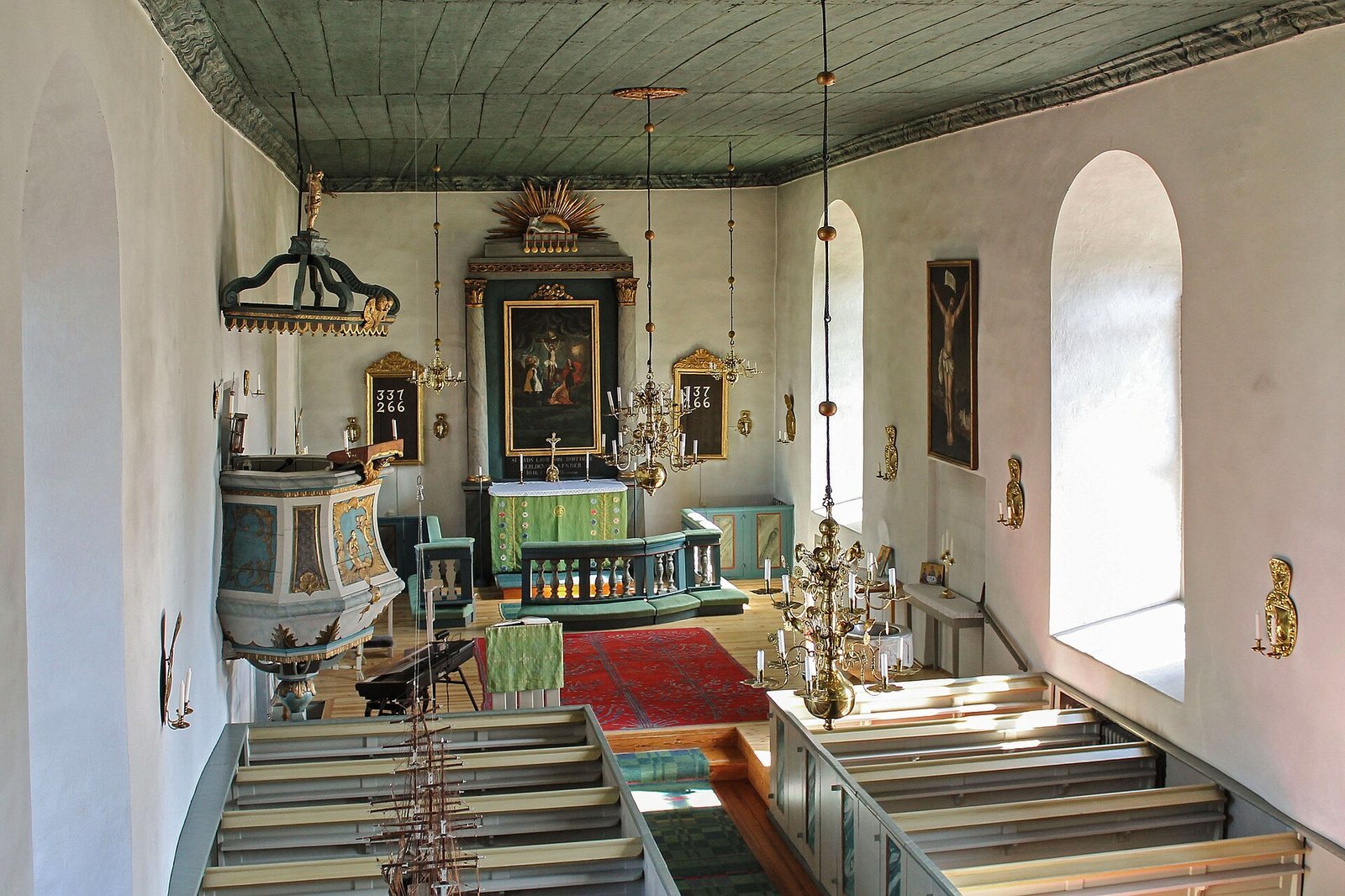
The tower was crowned with a lantern in 1818, and a new entrance was made on the south side in 1832. A restoration in 1938 returned the interior to an 18th-century blue color scheme after 19th-century repainting in pearl gray, white, and gold. The altar, altar rail, pulpit, and ceiling were also restored to earlier appearances.
Vickleby Church belongs to the Church of Sweden, a Lutheran church, and to the Diocese of Växjö, a territorial church-administration district, and Resmo-Vickleby Parish, its local church community and administrative unit.
Remains
Plan and defensive tower
Overall plan
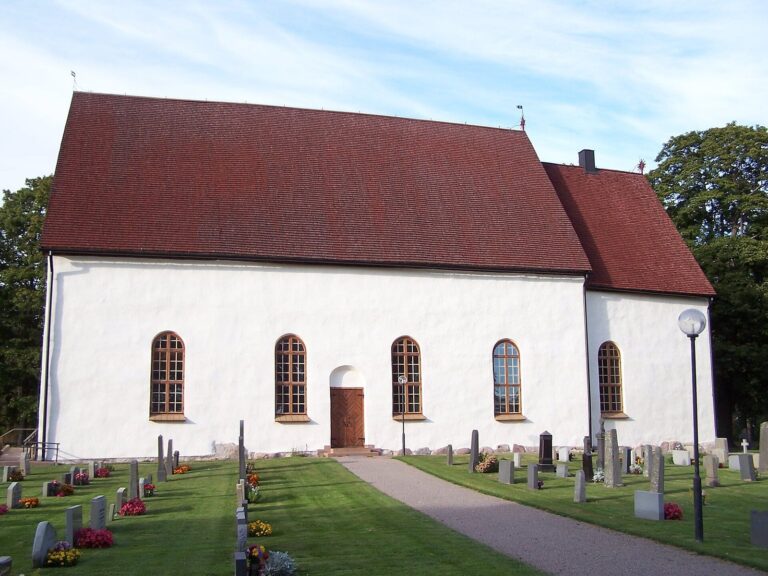
The church stands on a slightly raised crest of the coastal ridge, with views over the Kalmar Strait. Its plan brings together a rectangular nave, a straight-ended chancel to the east, a sacristy on the north side, and a west tower as wide as the nave. The nave’s whitewashed walls contain large, round-arched windows. West and south portals open into the elongated interior; the original south portal is damaged, while the present entrance is a later opening.
West tower
The sturdy, well-preserved tower contains a network of masonry stairways and rooms, including small cells, storage beams, and a concealed space for treasure. A brick staircase is also among its features. Openings on the top level served defence, with the bell chamber directly below. The tower’s upper vaulted rooms were also put to secular uses, including sheltering travellers and storing produce. Its pointed-arch portal is decorated with a carved, many-petalled rose.
Interior and furnishings
Nave and gallery
The nave has a flat, wood-panelled ceiling and a large round arch through its west wall, behind the gallery. Johan Lundgren Olofsson painted the ceiling in the early 1780s. Anders Georg Wadsten painted the gallery in 1768, and pegs beneath its southern section were used for men’s hats.
Altar and worship furnishings
The altar, made by Master Aspelund, dates to 1778. Jonas Berggren carved the pulpit in 1763; Clas Wahlberg and Johan Lundgren enlarged it in 1778. Its reliefs show Jesus in Gethsemane and the Ascension. Anders Björkman painted the original altarpiece in 1713 and 1714. It was enlarged above and below in 1780 to fit the expanded chancel, and A. Högström made a new frame in 1809. N. J. Jonsson painted another Crucifixion altarpiece in 1856 and placed it over Björkman’s work. The later painting may have been moved to the south cross-wall in 1939.
A sandstone baptismal font from the late 12th century bears reliefs that are now heavily worn. Its exposure on the chancel roof ridge contributed to their weathering. It was later taken down and returned inside the church. A chasuble, the outer vestment worn by a priest during worship, was made by Arthur Percy and Sofia Widén in 1944 and decorated with flowers of Öland’s alvar, an open limestone landscape. The church also has an hourglass given in 1780.
Bells and votive ship
Fahlsten cast the large bell in 1744, while the smaller bell is medieval. A votive ship, given to the church, represents the Church voyaging toward heaven through stormy waters, carried by the wind of the Holy Spirit.
Organ
The church had an organ by the 1810s. Carl August Johansson built a seven-stop mechanical organ in 1875 and 1876, with a façade designed by Fredrik Reinhold Ekberg in 1875. In 1948, Hammarbergs Orgelbyggeri installed an eleven-stop pneumatic organ with two hand-played keyboards and a foot-operated pedal; five stops were reused from the earlier instrument. Nye Orgelbyggeri built the present mechanical organ in 1997. It has nine stops, which control sets of pipes, and four switchable tone settings across one hand-played keyboard and a pedal. The instrument stands behind Ekberg’s surviving façade.