St Anthony’s Battery: An Order of St John Coastal Fortification in Malta
Site at a Glance
- Country
- Malta
- Primary era
- Early Modern
- Eras represented
- Early Modern
- Civilizations
- Knights Hospitaller
- Site type
- Military
- Remains
- Fort
On this page9 sections
History
Planning and construction
St Anthony’s Battery is an eighteenth-century coastal artillery fortification on Ras il-Qala, at the eastern tip of Gozo, Malta. The Order of St John, a Catholic religious and military order that governed Malta, built it to guard the channel between Gozo and Comino and protect a coast considered vulnerable to landing. Proposed in 1730, the battery began taking shape in 1731 and was largely complete by December 1732. Finishing work continued through 1734.
The site had featured in earlier coastal-defence plans, but the Order lacked funds to fortify it. During the seventeenth century, the Order developed a network of coastal watchtowers. Renewed fears of invasion in 1714 led to plans in 1715–16 for batteries, redoubts, and defensive lines. Philippe de Vendôme, a Grand Prior, a senior Order official responsible for a regional priory, contributed 40,000 scudi, a currency used in parts of Europe and the Mediterranean, to the wider programme. Ras il-Qala remained undefended. Antonio Manoel de Vilhena, the Order’s Grand Master, or head, later financed the battery himself, and it was named in his honour. Its design is attributed, with some uncertainty, to the Order’s engineer Charles François de Mondion; his deputy, Francesco Marandon, oversaw construction.
Armament and maintenance
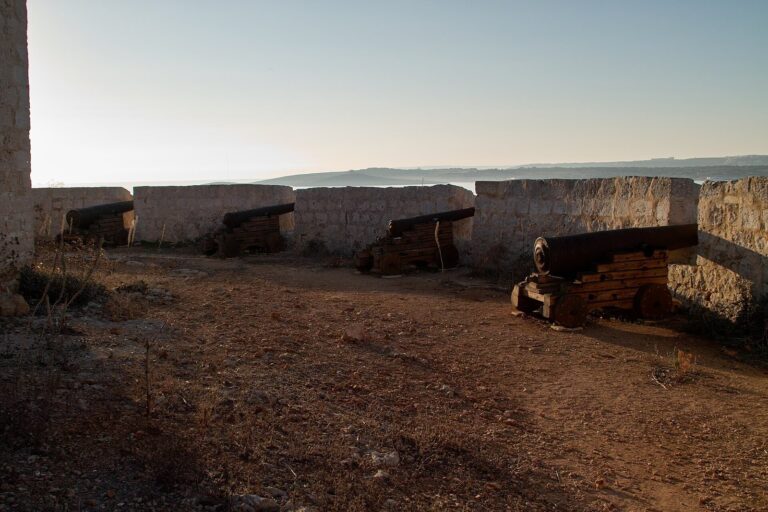
The battery was armed in 1732. Its initial plan called for two 36-pounder guns and additional 24-pounders, ratings that refer approximately to the weight of the shot fired. Ammunition for the heavier guns was stored at the site by the end of 1731, but the armament was changed to smaller calibres. An inventory from 1785 lists five iron 8-pounders and three 6-pounders, along with 420 roundshot and 58 grapeshot for the 8-pounders, and 175 roundshot and 61 grapeshot for the 6-pounders. Grapeshot consisted of small projectiles fired together. The battery also held two small artillery pieces. Powder was kept in the blockhouse, requiring a permanent guard; the inventory indicates a crew of at least twelve soldiers.
Installing the guns damaged the stones supporting the drawbridge, which had to be replaced. The blockhouse roof was renewed twice in 1733. In 1749, Marandon found the parapet unfinished and proposed further work, but limited funds constrained improvements.
Ownership and restoration
A property dispute arose in the 1990s when Magistrate Carol Michael Peralta attempted to transfer the battery to an unnamed claimant asserting ownership. The proposed transfer could have enabled a later sale. Restoration work took place from the late 2000s into the 2010s, involving Din l-Art Ħelwa, a Maltese heritage organisation, the Qala Local Council, and the Malta Environment and Planning Authority. The Government of Malta owns the battery, which is managed by Din l-Art Ħelwa and the council. It entered Malta’s National Inventory of the Cultural Property of the Maltese Islands in 2012.
Remains
Setting and overall plan
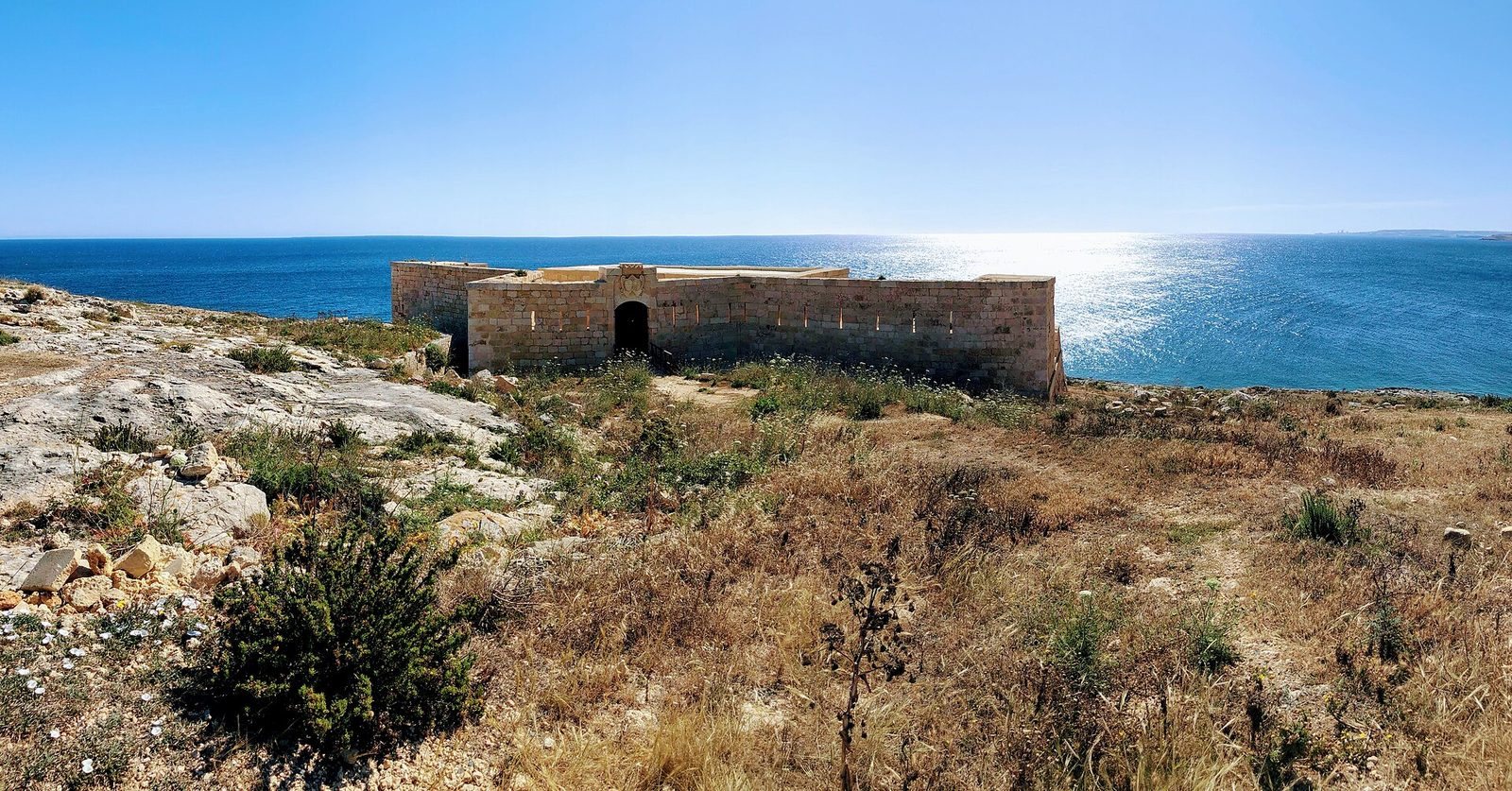
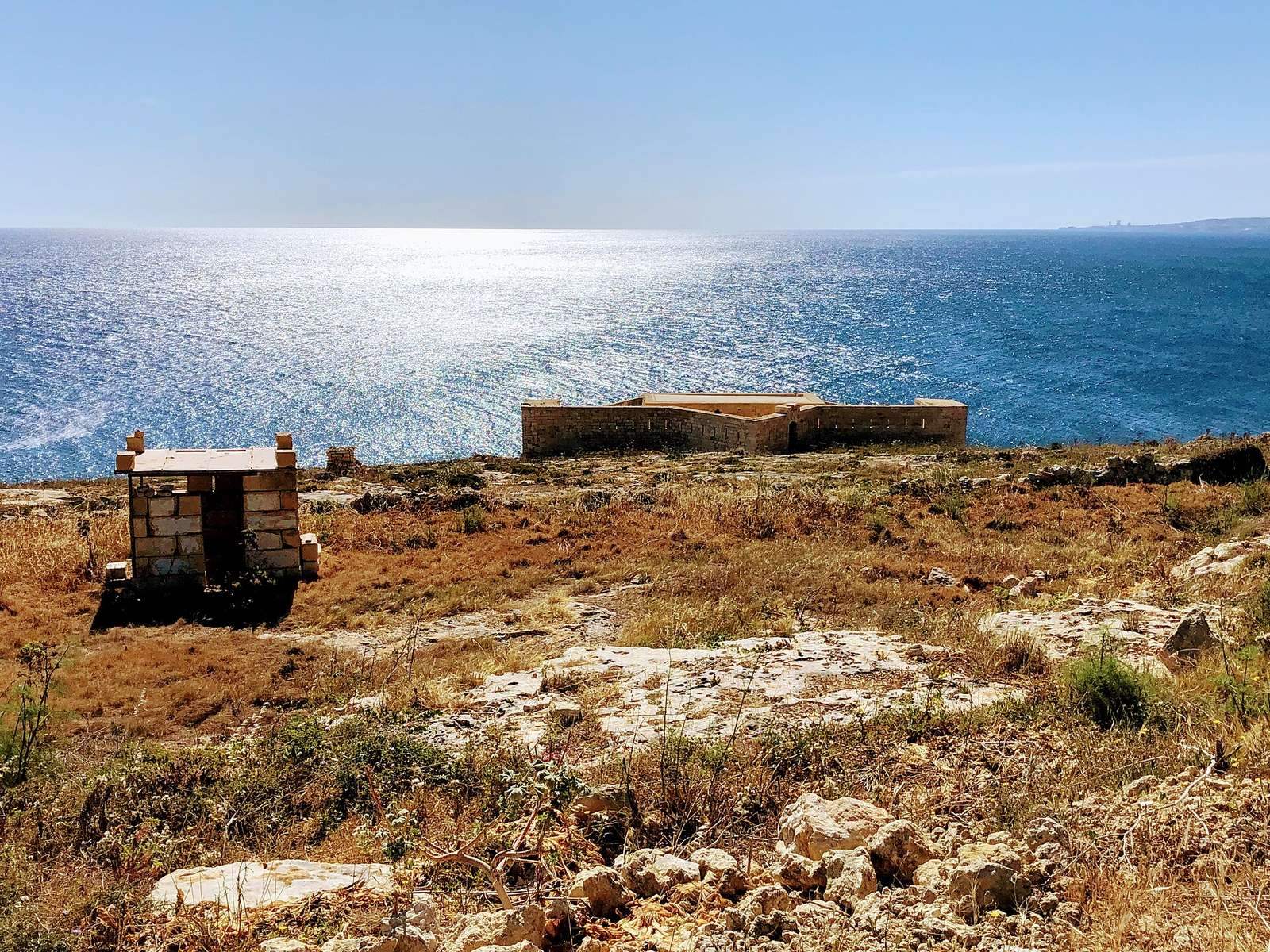
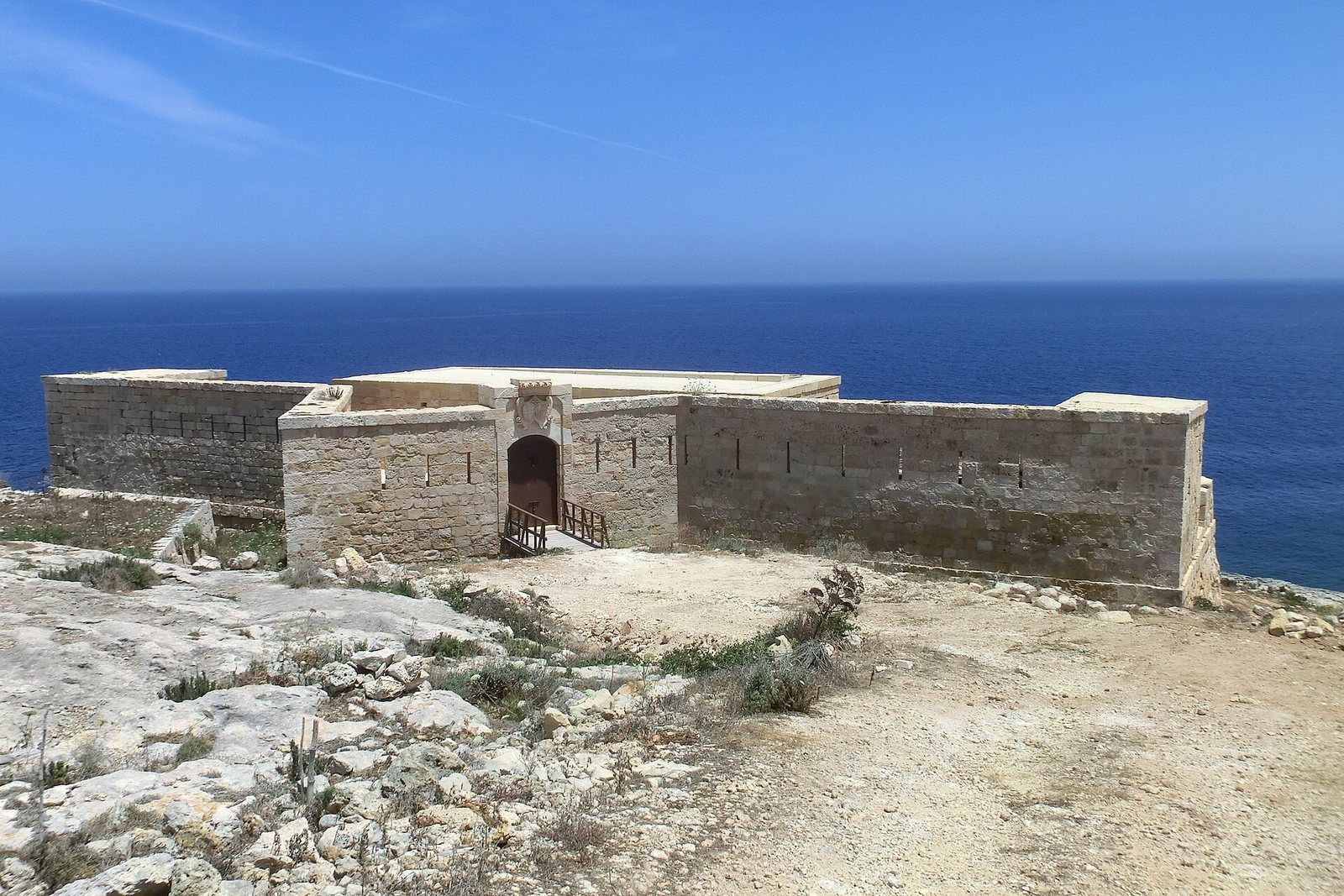
Standing about two kilometres east of Qala, the battery occupies Ras il-Qala, a coastal point whose surrounding landscape has changed little since the fortification was built. It is one of only two surviving coastal batteries on Gozo, and its scale and form distinguish it from other batteries on the Maltese islands. The landward side is straight, while the seaward front forms a semi-hexagon. A plan from 1732 instead shows a semicircular platform, two blockhouses at the rear, and a defensive work between them. The difference may reflect an adjustment during construction; the masonry blocks also vary in size.
Gun platform and parapet
Nine gun positions are arranged across the three seaward sides, with three along each side. A broad limestone parapet, a protective wall around the platform, contains eleven loopholes, narrow openings through which defenders could fire. Its limestone walls enclose a core of rubble and earth held with a thin layer of mortar, covered by waterproof cement. The paved limestone platform slopes slightly toward the parapet to make it easier to move the guns. Culverts, channels carrying water beneath a surface, drain rainwater through openings beneath the loopholes, and a small cistern stands beside the blockhouse.
Landward defenses and entrance
A free-standing limestone redan, a V-shaped defensive work, guards the landward side. Its twenty-four loopholes face outward, while two flanking traverses, barriers that help shield defenders from side fire, protect it from fire coming from higher ground and from the sea. A shallow, dry ditch cut into natural limestone runs in front of the defenses; a drawbridge crossed it, with a palisade, a barrier of upright stakes, beyond. The entrance lies in the redan’s left face beneath an arched gateway. Above it, sculpted shields display the arms of the Order and Vilhena. Charles Fabri, a Maltese stonemason, carved them in 1734. An inscription dated 1732 commemorates Fra Paolo Antonio de Viguier, the Order’s governor on Gozo from 1724 to 1732. A storm later brought down the gateway, which was rebuilt during restoration; vandalism had also damaged parts of the redan before its repair.
Blockhouse
The blockhouse stood at the rear of the gun platform and was larger than those at other coastal batteries. Three rooms opened onto the platform, and the smaller central room had an additional small door. Windows faced the rear, toward the redan, and one room served as a powder store. Arched supports for the roof ran lengthwise along the façade. The original building was destroyed, with part of one side wall surviving before the blockhouse was rebuilt during restoration.