Långlöt Church: A Medieval Church on Öland
Site at a Glance
- Rating
- 3.9
- Popularity
- Very Low
- Country
- Sweden
- Primary era
- Early Modern
- External website
- Open
- Eras represented
- Medieval, Early Modern
- Civilizations
- Swedish
- Site type
- Religious
- Remains
- Church
On this page12 sections
History
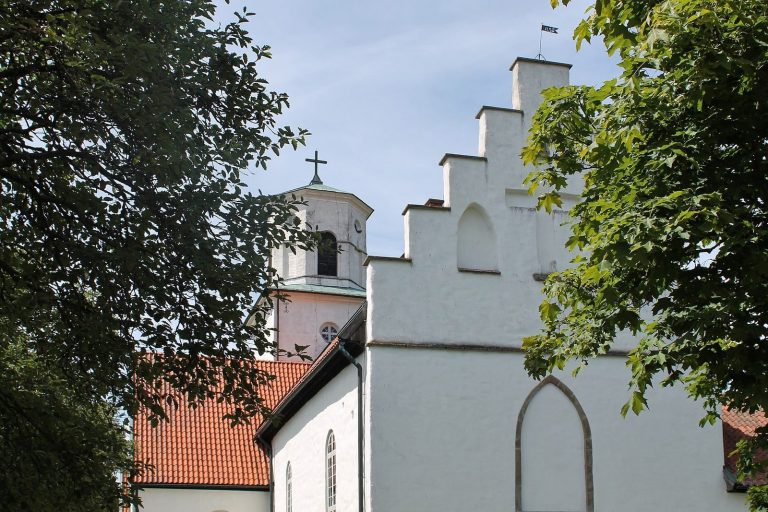
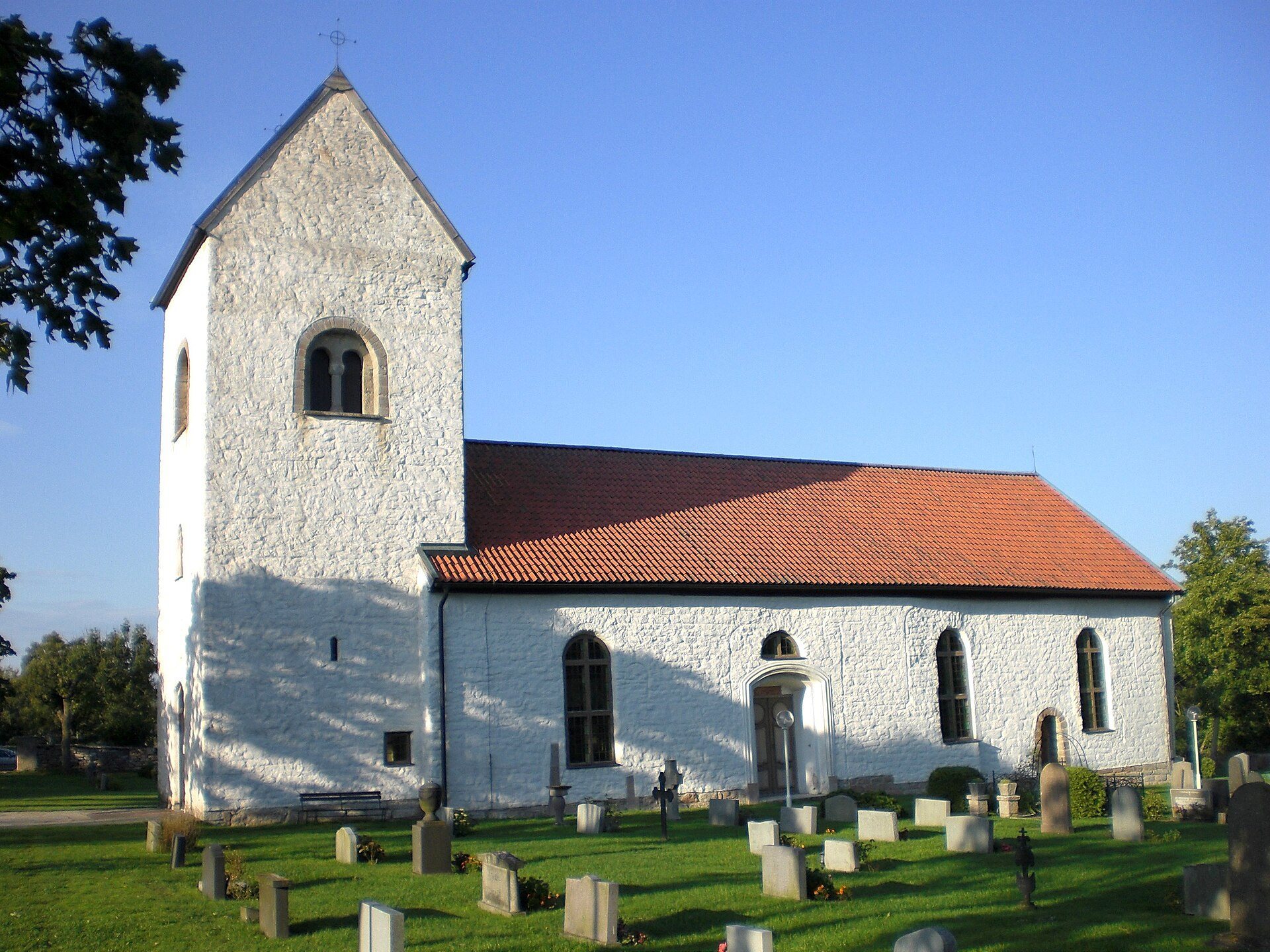
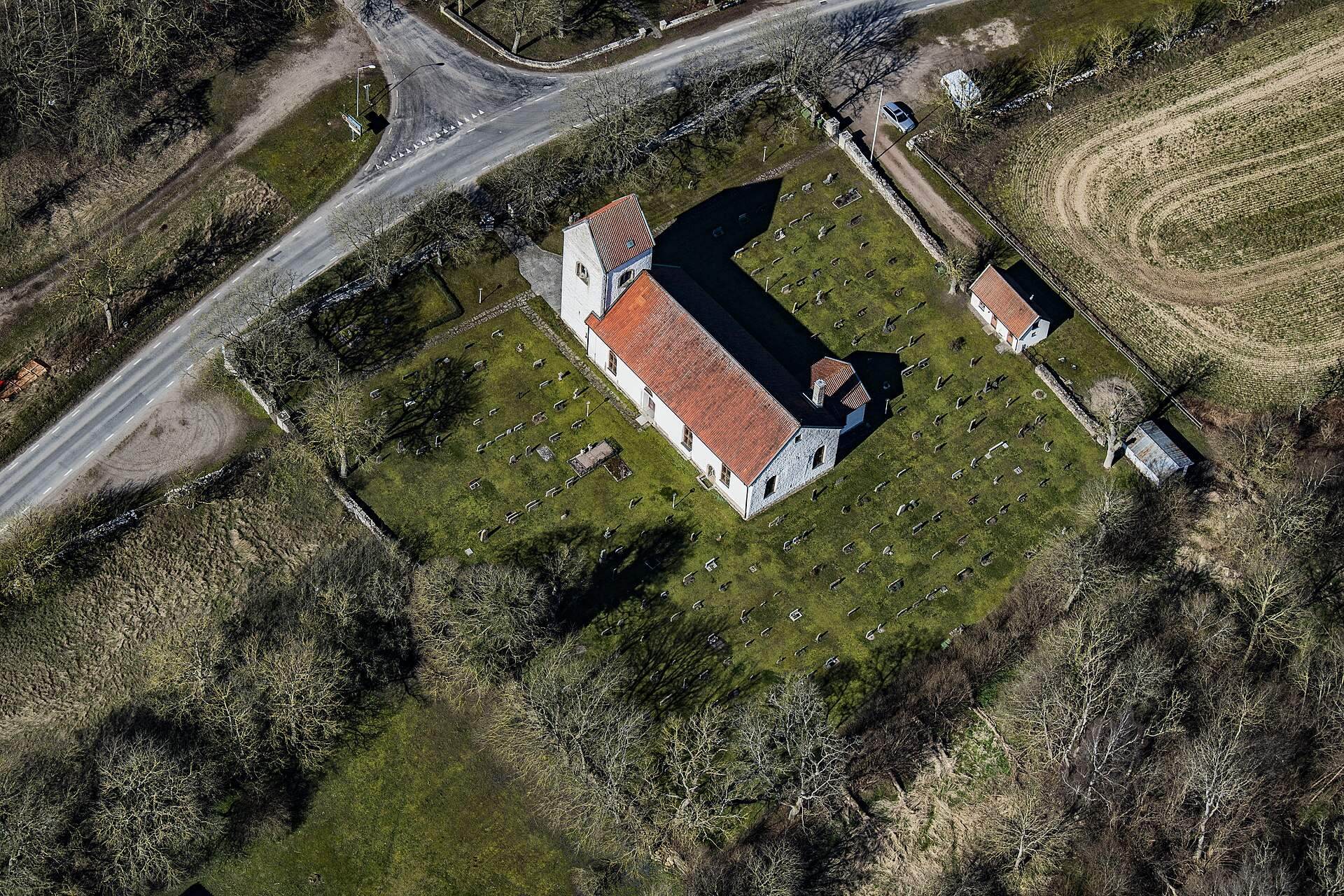
Långlöt Church is a Protestant Church of Sweden church in Sweden, serving the settlement of Långlöt on Öland near the island’s eastern coast. Its history reaches back to the eleventh century, while the present building combines a Romanesque medieval tower with a later hall church, a form with a unified interior in which the nave and side spaces are of similar height. The church belongs to the Diocese of Växjö, an ecclesiastical administrative jurisdiction within the Church of Sweden.
Early church and medieval rebuilding
A fragment of an eleventh-century runestone was found in front of the present church in 1970. It is probably connected with the earliest church at the site. A fragment of a probably wooden roof truss, also found there, has been dated to around 1080. These remains place an early Christian building phase at Långlöt before the construction of the surviving medieval structure.
The original church was built in stages from the twelfth century to the middle of the thirteenth century. The twelfth-century building was Romanesque, a medieval style associated with strong masonry, rounded arches, and forms derived from earlier Roman architecture. It had an apse, a usually semicircular end of a church, and a western tower built in three stages.
During the early and middle parts of the thirteenth century, the builder Håkan Tanna remodelled the church as a saddleback church. This form has two prominent tower-like masses or raised end sections, producing a saddle-like profile. The walls of the nave and chancel were raised, interior vaults were added, and another storey was constructed. The chancel was rebuilt as an eastern tower, and a sacristy, a room for vestments and liturgical objects, was later attached to its southern side.
Rebuilding and conservation
A major rebuilding took place in 1795 and 1796 under Henrik Wermelin. The medieval west tower was retained, as were the southern side, the southeastern corner, and part of the eastern gable. Most of the remaining medieval building was demolished, including its vaulted sections and eastern tower. The later church therefore preserves only selected parts of the medieval structure within a substantially rebuilt form.
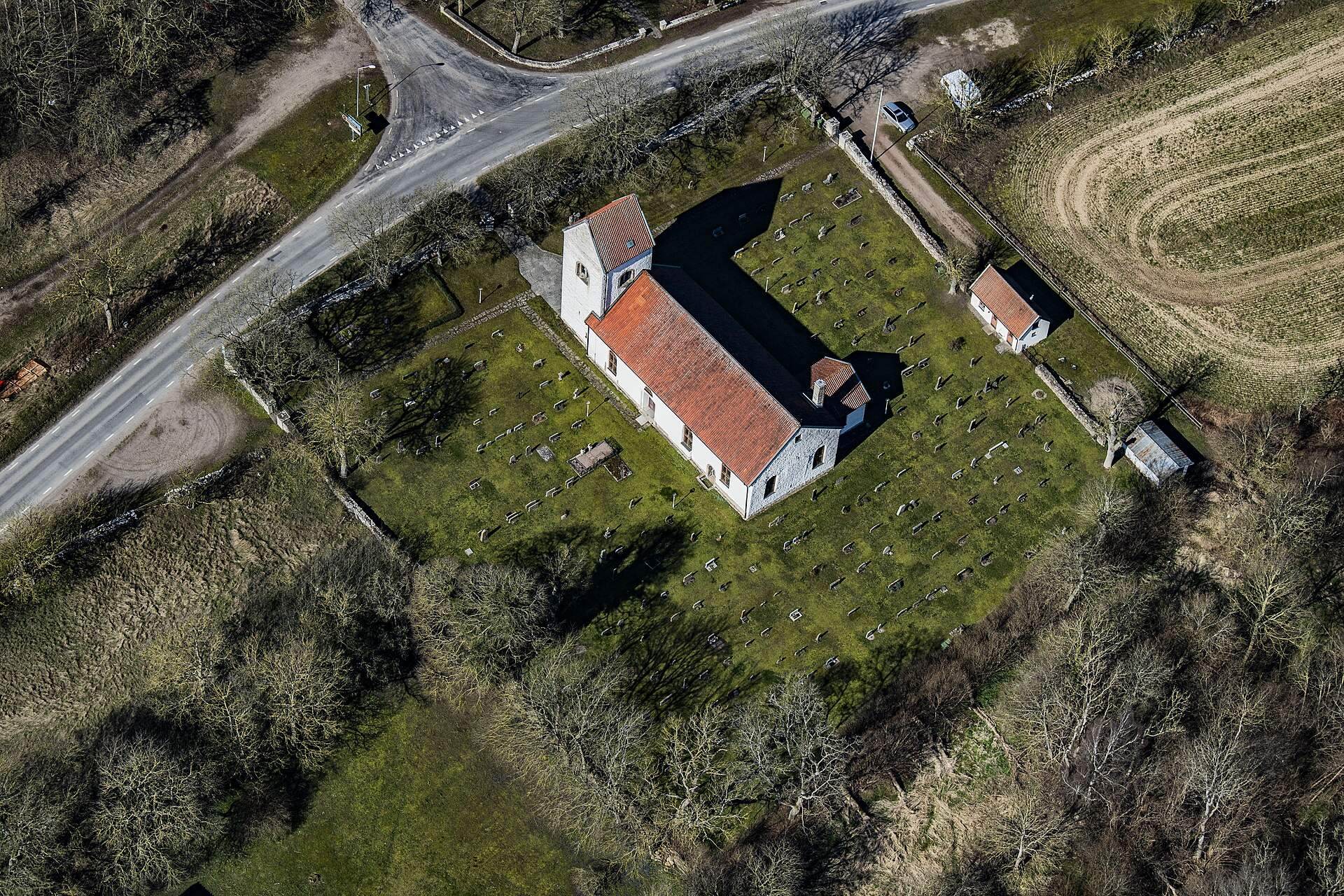
In 1855, the southern sacristy was demolished and replaced by the present extension on the north side. Major restorations followed in 1938 under Paul Boberg and Sven Wahlgren, and again from 1968 to 1970 under Sven Wahlgren and Gösta Gerdsiö. The church and its medieval cemetery are preserved as a historic church complex. The medieval tower spire is an unusual survival among Öland’s churches, matched there only by the church at Persnäs. The cemetery has also retained its original form, and a historic alms collection container remains at the western entrance to the churchyard.
Remains
Långlöt Church consists of the retained medieval western tower and a later nave with a straight-ended chancel. The rebuilt structure follows the hall-church type, with tall windows and wooden barrel vaults. The surviving medieval tower retains its spire, while the churchyard remains enclosed by a cemetery whose original layout continues to define the complex.
Medieval structure
Western tower
The western tower was first constructed in three stages as part of the Romanesque church. It survived the rebuilding of 1795 and 1796 and remains the principal medieval part of the present building. Its medieval spire is an unusual surviving feature among the churches of Öland.
Cemetery and churchyard
The medieval cemetery surrounds the church and has retained its original form. At the western entrance to the churchyard, a historic alms collection container survives as part of the complex.
Interior and furnishings
Baptismal fonts and sculpture
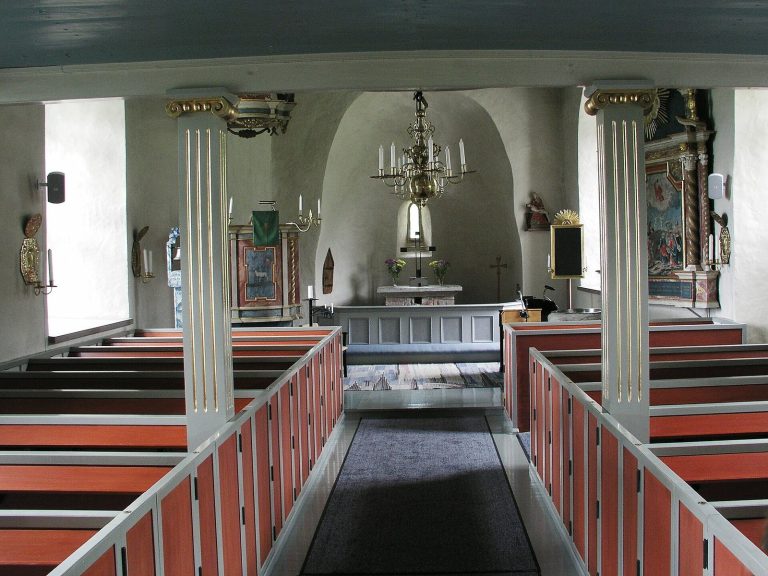
The church contains two baptismal fonts. One is made of Gotland sandstone and dates from the late twelfth or early thirteenth century. The other is formed from red polished limestone and is dated 1668. A sculpture of Mary from a North German workshop dates from the early fourteenth century, and a crucifix hangs above the baptismal font.
Altar and pulpit
The pulpit was carved by Anders Dahlström the Younger in 1763 and remodelled in 1854. The altar carries Christ Carrying the Cross, painted by Sven Gustaf Lindblom in 1854 after a work by Raphael. The upper part of an older altar, carved by Anders Dahlström the Elder around 1750, is mounted on the southern wall. It depicts an angel washing away the sins of humanity.
Other furnishings
Two wooden sculptures on the northern wall probably represent John the Baptist and Moses. A votive ship, a model vessel placed in a church as a religious offering or memorial, takes the form of a three-masted sailing ship. The interior also contains a Rococo hourglass dated 1736 and a crystal chandelier in the chancel, the part of the church traditionally reserved for the altar and clergy, acquired in 1878.
Two brass chandeliers were acquired in 1740 and 1774. The pews date from the 1790s and were modernised in 1938 and 1970. The church has two bells, as well as two mass bells. Both main bells originally dated from 1765. The large bell was recast in 1941 by M & O Ohlsson of Ystad. The small bell was recast by J. P. Forsberg in 1873 and again by M & O Ohlsson in 1941.
Organ
The first organ was acquired from Fliseryd Church. Setterquist & Son Orgelbyggeri of Örebro built a new instrument in 1896. In 1970, the Mårtensson organ factory of Lund constructed another organ, positioned behind the 1896 organ façade.