Arby Church: A Medieval Parish Church in Sweden
Site at a Glance
- Country
- Sweden
- Primary era
- Medieval
- Eras represented
- Medieval, Early Modern, Modern
- Civilizations
- Swedish
- Site type
- Religious
- Remains
- Church
On this page11 sections
History
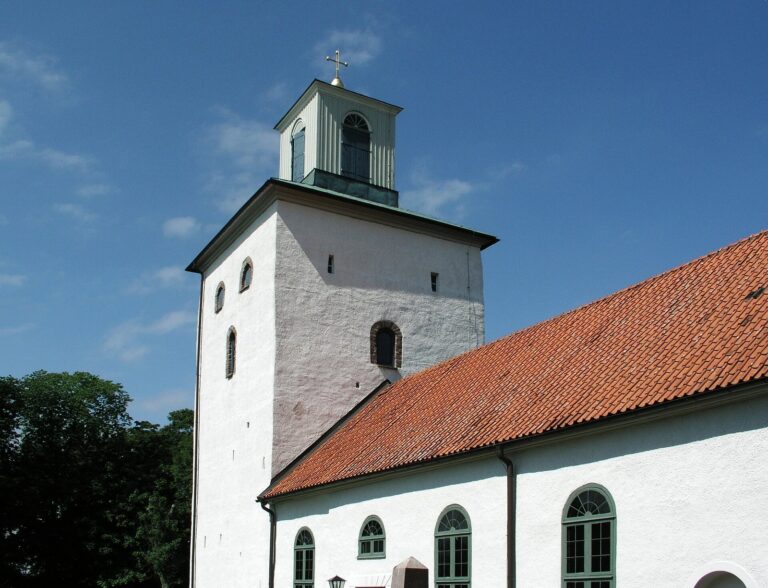
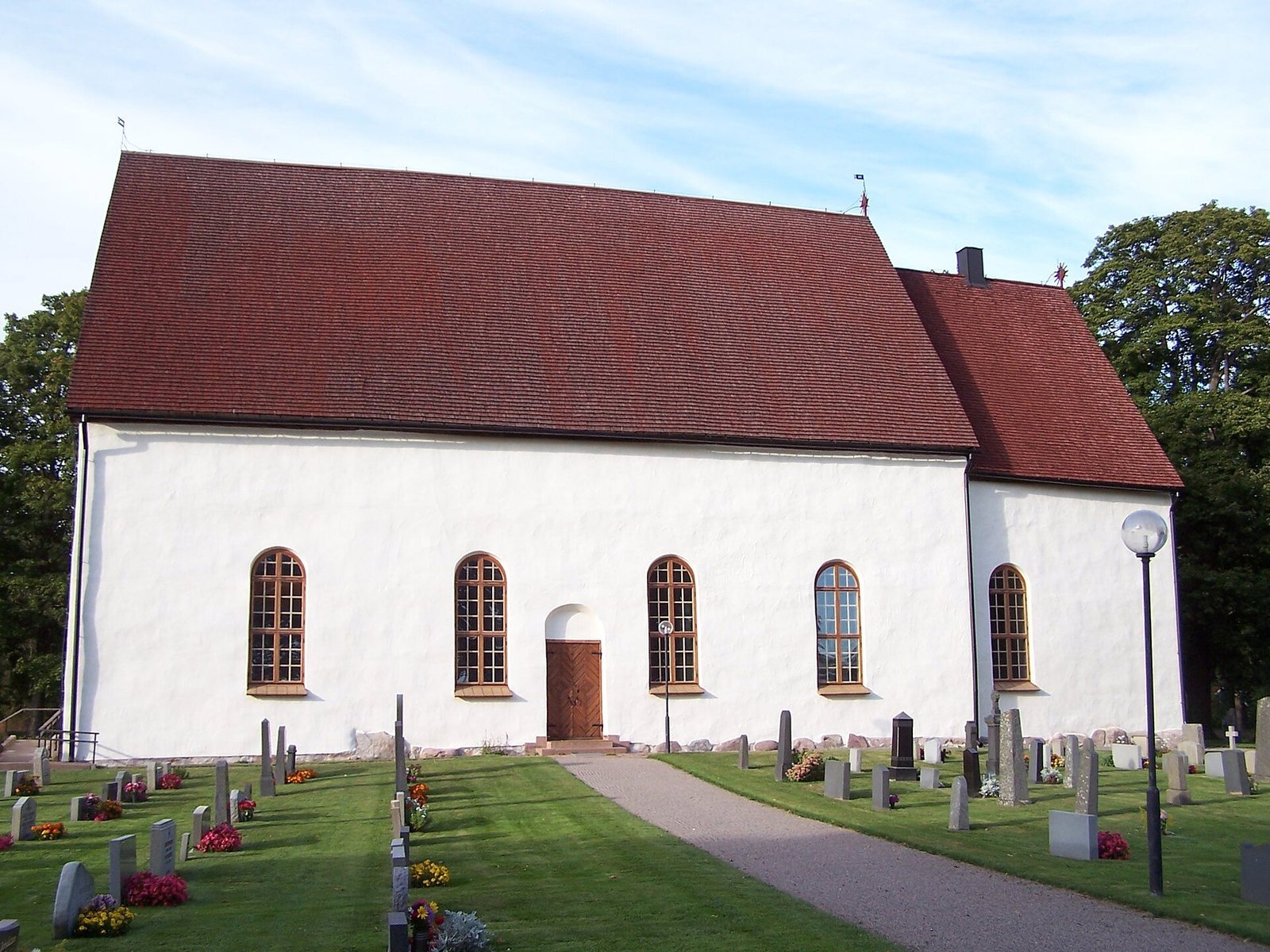
Arby Church in Vassmolösa, Sweden, is a parish church whose stone building took shape in the 13th century in the Romanesque style, a medieval form associated with substantial masonry and rounded arches. It followed a probable wooden predecessor from the early 12th century. Identified as consecrated in the 12th century, the church served the parish of Arby from the Middle Ages and later served Arby-Hagby.
Early church and stone rebuilding
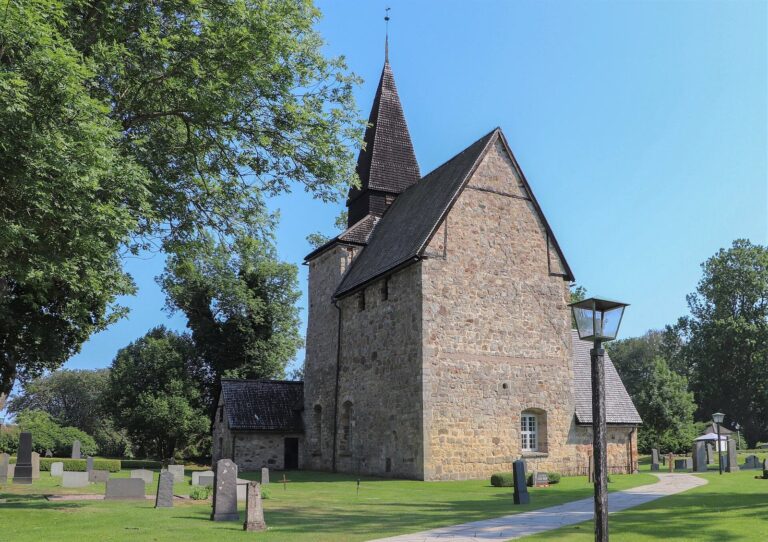
The first church was probably a simple wooden building. During the 13th century, it was gradually replaced by a Romanesque stone church. Work began with the eastern chancel; the older nave was then demolished and replaced with a rectangular stone one. A western tower completed the main building sequence.
Later alterations and restoration
A drawing made in 1747 by Swedish clergyman and antiquarian Petrus Frigelius depicts the tower with two spires. The spires were removed between 1770 and 1772, and the tower chamber was incorporated into the nave. A major rebuilding followed during the 1820s. The church was restored in 1971–1972, when building and archaeological investigations also took place.
Remains
Church plan and churchyard
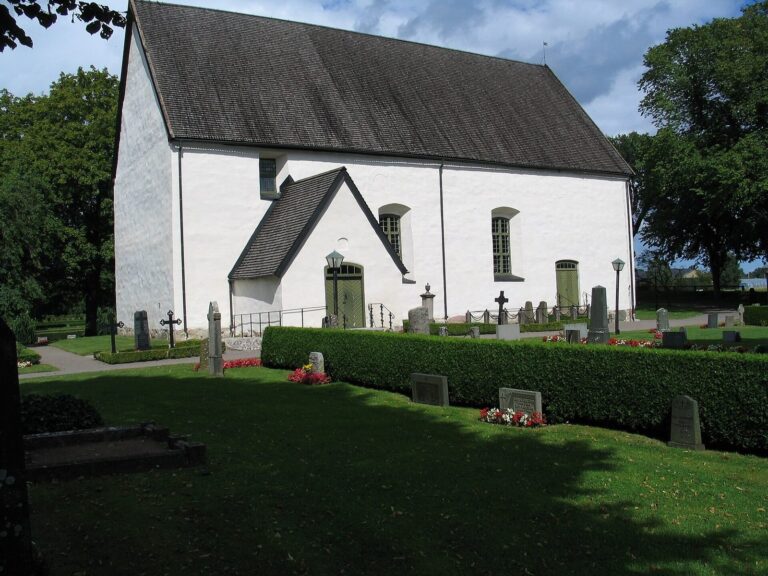
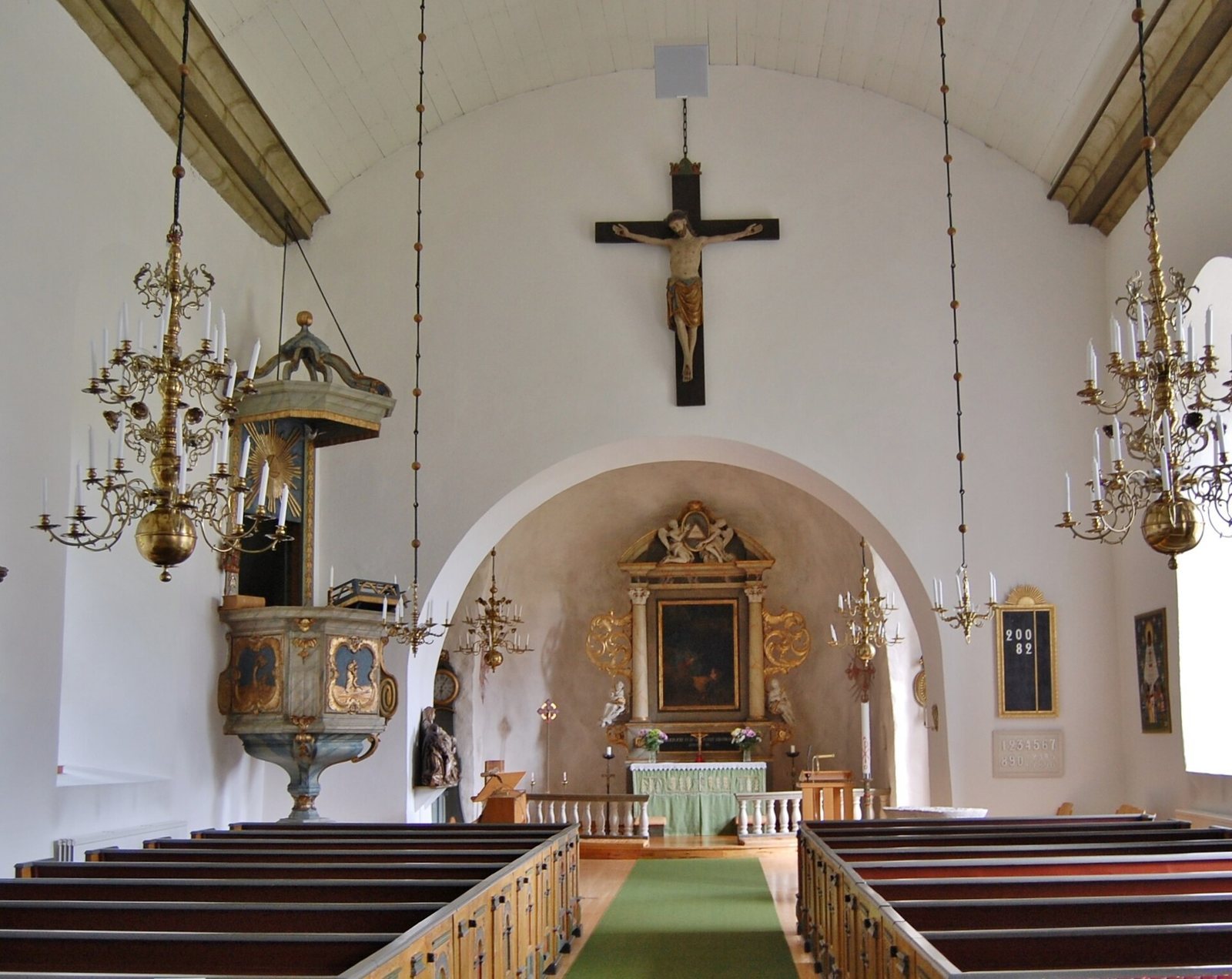
The church comprises a nave, chancel, built-in apse, and broad western porch; the porch was formerly the lower part of the tower building. A sacristy, a room used by clergy and for church vessels and vestments, adjoins the chancel on its north side and dates to the 14th century. Inside, a barrel vault covers the church, while a triumphal arch marks the division at the chancel. The altar stands in the built-in apse, whose walls carry two ornamented consecration crosses, markers associated with the church’s dedication. The bells hang in an open bell tower supported by a frame, with a helmet-shaped roof and small spire. A medieval stone outbuilding stands in the churchyard.
Runestone fragment
A fragment of a runestone, a stone bearing a runic inscription, was found in the church in 1973. Made of Öland limestone and dated to the second half of the 11th century, it indicates that Christianity had reached the district by that time.
Furnishings and organ
Medieval furnishings and sculpture
The church has a baptismal font from the latter part of the 13th century and a processional crucifix from a South Scandinavian workshop, dated to the second half of that century. The crucifix was made to be carried in religious processions. Artist Ebba Pauli Rappe donated a Pietà, a sculpture of Mary mourning the dead Christ, probably made in Bavaria around 1600.
Altarpiece and altar rail
Jonas Berggren made the altarpiece in 1770. The altar rail has turned balusters and a central opening.
Pulpit and pews
Berggren also made the pulpit in 1770. Its Rococo style is characterized by elaborate, curving ornament; it has a sounding board and is reached from the sacristy. The pews are enclosed.
Organ and loft
The organ loft has a projecting, curved central section decorated with a lyre. Carl August Johansson and local organ builder Johannes Magnusson of Lemnhult built an 11-stop pipe organ in 1852. Magnusson rebuilt it in 1904 as a seven-stop instrument with one manual, or keyboard, and a pedal. Frederiksborg Organ Builders rebuilt the organ in 1955 behind its 1852 façade. It then had 17 stops, two manuals, and a pedal, with mechanical connections operating the keys and stop controls. A 1973 specification names a “Scharff III chor,” a high-pitched mixture stop, which is not listed in the Inventory of Swedish Organs.