Sandby borg: An Iron Age Ringfort in Sweden
Site at a Glance
- Rating
- 4.2
- Popularity
- Low
- Country
- Sweden
- Primary era
- Iron Age
- External website
- Open
- Eras represented
- Iron Age
- Civilizations
- Unclassified
- Site type
- Military
- Remains
- Fortified Town
On this page10 sections
History
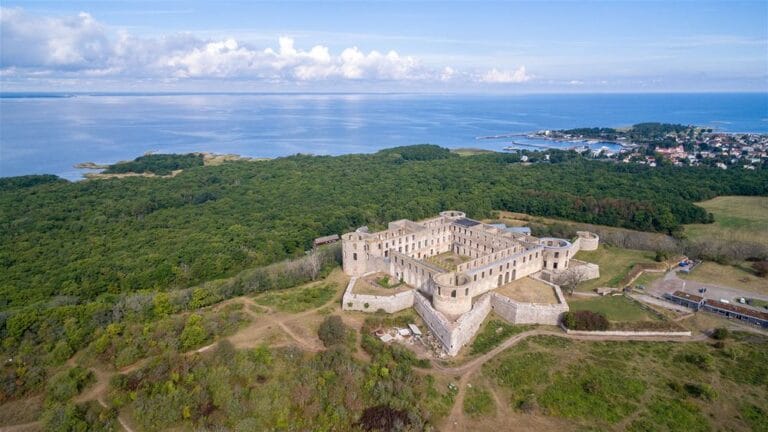
Sandby borg is an Iron Age ringfort in Sweden, near Södra Sandby on southeastern Öland. It was in use by the late fifth century during the Migration Period, an era of major population movements and political change in Europe, although the date of its construction remains uncertain. The fort became the scene of a mass killing, leaving unusually direct evidence of violence and everyday life within an enclosed settlement.
The fort in the Migration Period
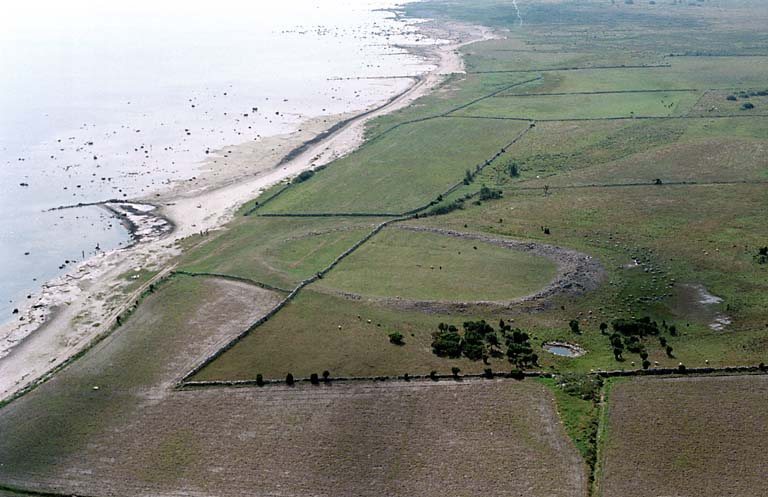
Sandby borg was one of at least 15 ringforts on Öland. These were fortified settlements enclosed by circular or oval defensive walls. The fort stood near the shoreline in Sandby parish, close to Gårdby, and formed part of a wider pattern of enclosed communities on the island.
During the late fifth century, violence took place inside the settlement. The victims were not buried, and their bodies remained inside houses and along the streets. Injuries caused by sharp and blunt weapons indicate that the deaths were not ordinary losses in combat and may have followed executions. The event left the settlement with a rare connection between its buildings, household objects, and the people who died there.
Discovery and excavation
Initial geophysical investigations in spring 2010 identified suspected looting pits. A metal-detector survey later that year located five concealed deposits of Migration Period jewelry in houses within the central block. These discoveries drew attention to the fort and helped establish the importance of systematic archaeological work.
The Kalmar County Museum began annual excavations in 2011. By the end of the 2017 campaign, about 9 percent of the fort and three of its 53 houses had been excavated. Complete investigations of House 40 in 2015, House 4 in 2016, and House 52 in 2017 supported detailed study of the human remains and the victims’ demographic composition. Osteological analysis, the study of human skeletal remains, and bioarchaeology, which combines skeletal study with archaeological evidence, have formed important parts of the research. Sandby borg is preserved as an archaeological ruin, while excavation and analysis have continued beyond the 2010 to 2017 campaigns.
Remains
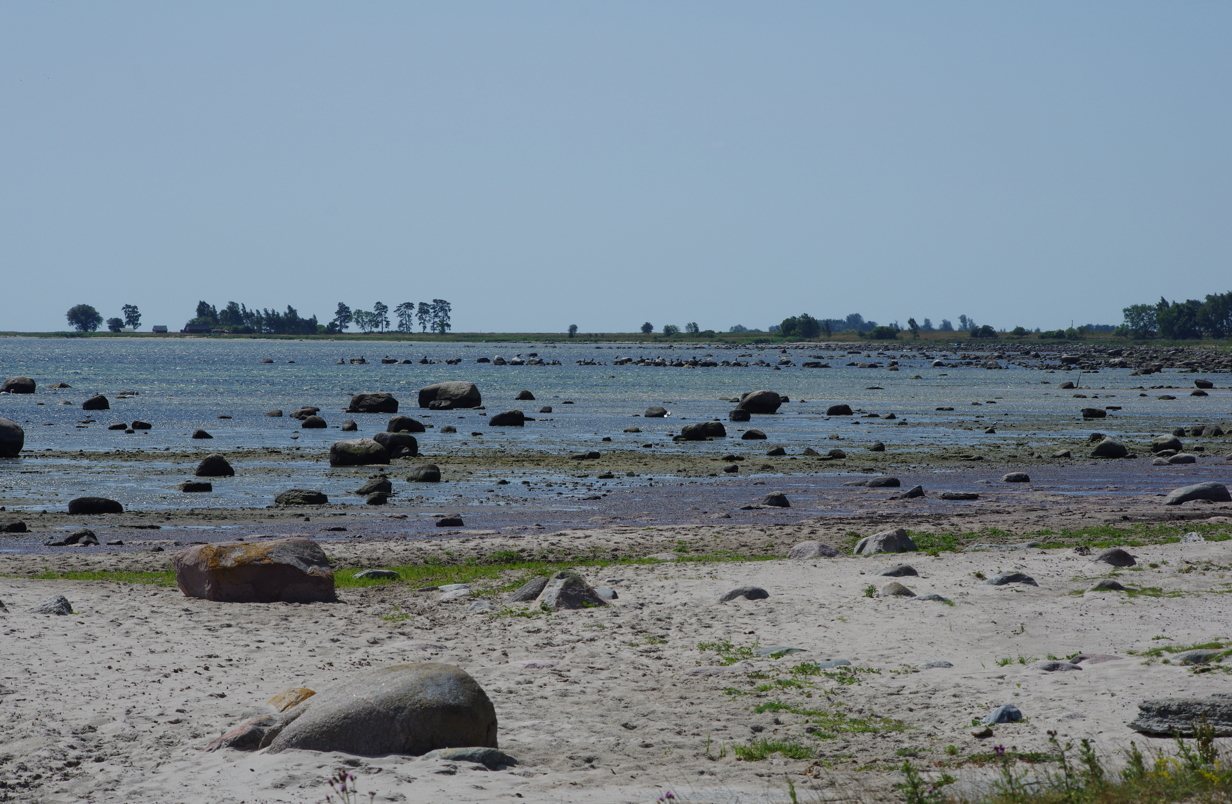
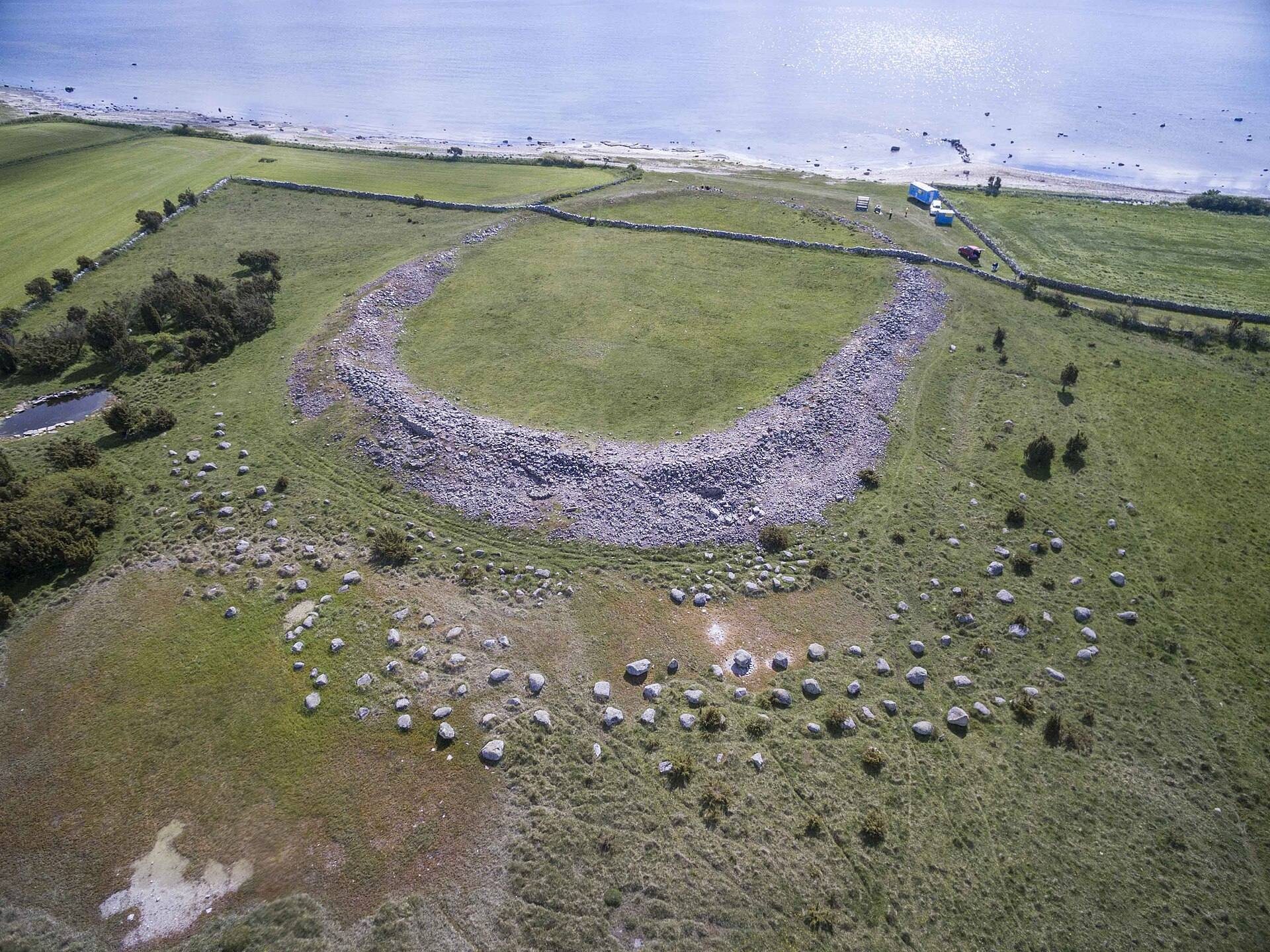
Sandby borg occupies a shoreline setting in southeastern Öland. Its surviving enclosure is an eroded oval limestone wall surrounding approximately 5,000 square metres. Inside it, buried stone structures define houses arranged radially around a central block and its surrounding street. This organization resembles the layout of other Öland ringforts, including Eketorp.
Enclosure and settlement layout
Limestone wall and gates
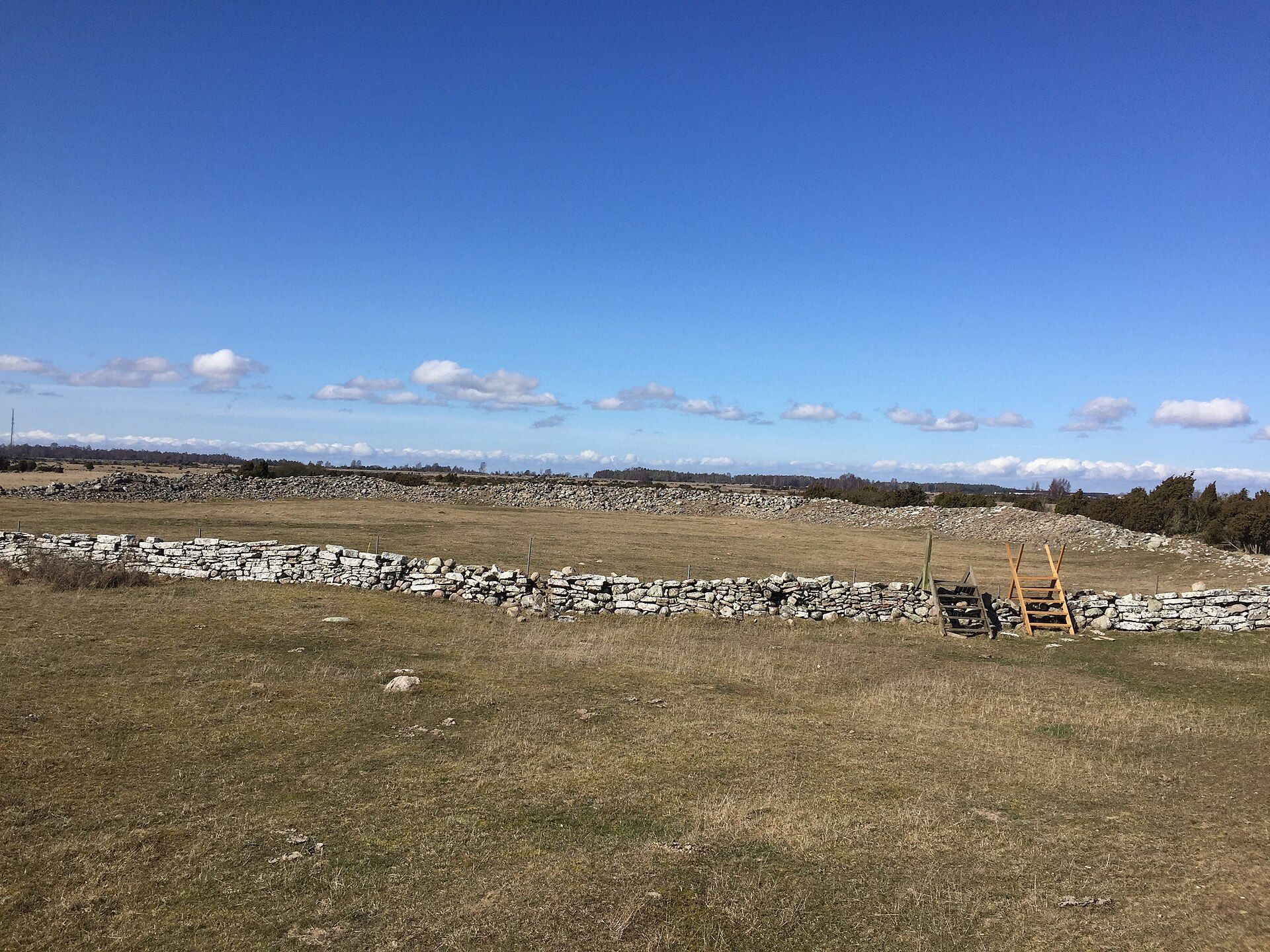
The visible wall is 2 to 3 metres high and was built from local limestone, with erratic boulders and pebbles filling its structure. The original enclosure was approximately 4 metres wide and probably reached 4 to 5 metres in height. Three gates survive as shallow depressions in the wall, while aerial crop marks suggest that a fourth gate may have existed. West of the fort, regularly arranged rows of large erratic boulders probably formed part of the defensive system.
Houses and internal streets
Aerial photography and geophysical surveys revealed the buried walls of 53 houses. They were laid out radially inside the enclosure, around a central block bordered by a street. Excavated pottery and tools relate to everyday activities within the settlement, while the arrangement of the houses provides the main surviving evidence for its internal organization.
Objects and human remains
Jewelry deposits
Five concealed jewelry deposits were found in separate houses in the central block. Each included a gilded-silver relief brooch, together with objects such as glass beads, finger rings, and silver pendants. The large brooches are prestigious pieces decorated with animal designs. Their ornament belongs to Salins Style I, a Migration Period style recognized especially through animal decoration on elite metalwork, and also includes spiral ornamentation. Their typological date is approximately AD 450 to 510. The brooches probably formed part of aristocratic women’s jewelry sets.
Other finds include gold and silver ornaments, imported Roman glass, pottery, tools, and two Roman gold solidi. A solidus was a high-value Roman gold coin introduced as a stable denomination in the late Roman Empire. Together, these objects provide evidence for the material activities and external connections represented at the settlement.
Victims of the massacre
Human remains were found inside houses and on the fort’s streets, often in the positions in which the victims fell rather than in graves. At least 26 individuals have been identified, including young children and elderly adults. Nine are represented by nearly complete skeletons. Many of the skeletons bear sharp-force or blunt-force injuries, commonly delivered from above or behind, providing physical evidence for the violent event that ended the settlement’s occupation.