Saqqara: Egypt’s Ancient Necropolis of Memphis
Site at a Glance
- Popularity
- Very High
- Country
- Egypt
- Primary era
- Bronze Age
- Eras represented
- Bronze Age, Medieval
- Civilizations
- Byzantine, Egyptian
- Site type
- Burial
- Remains
- Necropolis
On this page28 sections
History
Saqqara is the principal ancient Egyptian necropolis of Memphis, near Saqarah in Giza Governorate, Egypt, about 30 km south of modern Cairo. Elite burials began here in the First Dynasty, and the site developed into a royal cemetery and a centre of funerary worship over many centuries.
Early royal burials and Djoser
After Egypt’s unification under the First Dynasty, its southern rulers established a capital near the Nile Delta. By the end of the Second Dynasty, the city was known as Ineb Hedj, meaning the White Wall; Greek writers later called it Memphis. Saqqara became its nearby royal burial ground. The ancient name for the necropolis was Ro-setjaou, or Gate of the Passages. The origin of the name Saqqara is disputed: proposed explanations connect it to the nearby village, the funerary deity Sokar, or the Berber Beni Saqqar. Medieval writers also used a name meaning Land of Buckthorn.
Elite burials at Saqqara date to the First Dynasty. Tomb 3357, from the reign of Hor-Aha, is among the earliest. Large tombs built for officials were once mistaken for royal graves. The earliest royal burials at the site belong to the Second Dynasty and include those of Hotepsekhemwy and Nynetjer. The ownership of the large enclosure called Gisr el-Mudir remains uncertain, with Nynetjer and Khasekhemwy both proposed. Khasekhemwy was buried at Abydos, though he may also have built a funerary monument at Saqqara. A cemetery for elite or possibly royal burials developed nearby late in the dynasty.
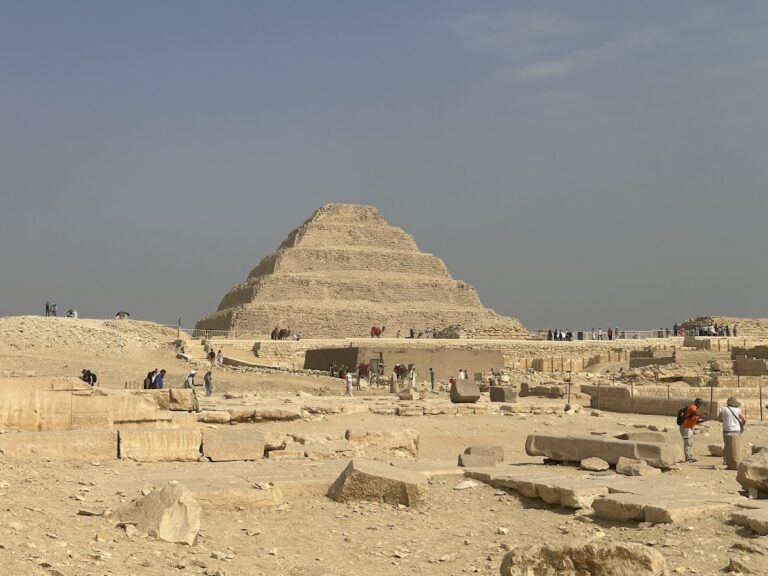
In the Third Dynasty, King Djoser’s funerary complex was built at Saqqara. Its architect, Imhotep, is credited with designing Egypt’s first building made entirely of stone. Another royal complex, built for Sekhemkhet, remained unfinished.
Old and Middle Kingdoms
Saqqara again became a royal burial ground in the later Old Kingdom, especially during the Fifth and Sixth Dynasties, after most Fourth-Dynasty kings chose other burial places. Courtiers commonly established tombs near royal pyramids, creating groups of private graves around the complexes of Unas and Teti. Burial activity at Saqqara continued even when kings established cemeteries elsewhere.
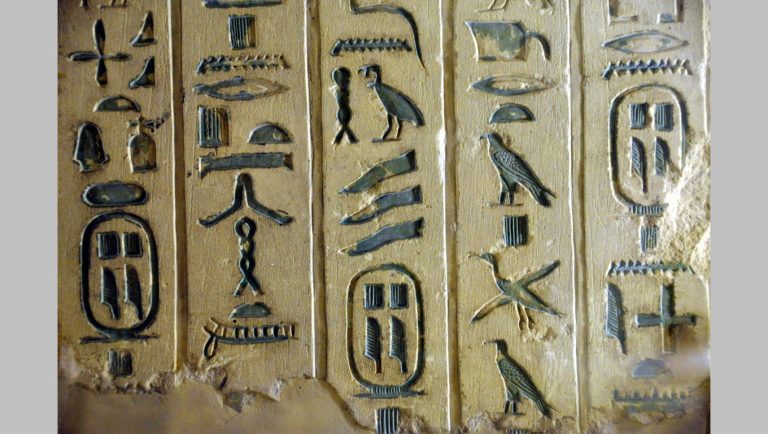
Unas, the last king of the Fifth Dynasty, was the first to have Pyramid Texts inscribed in his pyramid’s burial chambers. These religious writings were intended to support the king’s afterlife and are regarded as precursors to the Book of the Dead, a later collection of funerary spells associated with the New Kingdom.
When the royal court moved away from Memphis during the Middle Kingdom, activity at Saqqara declined. Some Thirteenth-Dynasty kings nevertheless built pyramid complexes in southern Saqqara, including Khendjer.
New Kingdom and later use
Memphis regained importance as an administrative and military centre during the New Kingdom, and high officials once again built tombs at Saqqara. Horemheb constructed his tomb there while still a general. After becoming king, he was buried in the Valley of the Kings at Thebes. Officials also continued to be buried at Saqqara during the Nineteenth Dynasty.
The Serapeum, the burial complex for Memphis’s sacred Apis bulls, began in the Eighteenth Dynasty and was expanded especially under the Ramesside kings. Khaemwaset, a son of Ramesses II and a high priest of Ptah, restored monuments at Saqqara, including the Pyramid of Unas, and enlarged the Serapeum. He was eventually buried in its underground galleries.
Saqqara remained a burial ground and a destination for worship and pilgrimage through the Ptolemaic and Roman periods. Later sanctuaries and animal-burial galleries served cults associated with deities such as Anubis and Bastet. Several monasteries, including the Monastery of Apa Jeremiah, belong to the Byzantine and early Islamic periods.
Excavation and archaeological discoveries
Karl Richard Lepsius surveyed and mapped Saqqara in 1842–1843, beginning the systematic numbering of its monuments. Auguste Mariette excavated there from 1851 to 1855, discovered the Serapeum, and returned periodically as Director of Antiquities from 1858 until his death in 1881. Alessandro Barsanti worked at the site from 1899 to 1901, and James Edward Quibell excavated there from 1905 to 1914. Cecil Mallaby Firth worked with Quibell during the 1920s, while Jean-Philippe Lauer devoted much of his career to excavating and restoring Djoser’s complex. The Egypt Exploration Society also conducted work, particularly in North Saqqara, during the 1950s and 1960s.
Excavations by Walter B. Emery from 1936 to 1956 uncovered mastabas bearing references to First- and Second-Dynasty kings already known from tombs at Abydos. The discoveries prompted debate over whether some Saqqara tombs were symbolic graves for people buried at Abydos, or whether the relationship was reversed. In 1861, a painting in a New Kingdom tomb was found to contain a royal list. It names 57 rulers from whom Ramesses II claimed descent, with 52 names still legible.
Excavations and discoveries in the twenty-first century have added further evidence of burial and worship across different periods. Finds include mummies, burial chambers, animal remains, coffin caches, elite tombs, and temple structures, with discoveries announced as recently as 2025. In 1979, the wider Memphite pyramid fields, extending from Giza to Dahshur and including Saqqara, were inscribed as a UNESCO World Heritage Site.
Remains
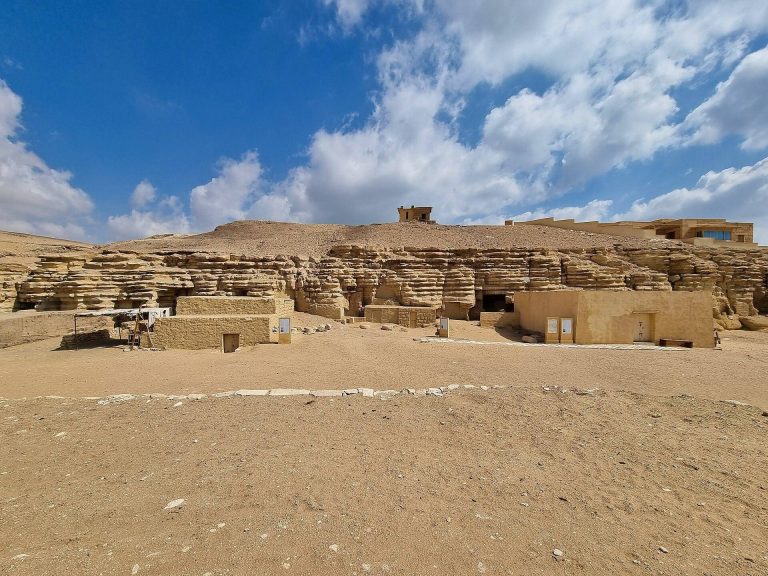
Saqqara extends across about 9 square kilometres, in an area roughly 7 km long and 1.5 km wide. It is divided into North Saqqara, the central or main area, and South Saqqara. Early elite tombs and animal burial grounds are concentrated in the north; Djoser’s complex and the Serapeum lie in the central area, while several Old and Middle Kingdom royal pyramid complexes occupy the south.
Layout and early burials
Mastabas and the necropolis landscape
Many early elite tombs are mastabas, low, flat-topped tomb structures built above underground burial chambers. They average about 6 m in height and were made of sun-dried brick. Their recessed and projecting exterior walls were coated with whitewash and designed to resemble palace fronts and the appearance of brightly coloured mats or tents.
Tombs of Hesyre and Hemaka
The Third-Dynasty tomb of Hesyre contains damaged painted scenes of people and cattle in its outer corridor. Paintings in the inner corridor show vessels, inscriptions, offerings, furniture, and other funerary goods. Eleven painted niches once occupied the west wall; six surviving stelae depicting Hesyre are now in the Cairo Egyptian Museum. Two seal fragments bearing Djoser’s name were also found there. The First-Dynasty tomb of Hemaka contained storerooms and many inscribed objects, including wine-jar seals, ebony and ivory labels, game pieces with hunting scenes, and a wooden model sickle. Many of its finds are also in the Cairo Egyptian Museum.
Djoser and early royal architecture
Djoser’s enclosure and complex
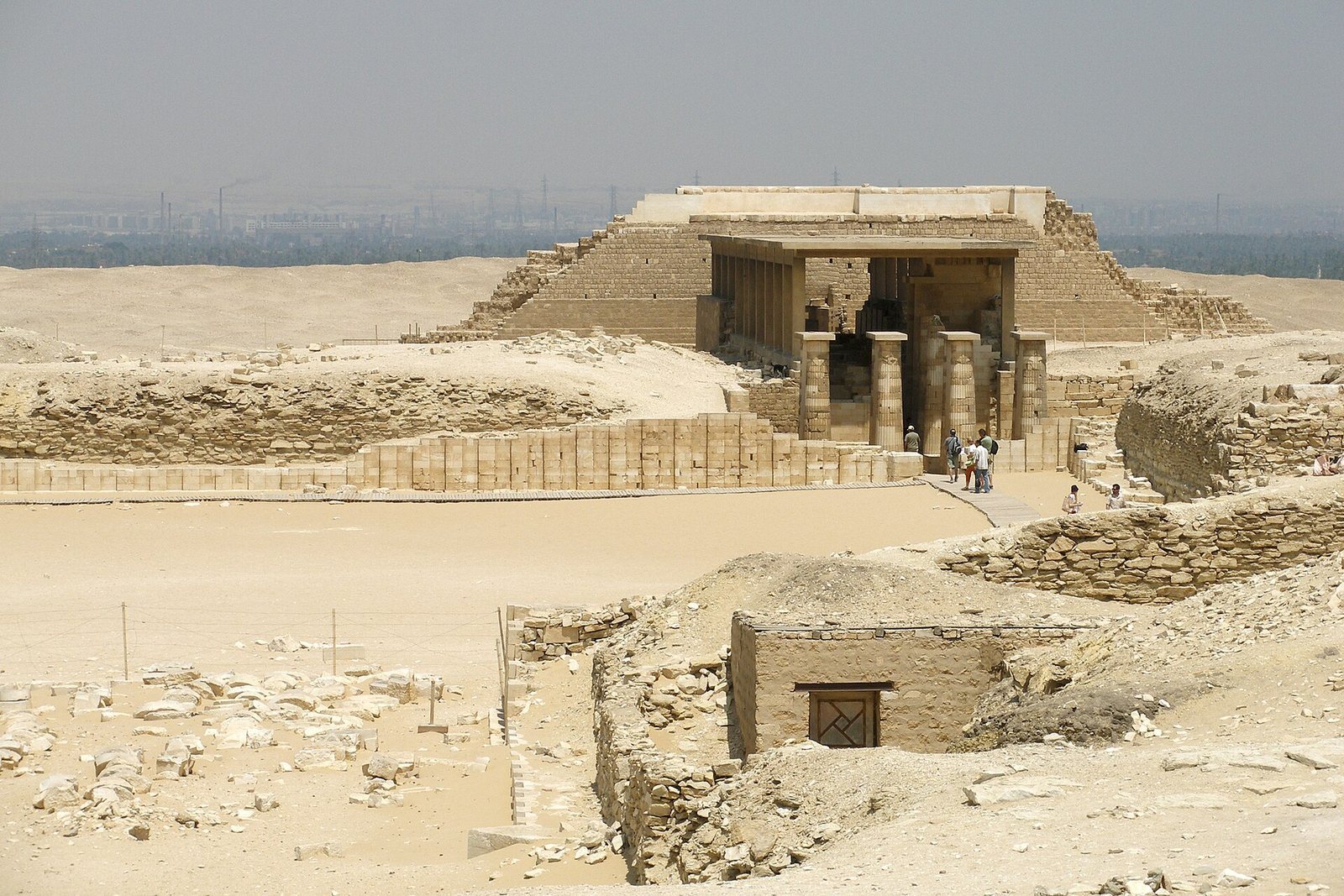
Djoser’s funerary complex occupies about 15 hectares inside a rectangular limestone wall approximately 10 m high. Built of Tura limestone, the wall has recessed and projecting sections, pilasters, and 14 decorative double-leaf doorways. Its palace-front design recalls the White Wall fortress of Memphis, traditionally attributed to Narmer. Within the enclosure are the stepped pyramid, courts, buildings designed to imitate temples, and the Southern Tomb.
A large trench known as the Dry Moat forms another feature of the complex. It has been interpreted as a model of the pharaoh’s passage to the netherworld, though that proposed meaning is uncertain.
Gisr el-Mudir and neighboring remains
Gisr el-Mudir is a large rectangular enclosure whose attribution to a Second-Dynasty ruler, possibly Nynetjer or Khasekhemwy, remains uncertain. A separate L-shaped structure is also among Saqqara’s early remains.
Royal pyramid fields
Old Kingdom pyramids
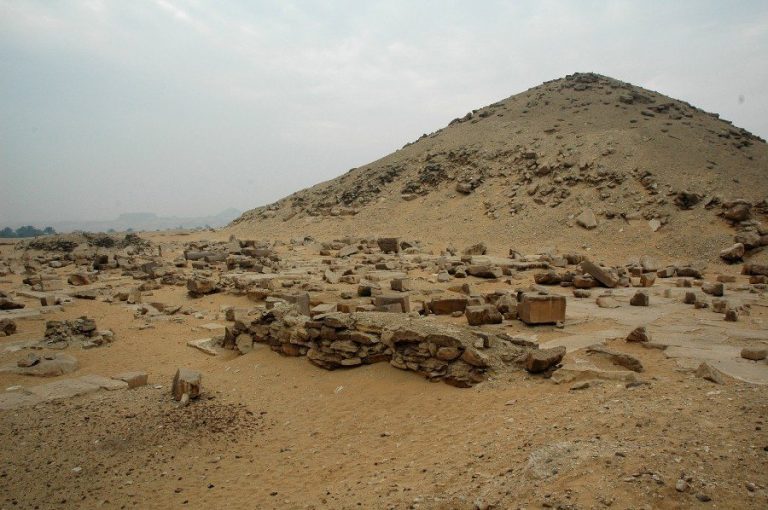
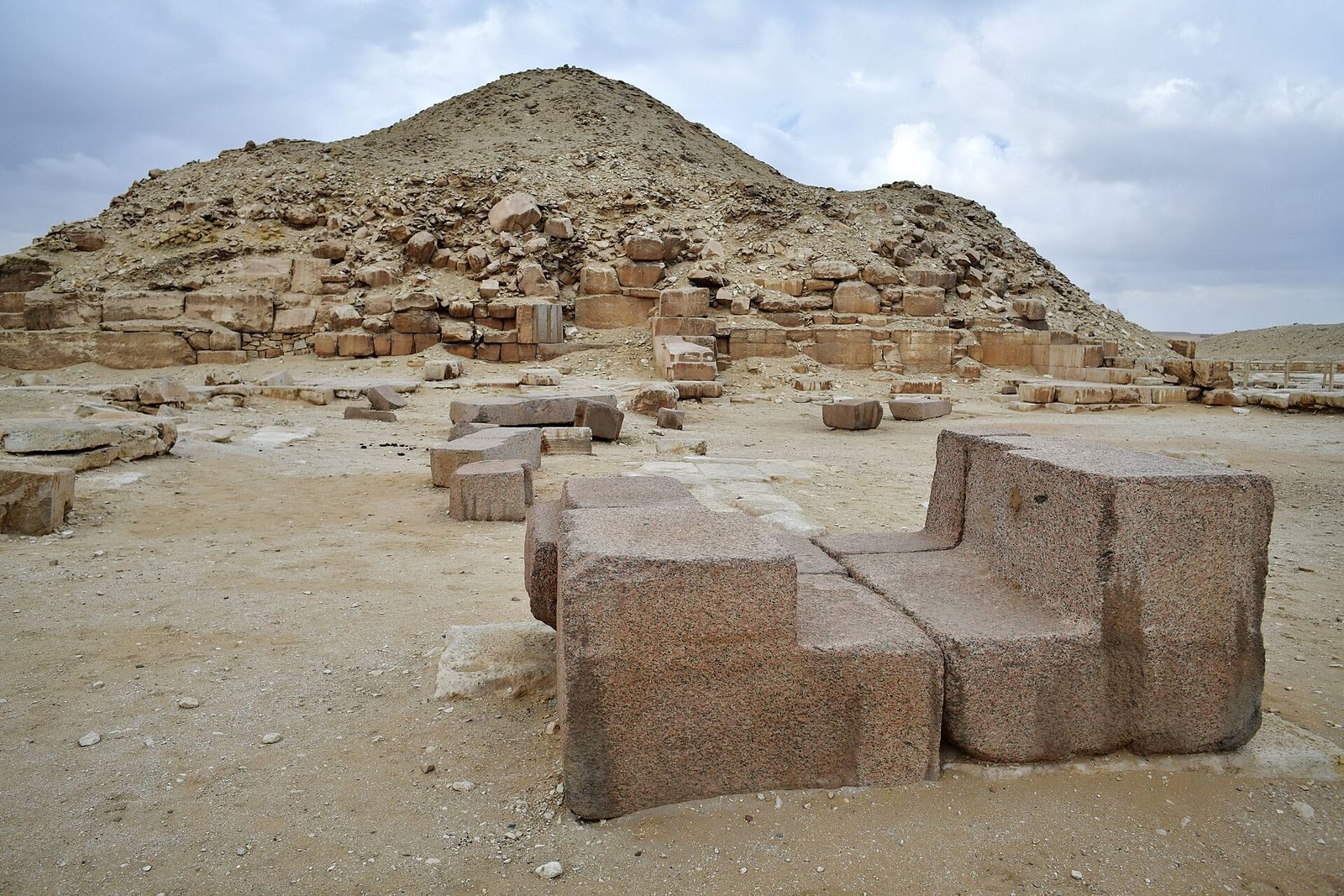
The Pyramid of Unas stands south of Djoser’s stepped pyramid. Its burial chambers contain the earliest known royal Pyramid Texts. Many Fifth- and Sixth-Dynasty pyramids at Saqqara were built around rubble cores rather than from massive stone blocks throughout. This construction helps explain why they are less well preserved than Fourth-Dynasty pyramids at Giza.
Other royal and queenly complexes
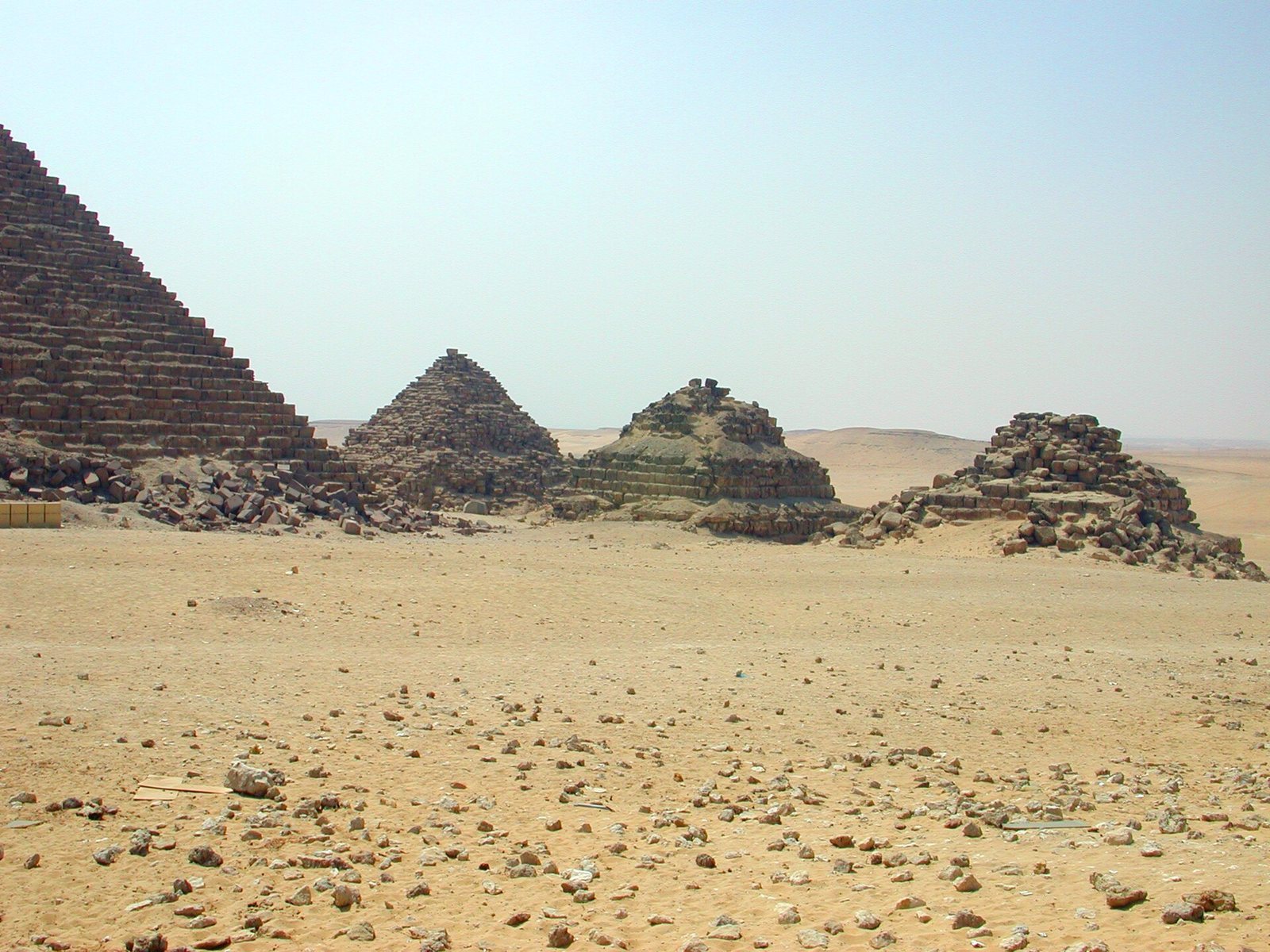
Royal pyramid complexes at Saqqara include those associated with Userkaf, Neferhetepes, Menkaouhor, Djedkare Isesi, Setibhor, Teti, Pepi I, Merenre I, Pepi II, and Ibi, as well as the unfinished complex of Sekhemkhet. Other named monuments include the tomb and temple of Shepseskaf, known as Mastabat Fara’un, and Khendjer’s pyramid complex. Several queens also had complexes, among them those of Khuit II, Iput I, Neith I, Noubounet, Inenek Inti, Ankhesenpepi II and III, Meritites, Behenu, Neith II, Iput II, and Udjebten. Their pyramids survive in varying states of preservation.
Serapeum and processional features
Apis-bull burial galleries
The Serapeum consists of large rock-cut galleries for the mummified Apis bulls, which were sacred animals worshipped at Memphis and associated with Ptah. The complex was designed to hold as many as 64 bull burials. One sealed chamber contained an undisturbed burial.
Avenue and Circle of Philosophers
A processional avenue lined with sphinxes led to a temple dedicated to Apis. Its route passed through a semicircular architectural setting associated with the Circle of Philosophers. The statues include Greek poets and thinkers such as Hesiod, Homer, Pindar, Plato, and Protagoras. They were erected under Ptolemy I and may have stood near a temple.
Animal burial galleries
Extensive underground galleries held mummified ibises, baboons, cats, dogs, and falcons. Burial galleries for dogs contained the remains of millions of animals. Other catacombs are associated with cult centres for Anubis and Bastet.
Private tomb chapels and elite burials
Merefnebef’s chapel
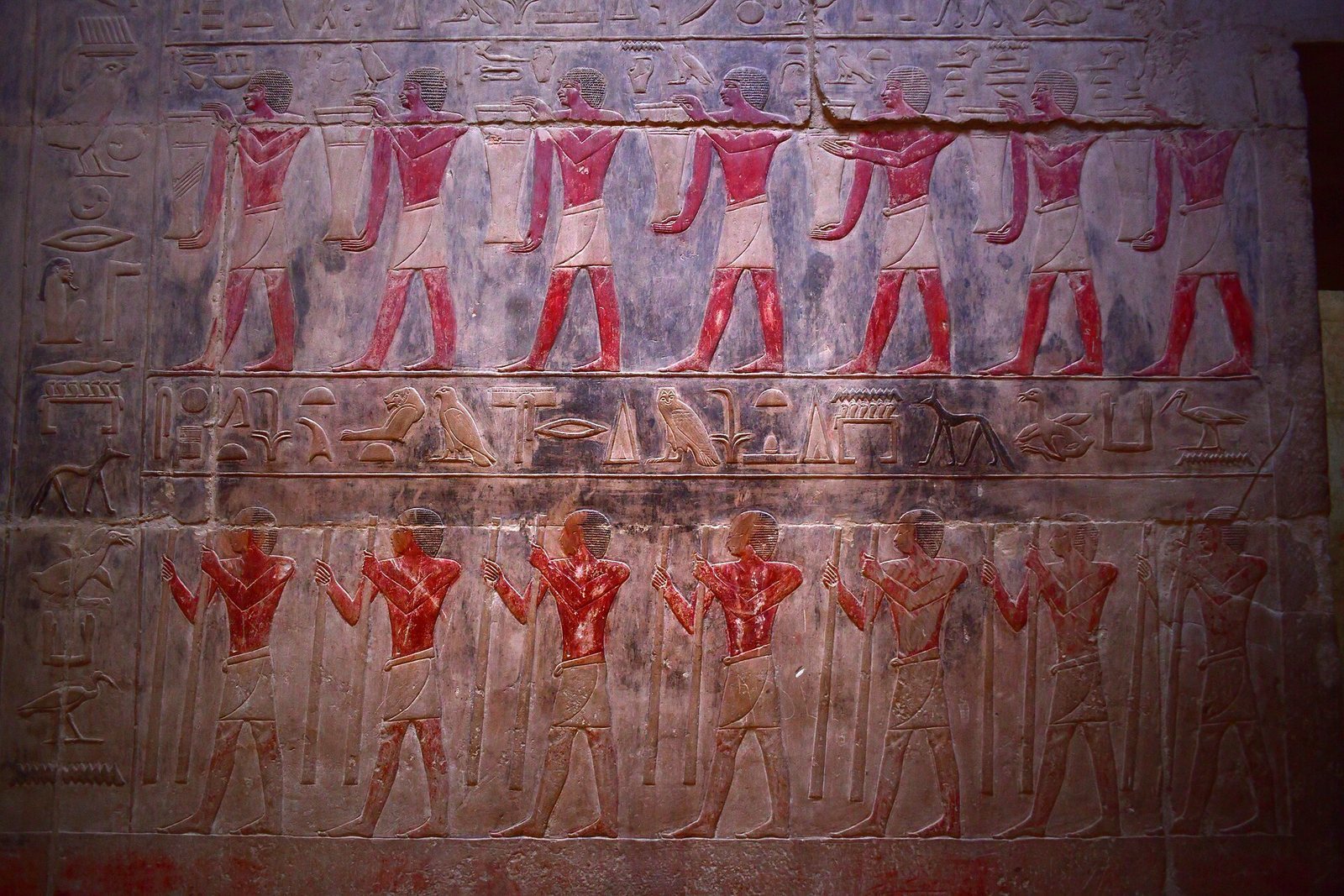
Excavated in 1997, the tomb of Merefnebef has a funerary chapel decorated with multicoloured reliefs. The courtier Nyankhnefertem’s tomb was excavated in 2003.
Wahtye’s tomb
Wahtye, a high-ranking Fifth-Dynasty priest who served under Neferirkare Kakai, was buried in a tomb about 10 m long and 3 m wide. It has five burial shafts and a basement, with more than 50 sculptures. Painted scenes show family life and activities including wine and pottery production, music, sailing, hunting, and furniture-making.
Khuwy’s tomb
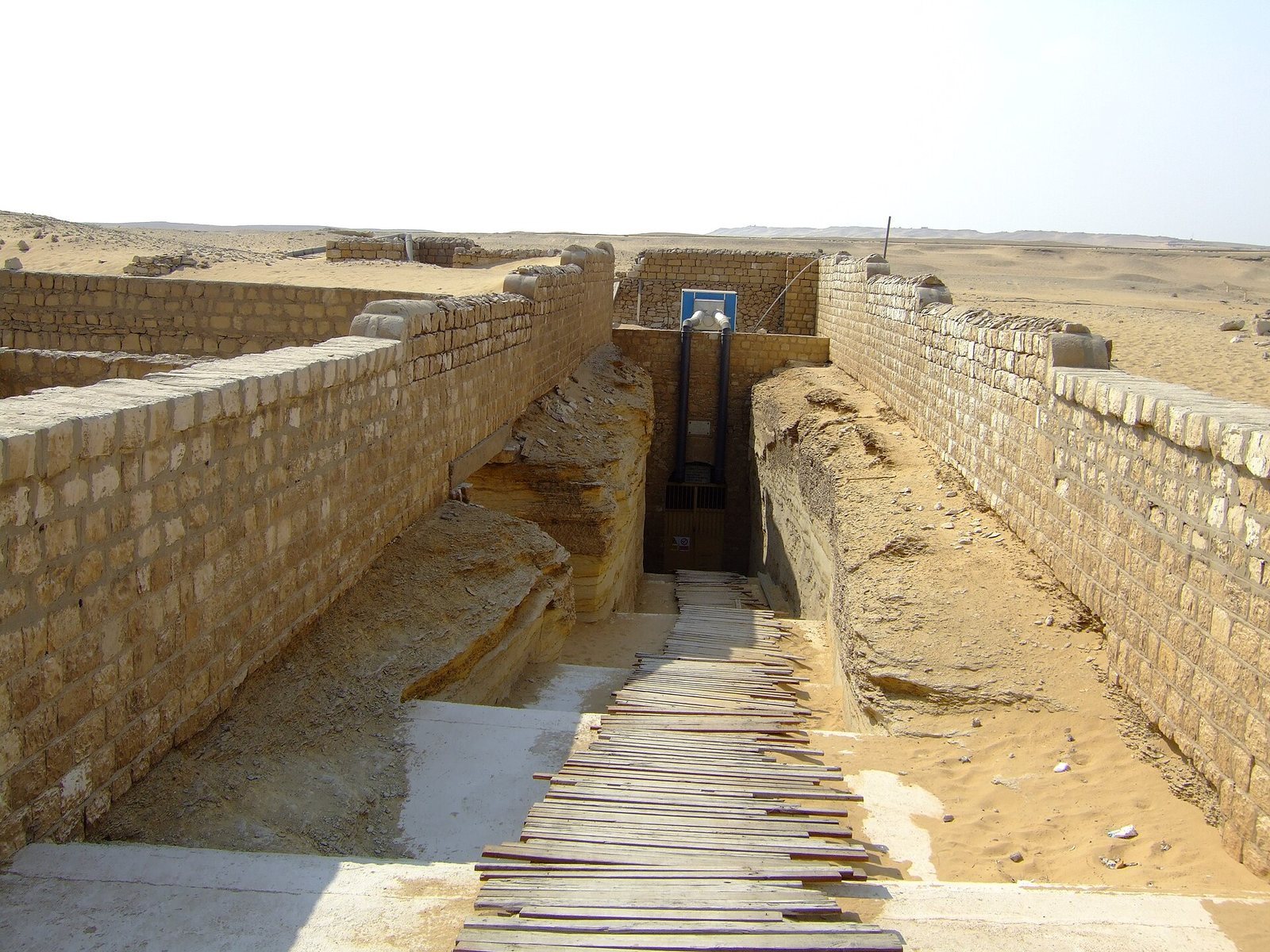
Khuwy’s tomb is L-shaped. A small descending corridor leads to an antechamber and then to a larger chamber, where painted reliefs show the tomb owner seated at an offering table. The structure is built mainly of white limestone bricks and has a tunnel-like entrance.
Later tombs and excavated finds
Coffin caches and burial shafts
A cache of 30 coffins discovered in 2019 was stacked in two rows about 1 m below the sandy surface. Pigments, surface coatings, and inscriptions remained visible. In 2020, one burial shaft about 9 m deep held five limestone sarcophagi, four wooden coffins containing mummies, 365 burial figures, and a painted wooden obelisk about 40 cm high. Images of Horus, Isis, and Nephthys decorate the obelisk. A separate shaft, about 11 m deep, yielded nearly 30 sealed sarcophagi. Other finds from that year included painted wooden coffins, gilded wooden statues, statues of Ptah-Sokar, funeral masks, and ceramic amulets.
New Kingdom shafts and Naert’s temple
In 2021, more than 50 wooden sarcophagi were found in 52 shafts dating to the New Kingdom. Objects from the shafts included a papyrus about 13 feet long with text from Chapter 17 of the Book of the Dead, wooden funerary masks, board games, a shrine dedicated to Anubis, bird-shaped objects, and a bronze axe. A limestone slab from the reign of Ramesses II depicts the royal chariot overseer Kha-Ptah and his wife worshipping Osiris with their six children.
The same year, excavators uncovered the funerary temple of Naert, a wife of Teti. Three brick-built storerooms attached to its southeast side held provisions, offerings, and tools for temple use. Naert’s name was inscribed on a fallen obelisk near the main entrance.
Mummification workshop
A German-Egyptian team found a mummification workshop south of the Pyramid of Unas in 2018. The structure has several chambers and contained a rare silver-gilt burial mask.
Tombs from later periods
The richly decorated tomb of Mehtjetju, a priest and inspector of royal property, was among discoveries announced in 2022. In 2023, a tomb attributed to Hekashepes contained a mummy covered with gold. A rock-cut Second-Dynasty tomb uncovered in 2024 held the remains of an adult with a coloured mask, a small child, and terracotta figures of Isis and Harpocrates. The tomb of Prince Waser-If-Re, uncovered in 2025, has a pink-granite false door measuring 4.5 m high and 1.15 m wide. Its inscriptions give the prince’s court and religious titles.