Statue of Ramesses II: A Colossal Ancient Egyptian Monument


Site at a Glance
- Rating
- 4.6
- Popularity
- Low
- Country
- Egypt
- Primary era
- Bronze Age
- Eras represented
- Bronze Age
- Civilizations
- Egyptian
- Site type
- Civic
- Remains
- Statue
History
The Statue of Ramesses II is a colossal ancient Egyptian red-granite representation of the pharaoh in Egypt. Ramesses II ruled from 1279 to 1213 BCE as the third king of the Nineteenth Dynasty, a New Kingdom ruling house associated with the Ramesside period.
Discovery and Relocation
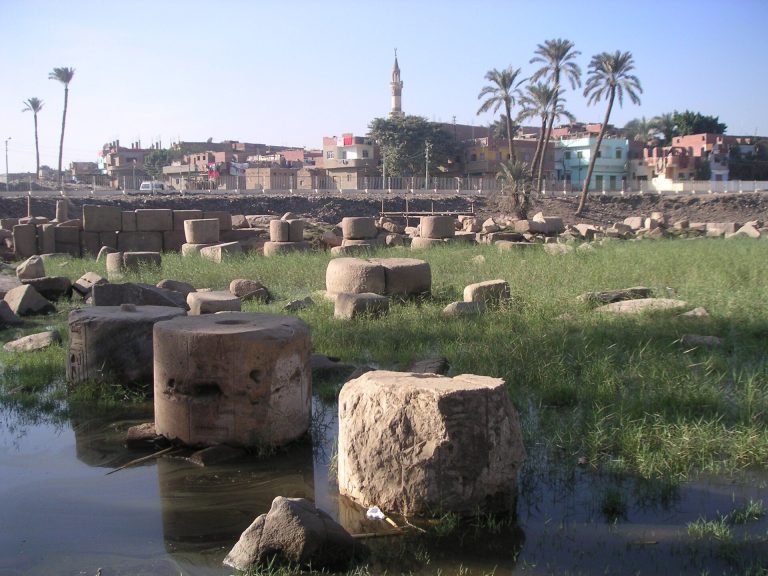
Giovanni Battista Caviglia, an Italian archaeologist, discovered the statue during excavations at Memphis in 1820. It lay broken into six pieces and weighed approximately 83 tons.
In 1955, Egyptian Prime Minister Gamal Abdel Nasser ordered the statue’s transfer to the square in front of Cairo railway station. The square was later called Ramses Square, where the figure was restored and reassembled for the first time. As the square gradually became unsuitable for the monument, the Egyptian government decided in 2006 to move it to a more appropriate setting. Following restoration, the statue was transferred in 2018 to the entrance hall of the Grand Egyptian Museum in Giza.
Remains
The surviving monument consists of a colossal red-granite figure that was reconstructed from six broken pieces. During its restoration in Cairo, the statue was reassembled to a height of 11 metres and placed on a pedestal 3 metres high. Iron rods were inserted into the body to reinforce the reconstructed figure. It is now installed in the entrance hall of the Grand Egyptian Museum in Giza.