Lérins Abbey: A Monastery on Saint-Honorat Island
Site at a Glance
- Popularity
- High
- Country
- France
- Primary era
- Medieval
- Eras represented
- Medieval, Early Modern, Modern
- Civilizations
- County of Provence, French
- Site type
- Religious
- Remains
- Fortified Monastery
On this page20 sections
History
Lérins Abbey is a monastery on Saint-Honorat Island in Cannes, France, founded around 400 to 410 by Honorat of Arles. He came with the hermit Caprais of Lérins, under the protection of Leontius, bishop of Fréjus. Tradition holds that Honorat first sought a solitary life, but disciples gathered around him and formed a community. Fifth-century occupation at Saint-Sauveur provides the earliest evidence of monastic presence in the West.
Foundation and early influence
By 427, the monastery had grown into a large community. Honorat established shared guidelines known as the Rule of the Four Fathers, identified as the earliest rule of its kind in France. After Aigulf tried to introduce it around 660, the monks adopted the Rule of Saint Benedict, a guide to communal monastic life, toward the end of the seventh century.
In the fifth and sixth centuries, Lérins drew prominent religious figures and supplied bishops to southern Gaul. Patrick is traditionally said to have studied there before his mission to Ireland. Maximus and Faustus served as abbots before becoming bishops of Riez. Eucherius of Lyon sent his sons to the monastery and later joined them, while Quinidius of Vaison lived there as a monk. Rusticus, later bishop of Narbonne, Loup of Troyes, James of Tarentaise, and Apollinaris were also associated with the community. Honorat, Hilary, and Caesarius went on to become bishops of Arles.
Vincent of Lérins wrote the Commonitorium at the monastery, arguing that divine grace works together with human action. The Council of Orange, a church council held in 529, condemned this position under the label semi-Pelagianism, a term for views about the relationship between grace and human action.
Raids and monastic reform
Nazarius, the monastery’s fourteenth abbot, probably served during the reign of Clotaire II, a Merovingian king of the Franks who ruled from 584 to 629. He opposed remaining pagan practices along the southern coast, demolished a sanctuary of Venus near Cannes, and established a women’s convent on the site. Invasions during the eighth century later destroyed the convent. In the 630s, Agricola of Avignon was a monk at Lérins before becoming bishop of Avignon.
Raids disrupted the community in the following centuries. Around 732, invaders killed about 500 members of the community, including Abbot Porcarius. Tradition says that Porcarius received an angelic warning and sent some monks away to safety. Elenthère, one of the few survivors, rebuilt a monastery among the ruins.
Between 978 and 1020, Lérins adopted the Cluniac reform, a Benedictine movement associated with the Abbey of Cluny. The monastery received many donations and established about a hundred dependent monastic houses in Provence. In 1041, the counts of Ventimiglia, Otto and Conrad, joined other local nobles in making substantial gifts. Six years later, raiders invaded the island and carried monks captive to Spain. Isarn, abbot of Saint-Victor Abbey in Marseille, secured their release by paying a ransom.
Fortification, pilgrimage, and reform
Fortified buildings were added on the island between the eleventh and fourteenth centuries. In 1327, a system of fire signals connected the monastery tower with the tower at Suquet in Cannes. The return of Honorat’s relics from Arles in 1391 made the island a pilgrimage destination. Raymond Féraud, a monk who composed a legendary life of Honorat, helped foster this devotion.
Genoese pirates plundered the island in 1400. Servants initially defended the fortified monastery; in 1437 Provençal soldiers and, in 1481, French soldiers occupied its upper floors to protect the monks. In 1464, the abbey entered the commendatory system, in which an abbot held a monastery’s revenues and rights, often without living there. Augustin Grimaldi, its third commendatory abbot, gave up the office in 1510, reformed the community, and joined it to the Cassinese congregation, a Benedictine monastic body. Pope Leo X approved its union with the Congregation of Saint Justina of Padua and Monte Cassino, also Benedictine, in 1514. Francis I revoked the union in 1533, and Henry II restored it in 1547.
Occupation, closure, and revival
Spanish forces captured the island in 1635 and expelled the monks. France retook it two years later and established a large permanent garrison. The monks returned after exile in Vallauris, but Spanish and Genoese attacks continued. By royal order, the abbey belonged to the Congregation of Saint-Maur, a French Benedictine reform group, from 1638 to 1645. In 1756 it joined the old observance of Cluny, a Benedictine congregation linked to the Cluniac tradition.
A royal commission closed the monastery in 1788, when four monks remained, and its property passed to the bishop of Grasse. During the French Revolution, the island became state property and was declared national property before being sold to the actress Mademoiselle de Sainval. She lived there for twenty years and used the monastery for receptions.
Bishop Jordany of Fréjus bought the island in 1859 with the aim of restoring a religious community. Cistercian monks from Sénanque Abbey settled there in 1869. Cistercians are a Catholic order developed from the Benedictine tradition. In 1886, Pope Leo XIII assigned parishes in the Grasse district to the diocese of Nice while keeping the Lérins Islands in the diocese of Fréjus. During the 1903 expulsions of religious congregations in France, Lérins was one of five male Catholic congregations allowed to continue operating.
The present community belongs to the Cistercian Congregation of the Immaculate Conception. Its monks maintain monastic life alongside hospitality and vineyard cultivation, producing wine and mandarin liqueur. The fortified abbey received historic-monument classification in 1840, and the island became a protected site in 1941. Restoration work has been carried out at Saint-Sauveur Chapel and the tower-monastery.
Remains
The surviving complex includes the fortified monastery tower, communal monastic buildings, and chapels distributed around the island. Its remains reflect both the practical life of the monastic community and the island’s use for defence and pilgrimage.
Defensive structures
Tower-monastery
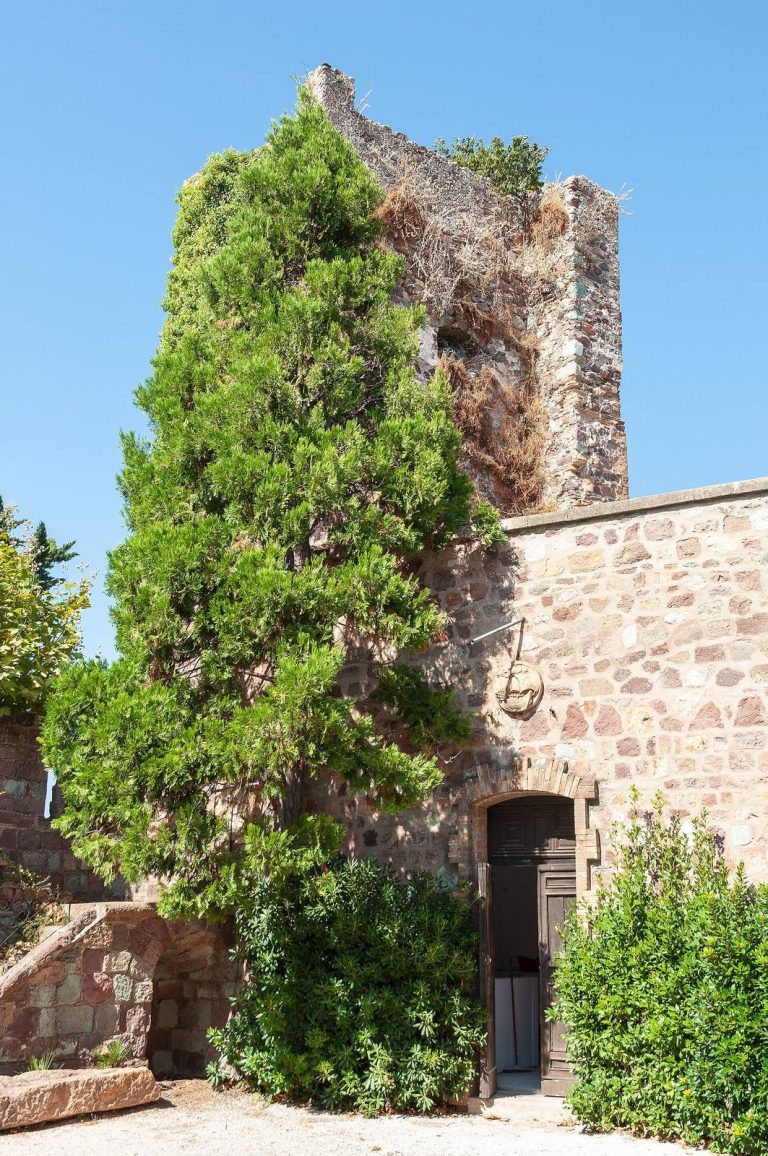
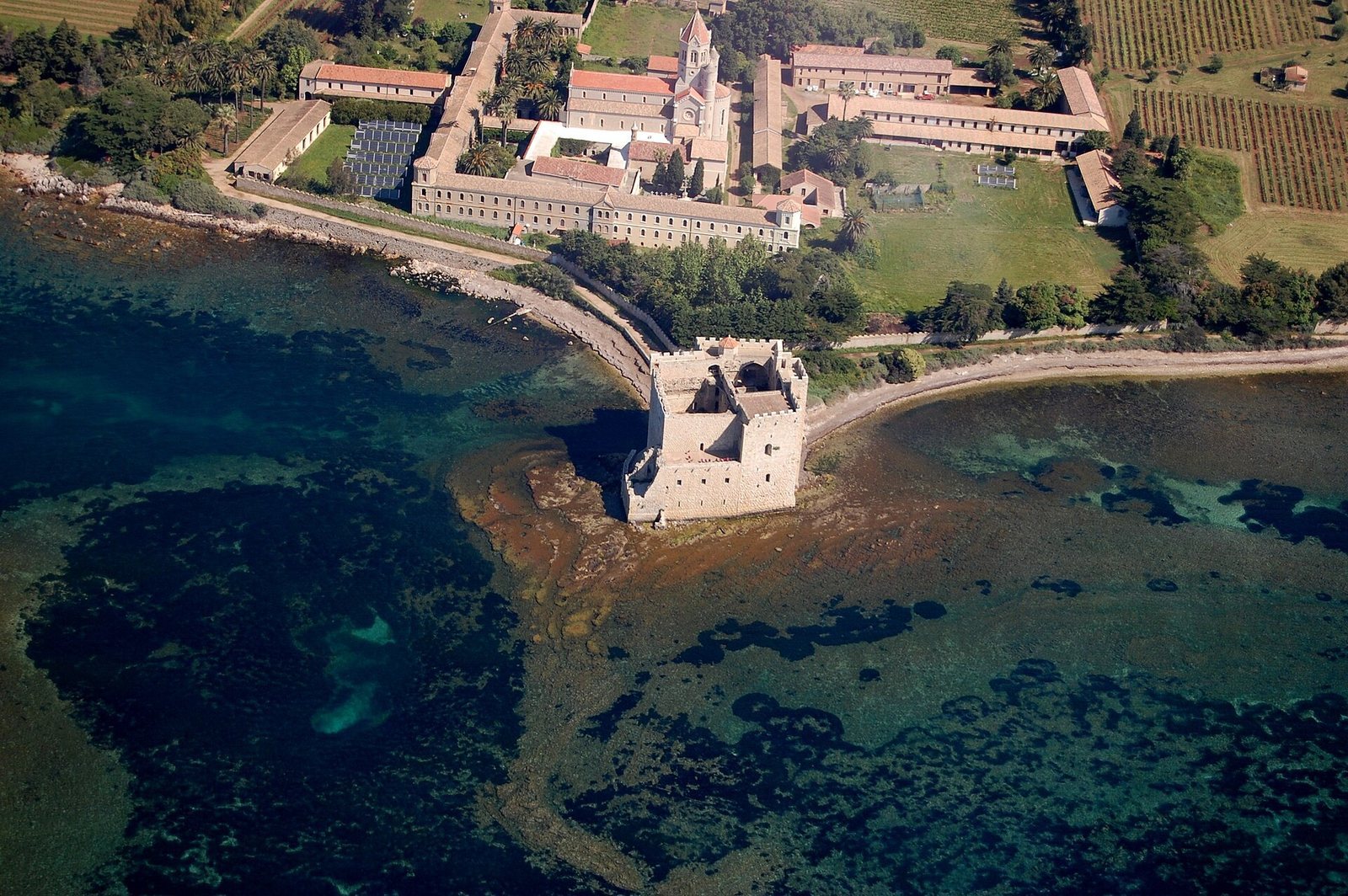
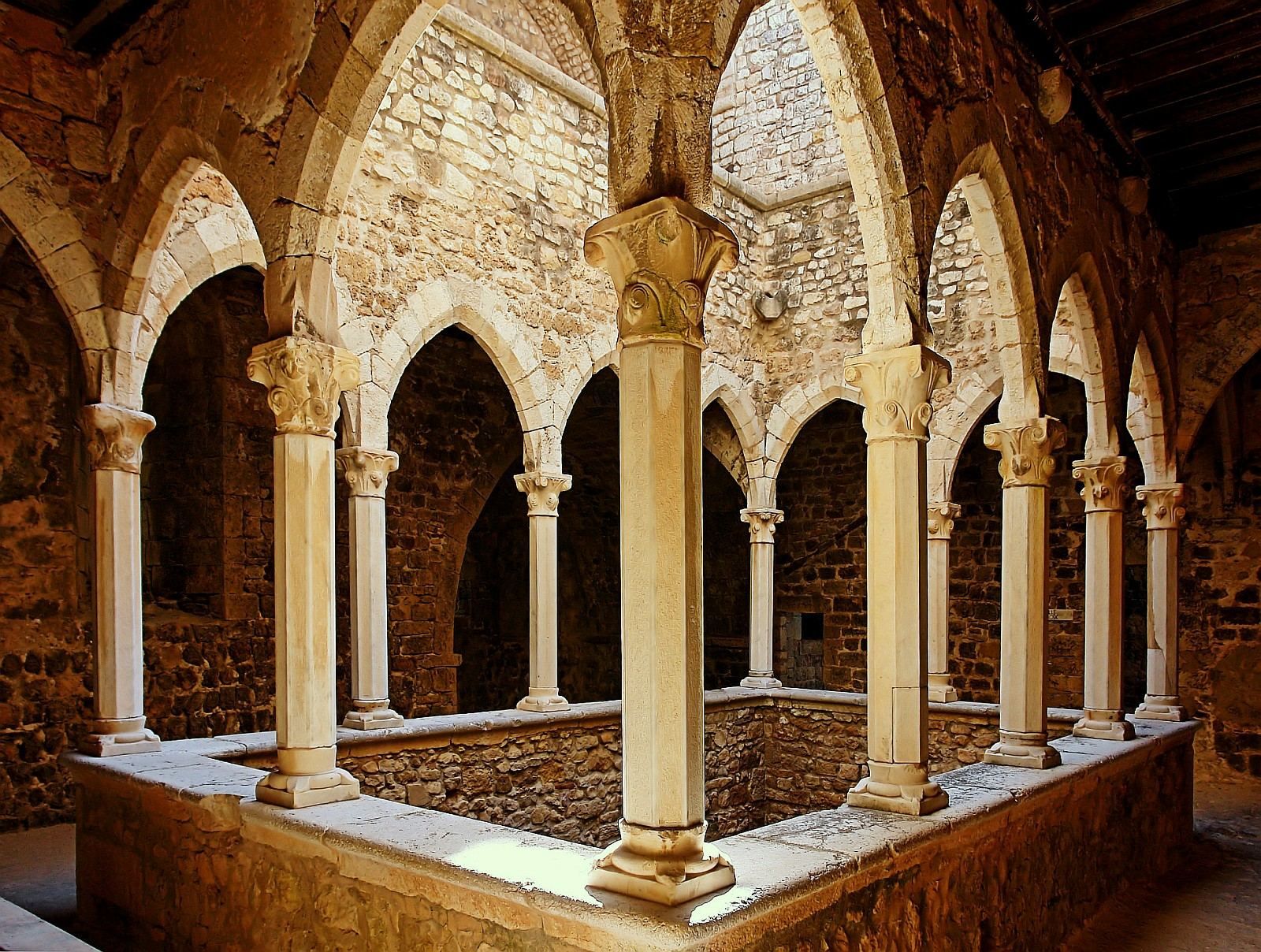
Abbot Adalbert II began the fortified tower around 1073 as a refuge from repeated attacks. Its construction may have been connected with the tower at Suquet in Cannes. The complex contains 86 rooms, four chapels, and two water cisterns, though it was never fully defensible. Excavated underground spaces include large food-storage cellars, an oil mill, and a bread oven. Two stacked cloisters were added in the fifteenth century.
The first level served work and communal life. Its work cloister, a covered walkway around a courtyard, surrounds a cistern, and most of its columns came from Roman monuments. The prayer level contains a second cloister with twelve octagonal marble columns, which gives access to three chapels, including the Chapel of the Holy Cross from the fourteenth century. Garrison rooms and terraces used for signalling and defence occupy the upper levels.
Cannonball-heating ovens
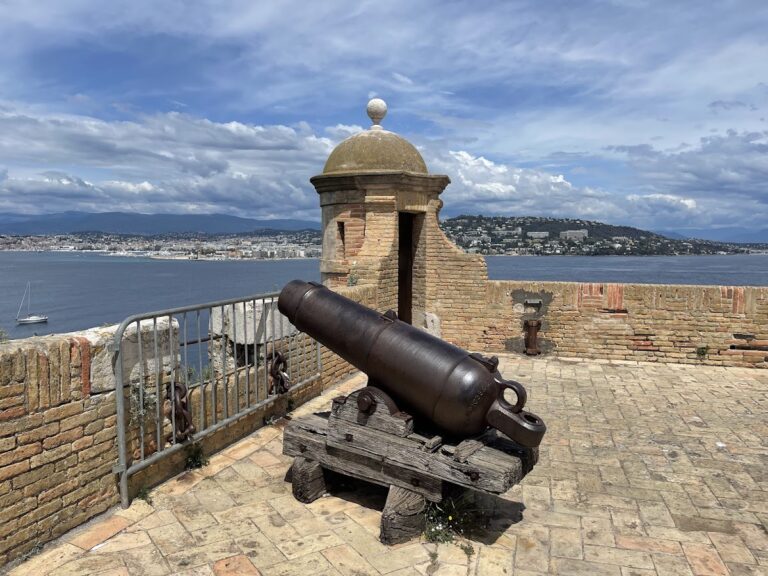
Two ovens built on the island in 1794 at Napoleon Bonaparte’s initiative heated cannonballs before they were fired at ships. The heated shot could set sails and decks alight.
Monastic buildings
Principal cloister and communal rooms
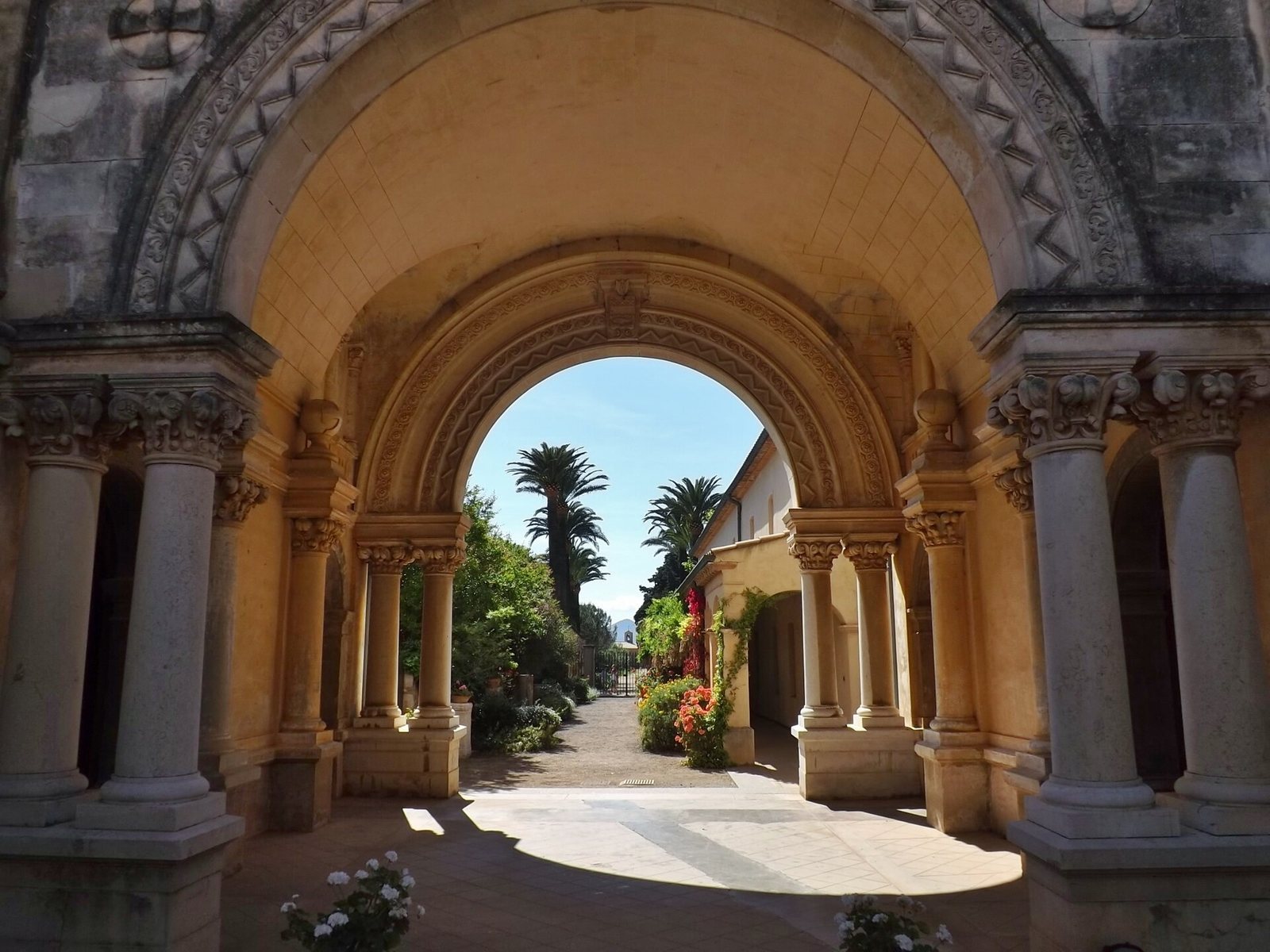
The principal cloister, a covered walkway around an open courtyard, was built between the eleventh and twelfth centuries and formed the centre of monastic life. The chapterhouse, a meeting room for community affairs, and the refectory, where the monks ate, border it. Both large rooms date to the twelfth and thirteenth centuries, and the cloister, chapterhouse, and refectory survive.
Church
The original church, dating to the twelfth century, was partly demolished to make way for a replacement church, consecrated in 1928.
Cistercian buildings
After the Cistercians arrived in the nineteenth century, they built new residential and communal buildings. Two wings at right angles contain the monks’ cells, the abbot’s and prior’s lodgings, and the library. A separate wing houses the guesthouse.
Island chapels
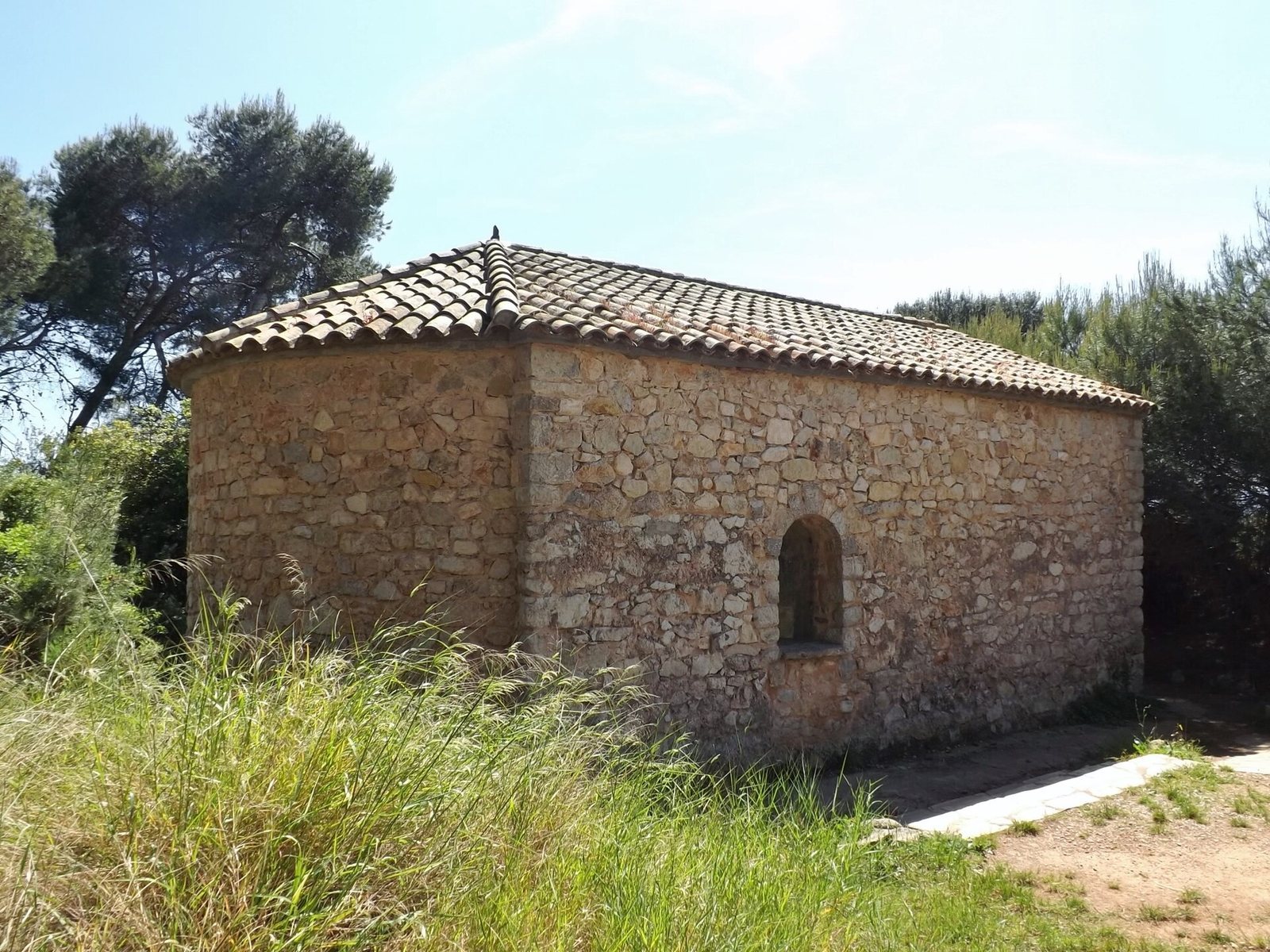
Seven chapels are spread across the island. In the Middle Ages, they served as stations along a pilgrimage route followed between Ascension and Pentecost.
Chapel of the Trinity
Probably built in the ninth or tenth century, the Chapel of the Trinity stands in the southeast of the island and reflects the monks’ devotion to the Trinity. During the Spanish occupation in 1635, a cannon battery was installed on its roof.
Saint-Sauveur Chapel
Near the present landing place in the northwest, Saint-Sauveur Chapel has an octagonal plan and a central star-shaped vaulted ceiling dating to the twelfth century.
Saint-Caprais Chapel
Saint-Caprais Chapel stands in the west of the island, near the place where Caprais is said to have lived as a hermit.
Saint Peter’s Chapel
South of the monastery, Saint Peter’s Chapel is surrounded by medieval burials.
Northeastern and southern enclosure chapels
One chapel stands in the northeast near the vineyards. Another is inside the monastery’s southern enclosure, close to the fortified monastery.
Northern chapel and cemetery
At a northern cemetery, a chapel is represented by a few surviving stones at its base. A tomb built with Roman roof tiles was found in the cemetery.