Château de la Croë: A Historic Holiday Residence in Antibes, France


Site at a Glance
- Rating
- 4.5
- Popularity
- Low
- Country
- France
- Primary era
- Modern
- Eras represented
- Modern
- Civilizations
- French
- Site type
- Domestic
- Remains
- Elite Residence
On this page13 sections
History
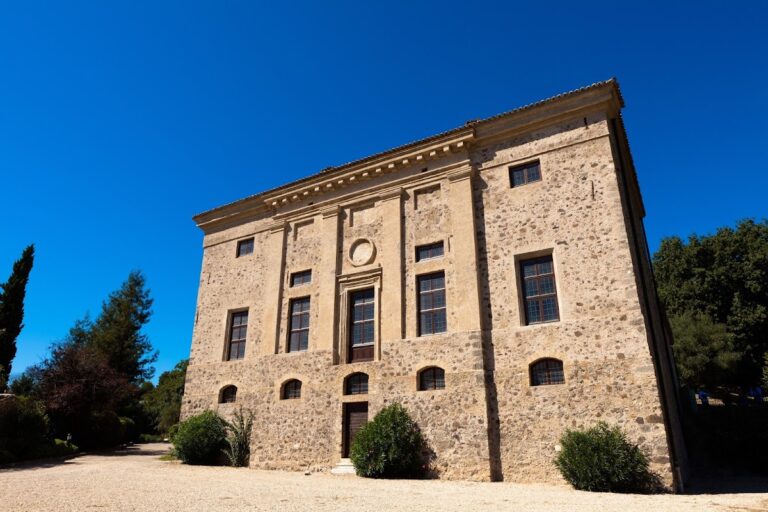
Château de la Croë is a classical French villa in Antibes, France, built in 1927 as a holiday residence for Sir William Pomeroy Burton, general manager of Associated Newspapers. Designed by the French architect and designer Armand-Albert Rateau, it stood on a seven-hectare estate extending to the sea and was closely modelled on Château de Bagatelle, an eighteenth-century château in Paris.
Construction and architectural model
Rateau drew especially on Château de Bagatelle for the rear facade facing the courtyard. The building is generally described as classical or French, although it has also been characterized as Victorian. Its original purpose was that of a private seasonal residence on the Cap d’Antibes, combining a large house with extensive grounds beside the Mediterranean.
The Duke and Duchess of Windsor
The Duke and Duchess of Windsor leased Château de la Croë from May 1938 until spring 1949, while also maintaining their residence in Paris. The Duke was Edward VIII, the British king who abdicated in 1936, and the Duchess was his American wife, Wallis Simpson. After German forces invaded France during the Second World War, the couple left for Spain on 19 June 1940.
Italian and German troops used the château as quarters during the war. When the Windsors returned in 1946, the house was in poor condition, and military equipment remained in both the building and the garden. The Duchess of Windsor later undertook its renovation. In 1948, Winston and Clementine Churchill celebrated their fortieth wedding anniversary at the château with the Windsors.
Ownership, fire, and abandonment
Aristotle Onassis acquired Château de la Croë around 1950 and owned it until 1957. It then passed to Stavros Niarchos, another prominent Greek shipping magnate, who bought the estate for his wife, Eugenia Livanos. In 1970, the estate was recorded as employing 33 people throughout the year.
A major fire in 1970 severely damaged the château and the trees around it. The property subsequently remained abandoned for approximately three decades, allowing the buildings and grounds to deteriorate.
Restoration and later changes
Roman Abramovich acquired the château in 2001. Permission for renovation was granted in February 2004, and the main work continued for approximately four years. A further major phase took place from 2008 to 2010. The restoration aimed to return the property to its initial condition, including furniture and fittings individually designed and made for the house.
Another phase began in October 2014, creating guest bungalow-pavilions and a new ecological swimming pool. In April 2022, the French government seized the château in connection with sanctions imposed on Russian oligarchs following the Russian invasion of Ukraine.
Remains
Château de la Croë is a large detached villa on the Cap d’Antibes peninsula, with approximately 2,000 square metres of interior space. Its service outbuildings cover more than 3,000 square metres. The estate now extends across approximately eight hectares, including the original grounds and a later park expansion of nearly one hectare.
The château
The courtyard-facing rear facade closely follows the design of Château de Bagatelle, reflecting Rateau’s principal architectural model. The house contains eight suites with eight corresponding bathrooms, twelve bedrooms, three sitting rooms, and two dining rooms. Its facilities also include a spa with massage rooms, fitness and sports rooms, a jacuzzi, and a hammam, a steam bath associated with Middle Eastern and North African bathhouse traditions.
An approximately 15-metre swimming pool occupies the roof level. The basement contains a cinema for twenty people and a gymnasium. The owner’s suite is on the first floor beside the colonnaded balcony overlooking the Mediterranean Sea and covers approximately 350 square metres.
Park and water features
Formal approach
The grounds were landscaped by the Belgian designer Peter Wirtz and planted with Californian and Mediterranean species. A long English lawn extends from the entrance gate towards the château. Four circular water basins decrease progressively in size, emphasizing the central perspective and reflecting the pine trees along the main approach.
Ecological pool and tennis court
The park contains an ecological swimming pool of approximately 400 square metres. A small cascading channel supplies the pool, which forms part of the later landscaping of the estate. A tennis court is also situated within the grounds.
Guest pavilions
La Provençale, La Louisiane, and La Grange
Three guest pavilions stand behind the château in the park. Named La Provençale, La Louisiane, and La Grange, each covers 150 square metres and contains two or three bedrooms, a sitting room, two bathrooms, a dining room, and a fitness and relaxation room. Each pavilion also has an adjoining ornamental garden intended for relaxation.
Proposed maritime installation
A proposed offshore pontoon was intended to extend 40 metres from the existing shore structure and to serve the yachts Pelorus, Ecstasea, and Susurro, which measure 115, 86, and 50 metres respectively. The Alpes-Maritimes prefect, Dominique Vian, refused the project in 2008. The pontoon and its retractable gangway were never built, although underwater foundations had already been installed.
Nearby sites