Roman Mausoleum of Punta del Moral: A Late Roman Funerary Building in Spain


Site at a Glance
- Rating
- 3.4
- Popularity
- Very Low
- Country
- Spain
- Primary era
- Classical
- External website
- Open
- Eras represented
- Classical, Modern
- Civilizations
- Roman, Spanish
- Site type
- Burial
- Remains
- Tomb
On this page7 sections
History
The Roman Mausoleum of Punta del Moral is a Late Roman funerary building in Spain, near Ayamonte, probably constructed in the fourth century as a family pantheon or tomb. It formed part of a wider settlement on Isla Canela, within the Natural Area of the Isla Cristina Marshes, and may have stood alongside a facility for preserving fish.
A Late Roman settlement
Archaeological surveys around the mausoleum identified a substantial settlement with two chronological and spatial areas. One belonged to the High Imperial period, the earlier imperial centuries of Rome, while the other dated to the fourth and fifth centuries AD. The Late Roman settlement on Isla Canela developed around AD 300, with fishing and the production of salted fish as its principal activities. Numerous coins from the reign of Constantine I, the Roman emperor who ruled from AD 306 to 337, were found around the mausoleum.
Discovery and early interventions
The mausoleum came to light in 1981, when earth-moving work removed sand from a dune. A mechanical excavator damaged the building’s southeast corner. Mariano del Amo y de la Hera then led the first archaeological intervention, exposing four graves and the floor while opening trenches inside and outside the structure. The results were not published. Material that escaped looting in the days after the discovery was deposited in the Provincial Museum of Huelva.
Looting followed the excavation, and the site was abandoned until 1986. That year, the Provincial Delegation of Huelva of the Junta de Andalucía, the regional government of Andalusia, carried out cleaning, consolidation, and enclosure works under José A. Teba. A surface survey recovered mainly Roman and modern pottery, fragments of roof tiles, and bricks.
Later survey and restoration
A 1993 surface inspection undertaken through the Tierra Llana project catalogued construction material, pottery, and glass. Most of the amphora fragments belonged to the fourth and fifth centuries, while one fragment dated to the sixth century. The Municipality of Ayamonte restored the mausoleum in 2004 and 2005. Because the structure was in a ruinous condition, the work introduced structural elements intended to reproduce its original form as closely as possible. Much of the wider archaeological site remains beneath the dune sand, and the area has not yet been investigated in depth.
Remains
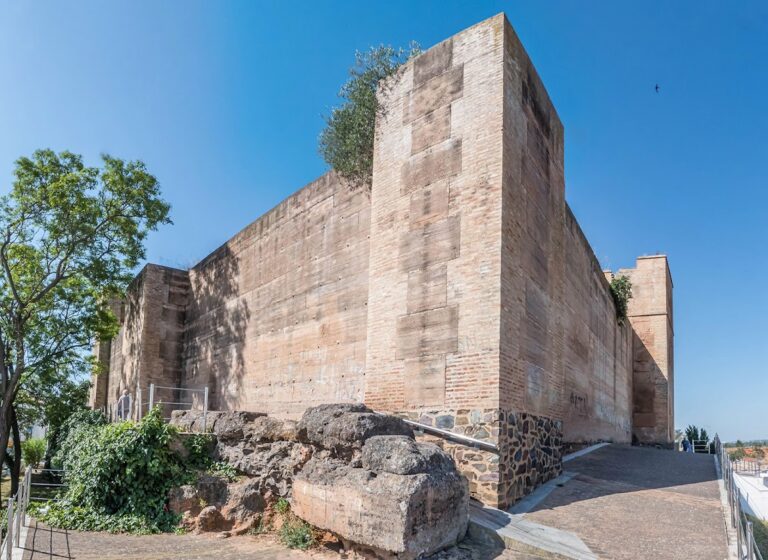
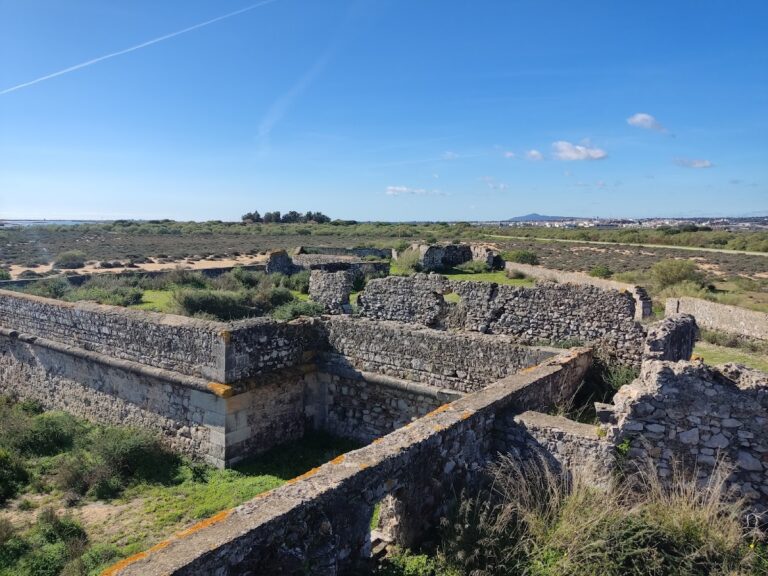
The mausoleum is a small rectangular building with a single room, standing on the left side of the road between Ayamonte and Punta del Moral, near kilometre 6.2. Its walls were built from rubble and incorporated roughly squared cut-stone blocks. The building had one doorway and two windows, while its floor was made of brick. The surrounding archaeological site extends beneath the sand of Isla Canela.
Structure and burials
Inside the room, four inhumation pits were covered with marble slabs or bricks. They held two adults, a child, and a young person. The identified individuals included a child approximately eight to ten years old, an adult man, an adult woman, and a young person. Nails found between the graves were placed there according to a custom of the period intended to ward off evil spirits. The 1981 excavation exposed both the graves and the building’s pavement, while surviving recovered material is held at the Provincial Museum of Huelva.
Roof and restoration fabric
The roof had two slopes and originally rested on a wooden framework. Its covering used flat Roman tiles, with curved tiles laid over their joints to create a weatherproof surface. During the 2004 to 2005 restoration, stone from Cádiz, Portugal, and Ayamonte was identified in the original construction. The paving around the building and the protective wall beside the nearby road belong to the restoration rather than to the ancient mausoleum.