Forte de São João da Barra: A Portuguese Coastal Fort
Site at a Glance
- Popularity
- Low
- Country
- Portugal
- Primary era
- Early Modern
- Eras represented
- Early Modern
- Civilizations
- Portuguese
- Site type
- Military
- Remains
- Fort
On this page7 sections
History
Origins and construction
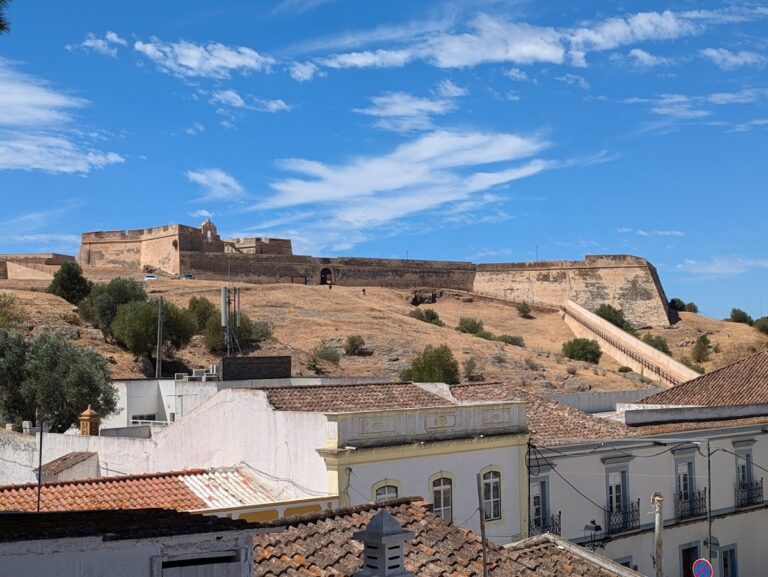
Forte de São João da Barra is a Portuguese coastal fort east of Cabanas de Tavira in the Algarve region of Portugal. It began as an earth-and-timber defense in 1656, during the Portuguese Restoration War, when Portugal regained its independence from Spain. Construction of the stone-and-lime fortress began on 19 December 1670 and was completed in 1672.
A Moorish watchtower called Raposa Tower is believed to have stood at Gomeira before the fort was built. Sixteenth-century writers described it as resembling Aires Tower and serving as a coastal lookout. The fort’s design is associated with French military engineer Pedro de Santa Colomba and Giovanni Vanicelli, an Italian field master in the Algarve armies. Mateus do Couto is also named in connection with the project.
Recorded commanders included Domingos de Carpião Castanheda, from 1656 to 1673; Luís de Correia Mascarenhas, from 1673 to 1696; Pedro Domingos Palma, from 1696 to 1710; Francisco de Sampaio, from 1719 to 1720; Francisco Afonso Mascarenhas, in 1723; Manuel Domingos Cavaco, from 1734 to 1746; Caetano Pereira de Araújo e Sousa, from 1794 to 1798; and Sebastião Martins Mestre, listed from 1808 to 1820.
Earthquake, rebuilding, and Napoleonic-era action
The 1755 earthquake damaged the fort. It was renovated in 1793 during the reign of Queen Maria I. Nuno José Fulgêncio de Mendonça e Moura, a third-generation descendant of the earlier Count of Vale de Reis, undertook the work, which Caetano de Andrade Castro inspected.
During the Napoleonic Wars, a series of European conflicts involving Napoleonic France, French forces occupied Portugal in 1808. Captain Sebastião Martins Mestre, assisted by local people, captured the fort to encourage an expected uprising against the French. The uprising began shortly afterward at Olhão. Martins Mestre then governed the fort until retiring around 1819–20.
Later uses and conservation
After the Portuguese Civil War of 1828–1834, fought between liberal and absolutist factions, the fort was partly deactivated. A small garrison remained until 1897. From 1857 to 1865, the building housed the first official boys’ school in the parish of Conceição. A post of the Tax Guard, Portugal’s customs and fiscal enforcement service, continued there until 1905.
In 1905 the fort was sold to a private owner in return for a commitment to build a replacement Tax Guard post closer to Cabanas. It was designated a Property of Public Interest in 1960 and renovated in 2007–2008. The fort now serves as a hotel.
Remains
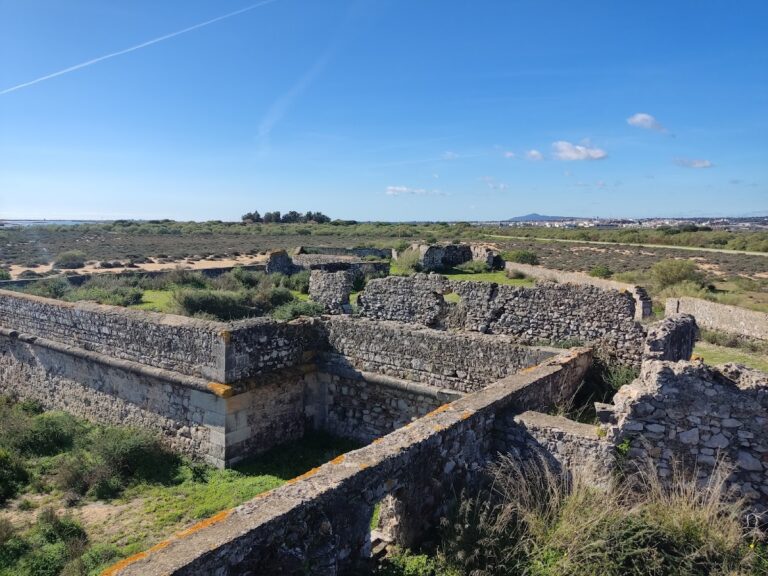
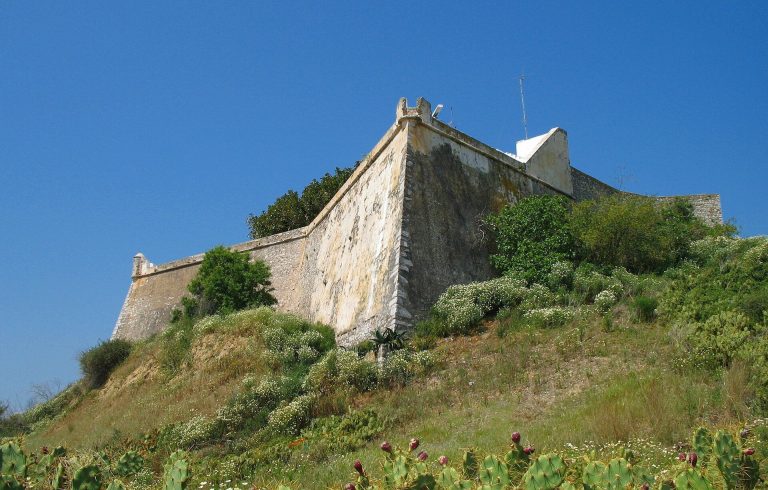
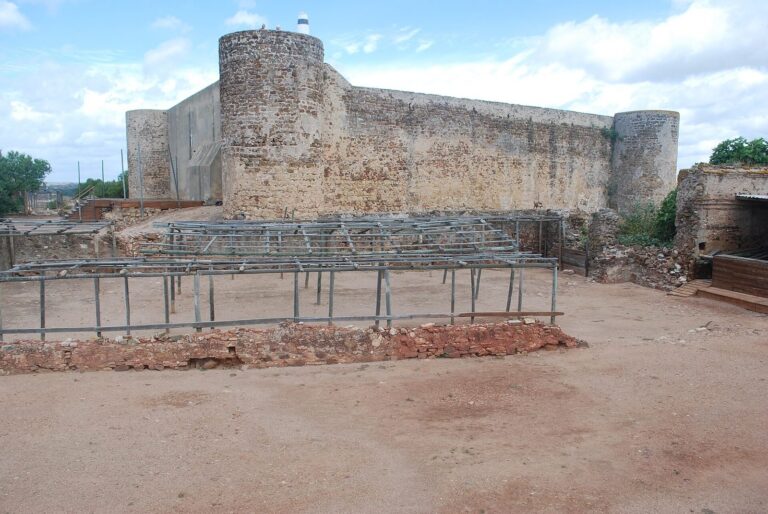
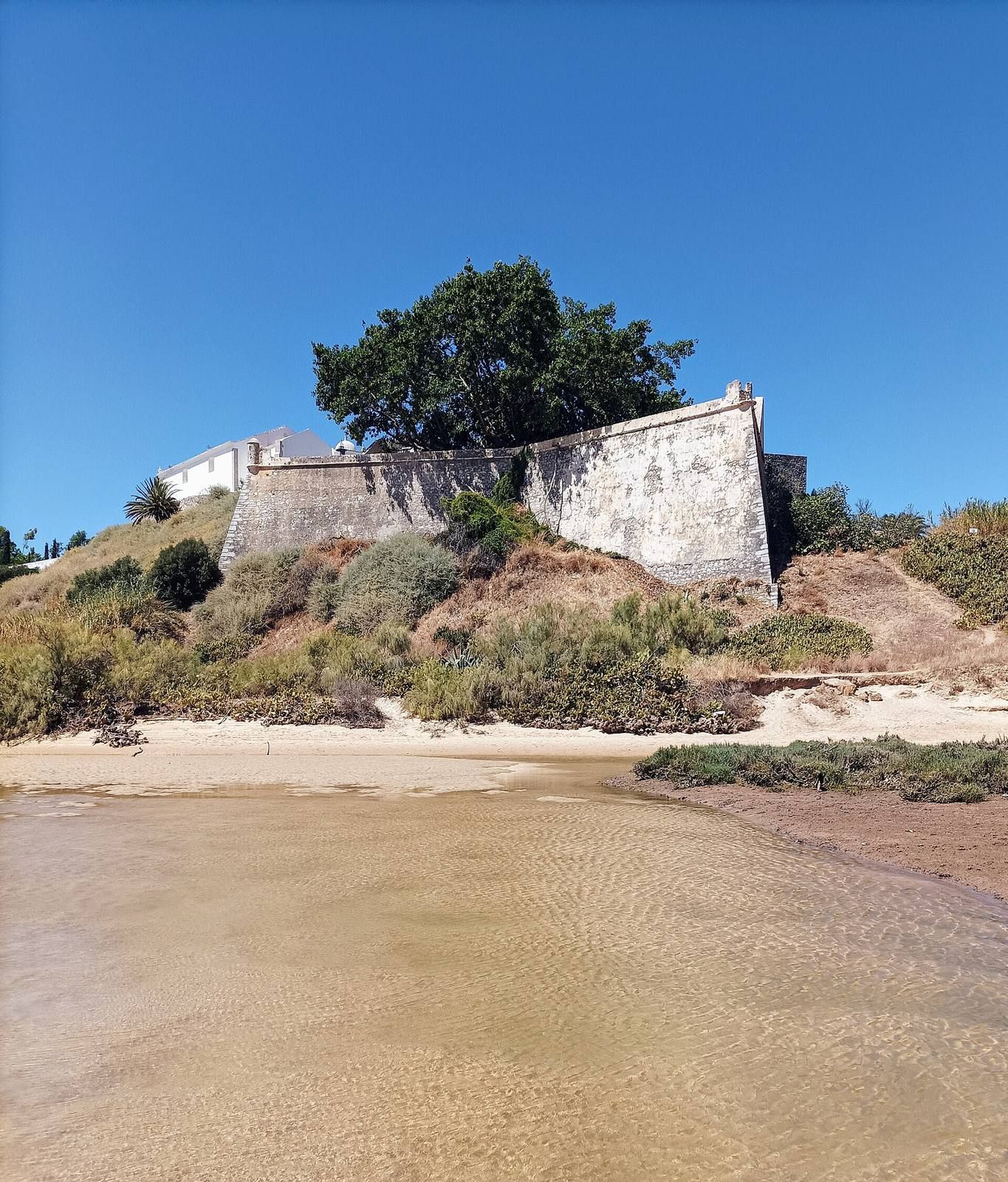
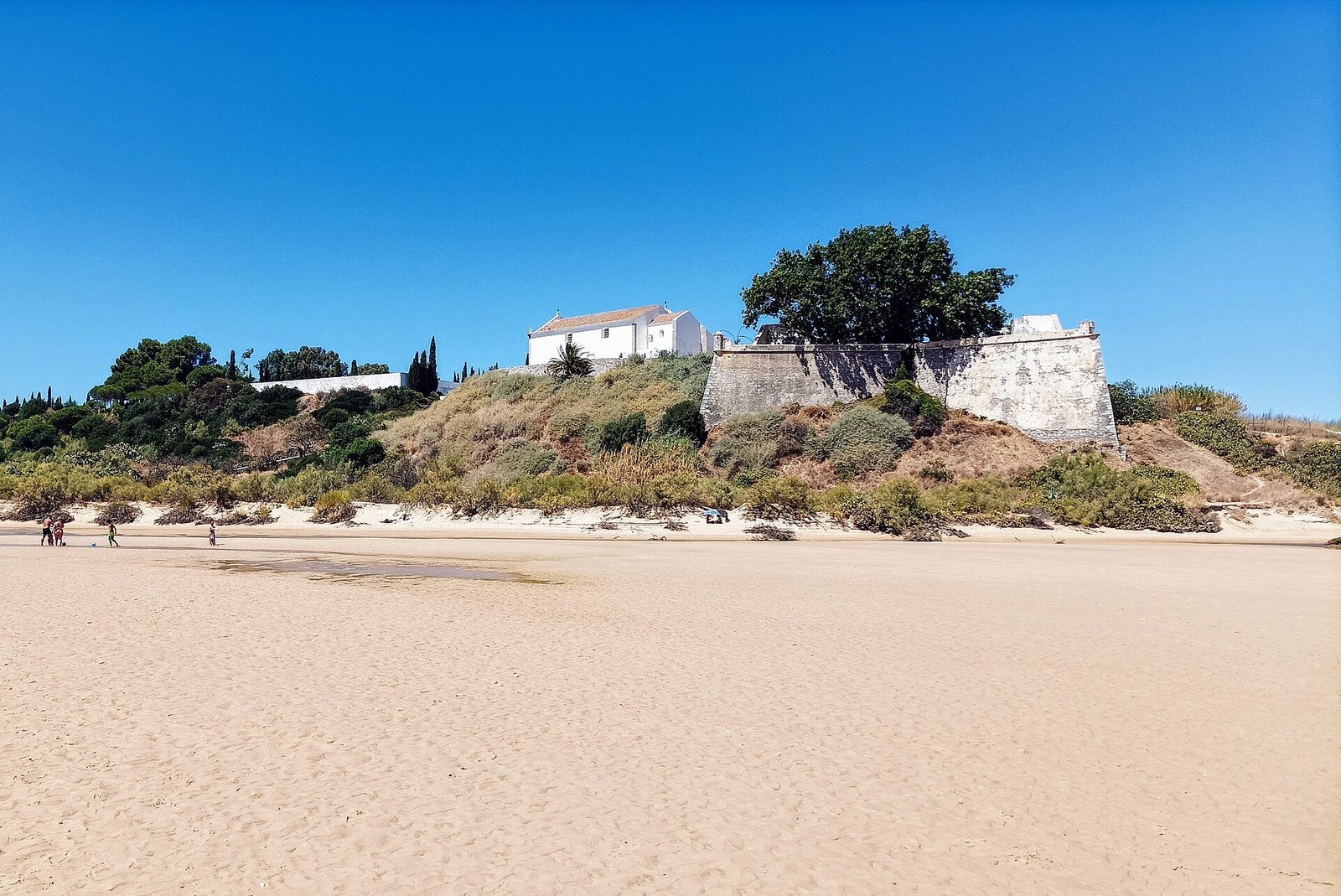
The fort stands on a small hill east of Cabanas de Tavira, below the Ria Formosa, a coastal lagoon system. Its stone-and-lime construction encloses a square plan arranged in a star-shaped form.
Defensive works and buildings
Four bastions, projecting works that help defend adjoining wall sections, stand at the edges of the fort, each with an access ramp. The listed buildings and facilities include the governor’s quarters, a chapel dedicated to Saint John the Baptist, garrison quarters, stables, a warehouse, and a well. The governor’s quarters and chapel are on the south side. The fort is in good condition.
Entrance inscriptions
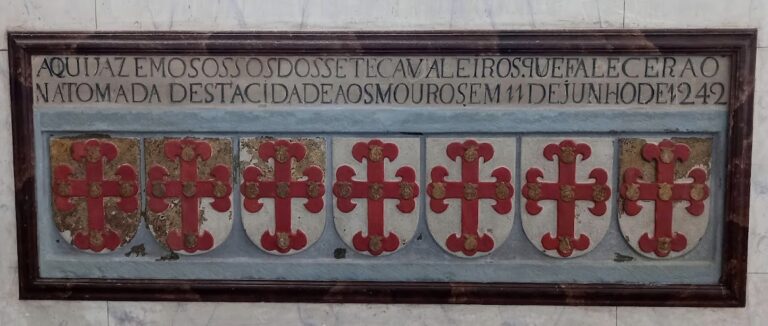
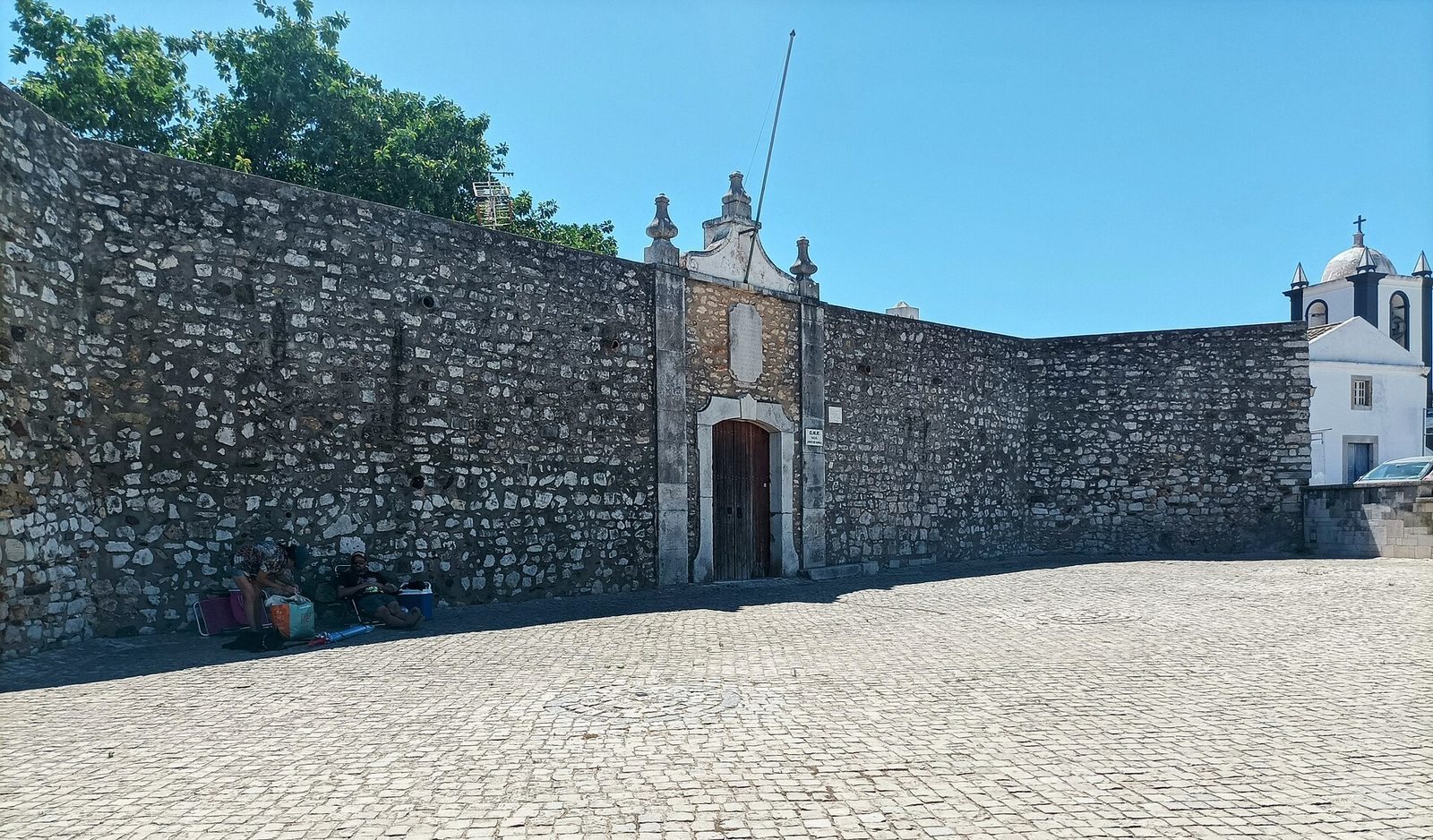
Two inscribed stones are set at the entrance. One identifies the stone-and-lime fortress and recalls the earlier earth-and-timber work under John IV. It also names Prince Peter as regent and Domingos de Carpião Castanheda as the official responsible for administering construction, and gives its start date as 19 December 1670. The other commemorates the rebuilding associated with Nuno José Fulgêncio de Mendonça e Moura.