Fortress of Cacela: A Muslim and Portuguese Coastal Stronghold


Site at a Glance
- Rating
- 4.7
- Popularity
- Very Low
- Country
- Portugal
- Primary era
- Medieval
- Eras represented
- Medieval
- Civilizations
- Crusader, Order of Santiago, Portuguese, Umayyad
- Site type
- Military
- Remains
- Castle
On this page8 sections
History
The Fortress of Cacela is a Muslim-period coastal stronghold in Portugal, standing at Cacela Velha above the mouth of the Ria Formosa. Its position linked defence, seaborne movement, and control of the surrounding territory, while the surviving small fortification largely reflects rebuilding carried out between 1770 and 1794.
Before and during Roman rule
Archaeological investigations indicate that the peninsula was occupied before the Roman period. The Tunos, Phoenicians, and Carthaginians successively used the area in activities associated with fishing and trade. A Roman military base is believed to have been maintained there, after which settlement expanded further inland.
Muslim Cacela
After the Muslim conquest of the Iberian Peninsula in 712, and Abd al-Aziz ibn Musa’s conquest of Beja and the Algarve in the following year, Cacela came under clans of Yemeni and Syrian origin. The settlement was associated with the Banu Darrâj group and had become a regional seat by the tenth century. Under the Umayyads, the dynasty that ruled the Caliphate of Córdoba and much of Muslim Iberia, Cacela formed part of a chain of rural fortifications. Its defensive position helped control vessels travelling to and from Tavira, while the wider district may have reached as far as present-day Alcoutim and included inland castles linked with pastoral and mining areas.
In the Muslim period, the fortress was known as Cacetalate Darrague, a name associated with the Darrag Alcacetali family. Abu Omar ibn Darrag, born at the castle in 958, became a poet and official of the Caliphate of Córdoba, later serving as its chancellor and gaining recognition at the court of al-Mansur. He died in 1030. After the caliphate dissolved by 1031, Cacela remained within the changing political sphere of Faro and later Seville. Almoravid and Almohad authorities, successive North African Islamic dynasties that ruled parts of the Iberian Peninsula, maintained or expanded the coastal defensive network. In 1168, troops commanded by Sidi Abu Yakub, son of Abd al-Mu’min, attacked Tavira from Cacela.
Al-Idrisi, a twelfth-century geographer whose descriptions provide evidence for medieval settlements and landscapes, portrayed Cacela in the early twelfth century as a well-populated fortress beside the sea, surrounded by orchards and fig fields. Shifting sandbanks in the Ria Formosa had damaged the anchorage by this period, increasing the importance of nearby Tavira.
Portuguese conquest and the Order of Santiago
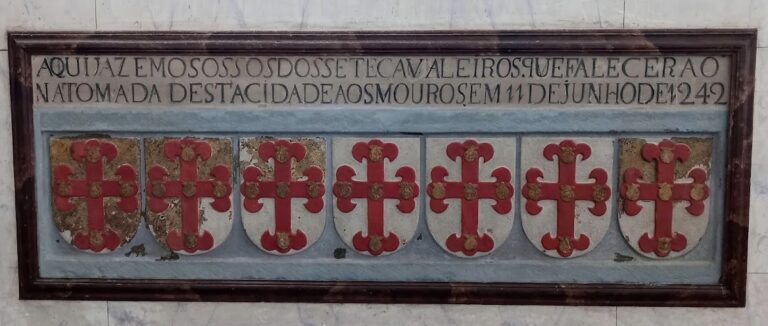
The Muslim fortification was partly abandoned during the transition to the thirteenth century, although it retained military value. Cacela was among the last Muslim positions conquered by Portugal in the Algarve, in a campaign conventionally dated to around 1240. Afterward, the fortress passed to the Order of Santiago, a military-religious order involved in the Christian conquest and administration of Iberian territories.
On 20 February 1255, King Afonso III donated Cacela Castle and Ayamonte Castle to Paio Peres Correia, master and general of the Order of Santiago, with the consent of his wife, Beatrice. The order rebuilt and enlarged the fortification. It subsequently helped secure the frontier against Muslim Granada and later against Castile. Paio Peres Correia had supported Afonso III in the conquest of Tavira, Silves, and Aljezur, and had also supported Ferdinand of Castile in the conquest of Murcia, Jaén, and Seville.
Rebuilding and later conservation
By the sixteenth century, the castle was ruinous. Reconstruction was ordered under either King John III or King Sebastian, who personally inspected the works in 1573. A report of 1617 noted that the walls on the cliff side had already deteriorated. The Lisbon earthquake of 1755 caused severe damage, and the fortification was rebuilt between 1770 and 1794. The small defensive structure visible today belongs principally to this late-eighteenth-century phase.
The extinction of Cacela’s municipal seat reflected the settlement’s declining importance. During the nineteenth and twentieth centuries, neglect threatened the fortress with further deterioration. The CASTRUM Foundation later restored it using traditional methods, including rammed-earth construction. The restored fortress now serves as the seat of the Fiscal Brigade responsible for coastal protection. Cacela Velha, including the fortress remains, became a Property of Public Interest under a decree published on 6 March 1996. The site also lies within the Ria Formosa Nature Park and related Natura 2000 protected areas, including the Cacela Velha Special Protection Zone.
Remains
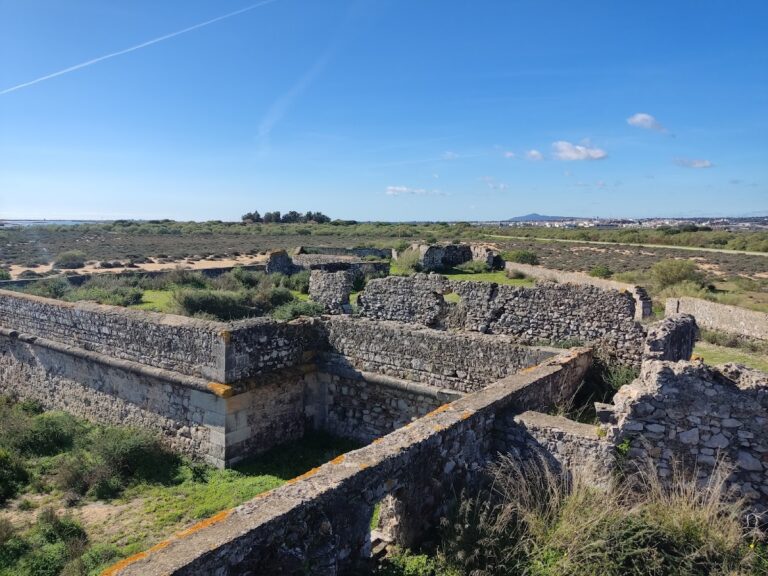
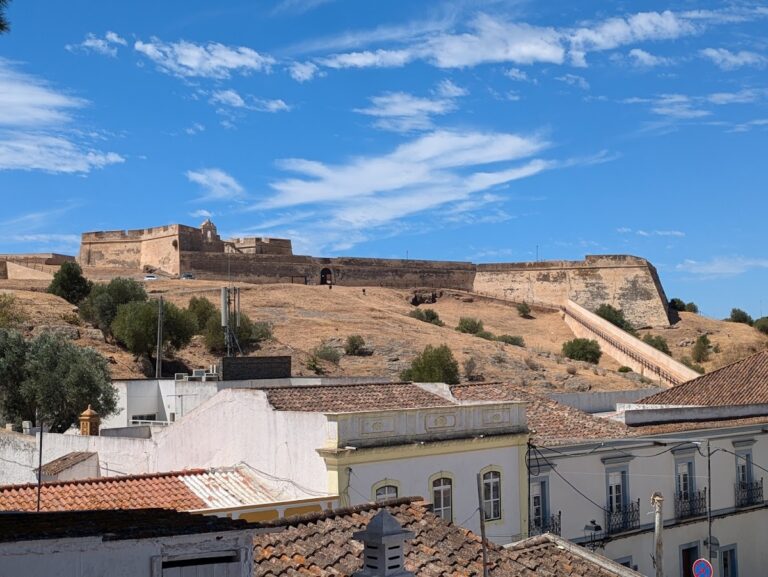
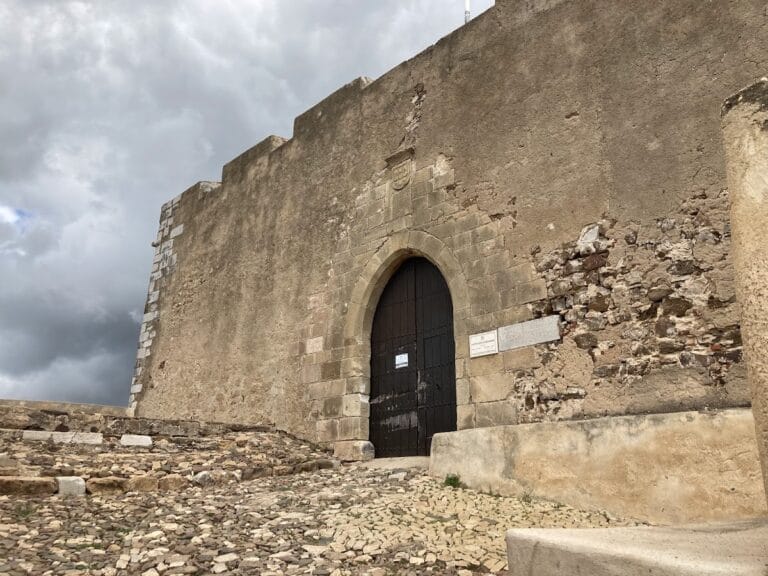
The fortress occupies a rocky elevation overlooking the mouth of the Ria Formosa within the historic settlement of Cacela Velha. Its surviving fabric represents several defensive phases. The early Muslim enclosure was built in rammed earth, while later rebuilding produced a smaller polygonal fortification with a star-shaped plan and two bastions facing the sea.
Islamic and medieval enclosure
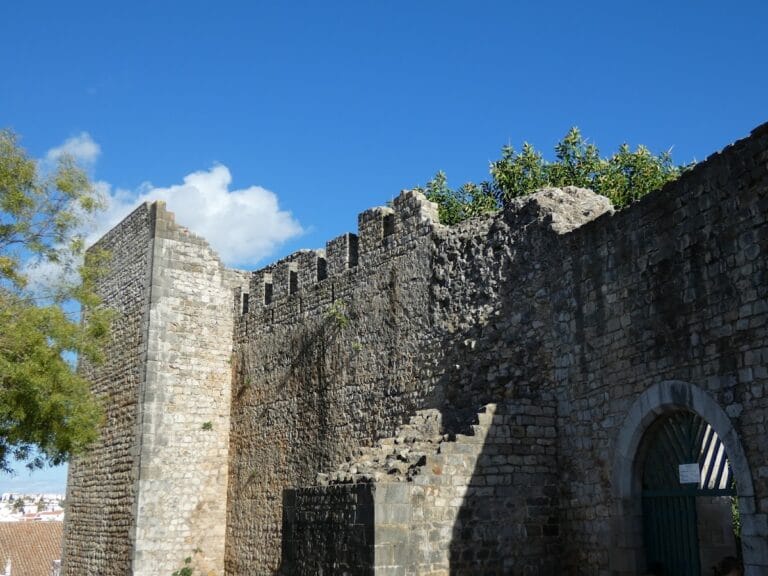
The original Muslim enclosure covered approximately 0.5 hectares, although its limits are difficult to establish because few documentary and architectural remains survive. Sections of the medieval castle wall remain visible in the northern and eastern parts of the historic centre. The medieval enclosure had a small, approximately oval plan. Part of the wall built by the Order of Santiago is now submerged, preserving evidence of the changing relationship between the fortification and the coastal environment.
Later defensive structure
The present fortress is a compact defensive work with a star-shaped polygonal plan and two bastions oriented toward the sea. Its form belongs to the rebuilding carried out after the damage of the 1755 Lisbon earthquake. The principal Gothic structures of the castle and its original church were replaced by later buildings, while the surviving defensive fabric was restored with traditional rammed-earth construction. In this technique, known as taipa, earth is compacted inside formwork to create solid walls, with brick and mortar incorporated into the restoration.
Nearby sites