Baths of Nero: Roman Bath Complex in Pisa, Italy
Site at a Glance
- Rating
- 4.1
- Popularity
- Low
- Country
- Italy
- Primary era
- Classical
- External website
- Open
- Eras represented
- Classical
- Civilizations
- Roman
- Site type
- Sanitation
- Remains
- Baths
On this page10 sections
History
Roman foundation and rebuilding
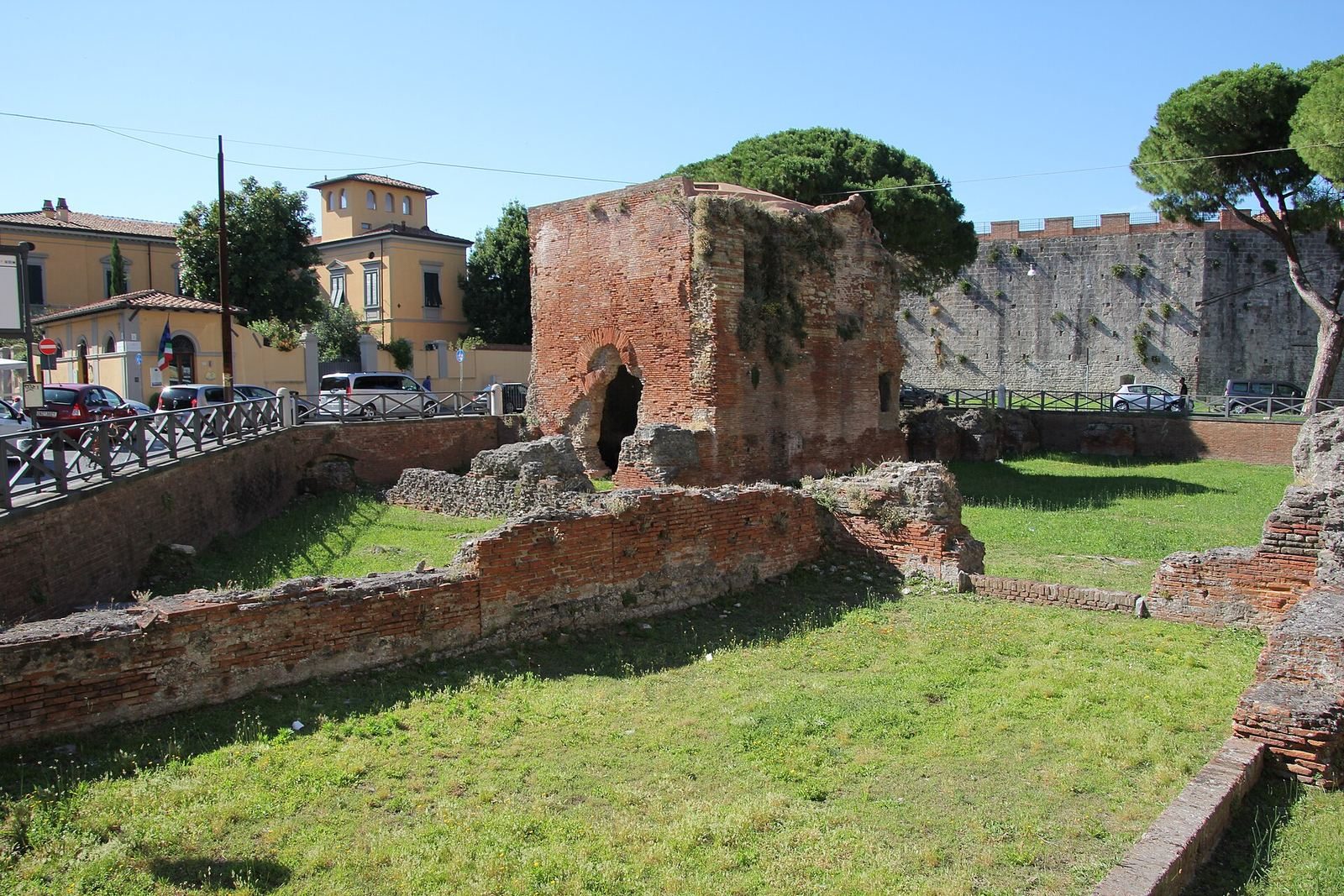
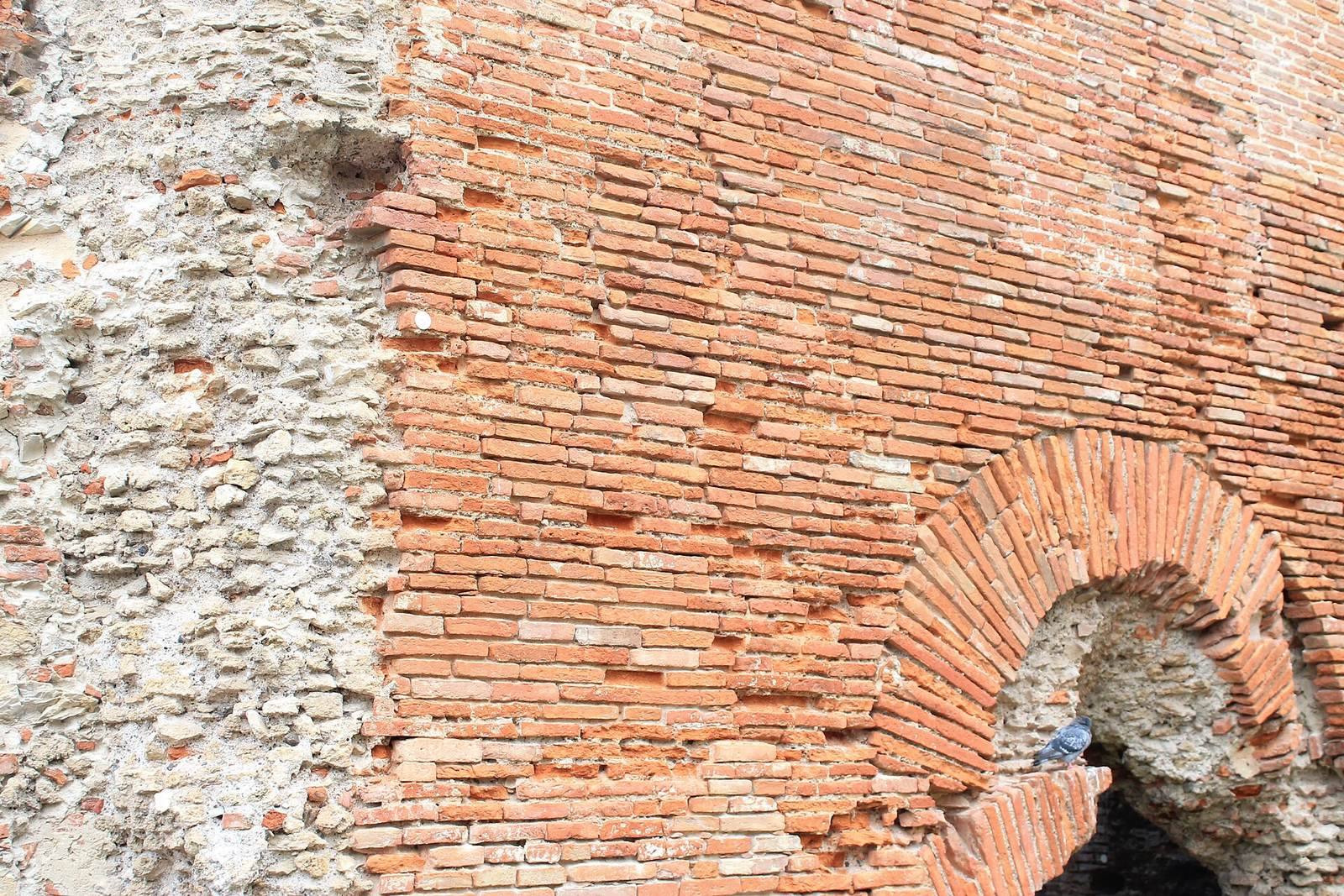
The Baths of Nero are the excavated remains of a Roman bath complex in Pisa, Italy, near the former Porta a Lucca in the Roman colony of Pisa. The complex was first built during the final decades of the 1st century AD, probably under Domitian, the Roman emperor who ruled from AD 81 to 96. Its early construction used opus vittatum mixtum, a Roman masonry technique combining courses of brick with stone.
The baths were rebuilt during the 2nd century. This work was financed in particular by Lucius Venuleius Apronianus Priscus, patron of the Roman colony of Pisa and consul of Attidium. A member of the prominent Veruleii Aproniani family, he held several offices during the Antonine period and also supported other public works, including the Caldaccoli Aqueduct in AD 92 and the Corliano reservoir.
Changing interpretations and archaeological work
From the Middle Ages onward, the complex was incorrectly connected with the emperor Nero. It was then believed to have belonged to a palace attributed to him, which gave the ruins their enduring name.
The area was privatized from the 17th century. The ground was levelled, and small dividing walls were built to create vegetable gardens. The baths were exposed and restored during the 16th and 17th centuries under the command of Cosimo III, a Medici ruler and Grand Duke of Tuscany. Excavations directed by the archaeologist Clemente Lupi began in 1881. After nearby houses were demolished, the remains were enclosed in 1938 for protection, followed by extensive restoration between 1943 and 1949. Weather damage led to the replacement of the covering dome in 2007.
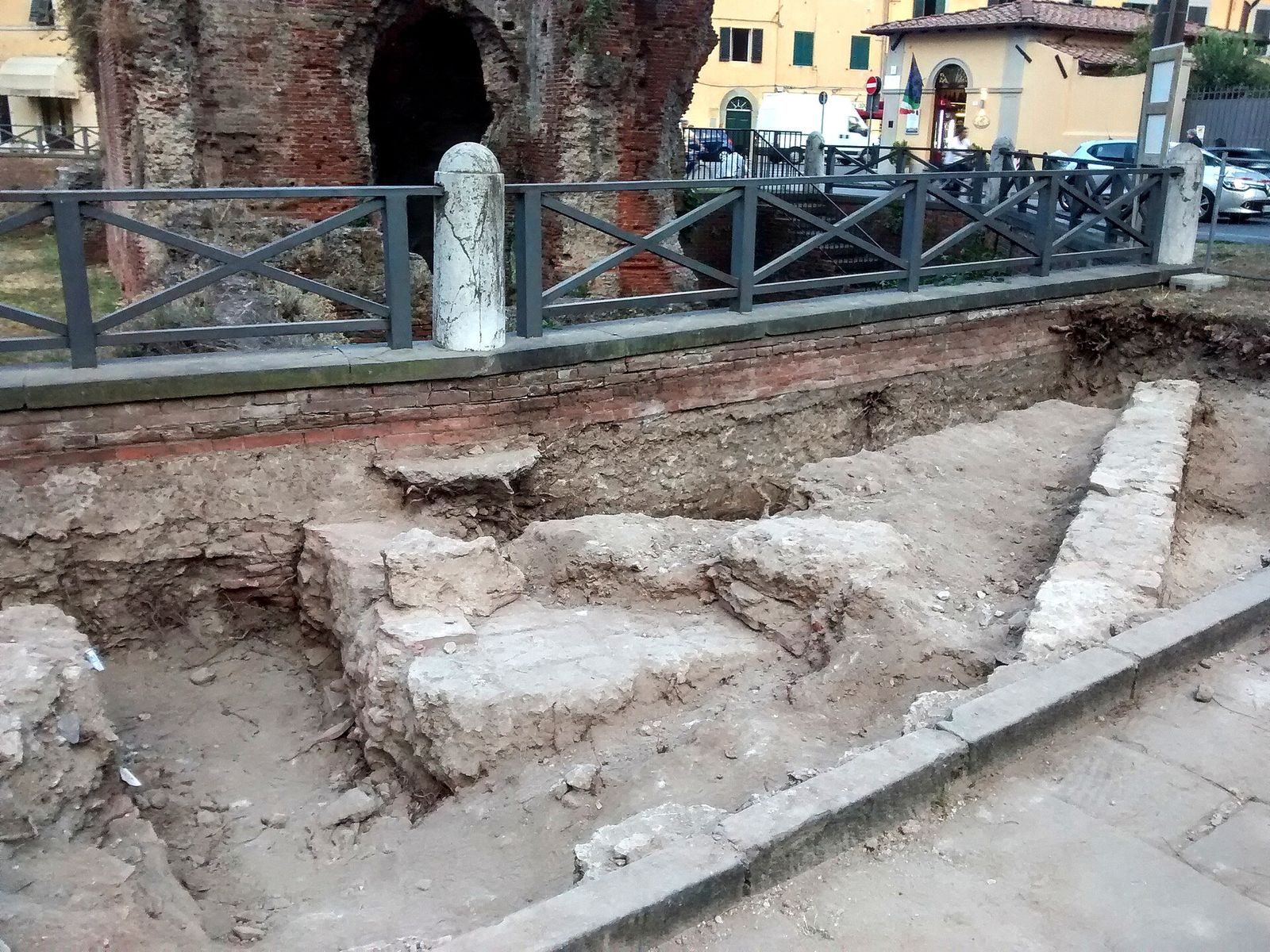
Further excavations in the summer of 2017 examined the functions of the bathing rooms and the phases of human occupation that preceded the baths. Work between the complex and the city walls also uncovered additional Roman walls and remains of the Gabella house, which had been built against the walls near Porta del Parlascio. The Baths of Nero are the only Roman remains in Pisa that still rise above ground level in an area open to the public.
Remains
Layout and construction
The remains lie below the present street level between the baths and the city walls, near Porta a Lucca and a short distance from Piazza del Duomo. The complex was built with opus vittatum mixtum, in alternating courses of brick and panchina stone. Its surviving fabric preserves part of the organization of a Roman bathing establishment, including heated rooms and spaces associated with changing and exercise.
Bathing rooms
Laconicum
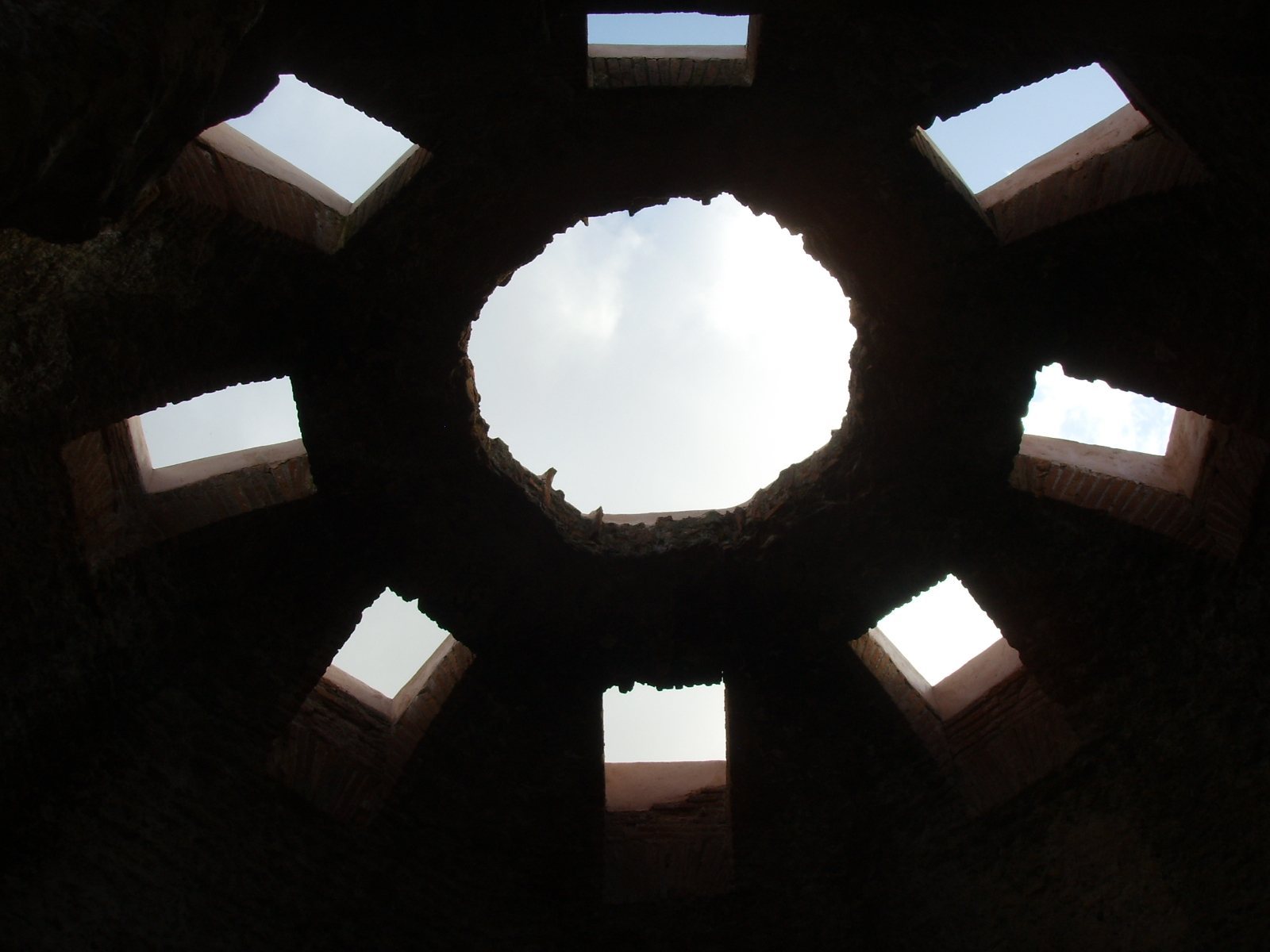
The best-preserved element is the laconicum, a heated room used for hot bathing or dry heat. It consists of an octagonal apsidal hall with a perforated, dome-shaped roof. The roof is partly restored, while the room remains the clearest surviving expression of the complex’s heated architecture.
Palaestra and apodyterium
Remains of the palaestra survive in association with the apodyterium, the changing room. These features formed part of the bathing complex’s wider arrangement, although the surviving evidence is fragmentary.
Tepidarium
Only two walls of the tepidarium remain visible. This was a moderately heated bathing room, and its surviving walls preserve one part of the sequence of spaces used within the baths.
Water supply and decoration
Water reached the baths from the nearby Auser and through the Roman Caldaccoli Aqueduct, which brought water from the area of San Giuliano Terme. Marble fragments and several sculptures found at the site probably belonged to the complex’s decoration. An inscription recording the 2nd-century rebuilding, CIL XI, 1433, is preserved at the National Museum of San Matteo and refers to the Veruleii Aproniani family.