Katz Castle: A Medieval Rhine Fortress in Germany
Site at a Glance
- Rating
- 4
- Popularity
- Very Low
- Country
- Germany
- Primary era
- Medieval
- External website
- Open
- Eras represented
- Medieval, Early Modern, Modern
- Civilizations
- German, Holy Roman Empire
- Site type
- Domestic
- Remains
- Castle
On this page11 sections
History
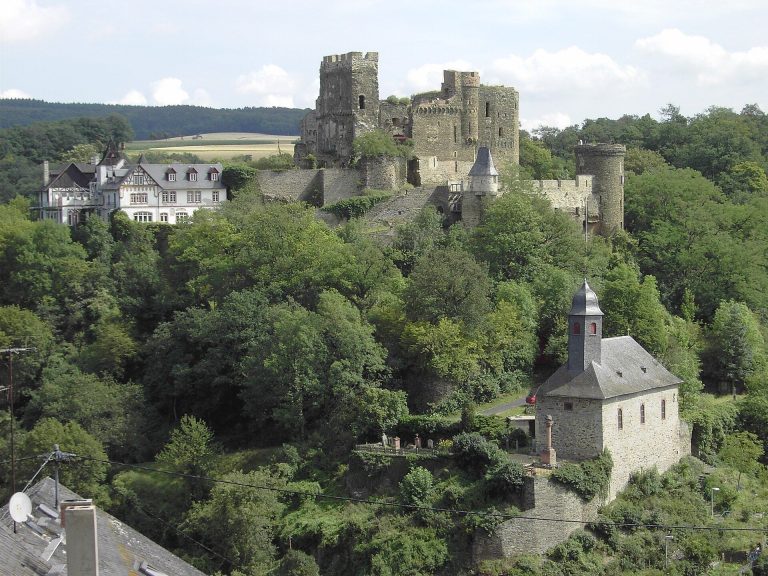
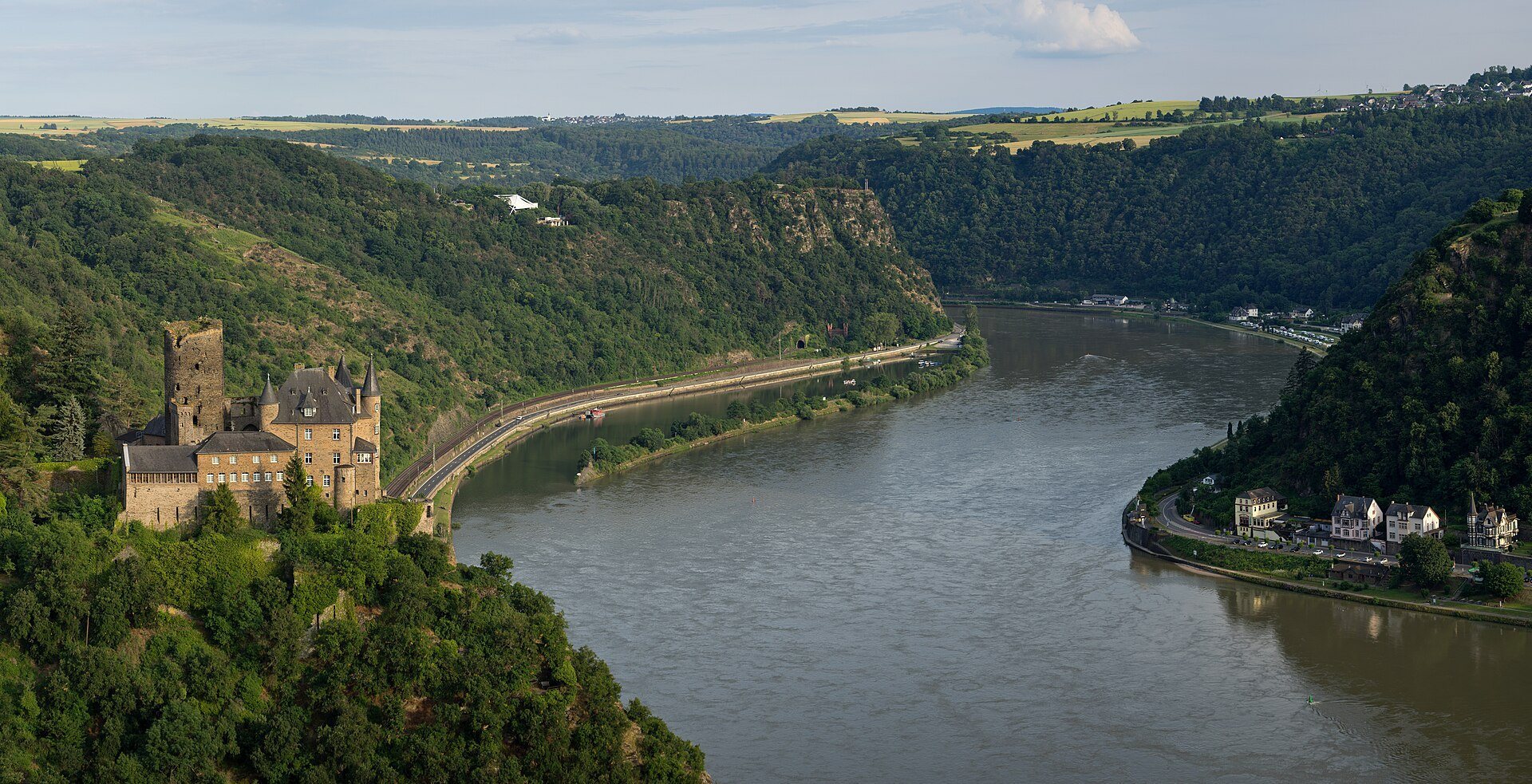
Katz Castle is a medieval hilltop fortress in Germany above St. Goarshausen on the eastern bank of the Rhine. Built around 1360 to 1371 by the Counts of Katzenelnbogen, it formed part of a fourteenth-century network of castles and customs installations controlling territory in southwestern Germany.
Foundation and Katzenelnbogen rule
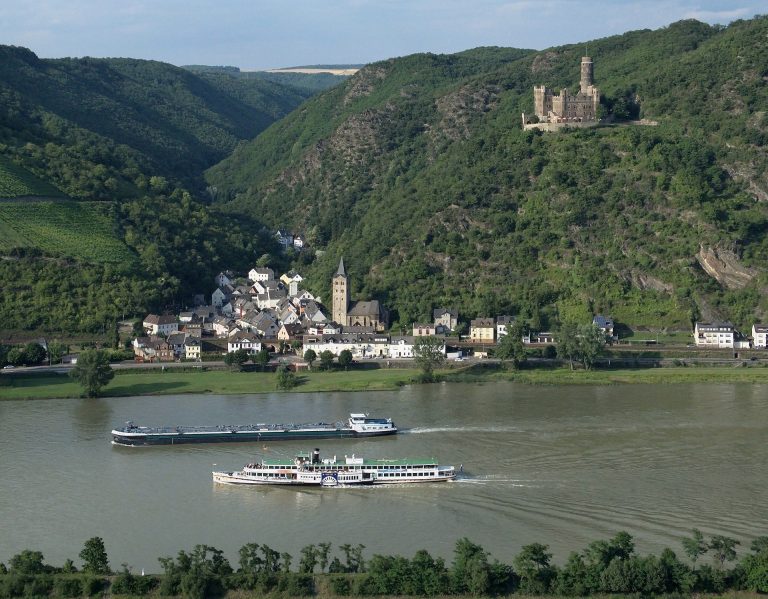
The castle was probably constructed in response to the nearby Electoral Trier castle of Maus, whose building work had begun in 1356. Katz was originally called Neukatzenelnbogen, while the shorter name Katz, meaning “cat,” became established, probably in reference to Maus, meaning “mouse.” Construction is also associated with Count Wilhelm II of Katzenelnbogen.
Together with Rheinfels Castle on the opposite bank of the Rhine, Katz helped create a customs barrier and strengthened the Counts of Katzenelnbogen’s control of the river corridor. The dynasty’s male line ended in 1479. Through the marriage of Landgrave Heinrich III of Hesse-Marburg to the daughter of the last Katzenelnbogen count, the county and castle passed to the Landgraves of Hesse. Katz later became a disputed possession between the Hesse-Kassel and Hesse-Darmstadt lines.
War and reconstruction
The new owners repeatedly rebuilt and reinforced Katz, adapting its defenses to artillery and adding fortifications and gun positions. During the Thirty Years’ War, a conflict that divided much of Europe and the German lands between competing political and religious alliances, the castle was besieged in 1626 and again in 1647. It was partly destroyed during these attacks.
Further damage came in 1692 during the War of the Palatine Succession, also called the Nine Years’ War, a European conflict in which France faced several opposing powers. Katz was affected by French forces during the siege of Rheinfels. French troops captured the castle in 1758 during the Seven Years’ War, an international conflict fought from 1756 to 1763, and it was returned to its owners in 1763. Partial restoration followed.
Destruction and nineteenth-century rebuilding
In 1806, Napoleon ordered the destruction of Katz. Its outer fortifications were blown up, and the complex remained in ruins. The site became part of the Duchy of Nassau in 1816 and passed through several private owners during the nineteenth century.
Ferdinand Berg, the district administrator of St. Goarshausen, acquired the castle in 1896. He commissioned the Cologne architectural firm Schreiterer & Below to rebuild it as a residence using a contemporary interpretation of medieval architecture. Work undertaken around 1896 to 1898 substantially changed the castle and paid limited regard to the surviving medieval remains.
Twentieth-century uses and present status
Katz was auctioned in 1928 and came under the control of the Reich Labour Service in 1936. This state labor organization of Nazi Germany established a training camp at the castle. After the Second World War, the Federal Republic of Germany became its owner as the legal successor to the German Reich.
The castle first served as a provisional school building for the Hofmann Institute. A boarding school under the Altgelt family opened there in 1948. Because the school in St. Goarshausen had been partly destroyed during the war, classes took place in barracks specially built on the castle grounds. After the town’s school buildings were restored in 1950 and 1951, the main school returned there, while Katz continued to house boarding students. Students moved into the newly built Wilhelm-Hofmann Gymnasium in 1964, and the last boarding students left the castle by 1966.
Until the end of 1987, Katz served as a recreation center for employees of the Federal Finance Administration’s social services. It closed after failing to meet fire-safety requirements, including inadequate escape facilities, and was offered for sale. Japanese management consultant Satoshi Kosugi bought it in 1989 for 4.3 million Deutsche Mark. His plan to convert the castle into a hotel for Japanese tourists was not carried out.
Katz remains in Japanese private ownership and is not open for public visits. Since 2002, it has formed part of the UNESCO World Heritage site of the Upper Middle Rhine Valley. The castle and its surroundings also appear as the setting of The Devil’s Organ, the second part of the Belgian comic series Yoko Tsuno.
Remains
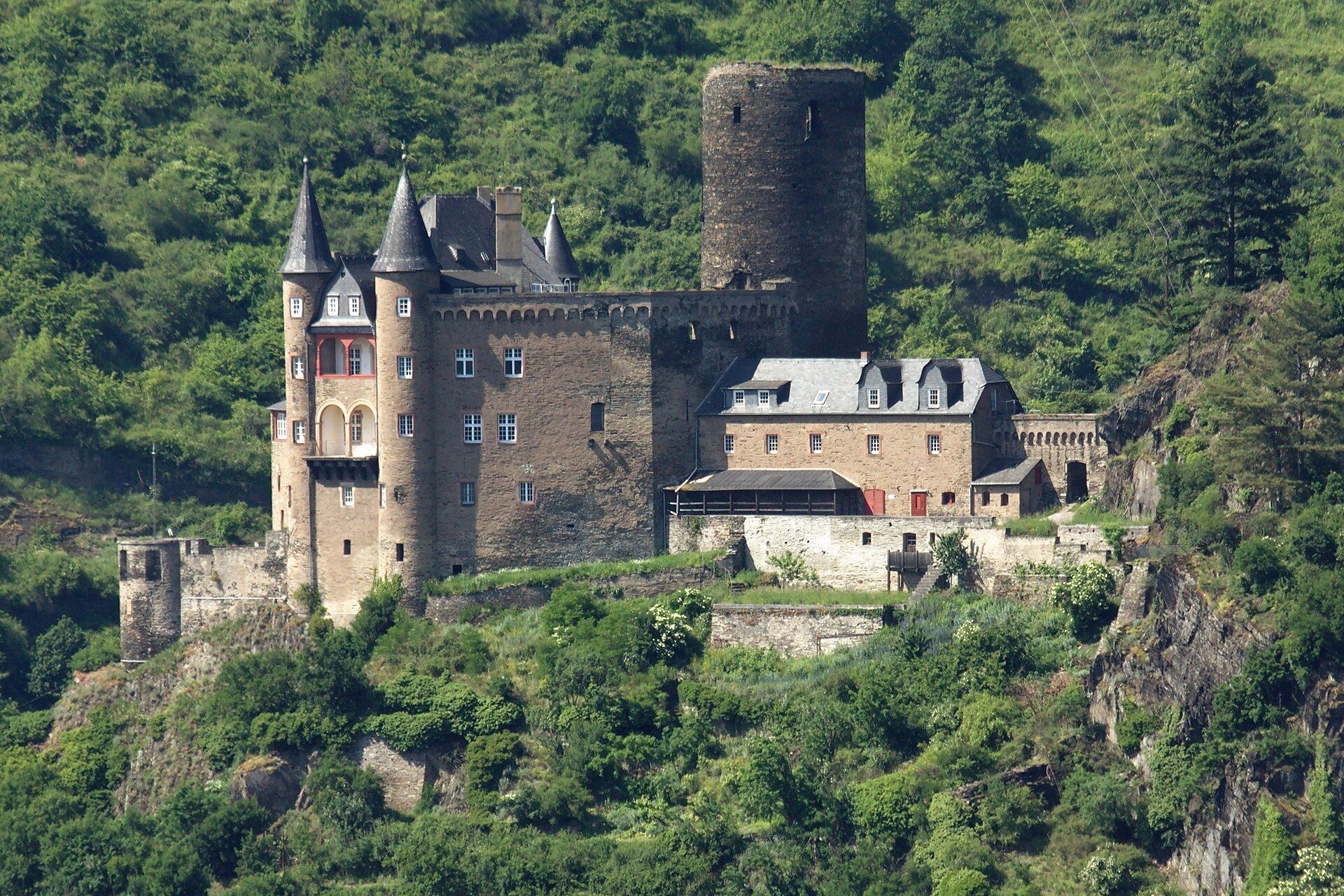
Katz is a right-bank Rhine spur castle set on a hillside above St. Goarshausen. Its restricted ground area produced a compact arrangement of massive buildings. The site’s physical character combines ruined medieval defenses with a late nineteenth-century residential rebuilding that only remotely resembles the former medieval complex.
Medieval defenses
Main tower and entrance defenses
The central defensive feature was a main tower, originally about 40 metres high, placed on the exposed attack side near the principal entrance. A deep neck ditch cut directly into the rock protected this approach, together with a drawbridge and a projecting triangular bastion. The arrangement concentrated the castle’s defenses where an assault was most likely to occur.
Keep, shield wall, and outer enclosure
Important medieval fabric survives in the ruins of the bergfried, the principal tower used mainly for defense and refuge, as well as in sections of the uphill shield wall. Parts of the zwinger, a defended outer area between or in front of castle walls, also remain. Other former fortifications survive in ruined condition.
Residential rebuilding
Riverside residence
The medieval residential tower was originally three storeys high. The riverside residence created during the reconstruction of around 1896 to 1898 substantially replaced or altered earlier fabric and only remotely reflects the former palas, the castle’s principal residential building. Katz is therefore partially restored, with surviving medieval remains standing alongside later construction.