Almodóvar Castle: An Andalusi Fortress in Spain


Site at a Glance
- Rating
- 4.8
- Popularity
- High
- Country
- Spain
- Primary era
- Medieval
- External website
- Open
- Eras represented
- Medieval
- Civilizations
- Umayyad
- Site type
- Military
- Remains
- Castle
On this page7 sections
History
Almodóvar Castle is an Andalusi fortress in Spain, located at Almodóvar del Río near Córdoba and established under Umayyad rule around 760. The site may have been occupied earlier by an Iberian-Turdetanian fortified settlement associated with Cárbula, a place mentioned by the Roman geographer Pliny the Elder. A Roman stronghold later preceded the medieval castle.
Before and during Andalusi rule
The earlier settlement may have served as an embarkation point for local olive oil and grain. Its surrounding economy supported a substantial pottery industry, while nearby silver mining and local coin production in the second century BC have also been proposed. These activities place the hill within a wider landscape of production and exchange before the present fortress took shape.
The Andalusi fortress was founded during the eighth century, when the Umayyads governed al-Andalus, the Islamic-ruled territories of the Iberian Peninsula. Around 760, it was known as al-Mudawar, a name meaning “round” or “secure” from which Almodóvar developed. From the eighth through the tenth centuries, the fortress and its territory belonged first to the Emirate and later to the Caliphate of Córdoba.
Political control changed during the eleventh century. The fortress was initially attached to the Taifa of Carmona, an independent Muslim principality formed after the fragmentation of centralized rule, and then to the Taifa of Seville. Under the Almoravids, a North African dynasty that ruled parts of al-Andalus, it returned to Cordoban jurisdiction. During the twelfth and thirteenth centuries, it became dependent on the Almohad court of Seville.
Castilian incorporation and royal jurisdiction
In 1240, Fernando III incorporated Almodóvar into the Crown of Castile by agreement. Three years later, he transferred it to the Council of Córdoba. Under his successor Alfonso X, the boundary between Almodóvar and Posadas was established in 1267.
Pedro I occupied the castle in 1360. His half-brother Enrique II also stayed there repeatedly. During the fifteenth century, custody of the fortress became associated with the House of Baena and Cabra, linking its administration to an important Castilian noble family.
In 1513, Almodóvar and its castle served as security for the purchase of Fuente Obejuna, after which the town returned to the Crown. Almodóvar remained a royal jurisdiction connected with Córdoba until Felipe IV sold it in 1629. Francisco del Corral y Guzmán, a knight of the Order of Santiago, bought the town and converted it into a seigneurial possession.
Restoration and modern ownership
After an extended period of deterioration, Rafael Desmaissieres y Farina, Count of Torralva, began a major restoration in 1901 under the technical direction of the architect Adolfo Fernández Casanova. Work continued after the deaths of Desmaissieres in 1914 and Fernández Casanova in 1932, but the Spanish Civil War interrupted the project in 1936.
The castle and the Desmaissieres titles passed to Fernando de Solís Beaumont y Atienza, Marquis of the Motilla. Since 2001, the property has belonged to his son, Miguel Ángel de Solís y Martínez Campos, Marquis of the Motilla. Spain granted the castle protection as a Bien de Interés Cultural, a protected cultural-heritage status, in 1985.
Remains
Hilltop setting and fortress form
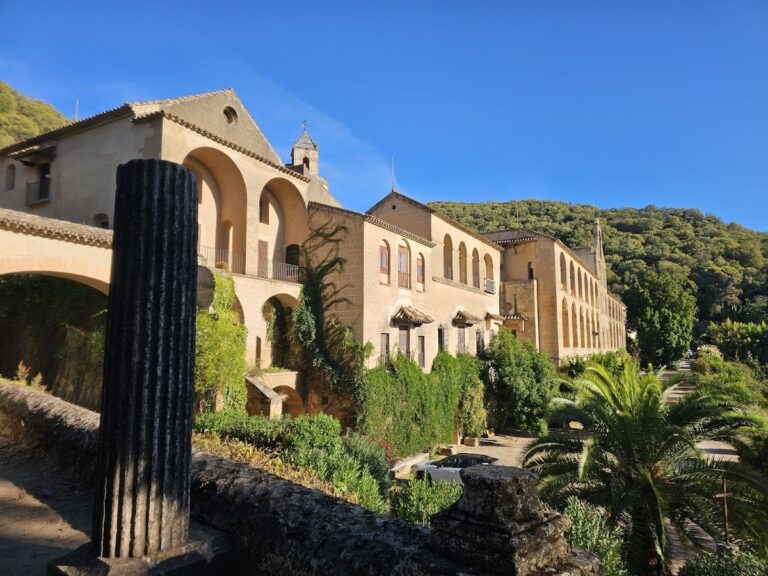
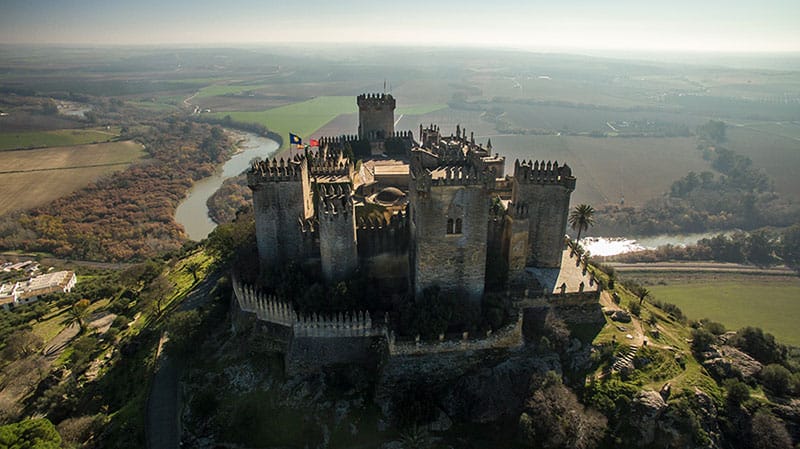
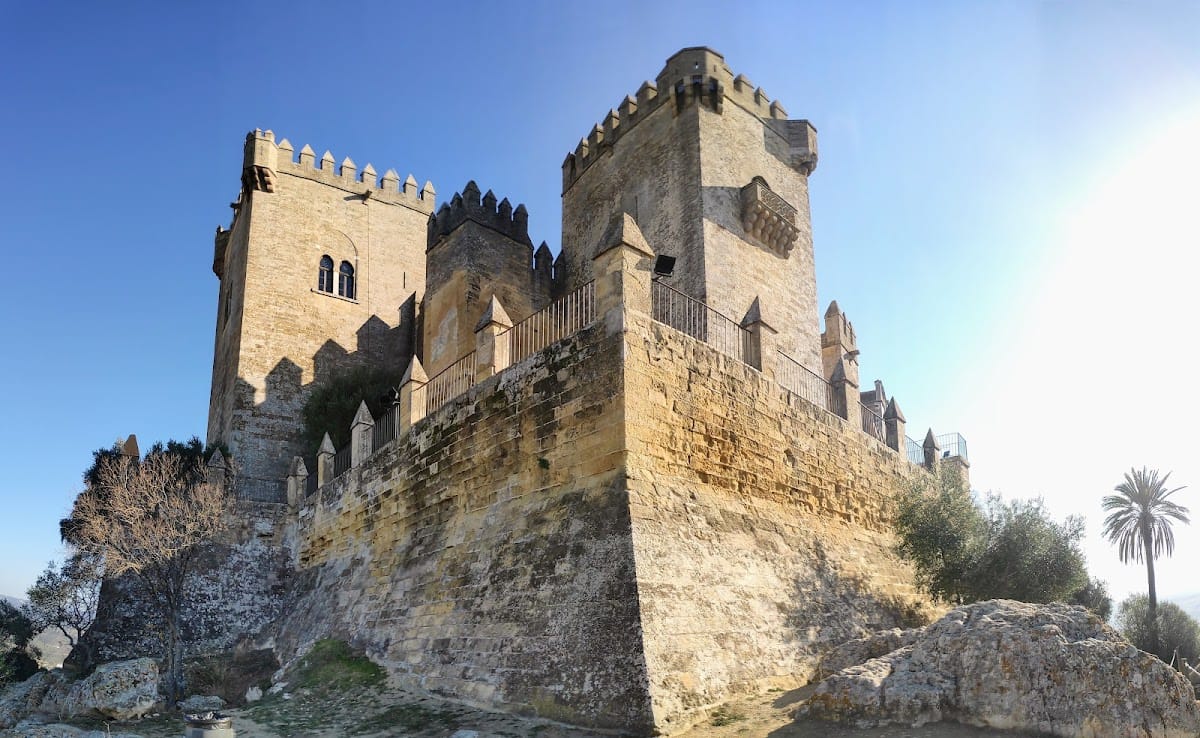
Also called Castillo de la Floresta, the castle occupies the hill known as El Redondo in Almodóvar del Río, Córdoba, at an elevation of approximately 218 metres. The surrounding land is generally flat to the southwest and hilly to the northeast, while the wider landscape is largely agricultural. This elevated position contains a medieval fortress that was repeatedly modified and rebuilt over time.
Principal towers
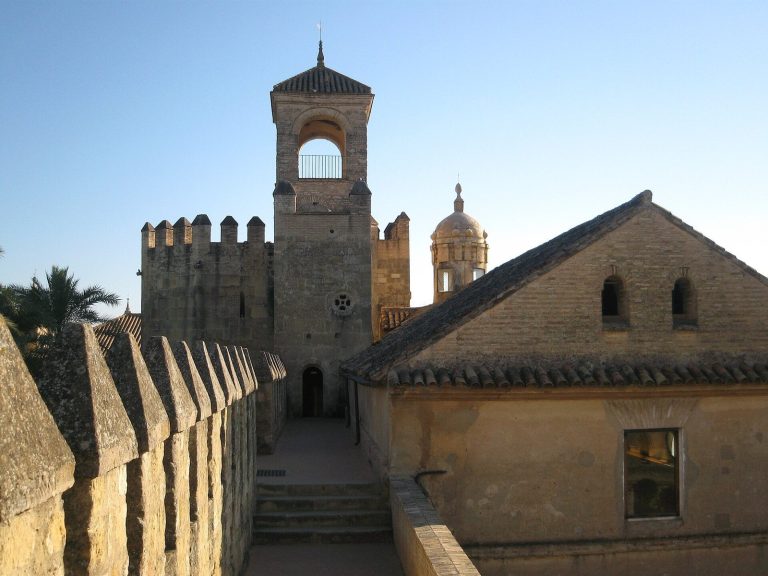
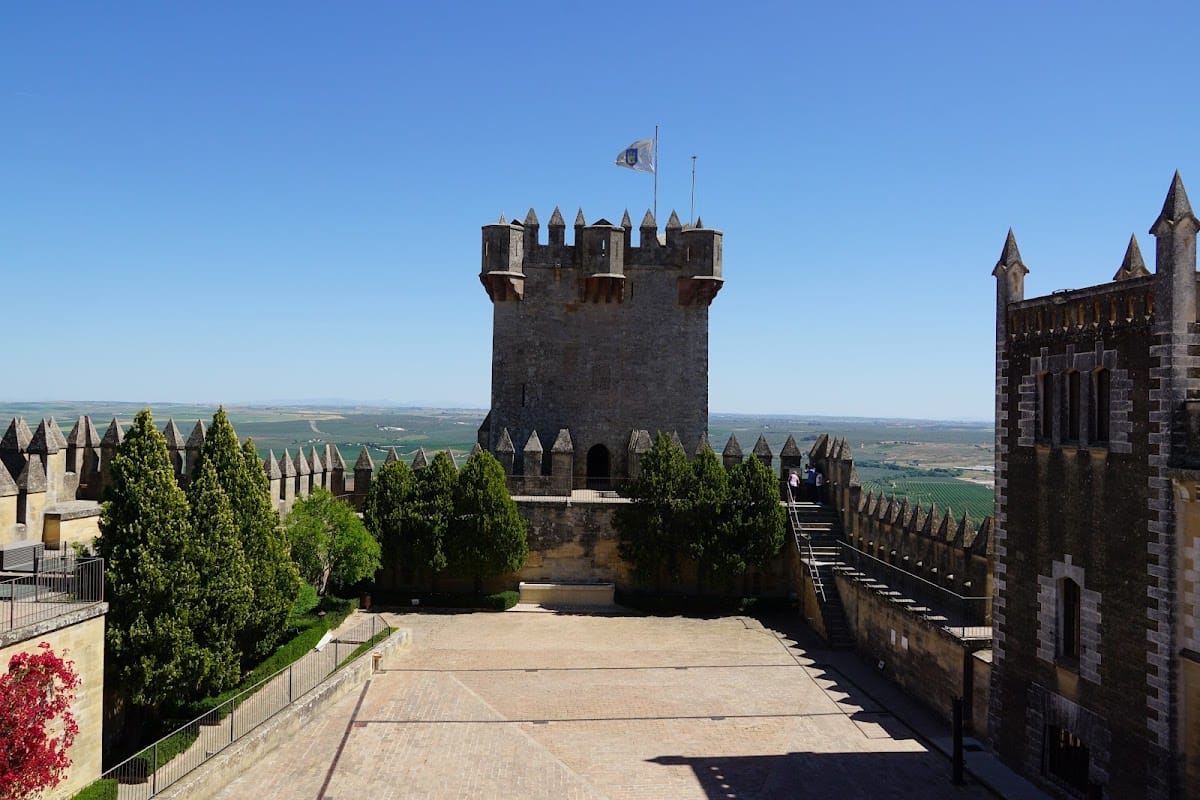
The restored fortress is organized around three principal towers: the Square Tower, the Round Tower, and the Tower of Homage. Together they form the principal surviving tower group of the medieval stronghold. The castle’s present condition reflects the extensive restoration carried out between 1901 and 1936, and the site is described as restored.