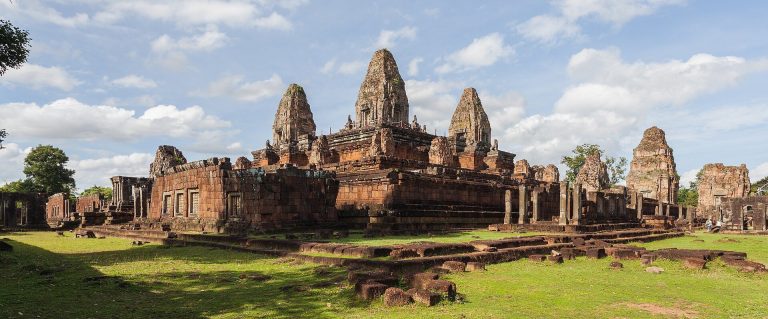
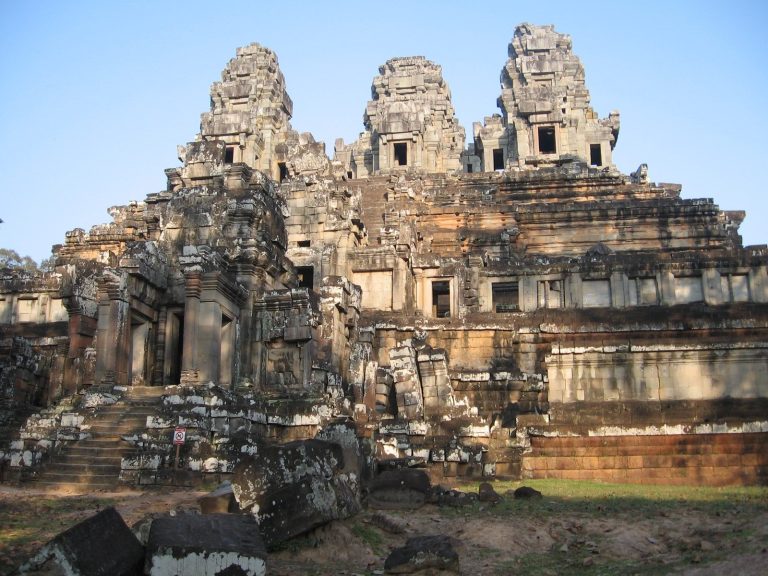
Prasat Kravan: A Tenth-Century Hindu Temple at Angkor
Site at a Glance
- Rating
- 4.6
- Popularity
- Low
- Country
- Cambodia
- Primary era
- Medieval
- Eras represented
- Medieval
- Civilizations
- Khmer
- Site type
- Religious
- Remains
- Temple
On this page9 sections
History
Prasat Kravan is a small Hindu temple in Angkor Archaeological Park, Cambodia, completed and dedicated to Vishnu in 921 during the reign of Harshavarman I. It stands south of the artificial reservoir Srah Srang, east of Angkor Wat, and south of Banteay Kdei. The temple belongs to a transitional phase between the Bakheng style, associated with the earlier Angkorian period, and the Koh Ker style, which developed around the tenth-century capital established by Jayavarman IV.
Foundation and Dedication
Construction is attributed to the high official Mahidhara Varman, although another interpretation connects the work more generally with senior officials serving under Harshavarman I or possibly Ishanavarman II. An inscription dated 921 records the installation of an image of Vishnu called Sri Tribhuvanesvami by Sri Virendradhipativarman. It also describes the joint creation of another image, Sri Trailokyanatha, by Mahidhara Varman and Jayaviravarman. Local inhabitants living around the temple were among those involved in its construction.
Prasat Kravan was associated with the worship of Vishnu, the Hindu deity linked with preserving and maintaining the cosmos, and was understood as a representation of his divine residence. Its construction was contemporary with the major temple at Koh Ker, connecting it to a period when Khmer royal power and architectural practice were undergoing change. The temple’s original Sanskrit name remains uncertain. Its present Khmer name is understood to refer to the fragrant kravan tree, identified as Artabotrys odoratissimus.
Clearance and Restoration
Vegetation was cleared from the temple during the 1930s by Henri Marchal and Georges Trouvé. The towers were later restored from 1962 to 1966 under the initiative of Bernard Philippe Groslier. Some replacement bricks from this work carry the mark “CA,” meaning “Conservation Angkor,” preserving evidence of the modern conservation campaign within the fabric of the monument.
Remains
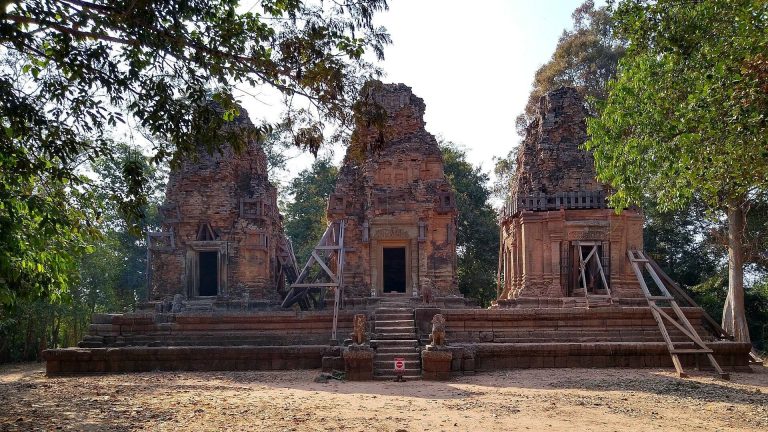
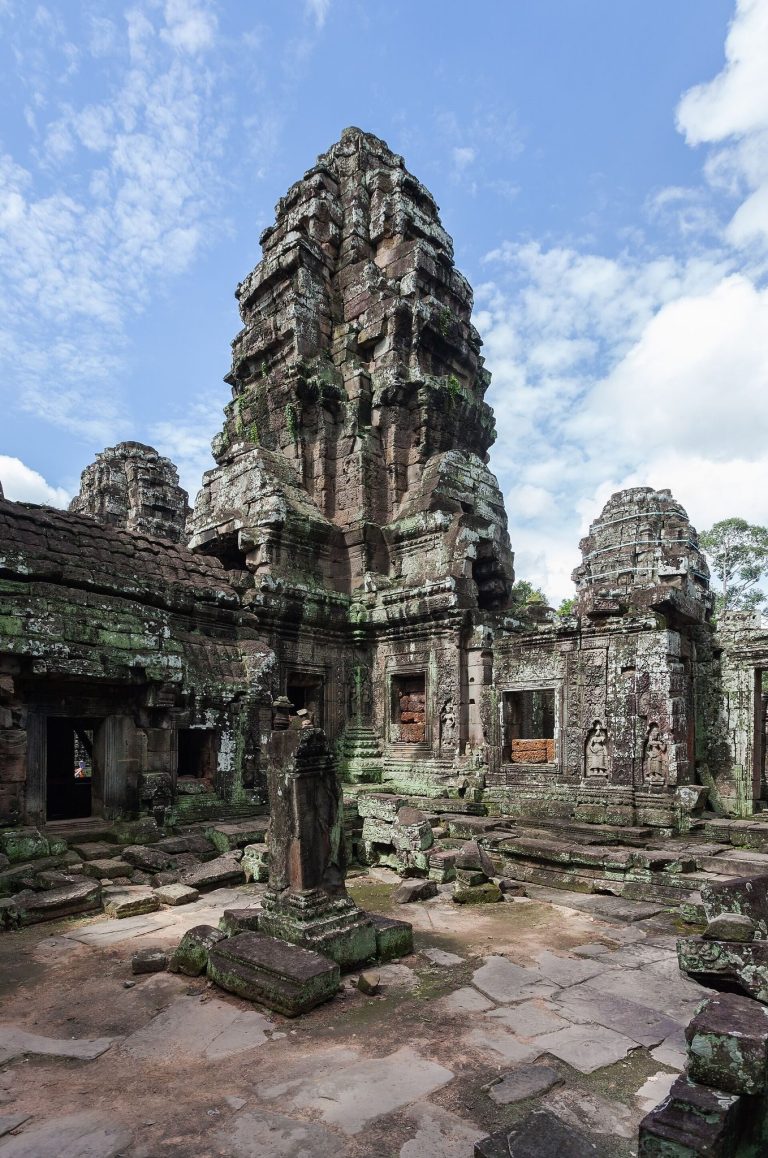
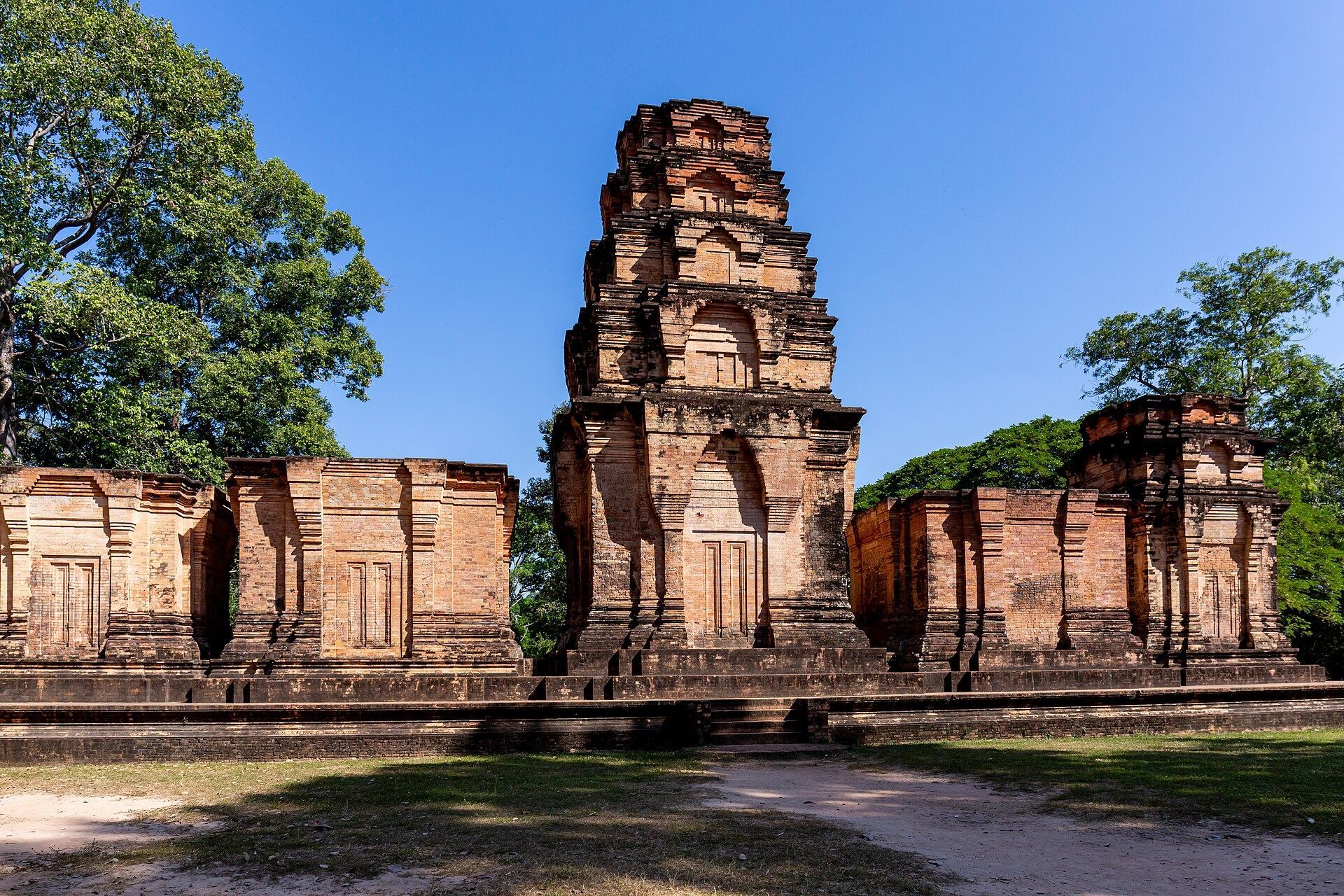
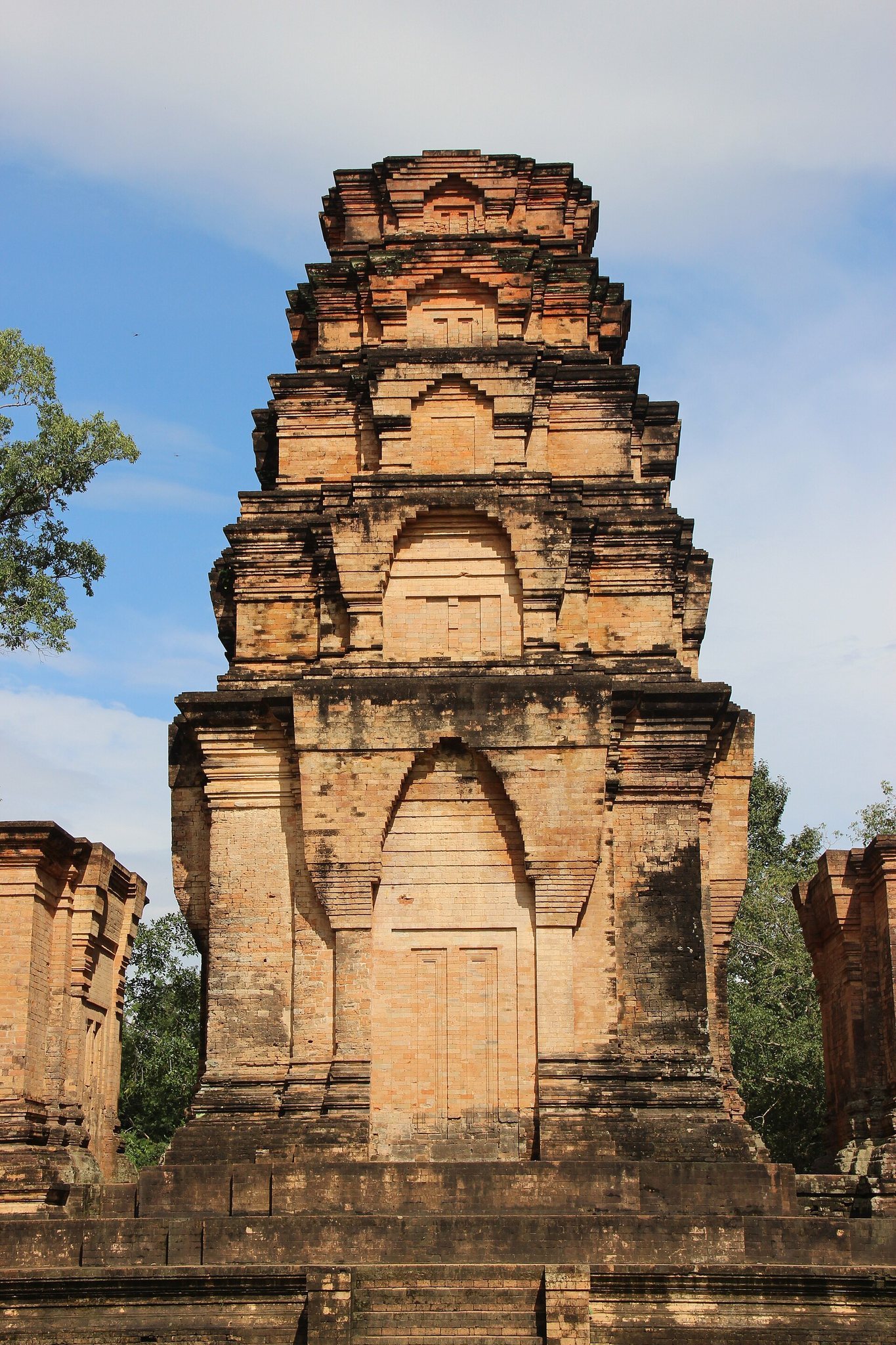
Prasat Kravan is arranged as five reddish brick towers in a row on a single common terrace. The central tower is larger and taller than the other four, while all five face east. A small moat encloses the temple, and an eastern forecourt includes an additional platform that may have served as a library. The exterior is defined by symmetry and restrained, classical lines. Each tower has one open doorway and three false doors, which are solid decorative doorways rather than usable entrances. Stone forms the door columns and lintels.
Towers and Brick Construction
The central and southern towers rise through tiers that become progressively smaller toward the top. This arrangement creates a deliberate false-perspective effect, making the superstructures appear more deeply layered. The brick walls contain finely carved reliefs of Vishnu, Lakshmi, the earth goddess, and scenes from Hindu mythology. Large reliefs carved directly into sanctuary interiors are characteristic of Cham temples but unusual among surviving Khmer monuments.
Sanctuary Reliefs
Central Tower
The central tower contains three interior reliefs of Vishnu. One shows the four-armed deity seated on Garuda, his divine vehicle, and holding a globe, conch, discus, and baton. Another depicts Vishnu taking a great stride in the story of Vamana, his dwarf incarnation, who reclaimed the worlds from the asura Bali in three steps. A third presents an eight-armed Vishnu standing rigidly like a statue, surrounded by hundreds of small devotees and topped by a crocodile or lizard. The meaning of this final composition remains uncertain.
Northernmost Tower
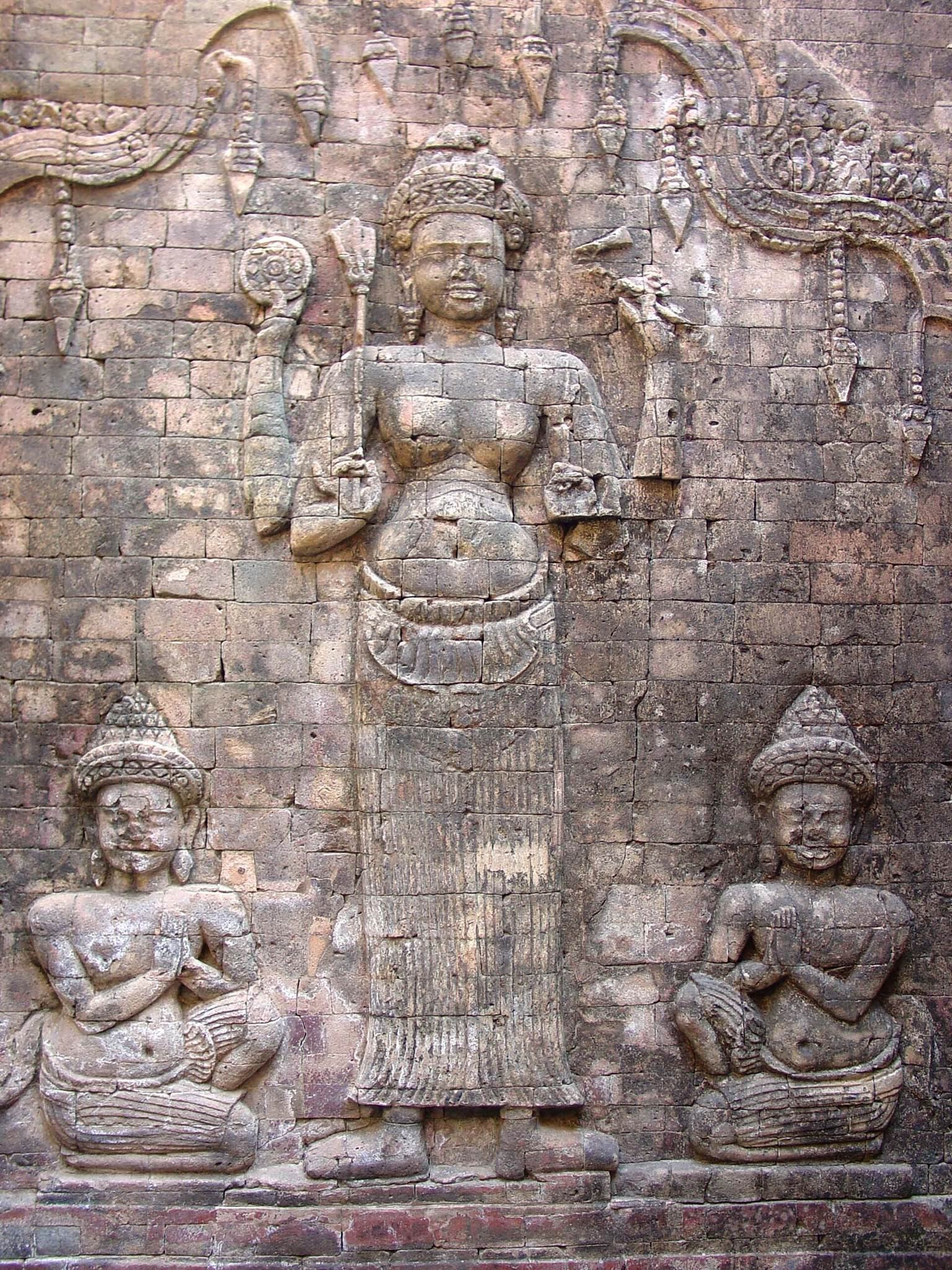
The northernmost tower contains two interior reliefs of Lakshmi, Vishnu’s consort, each accompanied by devotees. In one, she holds both Shiva’s trident and Vishnu’s discus, possibly presenting her as a goddess who transcends the division between Shaiva and Vaishnava worship. On the opposite wall, she appears in a more conventional form holding lotuses.
Main Tower Images
A major relief on the main tower shows Vishnu standing in a dancing posture with one foot on a throne. Another prominent composition presents him on a blossoming lotus. His four hands hold divine attributes, while Lakshmi kneels below in prayer with a lotus stem. Forms behind her represent seawater. Together, the imagery expresses Vishnu’s power to preserve and renew the world by overcoming destructive forces.