Tlatelolco: A Mexica City and Archaeological Site in Mexico City
Site at a Glance
- Rating
- 4.7
- Popularity
- Medium
- Country
- Mexico
- Primary era
- Medieval
- Eras represented
- Medieval
- Civilizations
- Aztec
- Site type
- City
On this page25 sections
History
Tlatelolco is the archaeological remains of a Mexica city in Mexico City, Mexico, founded around 1337 or 1338 on an island in Lake Texcoco. Established by Tlatelolca nobles who had separated from the Tenochca founders of Tenochtitlan, it developed as a major Mexica urban center during the pre-Hispanic period. The city began as a culturally diverse community and eventually became the principal commercial center of the Mexica world.
Foundation and early government
The first inhabitants included Tlatelolca, Tenochca, and Tepanec groups. Their society was organized into nineteen calpulli, neighborhood and kin-based communities that formed important units of political and social organization. At first, people supported themselves through hunting, fishing, and the extraction of tequesquite salt. These products were traded, providing the economic basis for the city’s early growth.
Tlatelolco was initially subject to Azcapotzalco, the Tepanec power that dominated the region. In 1352, it received its first ruler, Cuacuauhpitzáhuac, who came from the Tepanec ruling lineage. His son Tlacateotzin succeeded him after his death in 1409. This connection with Tepanec authority shaped the city’s early political identity before wider changes transformed central Mexico.
The Triple Alliance and rivalry with Tenochtitlan
After the defeat of Maxtla, Tenochtitlan, Texcoco, and Tlatelolco formed the Triple Alliance, a political coalition that came to dominate central Mexico. Tlatelolco joined the alliance and established its own government under Quauhtlatouatzin. During this period, the city was embellished with a major temple and a large commercial plaza, reflecting the growing importance of both religion and trade.
Quauhtlatouatzin died in 1467 and was the last Tlatelolco ruler from the Tepanec lineage. He was followed by Moquíhuix, a political relative of the Tenochca ruler Moctezuma Ilhuicamina. Relations with Tenochtitlan deteriorated under Moquíhuix and Axayacatzin, Moctezuma’s successor, brother-in-law, and rival. Their conflict culminated in the Battle of Tlatelolco, traditionally linked to the violation of Tlatelolca women by young Tenochca men. Tenochtitlan conquered Tlatelolco in 1473 and took control of its commerce.
Following the conquest, Tenochtitlan destroyed and filled Tlatelolco’s principal temple with refuse, preventing the restoration of its cult. The temporary market in the plaza became permanent and grew into the largest and most important market in the Mexica Empire. Over time, relations between the two communities became sufficiently cordial that the Spanish encountered no obvious continuing division between them.
The market and urban exchange
Tlatelolco’s market operated mainly through barter. High-value goods could also be exchanged for cacao, powdered gold, copper axes, and textiles that served as forms of currency. Professional long-distance merchants, known as pochteca, belonged to organized guilds with their own commercial laws and courts. A market official regulated the arrangement of stalls and helped maintain order within the busy trading area.
Goods included animals, birds, reptiles, worked and unworked stone, metals, jewelry-repair services, medicinal herbs, and products from both nearby and distant regions. The market brought Indigenous communities into sustained contact and made Tlatelolco an important center of economic and cultural interaction before the Spanish invasion.
Conquest and destruction
During the final Spanish siege of Mexico-Tenochtitlan in 1521, Tlatelolca forces helped prevent Spanish and Indigenous-allied troops from advancing along the causeways toward Tlacopan and Tepeyac. After Tenochtitlan fell, resistance continued at Tlatelolco. On 13 August 1521, Cuauhtémoc was captured and forced to capitulate to Hernán Cortés.
The city was then sacked and destroyed. The fighting was described as exceptionally bloody, with an estimate of more than 40,000 Indigenous deaths. Stones from the ruined pre-Hispanic temples were reused in the construction of the Templo de Santiago, which later formed part of the plaza surrounding the archaeological zone.
Excavation and modern historical memory
Drainage works led to excavations in the area in 1900, including investigations by Leopoldo Batres and his son Salvador. Further exploration was undertaken partly to obtain archaeological material for Mexico’s centennial exhibition in Madrid, promoted during the government of Porfirio Díaz. The National Institute of Anthropology and History began systematic work at Tlatelolco in 1944, followed by major campaigns between 1960 and 1968. These investigations recovered 67 structures and established the site as the largest exposed concentration of immovable archaeological heritage in Mexico City.
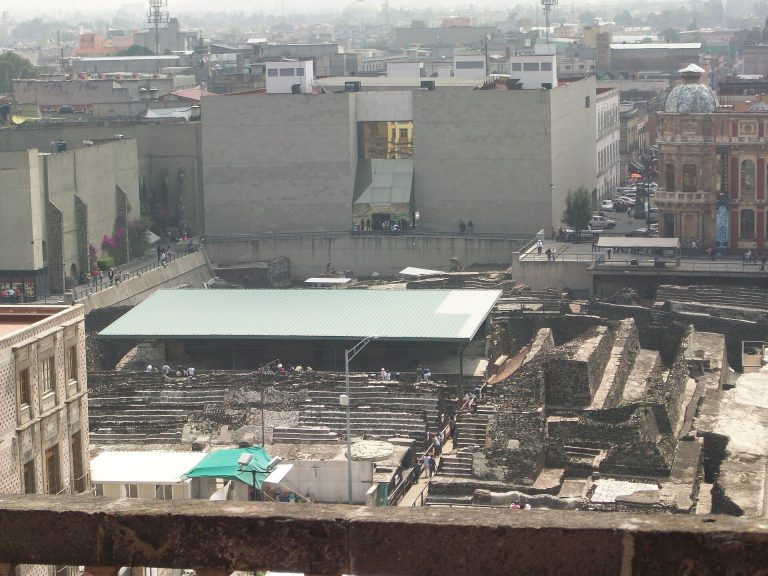
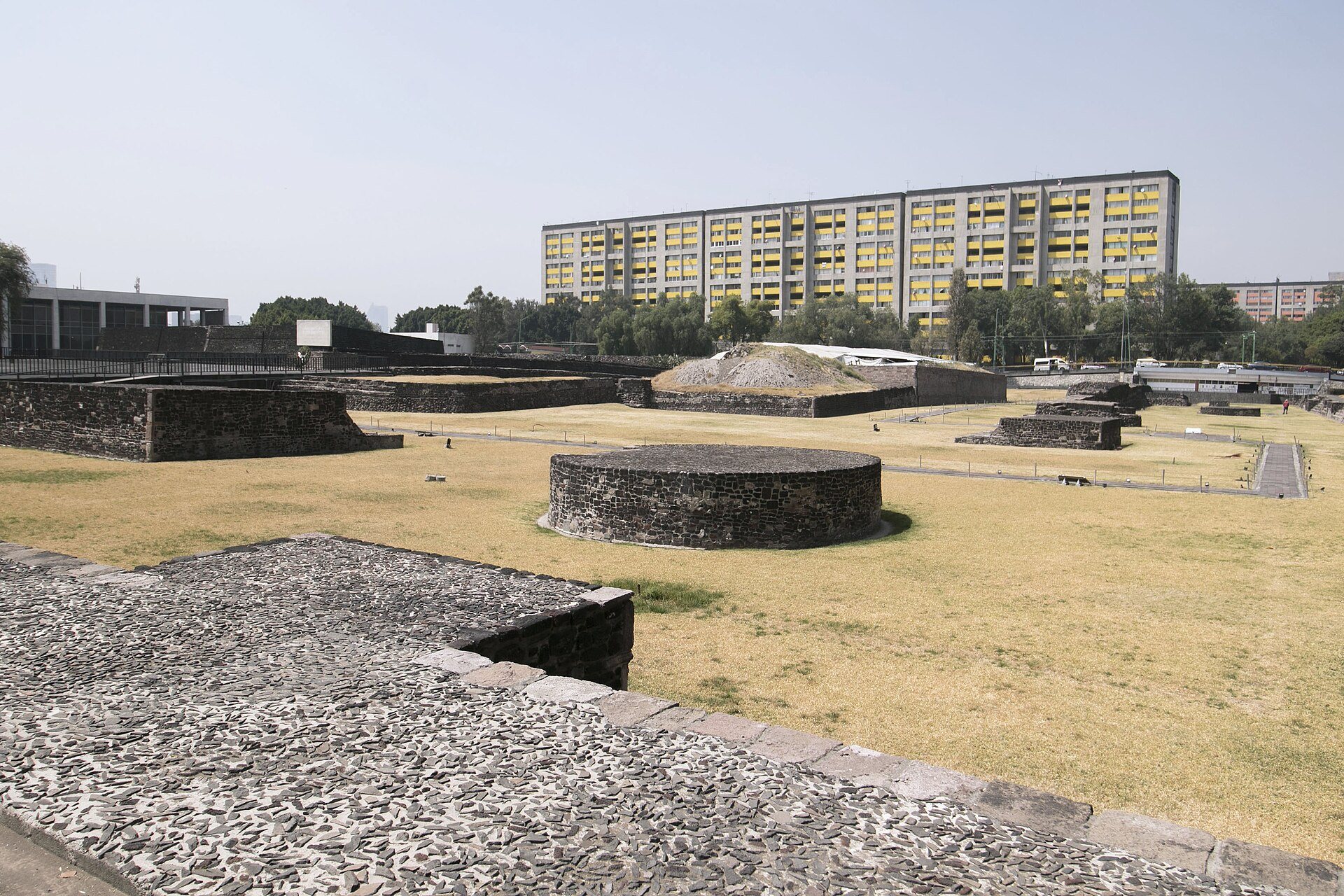
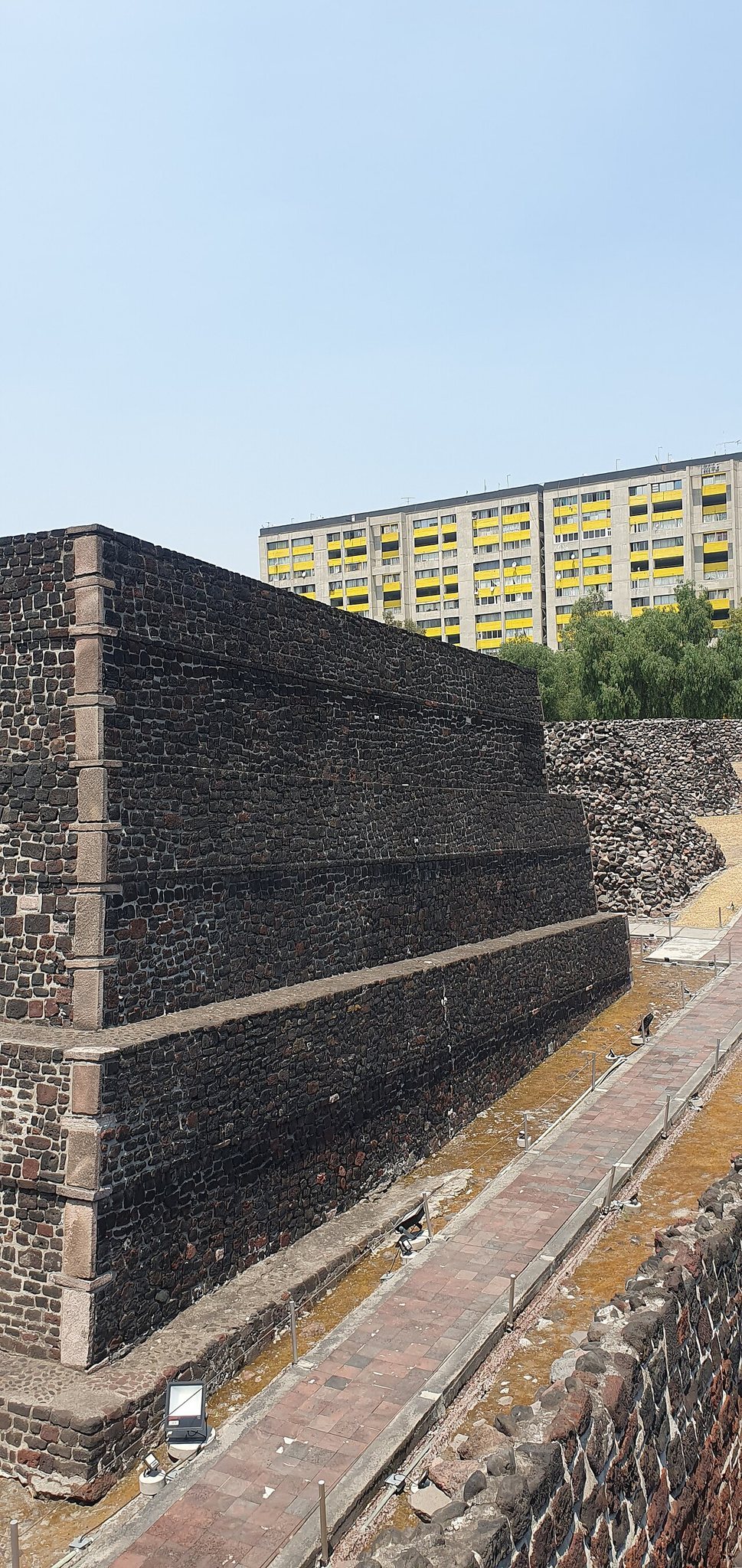
The archaeological zone forms one side of the Plaza de las Tres Culturas. The seventeenth-century Templo de Santiago occupies another side, while a modern office complex formerly used by Mexico’s Foreign Ministry stands on a third. That complex is now occupied by the Centro Cultural Universitario Tlatelolco of the National Autonomous University of Mexico.
Tlatelolco also became a central place in the student movement of 1968. The movement began in July amid clashes between students and police, with demands for freedom of expression, democratic rights, and an end to government repression. On 2 October 1968, the army and security forces repressed a demonstration at Tlatelolco, killing numerous students and civilians. The massacre became a major symbol of the struggle for human rights and democracy in Mexico. Raúl Álvarez Garín, one of the movement’s principal leaders, represented the National Strike Council during the conflict.
Remains
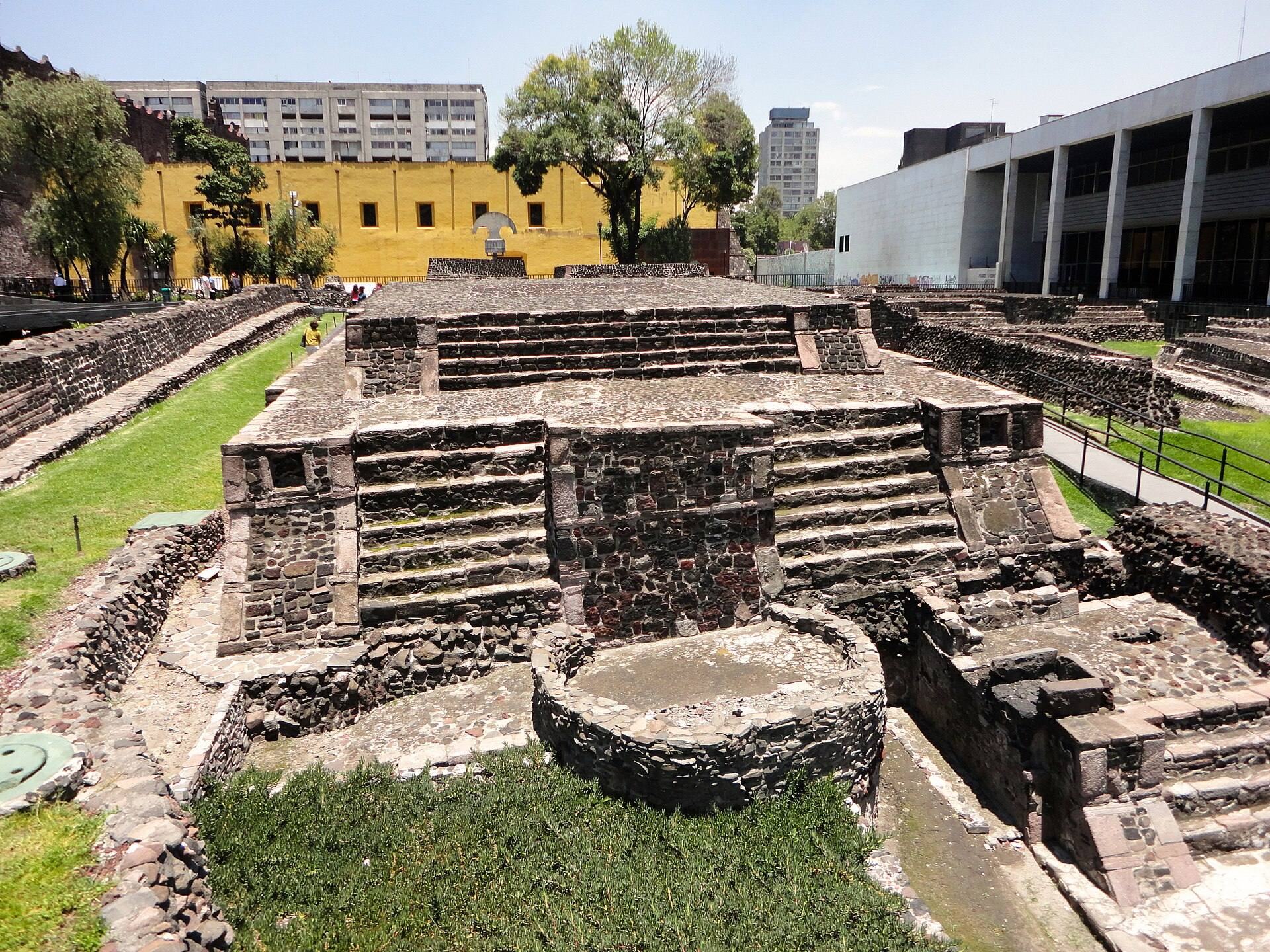
The archaeological zone preserves the remains of the pre-Hispanic city, with temples and other structures distributed mainly to the north and south of the Templo Mayor. The central ceremonial area contains buildings associated with Quetzalcoatl, Ehecatl, and Huitzilopochtli, while platforms, altars, walls, burials, offerings, and ceramics reveal the religious and social practices of Tlatelolco. The visible remains are integrated into the Plaza de las Tres Culturas beside the Templo de Santiago and the modern cultural center.
Central ceremonial precinct
Templo Mayor
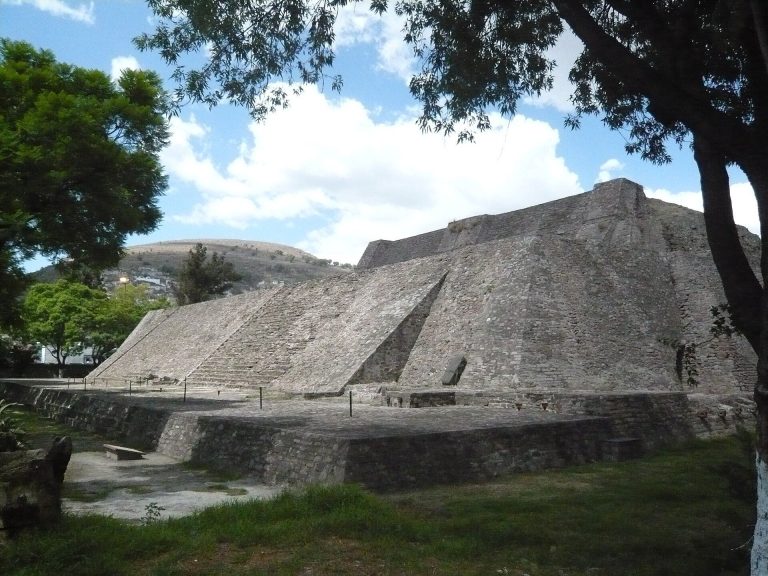
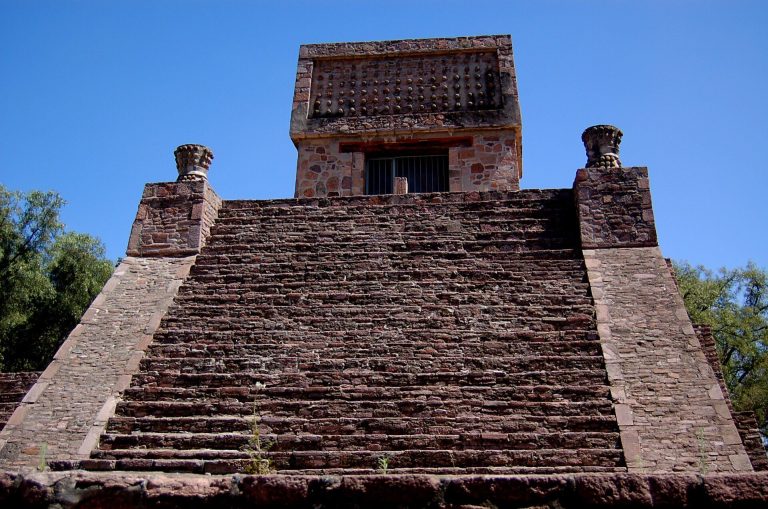
The Templo Mayor is the largest structure in the archaeological zone and occupies its central area. Its second construction stage resembles the pyramids at Tenayuca and the Templo Mayor of Tenochtitlan. The building consists of a three-part platform with broad stairways divided by central and side alfardas, solid elements bordering a monumental staircase. A pyramid more than 700 years old lies within the visible structure. Its similarities to buildings at Tenayuca and Tenochtitlan have led to the interpretation that it may represent an early construction combining Aztec and Tlatelolca traditions. The temple may originally have been taller than the Templo Mayor of Tenochtitlan.
Calendrical Temple
The Calendrical Temple has a panel decorated with reliefs referring to the first three thirteen-day periods of the tonalpohualli, the 260-day ritual calendar of central Mexican religious practice. It is the only minor temple at the site with a double staircase. Its principal facade carries a mural depicting the creator deities of the pre-Hispanic calendar.
Temple R and the Wind Complexes
Temple R, also called the Wind Complexes, preserves the remains of an earlier shrine dedicated to Ehecatl, the wind aspect of Quetzalcoatl. Burials and offerings in front of the structure included children placed inside pots, shells, stones, and ceramic figurines. These finds connect the building with ritual practices involving the wind deity and offerings made at the shrine.
The Palace
The Palace contains four small rooms arranged around a central courtyard with an altar. Remains of a broad portal also survive, giving the building a more formal architectural character than the smaller structures around it.
Altar V
Altar V is a smaller building with four concentric stairways. Its design and associated interpretation connect it with Tlaloc, the major Mexica rain deity.
Temples and precinct boundaries
Temple of Paintings
The Temple of Paintings comprises Buildings X and L. Three facades of Building L are crowned with bow-shaped high-relief elements, and murals survive on its facades, panels, and staircase side elements. The building uses the talud-tablero form, which combines a sloping wall with a vertical panel above it. This design is identical to that of the red temples in the ceremonial precinct of Tenochtitlan.
Coatepantli
The Coatepantli, or Serpent Wall, framed the space connecting the ceremonial precinct with the northern causeway toward Tepeyac. Its position helped define movement between the central area and the route leading north.
Tzompantli Altar
The Tzompantli Altar, also identified as Temple A, has a glyph at the top of its southern staircase side element. Skulls belonging to decapitated individuals were found in the temple, pierced through the parietal bones. A tzompantli was a structure associated with the display of human skulls, often those of sacrificed or defeated enemies.
Altar D1
Altar D1 stands in front of the northern entrance of the Coatepantli and restricted access to the northern courtyard. Its position made it part of the controlled approach to that area of the precinct.
Temples I and J
Temples I and J are joined by a large platform, of which only the western half has been excavated. Temple I is built entirely of pink stone blocks laid like masonry. Temple J has similar features but is smaller, preserving a related architectural design within the same platform complex.
Burials and ritual evidence
The Lovers of Tlatelolco
The burial known as the Lovers of Tlatelolco belonged to a larger group associated with the war between Tenochtitlan and Tlatelolco in 1473. It contained 54 people, including a man approximately 55 years old and a woman approximately 35 years old who had been placed in an embrace. The burial forms part of the evidence for the human consequences of the conflict that brought Tlatelolco under Tenochtitlan’s control.
Funerary customs
Burials at Tlatelolco reveal varied funerary practices and differences in the number and quality of accompanying objects. Ceramic offerings include plates, grinding bowls, pots, and figurines. Many child burials contained objects probably used as toys, including clay marbles and animal-shaped figurines, along with personal items such as vessels and small obsidian knives. Some offerings consisted of human bones, including three contexts that represented different stages of life through a juvenile left radius, an adult radius, and another left radius belonging to an elderly person.
Child sacrifices and the Tlaloque
Archaeological research identified numerous child remains within one temple. Hundreds of children were sacrificed between 1454 and 1457 to the Tlaloque, small-bodied rain beings associated with Tlaloc and also with illness. The sacrifices took place during a famine and a serious disease outbreak whose exact nature remains unclear.
Examinations of bones and teeth showed that many of the children had poor health to varying degrees. Possible explanations include the selection of children affected by disease because they embodied the Tlaloque’s connection with rain and illness, the use of children to represent the deities’ small bodies, and the belief that youth conveyed ritual purity. The larger number of male remains has also been linked to the belief that males represented the male deity Ehecatl-Quetzalcoatl more closely.
Ceramics and cultural interaction
Ceramics from Tlatelolco trace interaction among Indigenous communities and changes in local material culture from the city’s foundation through the Spanish occupation. Some vessels use simple black linear decoration on leather-colored or orange backgrounds. Four styles associated with Colhuacan, Tenayuca, Tenochtitlan, and Tlatelolco illustrate this development. The Tenochtitlan style began around 1400, while the Tlatelolco style began around 1450. Later vessels show the influence of Spanish models.
Conquest-period mass grave
A mass grave from the conquest period measured approximately 4 by 10 meters and contained 49 skeletons arranged in orderly rows on their backs. Their arms were crossed and their bodies were wrapped in maguey leaves. The remains included 45 young adults, two children, one adolescent, and one elderly person who wore a ring that may indicate elevated status.
Several of the young adults were tall and had healed fractures consistent with possible warrior activity. The grave also contained incense offerings, evidence of animal sacrifice, buttons, and a fragment of glass. Its careful arrangement resembled contemporary Christian burial practice rather than the mass disposal found in thousands of graves at other Aztec cities. The people may have died fighting the Spanish, from epidemic disease, or after being held and executed by Spanish forces, but the precise circumstances remain uncertain.