Mankiala Stupa: A Buddhist Monument in Pakistan
Site at a Glance
- Rating
- 4.4
- Popularity
- Low
- Country
- Pakistan
- Primary era
- Classical
- Eras represented
- Classical
- Civilizations
- Kushan, Mauryan
- Site type
- Religious
- Remains
- Stupa
On this page6 sections
History
Kushan Origins and Buddhist Associations
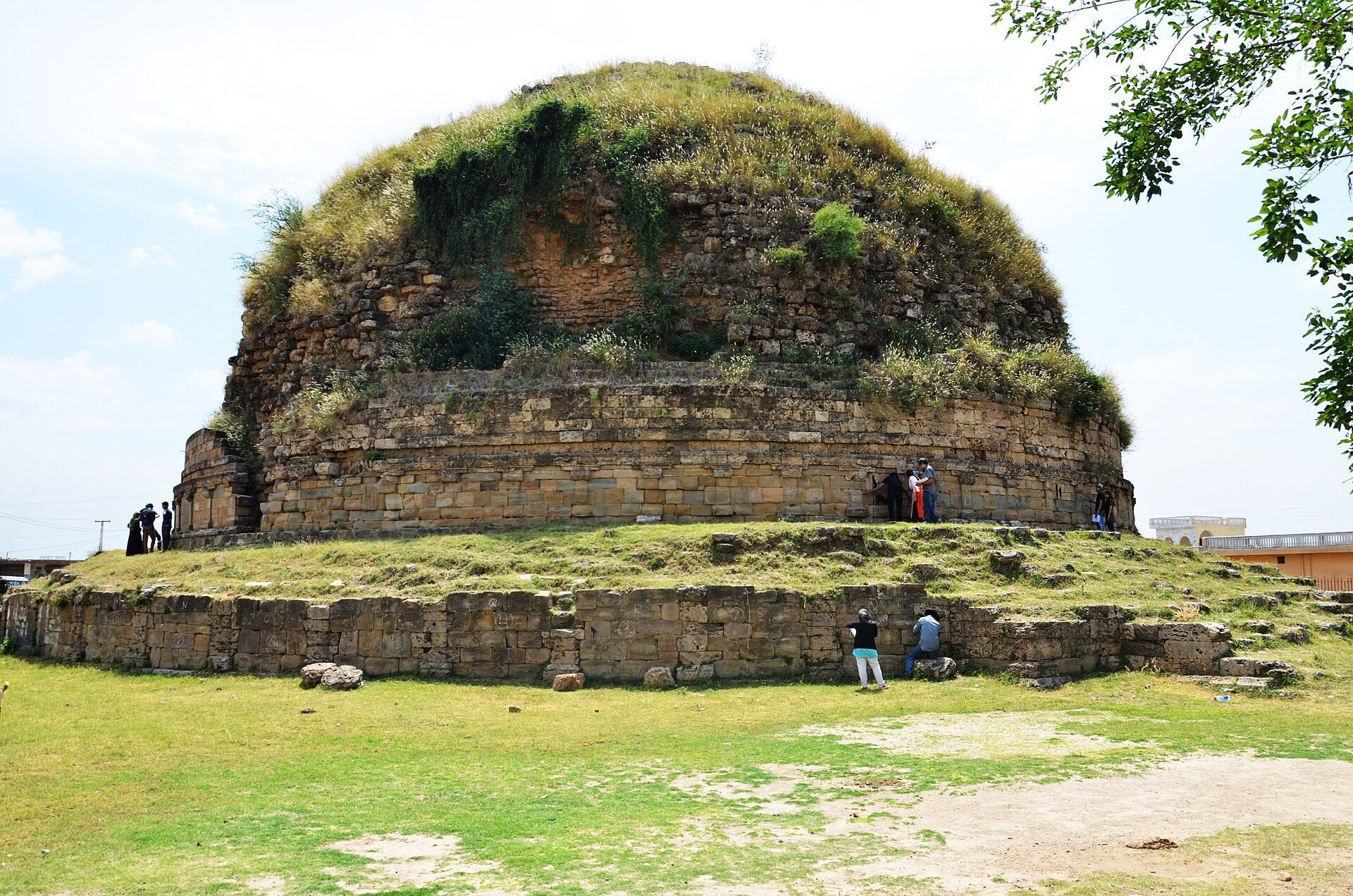
Mankiala Stupa is a Buddhist monument near Tope Mankiala in Punjab, Pakistan, in the Pothohar region southeast of Rawalpindi and Islamabad. It is generally dated to the reign of Kanishka, the major ruler of the Kushan Empire, between AD 128 and 151. Kanishka strongly supported Buddhism, and tradition holds that he visited the stupa repeatedly to pay his respects during his military campaigns.
The monument is associated with a Jataka tale, a Buddhist story about one of the Buddha’s previous lives. In this narrative, Prince Sattva sacrifices parts of his body to feed seven hungry tiger cubs. The story is also connected with the Golden Light Sutra, a Buddhist scripture concerned with merit, kingship, protection, and compassionate conduct. Another interpretation identifies Mankiala Stupa as one of 84 stupas attributed to Ashoka, the Mauryan emperor of the third century BC who was traditionally associated with the spread of Buddhism and the dedication of stupas containing Buddhist relics.
Rediscovery and Later History
Mountstuart Elphinstone, the first British emissary to Afghanistan, encountered the stupa around 1809. He later included a detailed account in Kingdom of Caubul, published in 1815. Jean-Baptiste Ventura discovered the stupa’s relic deposits in 1830. During the British Raj, the relics were removed from the monument and are now held in the British Museum.
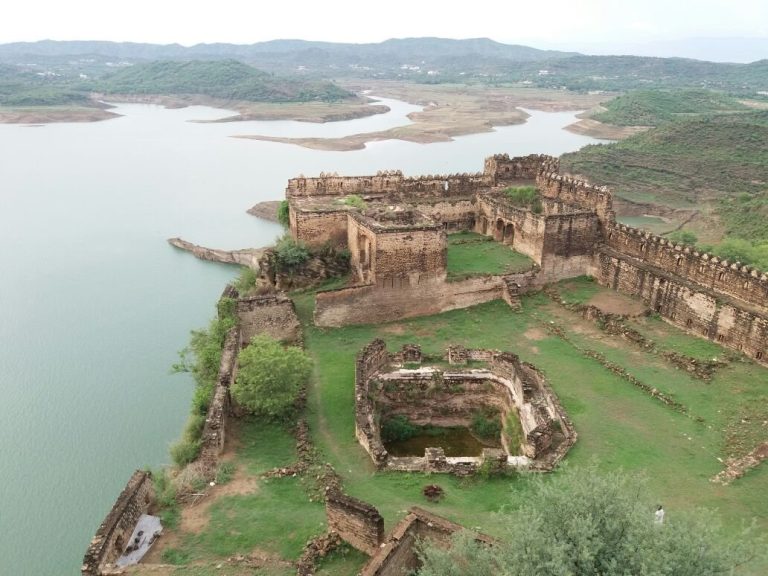
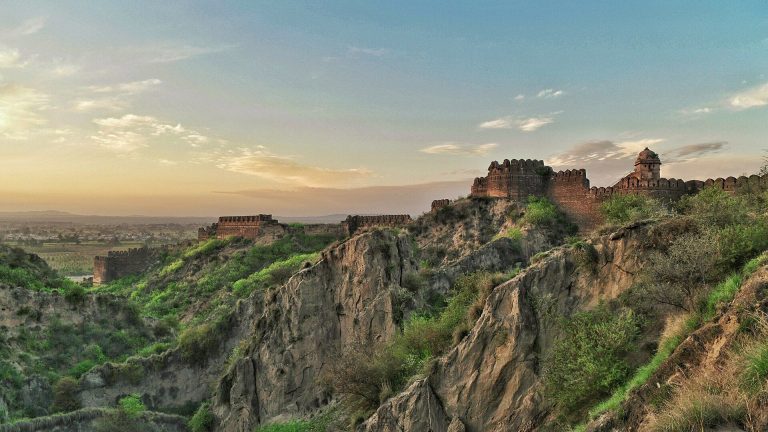
The stupa remained associated with Buddhism while becoming largely abandoned. An inscription records restoration work in 1891. The mound was later damaged by plunderers, who created a large defect in its fabric. The monument stands near Sagri and Sahib Dhamial and is visible from the nearby historic Rawat Fort.
Remains
Mound and Architectural Elements
Mankiala Stupa survives as a Buddhist mound with a large damaged area attributed to plundering. Its architectural remains include rows of pillars, separate pillars, and a capital or bracket. These elements form part of the surviving evidence for the monument’s construction and design, while the mound retains the physical form associated with a stupa, a Buddhist commemorative structure usually built as a mound or domed monument.
Relic Deposit and Inscription
The monument contained relic deposits discovered in 1830, linking its physical remains with Buddhist practices of preserving sacred objects. The recovered relics are now housed in the British Museum. One of the stupa’s stones carries an inscription in the Kharosthi script, an ancient writing system used principally in the northwestern Indian subcontinent. The inscription records the restoration of the stupa in 1891.