Archaeological Museum of Naxos: Collections of Cycladic and Aegean Antiquities


Site at a Glance
- Rating
- 4.2
- Popularity
- Low
- Country
- Greece
- Primary era
- Bronze Age
- External website
- Open
- Eras represented
- Stone Age, Bronze Age, Iron Age, Classical
- Civilizations
- Ancient Greek, Mycenaean, Roman
- Site type
- Museum
On this page9 sections
History
The Archaeological Museum of Naxos is a museum in Chora, Greece, established in 1972 within the town’s Venetian castle, known as the Kastro. Its collections trace the archaeological history of Naxos and the Little Cyclades, a group of smaller islands surrounding Naxos, from the Neolithic period beginning around 5300 BC through the Early Christian period of the fourth century AD. The museum is particularly known for its Early Cycladic material, including marble figurines, and for objects that illuminate the wider history of the Aegean.
The castle building and earlier institutions
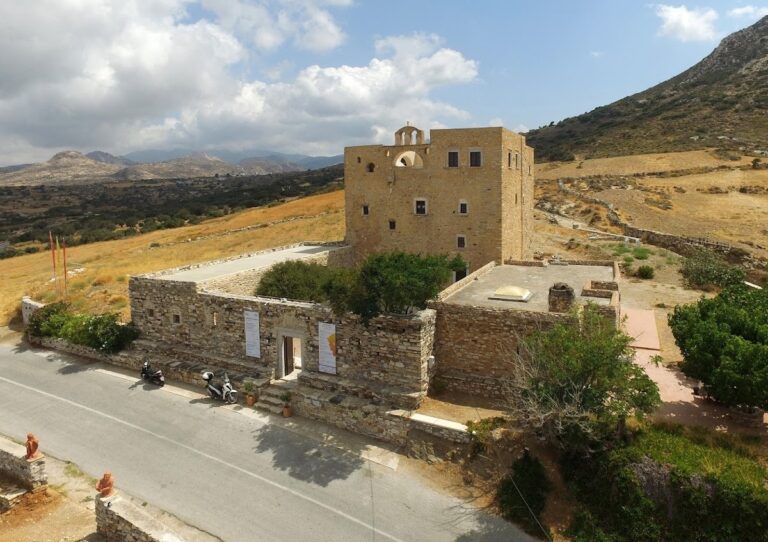
The museum occupies a five-storey Venetian-period building attached to the castle wall and incorporating two of the Kastro’s towers. Constructed in phases between approximately 1600 and 1800, the building first housed a Jesuit school established in 1700. The Jesuits were a Catholic religious order. During the nineteenth century and the early twentieth century, the building served as a commercial school before becoming the home of the archaeological museum. It is designated a historical monument.
Archaeological collections
The museum’s archaeological material comes from excavations on Naxos and in the Little Cyclades, including Schoinoussa, Donoussa, Koufonissia, Keros-Daskalio, and Iraklia. Finds from chamber tombs and other graves at the Kamini mound and Aplomata form part of the Mycenaean material. Other collections came from sites across Naxos, including Grotta, Aplomata, Plithos, Melanes, the Temple of Demeter at Sangri, the Sanctuary of Dionysus at Yria, Tsikalario, Panormos, and Korfi t’ Aroniou.
Renovation and temporary presentation
The museum is closed while the “Islet of Museums in the Castle of Chora, Naxos” project is carried out. The project is intended to renovate the museum and connect it with a network of museums and other cultural venues within the castle. Since 15 May 2021, a temporary exhibition of material from the Archaeological Museum of Naxos has been presented on the second floor of the Cultural Center of Saint Ursula, in the former Ursuline Monastery of the Holy Catholic Archbishopric of Naxos. The Ursulines were a Catholic religious order historically associated especially with the education of girls and women.
Remains
The museum combines a historic Venetian-period structure with archaeological collections arranged across a long sequence of island history. The building rises five storeys against the castle wall and incorporates two castle towers, while the objects inside represent periods from the Neolithic era, through the Bronze Age and ancient Greek periods, to the Roman and Early Christian eras.
Early Cycladic material
The Early Cycladic collection represents the Bronze Age culture of the Cyclades, conventionally dated here to the fourth and third millennia BC. It includes marble figurines, pottery, stone vessels, jewellery, bronze tools, and obsidian blades. Obsidian is natural volcanic glass that was used to make sharp-edged tools. The figurines come from Naxos, Kato Kouphonisi, and Keros. Among the dated objects are a violin-shaped figurine from 3200–2800 BC, figurines and stone vessels from Naxos dated to 3200–2300 BC, enthroned figurines from the third millennium BC, and female figurines from Naxos and Keros dated to 2800–2300 BC. A marble vessel from Naxos dates to 3000–2300 BC, while jewellery from Naxos dates to 3200–2300 BC.
The collection also includes a Cycladic “frying-pan” from Pano Koufonisi, dated to 2800–2500 BC, along with other finds from the island dated to 2800–2300 BC. These materials, together with the objects from Keros and Naxos, form a substantial body of evidence for the artistic and material culture of the Early Cycladic islands.
Mycenaean and Geometric finds
Mycenaean culture was a Late Bronze Age civilization of mainland Greece and the Aegean. The museum’s Mycenaean holdings include pottery and gold jewellery, as well as Late Mycenaean stirrup jars and other grave goods from chamber tombs and graves at Kamini and Aplomata. A stirrup jar is a vessel with a distinctive false neck and handle arrangement, commonly used for storing and pouring liquids. Jewellery from a child’s grave at Kamini dates to the twelfth century BC. A Mycenaean hydria from Naxos, a ceramic vessel traditionally used for carrying water, is also dated to the twelfth century BC and depicts fishing with a net.
Geometric-period objects include Greek pottery, especially examples from the eighth century BC and from the eighth and seventh centuries BC more broadly. The Geometric period was an early Greek Iron Age period known for strongly geometric decoration. Terracotta boots from a wooden statue found at Grotta date to the ninth to eighth centuries BC.
Archaic and Hellenistic sculpture
A room is devoted to kouroi, Archaic Greek statues depicting nude standing young men, generally shown frontally with one foot advanced. The sculptures date from approximately 650–450 BC. The Archaic collection also contains a kouros torso from about 525–500 BC and other sculptures dated to approximately 550–500 BC, 600–500 BC, and 500 BC. An offering vessel from Gyroulas on Naxos bears an inscription and dates to the late seventh century BC. Corinthian objects from the seventh or sixth century BC and figurines of Demeter, the Greek goddess associated with agriculture, grain, and fertility, represent further aspects of the Archaic collections.
Later material includes sculptures, terracotta figurines, pottery, jewellery, architectural fragments, tomb sculpture, and works from successive periods in Naxos’s history, including the Hellenistic period. The Hellenistic period followed the conquests of Alexander the Great and is conventionally dated from the late fourth to the first century BC. The collections also contain depictions or fragments described as the faces of sea nymphs.
Roman and Early Christian-period evidence
Roman-period material includes glass vessels dating broadly from the first century BC to the second century AD and a Roman mosaic floor from Aplomata on Naxos. A mosaic floor is a pavement made from small pieces of stone, glass, or ceramic set into a surface to form a pattern or image. Together with the material extending into the fourth-century AD Early Christian period, these objects place the museum’s collections within the later history of the Greek and Aegean worlds.