Archaeological Museum of Vathy, Samos: A Museum of Samian Antiquities



Site at a Glance
- Rating
- 4.5
- Popularity
- Low
- Country
- Greece
- Primary era
- Classical
- External website
- Open
- Eras represented
- Classical, Medieval
- Civilizations
- Ancient Greek, Byzantine, Roman
- Site type
- Museum
On this page15 sections
History
The Archaeological Museum of Vathy, Samos, in Greece, is a two-building museum founded around an older building constructed in 1912 and expanded with a new building inaugurated in 1987. Its collections preserve the history of Samos from prehistoric times through the ancient and early Byzantine periods, with particular emphasis on the Archaic period of Greek art, which broadly extended from the seventh to the early fifth century BC.
Formation and collections
The museum’s antiquities come mainly from excavations at the Heraion, the sanctuary of Hera on Samos, although finds from other parts of the island are also represented. Together, they present several millennia of Samian history through sculpture, pottery, bronzes, ivory, wood, clay figurines, jewelry, coins, tools, weapons, funerary and votive reliefs, inscriptions, and other objects connected with daily life and religious worship.
The older building, formerly associated with the Paschaleion archives, is known as the Paschaleios Archeiofylakeio, an ancient-object depository. The new building was erected with financial support from the Volkswagen cultural foundation and houses the museum’s collection of Archaic sculpture.
Archaic Samos
The Archaic collections reflect the island’s religious and artistic activity, especially at the Heraion. They include offerings dedicated to deities, mythological scenes, and works in several materials, showing the range of objects associated with Samian sanctuaries and communities during the Archaic period.
Remains
The museum occupies two buildings in central Vathy, positioned opposite one another near the town hall and the Church of Saint Spyridon. The older structure serves as the Paschaleios Archeiofylakeio, while the newer building contains the Archaic sculpture collection. Their displays bring together sculpture and friezes with mythological and daily-life scenes, along with pottery, small statues, tools, weapons, bronzes, ivory and wooden objects, clay figurines, coins, jewelry, inscriptions, and other small finds.
Museum buildings and collections
Paschaleios Archeiofylakeio
The older museum building dates from 1912 and formerly housed the Paschaleion archives. Its present identity as an ancient-object depository connects the building with the preservation of antiquities from Samos.
New museum building
Inaugurated in 1987, the newer building houses the Archaic sculpture collection. It contains works recovered chiefly from the Heraion, together with objects from other locations on the island, and provides the setting for sculptures, reliefs, and smaller archaeological finds.
Major sculptures and votive works
Colossal Samos kouros
The colossal Samos kouros, an Archaic Greek statue of a standing nude young man, was found on the sacred road leading to the Heraion. Approximately 5.5 metres high, it dates from the early sixth century BC and follows the Ionian artistic tradition associated with the eastern Aegean and western Anatolia. An inscription identifies the statue as an offering to Athena, a major Greek goddess associated with wisdom and warfare. The sculpture was originally painted.
Geneleos Group
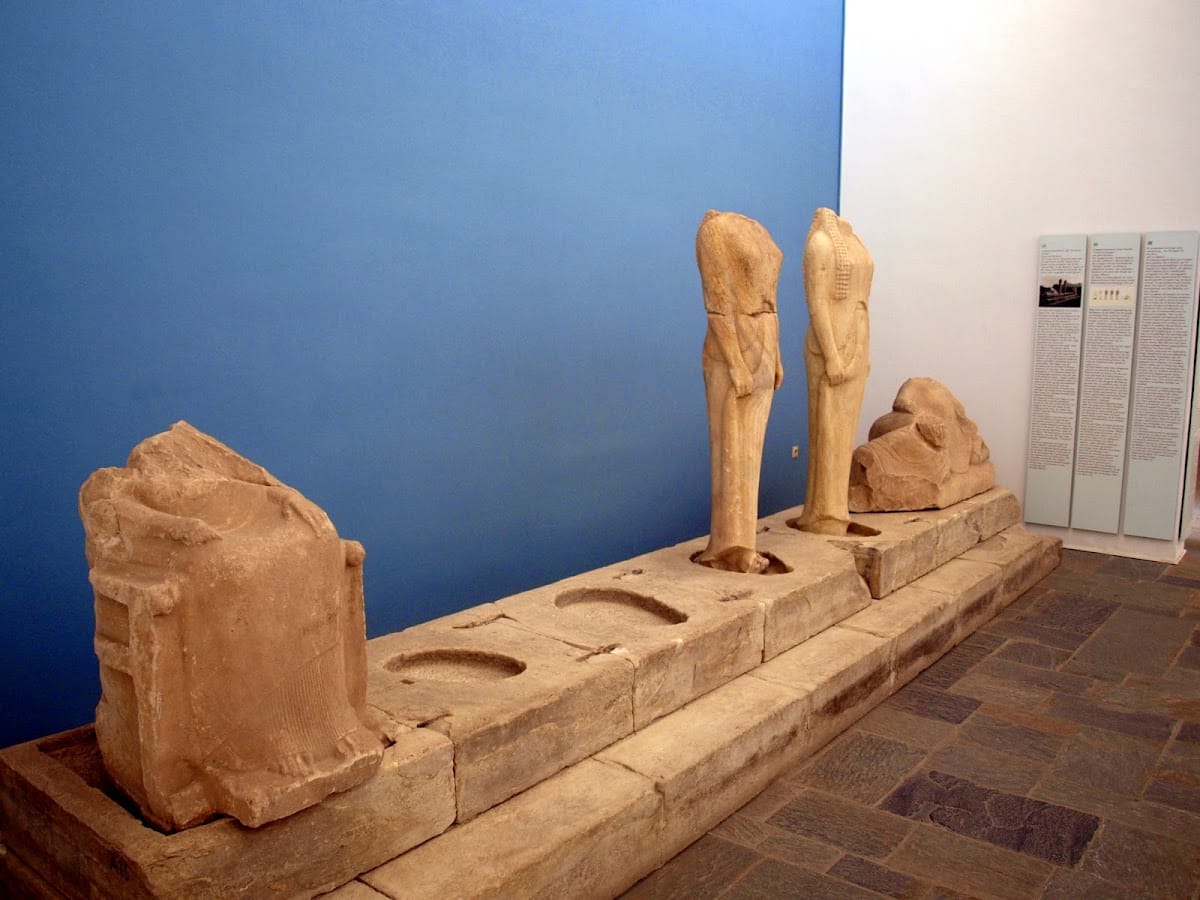
Found at the Heraion, the Geneleos Group dates approximately from 560 to 540 BC. Named after Geneleos, the Archaic Greek sculptor associated with it, the group originally consisted of six figures, five women and one man, dedicated to Hera. One of the figures is now held by the Altes Museum in Berlin.
Marble statue of a female figure
A marble female statue dates approximately from 570 to 560 BC. Cheramyes dedicated it to Hera as a votive offering, an object given to a deity as part of religious worship.
Other Archaic works
The collections also include a sixth-century BC Laconian ivory relief showing Perseus and Medusa, a wooden nude female figurine from approximately the sixth or fifth century BC, and a bronze rider dated to approximately 530 to 520 BC. A bronze horse breastplate bears an image of Herakles, the Greek hero known in Roman tradition as Hercules, with Cerberus, the multi-headed guardian dog of the underworld.
Later sculptures and archaeological objects
Chora relief
A relief discovered at Chora depicts a nude youth and dates from the fourth century BC. It forms part of the museum’s sculpture holdings beyond the Archaic period.
Additional antiquities
Other holdings include the remains of a second kouros from the fifth century BC, Archaic, Hellenistic, and Roman sculptures, a sixth-century BC krater, votive objects, and part of an inscription from a wooden votive offering dating from the fifth century BC. The collections also contain objects from daily use, weapons, jewelry, coins, tools, funerary and votive reliefs, inscriptions, and miniature sculptures.