Fotodoti Monastery: A Byzantine Orthodox Monastery on Naxos


Site at a Glance
- Rating
- 4.7
- Popularity
- Low
- Country
- Greece
- Primary era
- Medieval
- Eras represented
- Classical, Medieval, Early Modern
- Civilizations
- Byzantine, Venetian
- Site type
- Religious
- Remains
- Fortified Monastery
On this page8 sections
History
Fotodoti Monastery is an Orthodox monastery near Danakos on Naxos, Greece, established during the Byzantine period and traditionally dated to the eleventh century. Dedicated to the Transfiguration of Christ, it is also known as the Monastery of Christ the Light-Giver and is regarded as the oldest monastery on Naxos.
The monastery appears to have been established on the site of a sixth-century basilica. Fragments of wall paintings with aniconic decoration, meaning imagery that avoids figurative representations, point to a building phase during Iconoclasm, the Byzantine controversy over the religious legitimacy of sacred images. Traditions about the monastery’s foundation are varied, and some connect it with the Byzantine imperial family.
Frankish and Venetian rule
After the Frankish conquest of Naxos, Marco Sanudo transferred the monastery to Benedictine monks in 1227. Sanudo was a Venetian nobleman who established the Duchy of the Archipelago after the Fourth Crusade and became Naxos’s first duke. The monastery probably returned to Orthodox control in the late fifteenth century. Its defensive form developed during the fifteenth or sixteenth century, when the church was incorporated into a fortified tower.
Ecclesiastical dependencies
In the mid-sixteenth century, Fotodoti became stavropegic, an Orthodox status placing a monastery under the direct authority of a patriarch rather than the local bishop. In 1636 it returned to the ownership of the Metropolis of Paronaxia, the Eastern Orthodox jurisdiction associated with Paros and Naxos. By 1780 it was a dependency of the Monastery of Saint John the Theologian on Patmos, and in 1831 it became a dependency of Panagia Apeirathitissa. The monastery now belongs to the Metropolis of Paronaxia.
Abandonment and restoration
Fotodoti stood abandoned for an extended period. Restoration of the monastic buildings began in 1959, followed by a campaign that lasted from 1991 to 2007. The monastery continues its religious calendar with an annual celebration of the Transfiguration of Christ on 6 August.
Remains
Fortified complex
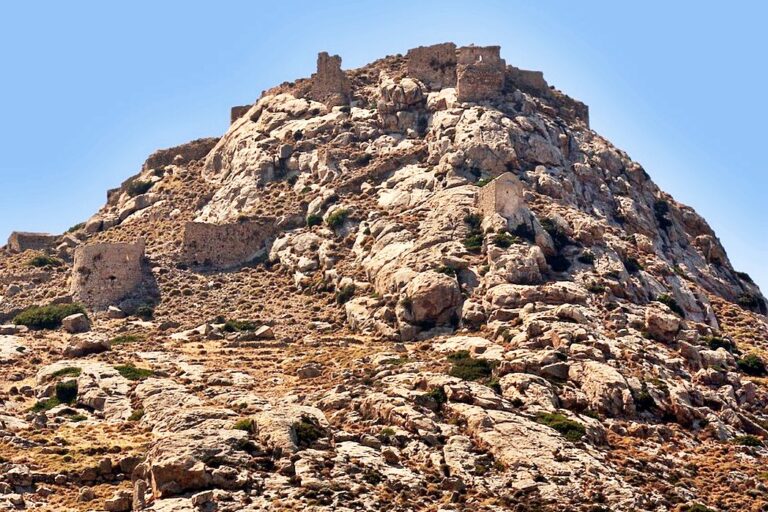
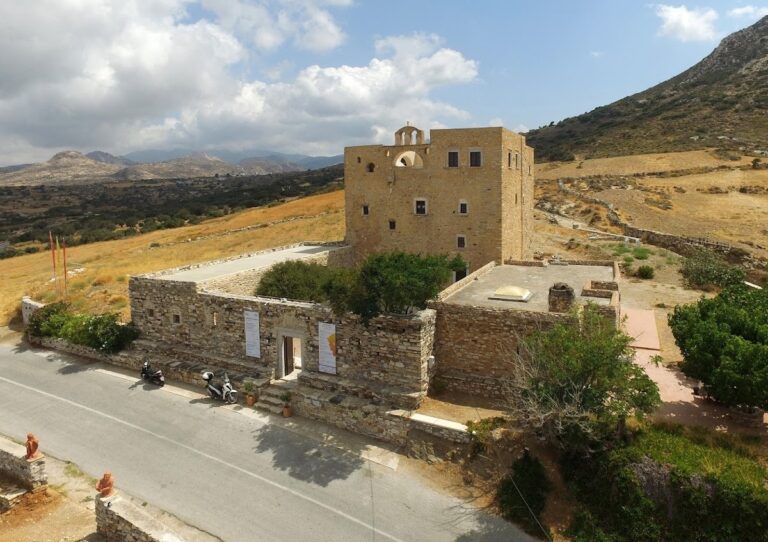
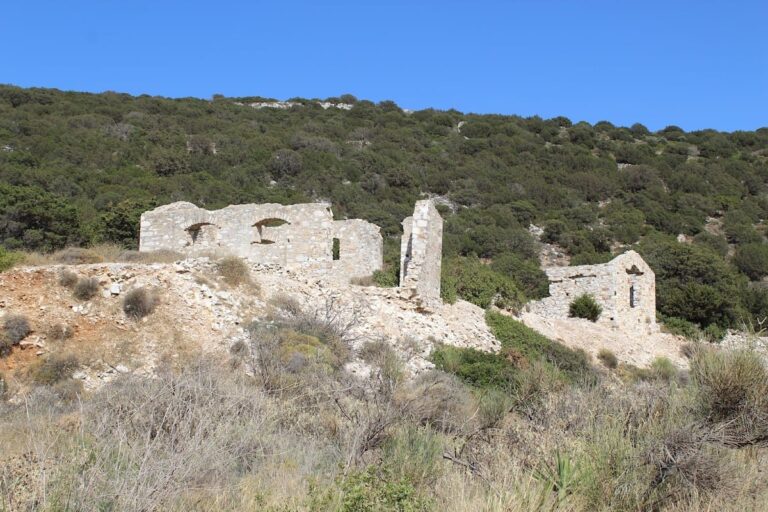
Fotodoti is a fortress-like building on a hill approximately 570 metres above sea level. The complex measures about 30 by 20 metres and rises roughly 15 metres. It has two floors and combines three principal building phases. The walls end in defensive turrets and are reinforced on the outside by large buttresses, giving the monastery a strongly defensive appearance.
Church and chapels
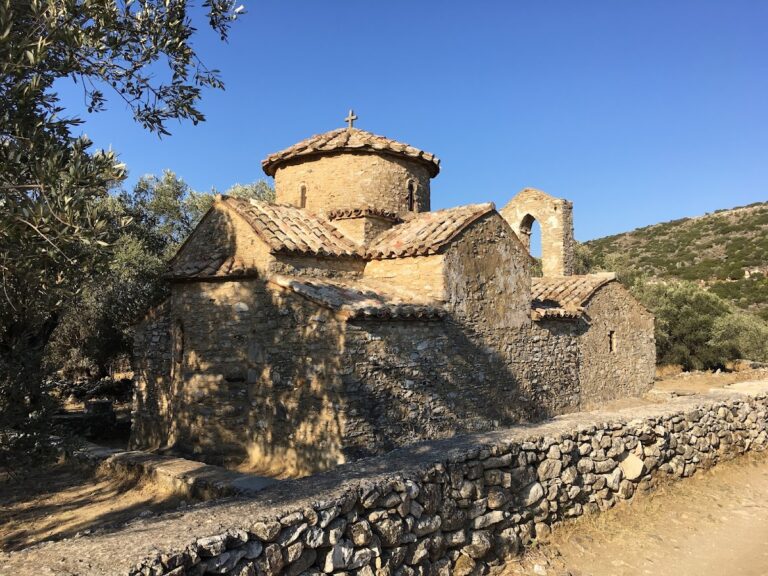
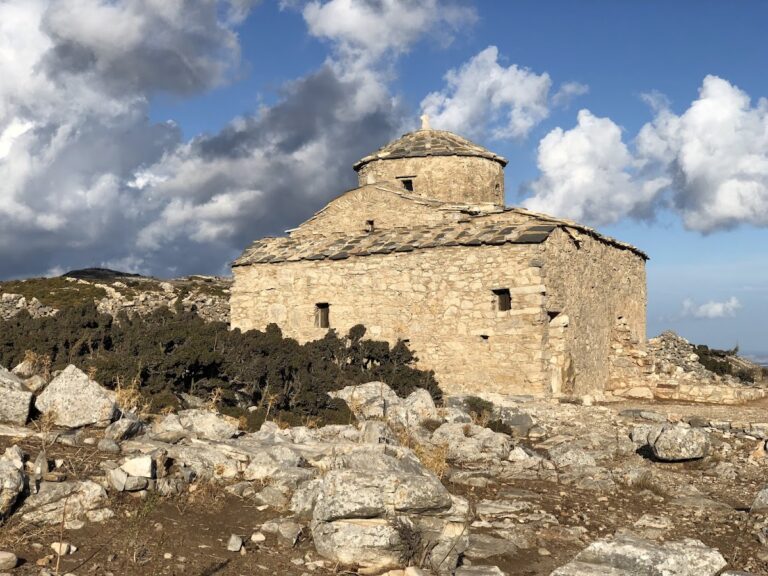
The original church was a sixth-century three-aisled basilica. When the monastery was formed in the eleventh century, the building was converted into a cross-in-rectangle church, a plan organized around a cross within a rectangular structure, and received a dome. During the Venetian period, the church became part of a fortified tower. Its surviving interior includes fragments of aniconic frescoes, a sculpted iconostasis, or screen separating the sanctuary, and a black-and-white tiled floor.
A later chapel was first built with a barrel-vaulted ceiling, formed by a continuous curved vault, and was subsequently given a dome. These alterations form part of the complex’s successive architectural development.
Monastic rooms
The ground floor contains the church and four rooms. An external staircase in front of the church rises to the upper floor, where a courtyard is organized around a central dome. Monks’ cells and an additional room occupy this level within the fortified enclosure.