Church of Panagia Protothronos: An Orthodox Parish Church on Naxos
Site at a Glance
- Popularity
- Low
- Country
- Greece
- Primary era
- Medieval
- Eras represented
- Medieval, Early Modern
- Civilizations
- Byzantine
- Site type
- Religious
- Remains
- Church
On this page12 sections
History
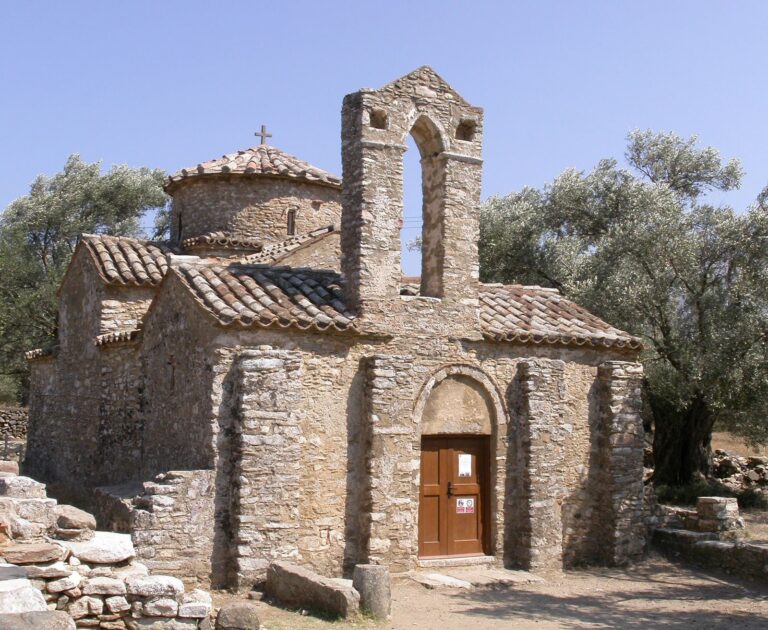
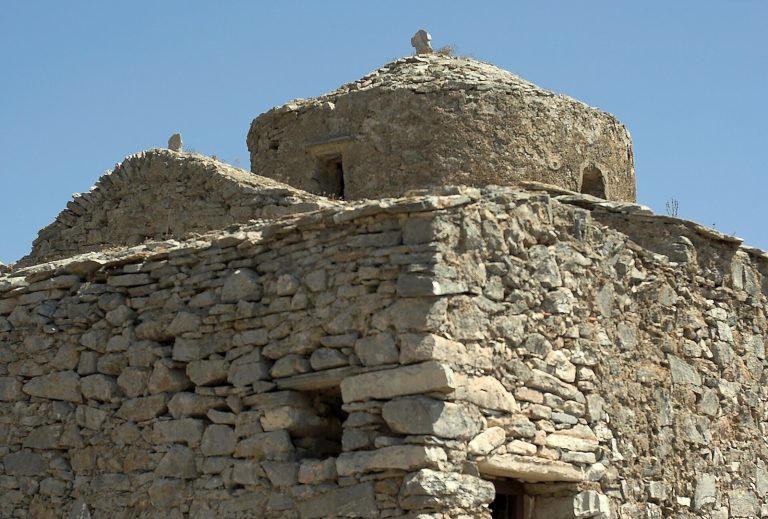
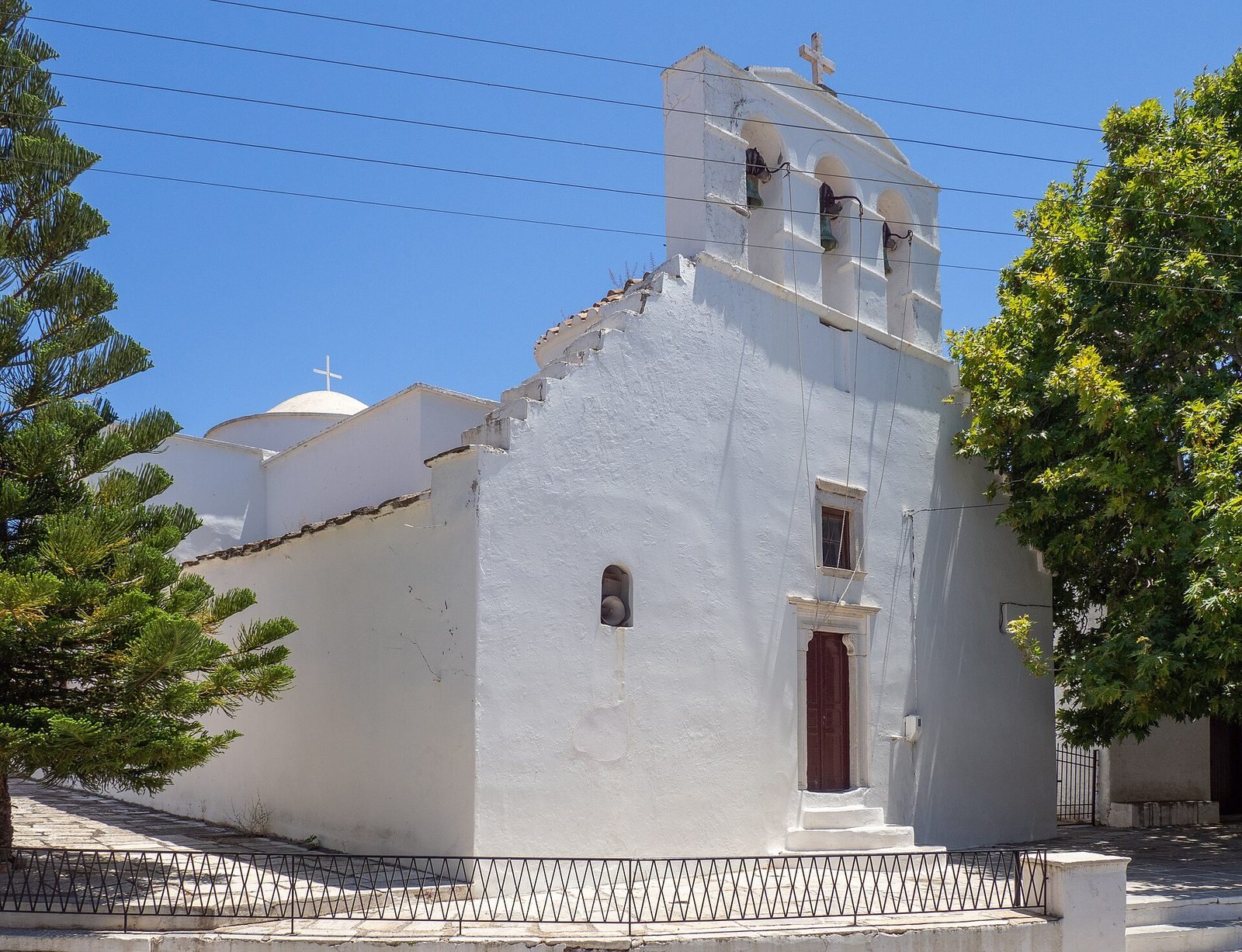
The Church of Panagia Protothronos is an Orthodox parish church at Chalki, on the Tragea plateau of inland Naxos, Greece. Dedicated to the Annunciation, the Christian episode in which the angel Gabriel tells Mary she will bear Jesus, it has remained in religious use since the Early Christian period. Its original form dates to the seventh century, and the church may have served as Naxos’s episcopal seat during the Middle Byzantine period.
Early Christian and Byzantine phases
The seventh-century church was a three-aisled basilica. Between the ninth and eleventh centuries it was converted into a domed, cross-in-square church, probably during the first half of the ninth century. This change reshaped the building while its religious use continued.
A renovation in 1052 is named in an inscription. Those associated with the work include Bishop Leo, Niketas, a protospatharios (high-ranking Byzantine court official) and tourmarch (commander of a territorial military division), and Count Stephen Kamilaris.
Later alterations and conservation
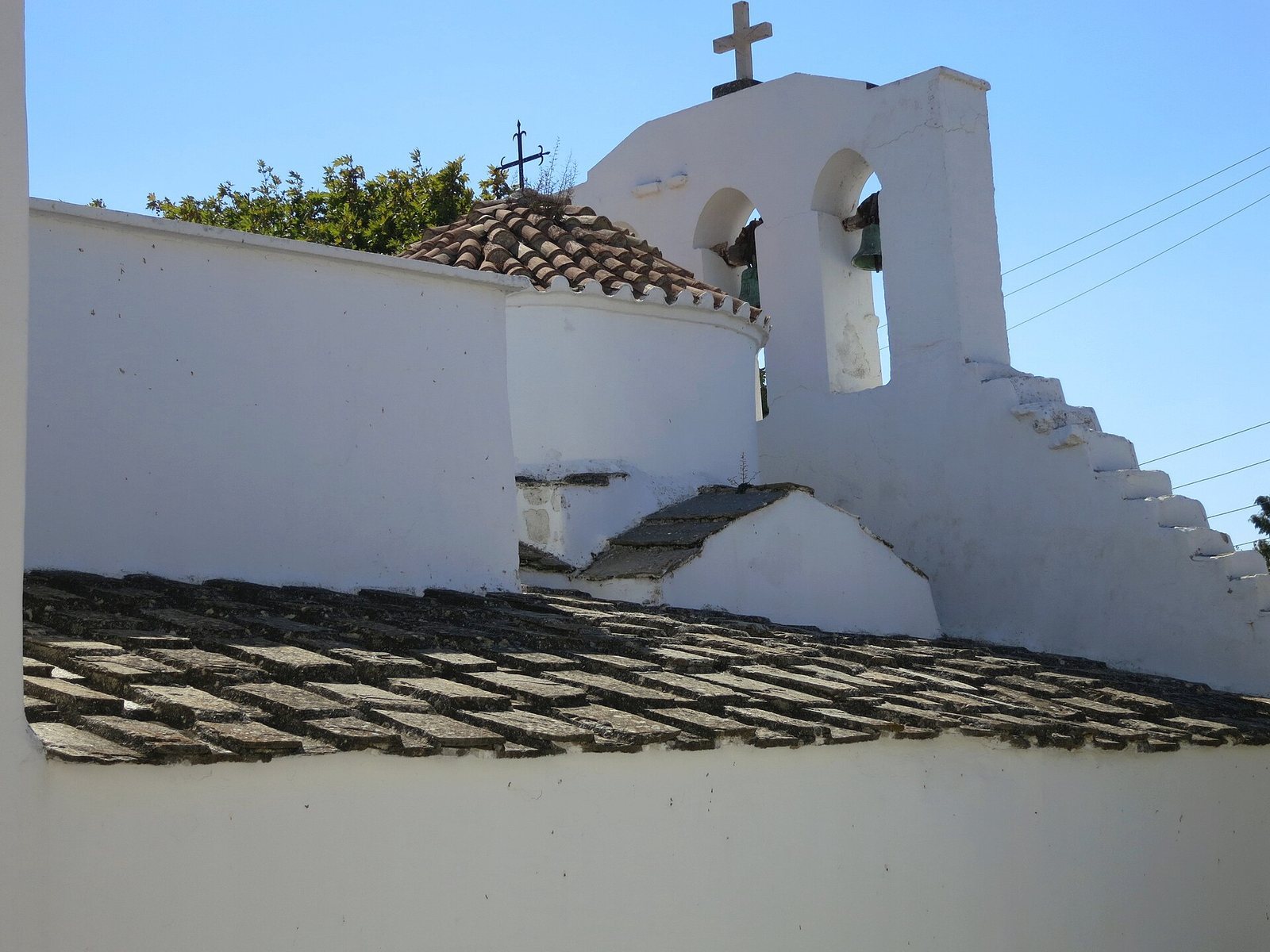
Further repairs and changes took place in the sixteenth and seventeenth centuries. In the post-Byzantine period, the church gained a bell tower at its western end, and doorways were opened in its north and south arms.
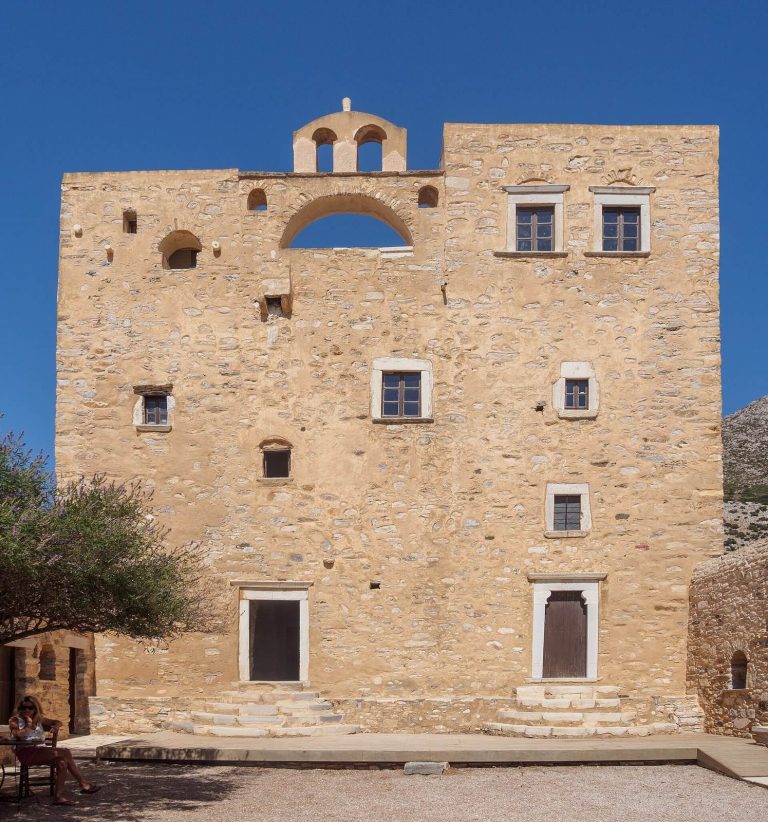
In the 1970s, the archaeological service consolidated the structure and cleaned its painted surfaces. The work exposed successive layers of paintings. The dome’s painted surface was detached and later put back in place; the oldest dome layer is now exhibited in the Byzantine Collection at Glezos Tower, in the Castle of Chora.
Remains
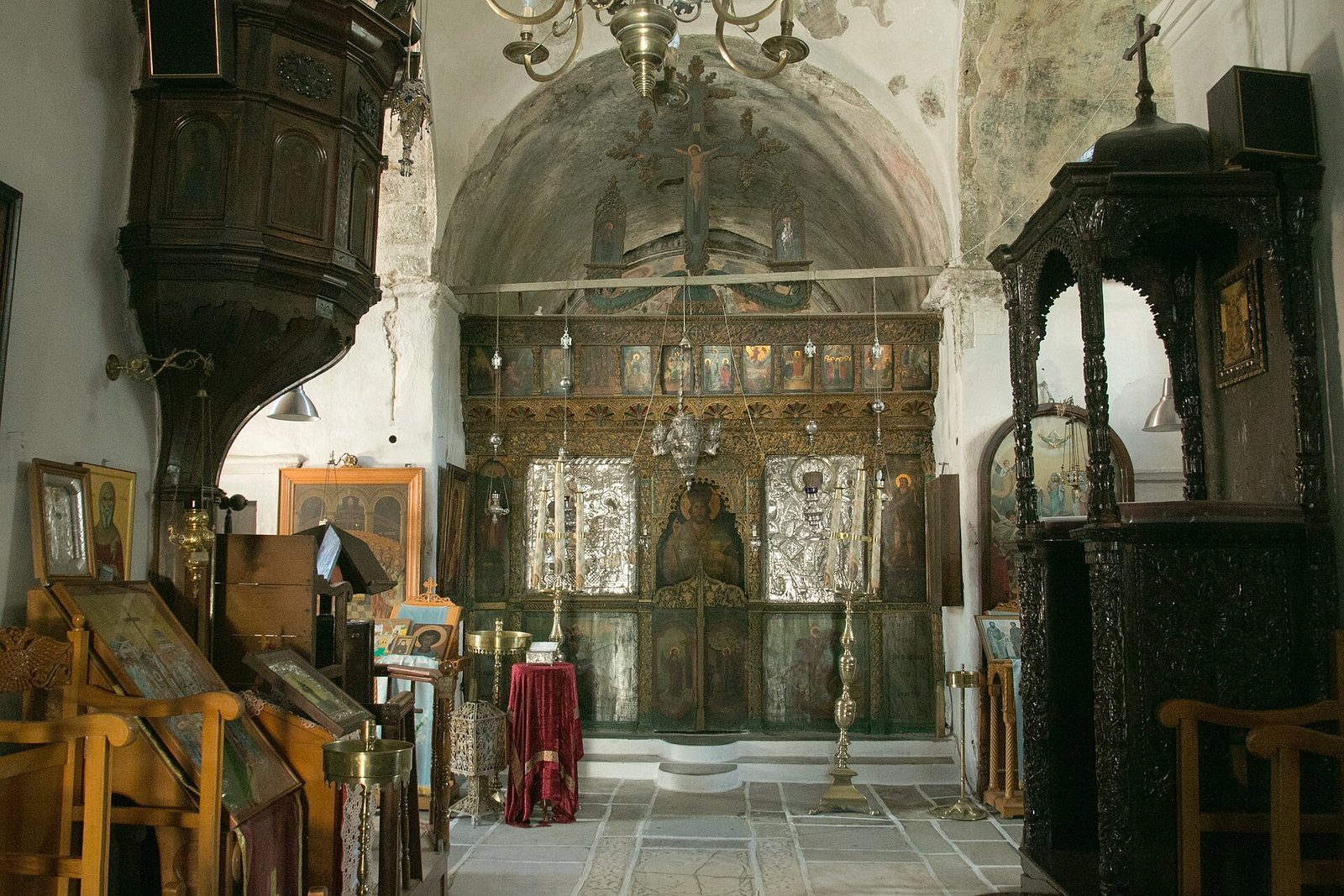
The church’s surviving layout combines a central dome and cross-in-square plan (a square arrangement of spaces around a central dome, forming a cross) with a sanctuary apse, the rounded eastern end. A western entrance vestibule and adjoining side spaces extend the building. Paintings survive or are displayed from several areas, including the apse, dome, vaults, and northwestern chapel.
Plan and structural features
Basilica and sanctuary
The original three-aisled basilica was probably supported by columns. Its sanctuary apse retains a synthronon, tiered seating for clergy, arranged around an episcopal throne.
Domed church and western additions
The later church has semi-cylindrical vaults. At its western end, a domed narthex, or entrance vestibule, was added, probably in the eleventh century. A chapel or room stands on each side: the northwestern chapel is associated with Saint Akindynos, while the southern space is rectangular and has a barrel-vaulted ceiling. A large, three-lobed Cycladic bell tower was added farther west in the post-Byzantine period. Doorways in the north and south arms also belong to later alterations.
Inscriptions and tomb niche
An inscribed stone beam above the entrance probably belonged to an earlier templon, a screen separating the sanctuary from the main body of the church. In the northern chapel, an inscription above a niche for a tomb reads, “Here lies Anna, the Servant of God, March 1056.”
Painted decoration
Early apse layers
The oldest painted layer, probably from the seventh century, shows full-length apostles in the lower, curved part of the apse. They formed part of an Ascension scene, likely completed by Christ ascending in glory in the apse’s semi-dome. A separate image of Saint Isidore sits beside the apse window. A second layer, probably from the ninth century, replaced figural decoration with arcading and large crosses. This layer has been detached and is displayed in an exhibition room adjoining the church.
Eleventh-century dome and vault paintings
A layer probably dating to the eleventh century and associated with the 1052 renovation includes a bust-length image of Christ Pantokrator, meaning “Ruler of All,” within a medallion, surrounded by heavenly powers and prophets. The vaults carry scenes from the lives of Christ and Mary, including the Annunciation, the Visitation, and the Presentation. A later dome layer, from the second half of the eleventh century and after 1056, retains the general arrangement while adding Saints Demetrius, George, Nicholas, and Theodore among the heavenly figures and prophets. Two archangels appear in the eastern part of the dome. The northwestern chapel has a bust of Saint Akindynos in its apse and full-length images of Saints Philip and George.
Later paintings
The fifth layer belongs to the thirteenth-century Palaiologan period, named for the Byzantine dynasty that ruled from 1261 until 1453. It includes a Deesis, an image of Christ with figures who intercede with him, in the apse’s semi-dome. A group of hierarchs from the apse has been detached, and only one figure remains clearly visible. The Annunciation on the sanctuary’s south wall is dated either to the twelfth or the thirteenth century.