Byzantine Sites in Syria: Explore Stone Villages, Pilgrimage Churches and Citadels
Byzantine sites in Syria include limestone villages with houses and olive presses, large pilgrimage churches and fortifications later enlarged by Crusader and Muslim rulers. The collection extends from the upland settlements of the northwest to Resafa on the desert margin and the temple-and-church complexes of the south.
Standing walls, arcades, courtyards and adapted sanctuaries preserve different parts of these places. A village church at Qirqbize retains a compact arrangement for its congregation and clergy; Resafa’s much larger basilica provided space for worship in a pilgrimage city. Other sites contain Byzantine buildings within complexes altered over many subsequent centuries.
Primary Function: All
Type: All
Popularity: All
Rating: All
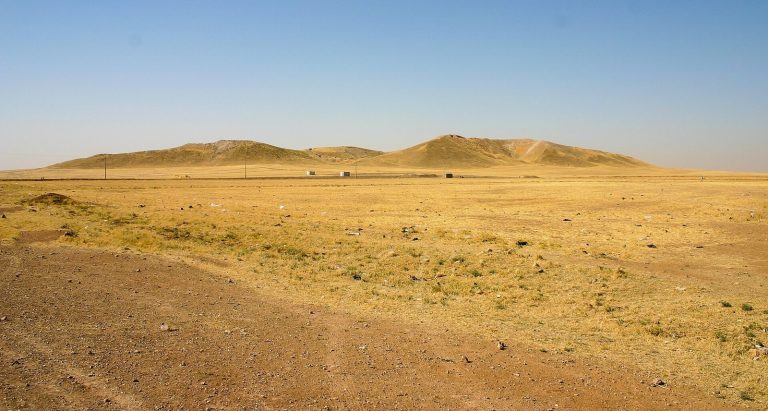
Occupied from about 6500 BC, Tell Brak grew into an early urban center and later the capital of Nagar. Its remains trace the changing communities,…
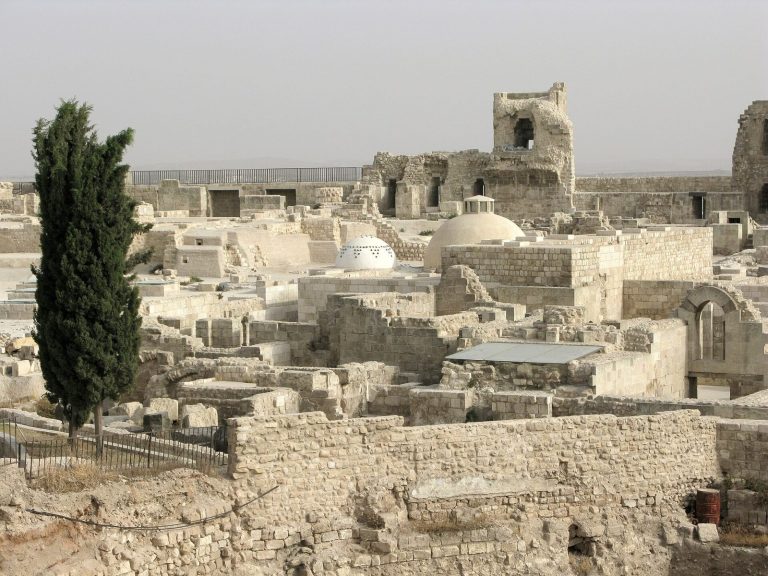
The Citadel of Aleppo is a fortified palace complex whose mound was used from the Bronze Age through the modern period. Its surviving Ayyubid and…
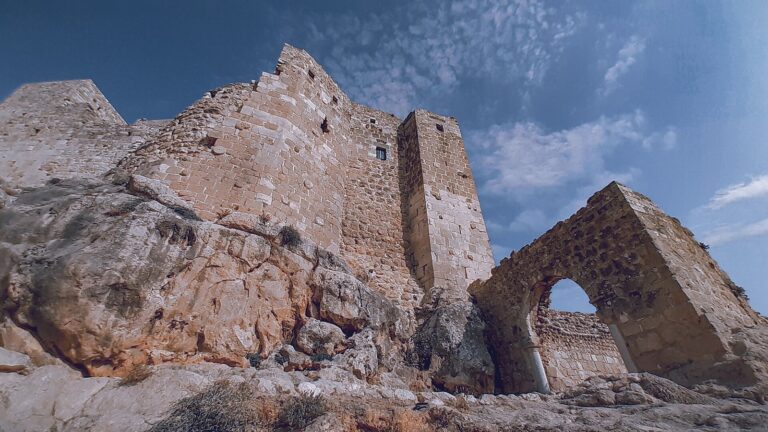
Masyaf Castle is a fortified site in western Syria whose Roman and Byzantine foundations were expanded by the Nizari Ismailis, Mamluks, and Ottomans.…
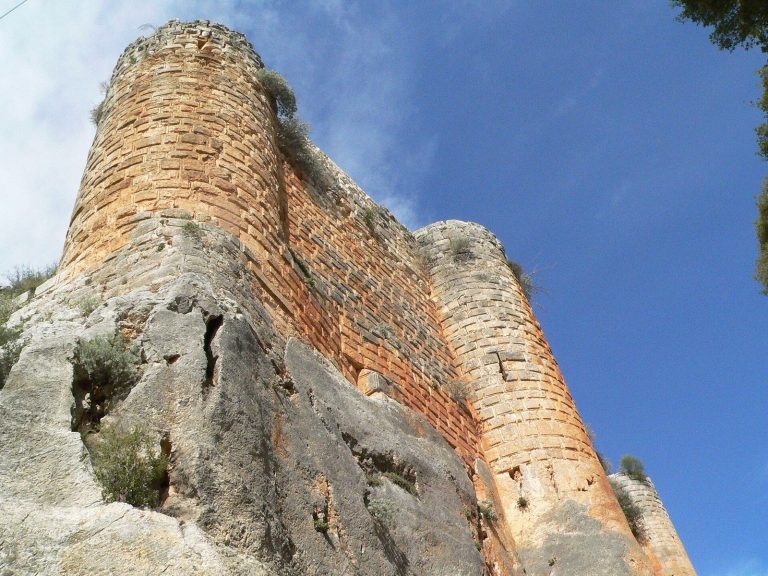
The Citadel of Salah Ed-Din, historically known as Sahyun, is a medieval fortress whose Byzantine, Crusader, Mamluk, and Arab-period remains occupy a…

Carchemish was a major city and political center on the Euphrates, whose history spans prehistoric settlement, Hittite and Neo-Hittite rule, Assyrian…
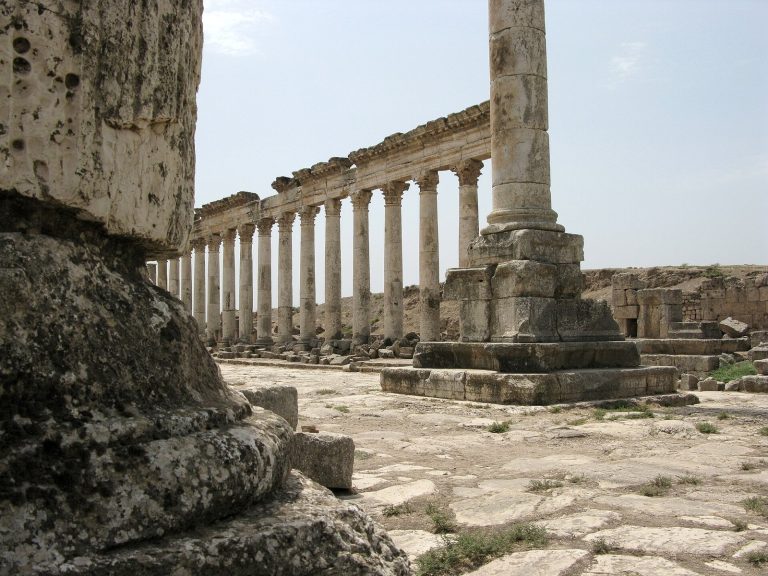
Apamea was a major Seleucid military and commercial center that later became a Roman provincial capital and an important Christian and cultural…
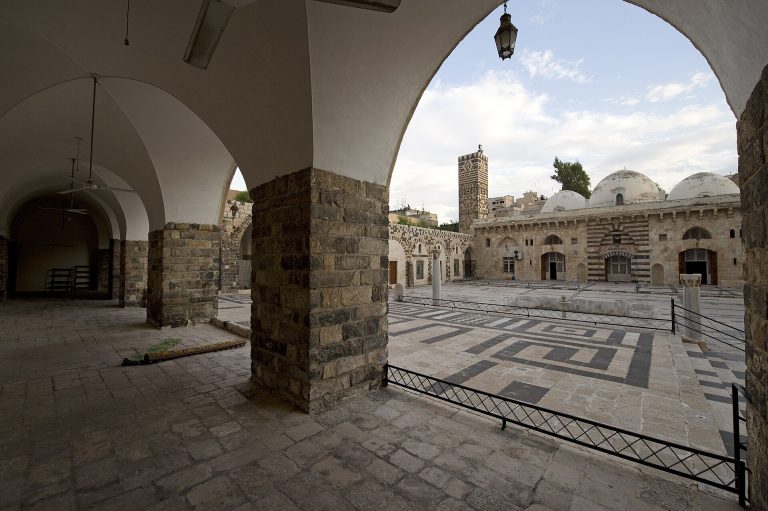
The Great Mosque of Hama developed from a Roman temple and Byzantine church into an important Islamic monument, with later additions by Ayyubid,…

As Suwayda National Museum traces the history of Syria’s basalt-rich southern region through archaeological collections from prehistoric, Nabataean,…
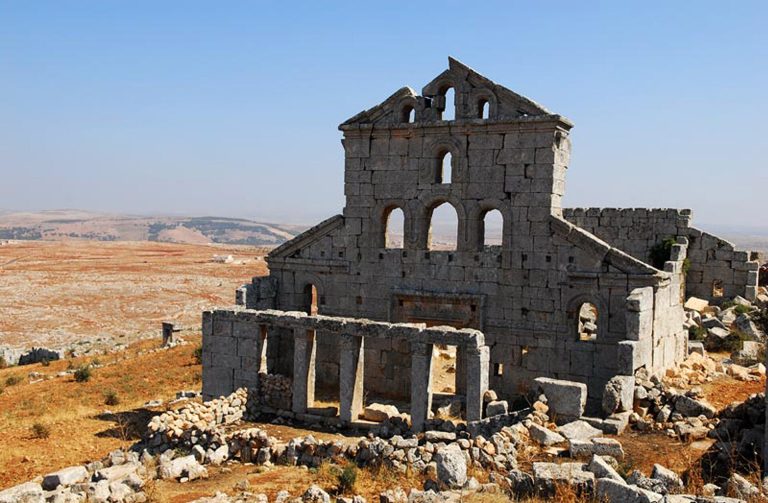
Baqirha was an ancient settlement in northwestern Syria that developed around Roman religious and commercial activity before becoming a Christian…
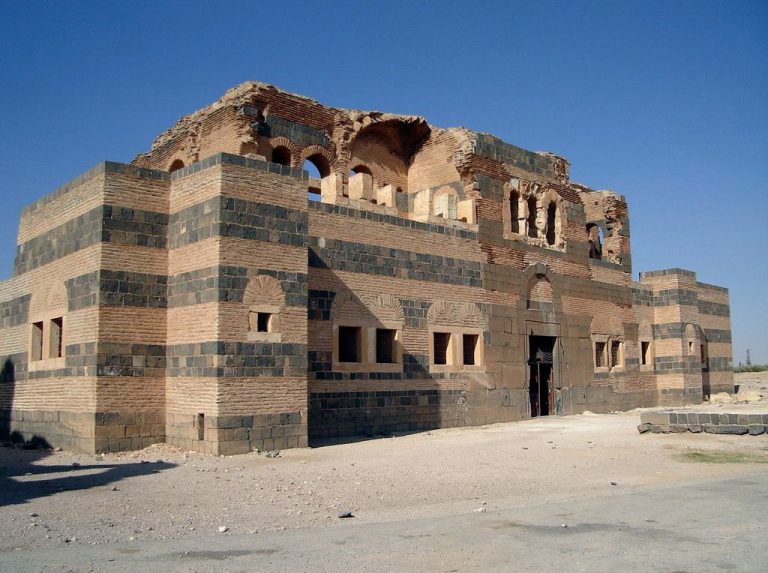
Qasr ibn Wardan is a sixth-century Byzantine complex in the Syrian Desert, built under Emperor Justinian I as part of a defensive line facing the…
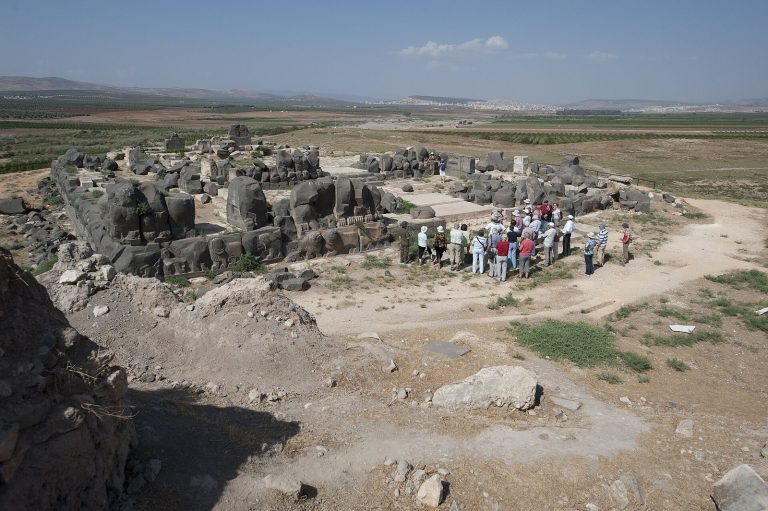
Ain Dara is an archaeological settlement in northern Syria whose long occupation, strategic location, and richly decorated Iron Age temple illuminate…
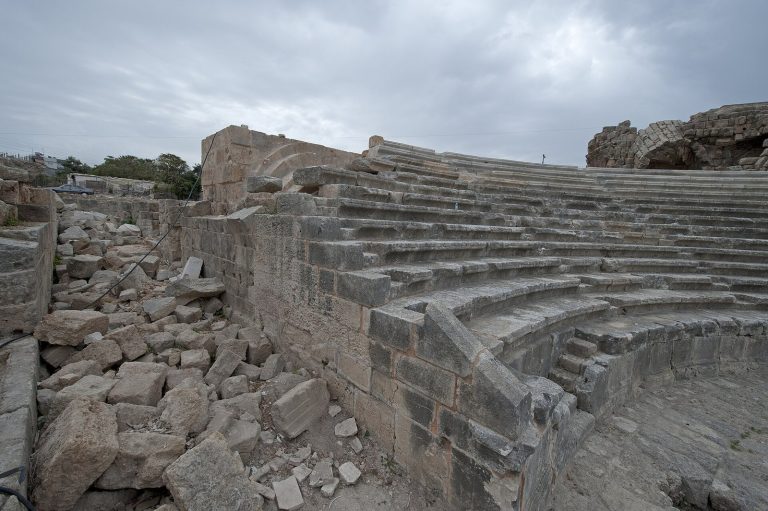
The Jableh Roman theater was built in the ancient city of Gabala, probably during the Severan dynasty in the first half of the 3rd century AD. Later…
For details on how to use the maps, which sites are included, how popularity and ratings are determined, and how sites are classified, see the help page.
On this page5 sections
Qirqbize: stone houses and a village church
Qirqbize occupies rocky ground among olive groves in the northern Syrian Limestone Massif. Carefully dressed limestone houses surround courtyards, with some walls preserved to the height of a second storey or gable. Olive presses and a reservoir cut into the rock formed part of the settlement’s working infrastructure.
Its church developed from a long rectangular building associated with an earlier house. The worship space had two entrances on its southern side, an altar platform towards the east and a raised central bema with seats for the clergy. A portico along the south wall provided a covered approach; surviving capitals belong to a later phase in the fifth or sixth century.
A stone relic container in the sanctuary allowed oil to pass over the saint’s remains and be collected below. This small installation adds a specific devotional practice to the larger remains of houses, courtyards and agricultural production.
Resafa: the arcades and clergy platform of Basilica A
Resafa, also known as Sergiopolis, developed around the veneration of Saint Sergius. Basilica A, near the southern side of the fortified town, preserves the remains of a broad three-aisled church built largely from pale gypsum stone. Wide arches separated the central nave from its aisles, while entrances on several sides admitted people into the building.
The raised bema occupied much of the nave’s width. Its arrangement included a platform and seating for the bishop and clergy, with a place for the Gospel book during services. This interior organisation gives the church a more specific identity than its large walls alone: the position of clergy and congregation was built into the floor plan.
Christian worship continued after the Arab conquest. An Umayyad mosque was subsequently built beside the pilgrimage church, and both occupied the later city. Twentieth-century restoration also altered portions of Basilica A’s standing masonry, including the removal and rebuilding of some wall sections.
Qanawat: a temple precinct adapted for Christian worship
At Qanawat, ancient Canatha, the complex known as the Seraya contains a Roman temple adapted into a Christian basilica during late antiquity. An exterior portico and a columned atrium formed an approach to the religious buildings. The retained columns and large masonry elements provided an existing architectural framework for the Christian complex.
The church conversion belongs to the town’s development as a Christian centre in the fourth and fifth centuries. It is separate from the original temple construction and from the rock-cut theatre lower in the settlement. The resulting precinct combines older temple architecture with later spaces arranged for Christian worship.
Salah Ed-Din Citadel: Byzantine chapels within a larger fortress
The Citadel of Salah Ed-Din, historically Sahyun, occupies a long ridge in the coastal mountains. Byzantine control began in the late tenth century, before Crusader builders greatly enlarged its defences. The earlier citadel lies near the centre of the complex, with associated remains that include a large cistern and two chapels.
A Crusader church was built beside one of these chapels. The arrangement preserves successive religious buildings within the same stronghold, alongside walls and towers from different rulers. The deep rock-cut ditch and much of the fortress’s imposing defensive construction belong principally to its later development. The Byzantine citadel and chapels identify an earlier fortified nucleus within that expanded medieval complex.
Explore the collection
Explore sites on the map or in the grid. Map icons reflect each site’s primary function, helping you identify different kinds of places at a glance. Narrow the results by primary function, site type or era, with additional filters for popularity and rating. Select a map marker to view the site’s details and open its article, or open the article from its grid entry.