Horažďovice Castle: A Medieval Fortress and Baroque Château in Czechia
Site at a Glance
- Rating
- 4.5
- Popularity
- Low
- Country
- Czechia
- Primary era
- Early Modern
- External website
- Open
- Eras represented
- Medieval, Early Modern
- Civilizations
- Habsburg, Holy Roman Empire, Kingdom of Bohemia
- Site type
- Domestic
- Remains
- Castle
On this page11 sections
History
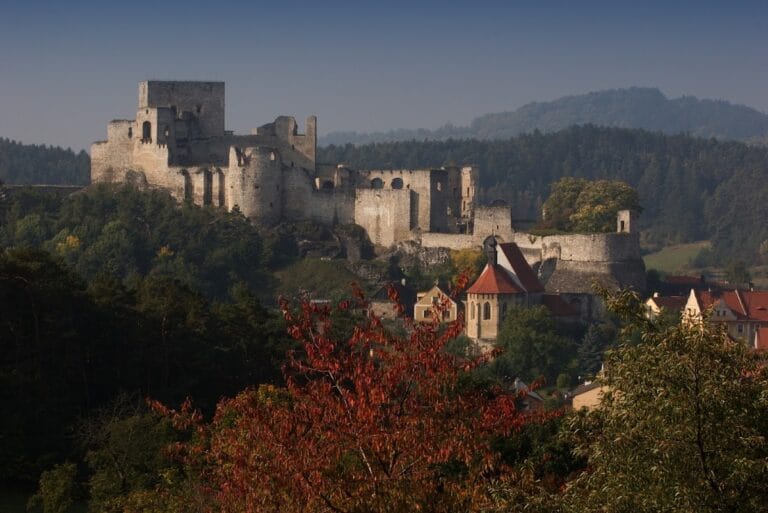
Horažďovice Castle in Czechia began in the second half of the thirteenth century as a strategically important fortress built by the Bavors of Strakonice. The Bavors helped raise Horažďovice to town status in 1292 and held the estate until 1389. The original medieval stronghold later developed into a Renaissance château and then acquired its present general appearance through a Baroque rebuilding.
From fortress to castle
After the Bavors, the estate passed to the Lords of Hradec. Děpolt of Rýzmberk acquired the town, which passed in 1459 to the brothers Jan and Racek of Kocov. Horažďovice again became the seat of the estate after a long interval, and Racek began converting the fortress into a castle.
Racek supported Matthias Corvinus, the fifteenth-century king of Hungary, and attacked supporters of Vladislaus II, king of Bohemia and Hungary. A royal army led by Jan of Švamberk, a Hospitaller of the Order of St John, besieged the town in 1477 and 1478 until Racek surrendered. Jan of Švamberk bought Horažďovice in 1483 and soon sold it to Půta Švihovský of Rýzmberk.
Renaissance and Baroque rebuilding
The Švihovský family of Rýzmberk held Horažďovice for almost 150 years. During this period, the castle was rebuilt in the Renaissance style, which revived classical forms and symmetry in European architecture. Děpolt Švihovský, owner from 1593 to 1616, carried out the most extensive expansion. His son Ferdinand Karel Švihovský joined the Estates Revolt, the Bohemian uprising of 1618 to 1620 against the Catholic Habsburg monarchy, and the estate was confiscated. Appraisal documents from the resulting proceedings record construction work undertaken around the turn of the sixteenth and seventeenth centuries.
In 1622, Adam of Šternberk, the highest burgrave of Bohemia and a senior royal official with major administrative and judicial responsibilities, bought Horažďovice with the castle, brewery, mills, farmyards, and thirteen villages. The estate was assessed at almost 75,000 Meissen groschen. Two town fires and the Thirty Years’ War, the European conflict of 1618 to 1648, seriously affected the castle.
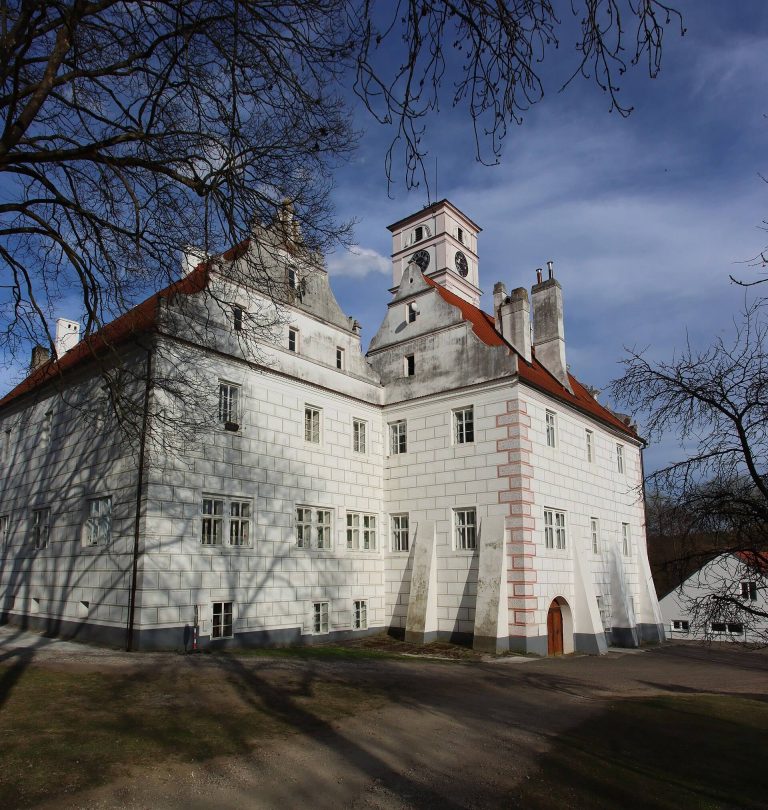
Adam’s grandson Václav Vojtěch of Šternberk financed a Baroque rebuilding between 1660 and 1692, with the participation of the Italian architect Salomini. Baroque architecture used more dynamic forms, elaborate decoration, and theatrical spatial effects. This campaign established the castle’s present general appearance and created the French garden with its gloriette, a small decorative garden pavilion, and sculptural decoration.
Later owners and modern use
After Václav Vojtěch’s death, the estate passed to his wife, Klára Bernardina of Maltzan, who died in 1719. Their granddaughter Marie Filipína Harrach, married to a Thun-Hohenstein, then inherited it. In 1721, Marie Eleonora of Mansfeld bought Horažďovice for 300,000 florins. Her son Jindřich Pavel of Mansfeld sold it to Count Václav Maria Pötting in 1748, but Pötting returned the estate in 1752 after he was unable to pay. Mansfeld sold it definitively in 1755 to Princess Marie Karolína of Löwenstein-Wertheim. She lived at the castle, died there, and carried out minor alterations.
The related Rummerskirch family inherited the estate after the Löwensteins and maintained a permanent residence at Horažďovice. In 1834, Prince Rudolf Kinský bought it from Count Karel of Rummerskirch for 400,000 florins. The Kinský family remained the last private owners, although they occupied the castle only occasionally. At the end of the nineteenth century, their estate covered 2,415 hectares in addition to the castle and included a brewery, brickworks, and limeworks.
The first land reform reduced the estate, but the castle remained Kinský property. A museum occupied part of the building from 1920. Because the princely branch of the Kinský family identified as German, its property was confiscated in 1945. After the Second World War, the museum expanded into the west wing, formerly used as living quarters during occasional Kinský visits. Other parts of the castle were adapted for municipal services, housing, and an automobile-school facility.
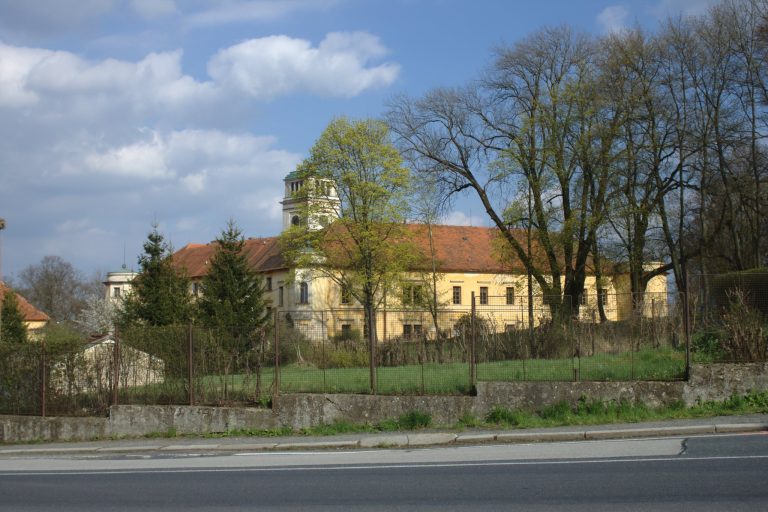
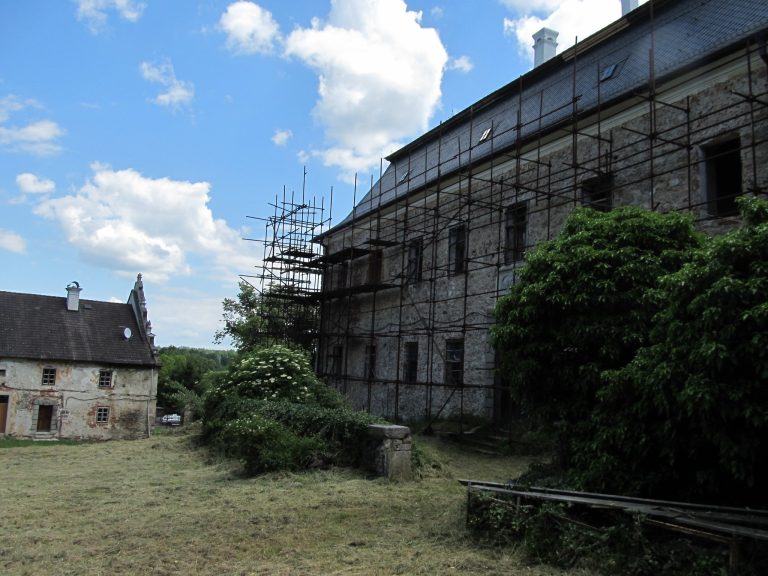
From the late 1970s, most of the castle was closed because domestic dry rot had spread through the building. Major reconstruction took place from 1990 to 1996, with work in some sections continuing until 2000. The town of Horažďovice now owns the castle. It contains the Municipal Museum, a gallery, an information centre, the municipal library, a ceramics workshop associated with Envicentrum Proud, and a private restaurant. The renovated Great Hall and Small Hall host cultural and social events. The castle has been protected as a cultural monument since 1964.
Remains
The castle occupies a roughly trapezoidal medieval enclosure that developed into a four-wing complex around an inner courtyard. The original fortress was a bergfried-type stronghold, with a principal defensive tower within the fortified enclosure. Its northern and western walls were connected continuously with the town fortifications.
Medieval fortress and later wings
Original fortress
A partly preserved bergfried stands at the southeastern corner of the complex. Opposite it was a small palace, of which a cellar covered by a barrel vault survives. The former eastern wall probably forms the courtyard wall of the eastern castle wing. A later Gothic palace wing was built outside the western wall, and its northern part contains a residential tower that originally had a large oriel. The form of the fortifications on the side facing the town remains uncertain.
Castle courtyard and wings
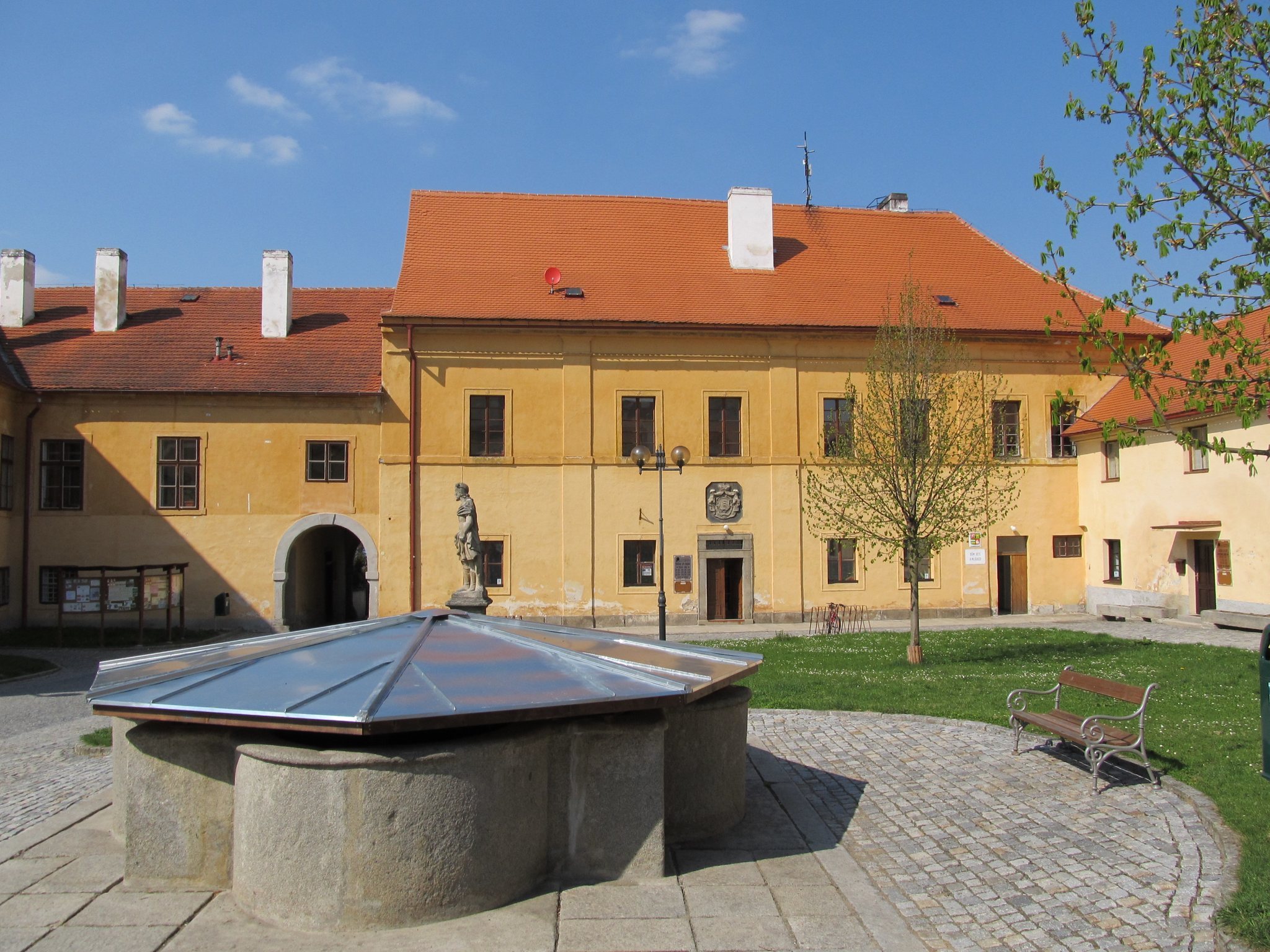
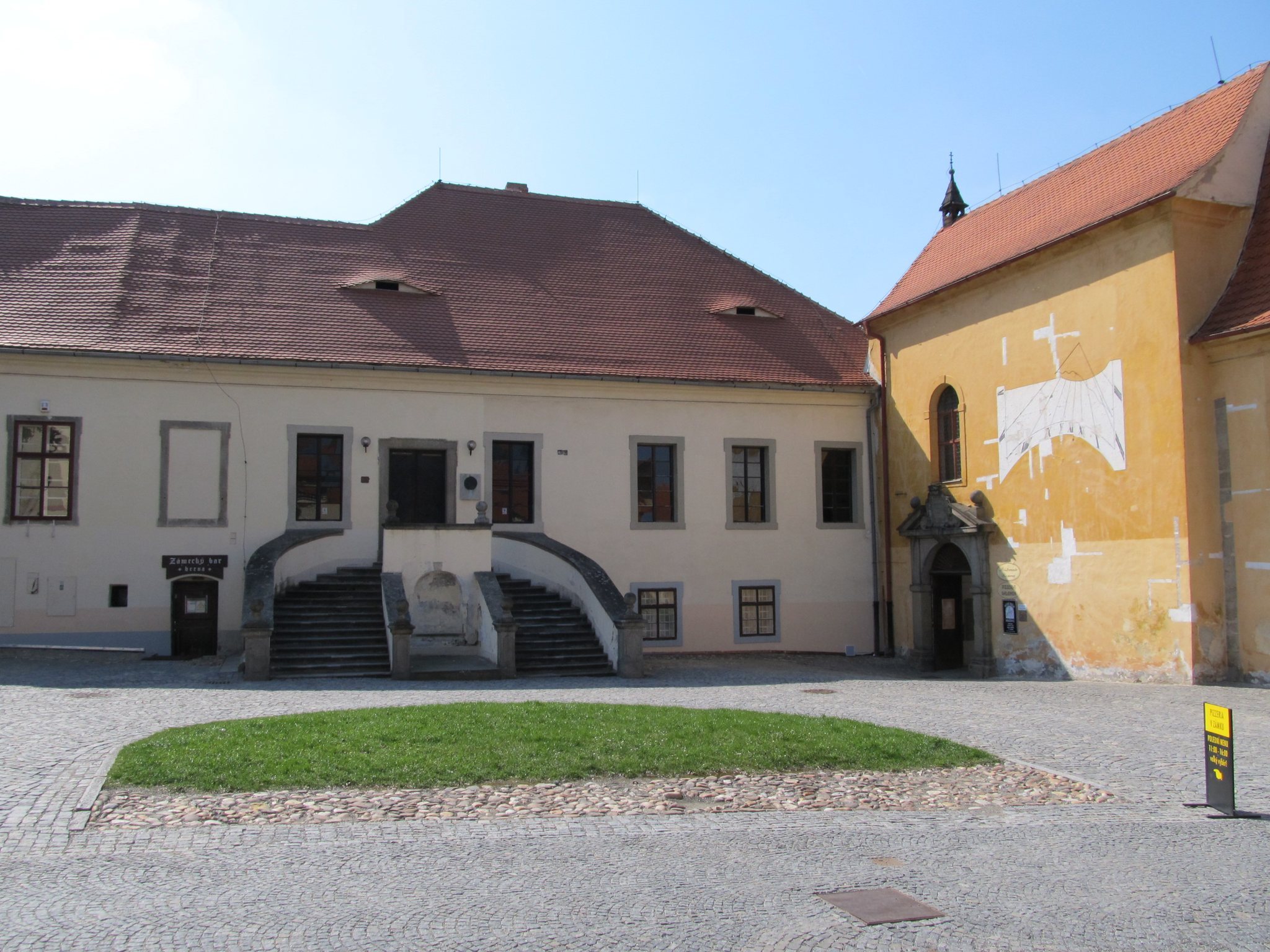
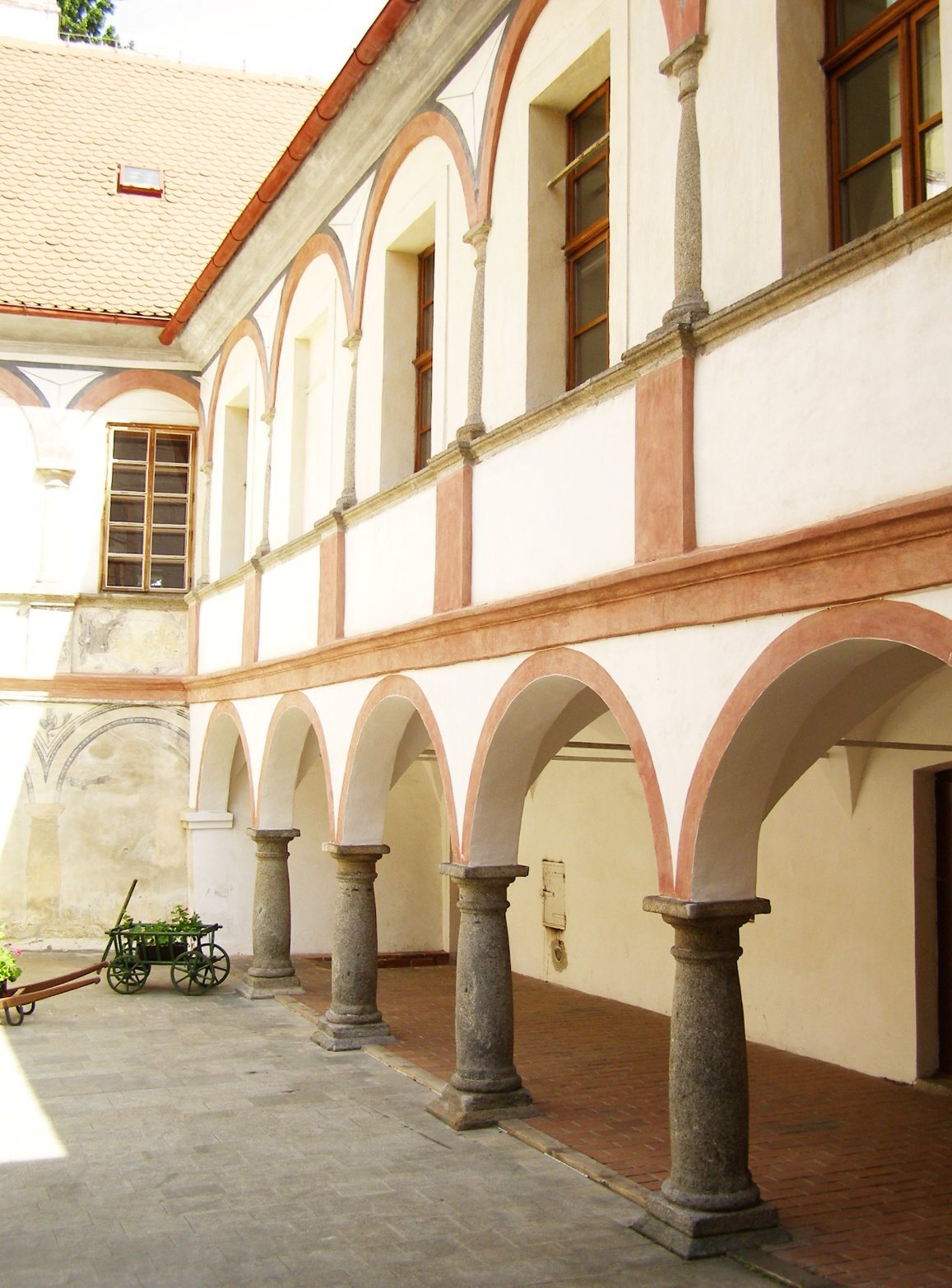
The present four-wing arrangement probably has late Gothic origins. A Renaissance arcaded gallery supported by Tuscan columns runs around the inner courtyard. The complex includes the Renaissance tower of the northern wing, the western wing, and an entrance gate bearing the coats of arms of the Šternberg and Maltzan families. Within the courtyard are a statue of an ancient soldier, stairs leading to the Great Hall, and the coat of arms of the Kinský family.
Baroque garden and interiors
French garden
The Baroque rebuilding produced a French garden decorated with sculpture and centred on a gloriette. The garden forms part of the castle complex created during the rebuilding carried out between 1660 and 1692.
Chapel and halls
The entrance wing contains an Early Baroque chapel. The Great Hall and Small Hall are artistically valuable interior spaces. Both have been renovated for cultural and social use, including weddings and concerts.